Muck-covered elephants beat any postcard. At Bali Zoo in Kampung Sumatra, you spend hours with rescued Sumatran elephants—feeding them local fruit, then joining their mud-and-river routine with an English-speaking mahout. I love how the day runs at an elephant-led pace, and I like the practical, behavior-focused explanations you get before you step in. I also appreciate that the ticket isn’t only about elephants; you get time to explore Bali Zoo afterward.
One possible drawback: it’s a long, wet, sandy day (7–10 hours). If you hate getting dirty, or if you’re bringing younger kids who can’t enter the mud fun area (under 120 cm), plan carefully.
In This Review
- Elephant Care at Bali Zoo: more than a photo stop
- Key things I’d focus on before you go
- Pickup and getting oriented at Bali Zoo
- Meet the mahout and start with fruit feeding
- Mud bath and sand spa: the mess is the point
- River Wos splash: bathing, scrubbing, and cooling down
- Lunch and the rest of Bali Zoo: fill the empty spots wisely
- Optional breakfast with Orangutan: fun, but don’t expect full contact
- Price and value: what you get for about $93
- Who should book this Bali elephant mud day?
- Should you book the Elephant Care Experience with Mud Bath at Bali Zoo?
- FAQ
- How long is the Elephant Care Experience with Mud Bath?
- What’s included in the ticket price?
- Do I need to bring swimwear and a change of clothes?
- Can kids participate in the mud bath?
- Is the experience only elephants, or do I get to see other animals too?
- Is the Orangutan breakfast experience hands-on?
Elephant Care at Bali Zoo: more than a photo stop
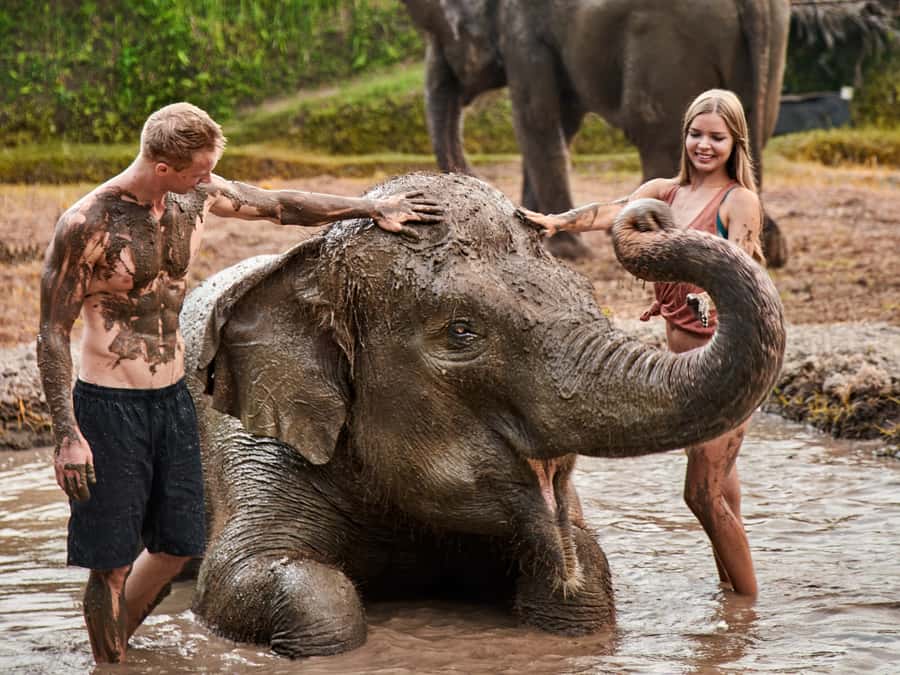
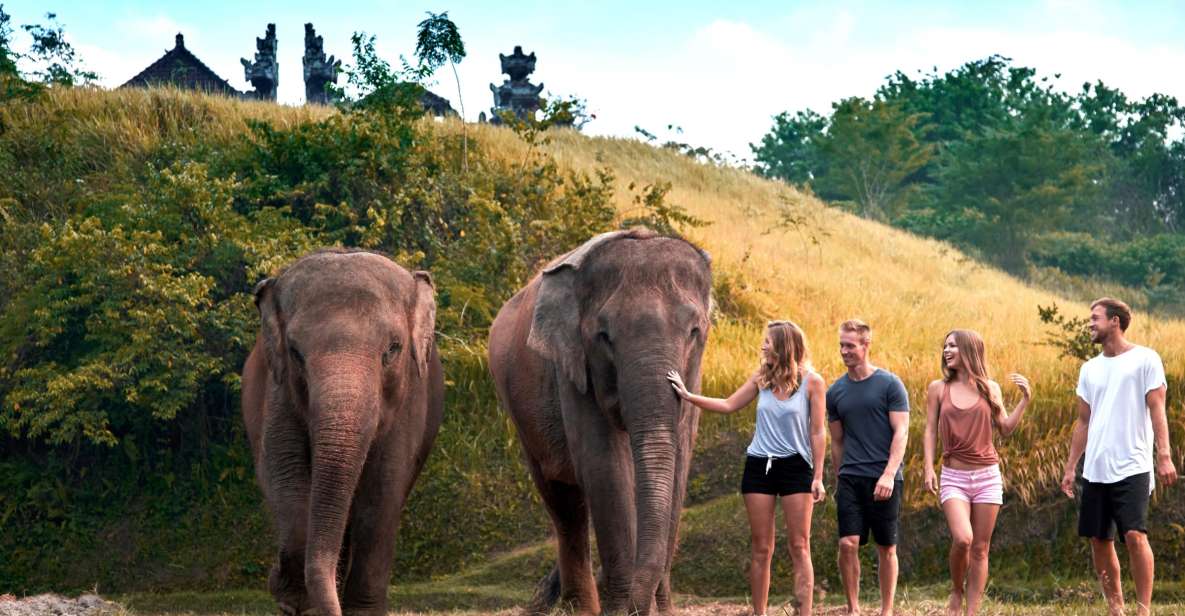
This experience is built around one simple idea: rescued elephants live by their own rhythms, and you learn those rhythms instead of forcing a show. You start at Bali Zoo’s main entrance in Singapadu, then head into Kampung Sumatra to meet your mahout and get oriented. The day’s theme is friendly, hands-on contact: feeding, watching, bathing, scrubbing, and yes—mud.
What makes it interesting is that you’re not just watching from behind a fence. You follow the elephants’ footsteps through the day, which turns the experience into a slow-moving nature walk with your feet getting muddy at the right moments. A key detail: the program notes that activities are based on the elephants and they are not forced to do anything they don’t want to do. That matters for animal welfare and for how the day actually feels.
The other hook is the behavior learning. You’re told why elephants bask in mud during summer months, and you’ll hear how elephants communicate and move. Even if you’ve seen elephants before, this kind of guided context changes the whole experience.
Key things I’d focus on before you go
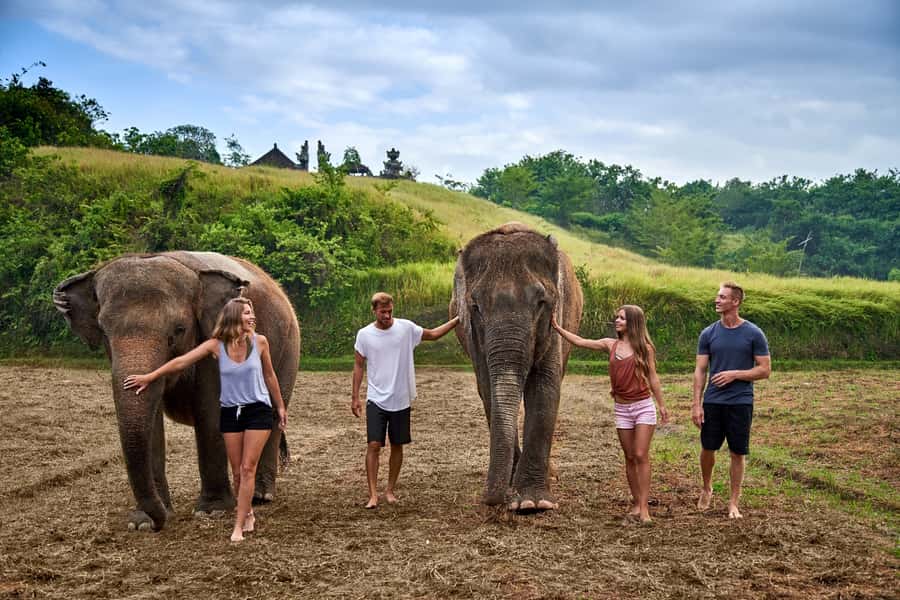
- Elephant-led timing: the day follows what the elephants want to do, not a rigid show schedule.
- Mud bath plus river Wos splash: you’ll get covered, then you’ll scrub down and splash in the nearby river.
- English-speaking mahout guidance: the best moments come right after the explanations, when you know what you’re looking at.
- Lunch included, then free zoo time: you’re not done after the mud fun—plan to linger.
- Optional orangutan breakfast: fun add-on, but interaction may be limited and distance rules apply.
- Bring real swim-and-sand gear: sandals, swimwear, sunscreen, insect repellent, and a change of clothes are not optional.
You can also read our reviews of more tours and experiences in Bali.


Pickup and getting oriented at Bali Zoo
If you choose hotel pickup, times are early. For areas like Kuta, Seminyak, Canggu, Nusa Dua, Tanjung, Benoa, Jimbaran, pickup is listed for 06:30 AM. For Ubud and Sanur it’s 07:00 AM. That matters because your whole day is built around the morning program inside the zoo.
At Bali Zoo, the meeting point is the main entrance on Jl. Raya Singapadu in Singapadu (Sukawati area). Your day starts with a brief introduction and a complimentary snack plus coffee or tea. This is when your mahout explains elephant behavior and what to expect next—especially how the elephants’ comfort leads the itinerary.
One practical tip: don’t show up “just in time.” Some people report that finding the specific Elephant Experience area inside the zoo can take a few extra minutes when signage isn’t obvious. If you’re arriving in a group, ask at check-in where to go next, and get your bearings fast.
Also, you’ll skip the ticket line, which saves time you can spend getting ready for the mud.
Meet the mahout and start with fruit feeding
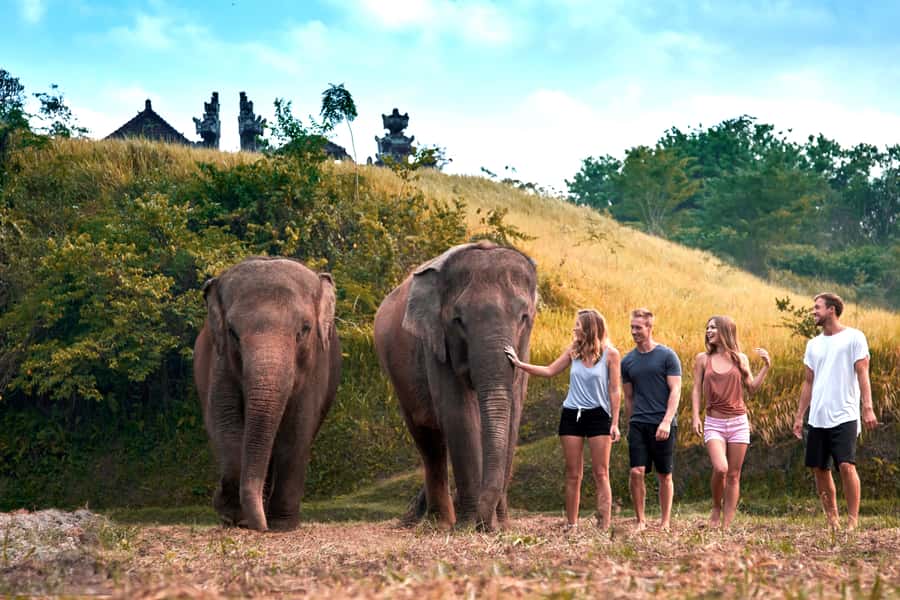
The most valuable part of the morning is the lead-up. You’re met by your English-speaking mahout, who answers questions and sets expectations for safe, respectful interaction. This is where you learn the basics of how elephants behave—what “calm” looks like, how movements translate, and what signals you should pay attention to.
Then you feed them. The program includes a selection of fruit for feeding, and you’ll get time to interact while staying close to what the elephants are choosing to do. The best feeding moments happen when you slow down and let the elephant approach, rather than trying to rush for a quick shot.
A few guide names show up in praise across the experience, including Niki and Boy as elephant guides in some cases, and Madda/Maddi as a tour guide known for being informative. There’s also a lot of praise for mahout-style teaching that makes the elephants’ behavior feel less mysterious.
Mud bath and sand spa: the mess is the point
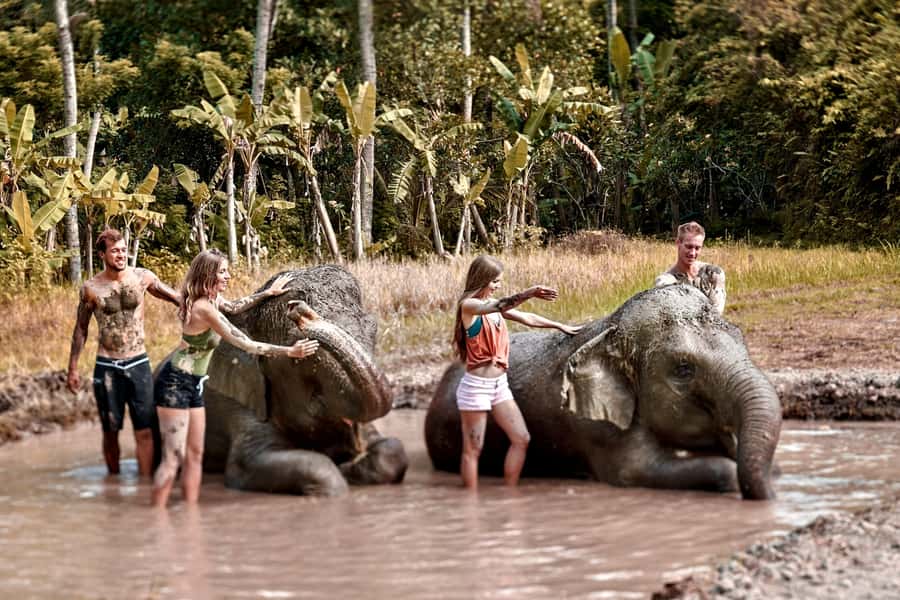
The muddy phase is the headline: you walk with the elephants into their mud and sand spa, and you’ll end up covered. The program describes a generous mix of earth, water, and fun. While that sounds playful, it’s also functional. You’re shown why mud matters, especially during summer—mud can help elephants cool down and protect their skin.
From a practical standpoint, this is where you win or lose the day based on preparation. Bring the right stuff:
- Swimwear under easy clothes (so you’re not fighting awkward dressing)
- Sandals that can handle wet sand
- Sunscreen and insect repellent (you’re outside)
- A change of clothes for after
The tour also notes that kids under 120 cm can’t enter the mud fun area for safety reasons. So if you’re traveling with family, plan a buddy system. Adults can go all in; smaller kids may be able to enjoy parts of the zoo, but they won’t be in the mud zone.
You’ll also observe elephant behavior during this time. Watching how they roll, shift weight, and interact with handlers is a lot more meaningful once you know what you’re seeing.
River Wos splash: bathing, scrubbing, and cooling down
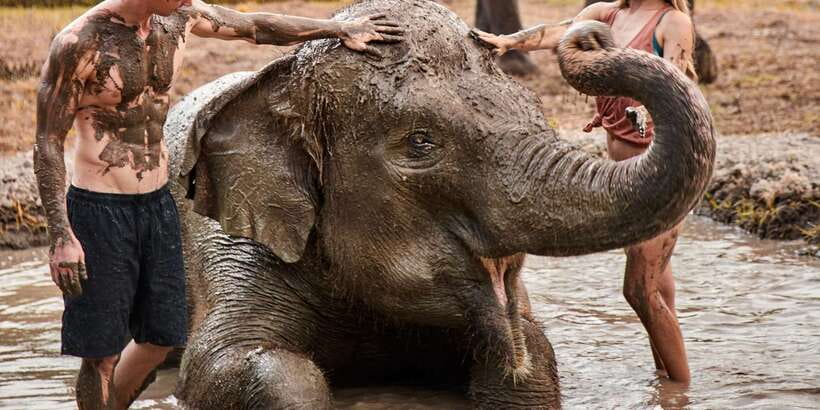
After the mud play, you and the elephants walk to the nearby River Wos for a splash and scrub session. This part feels like the “reset.” You get a chance to join the elephants in the water, then bathe and scrub down.
This phase is where good logistics pay off. You’re provided a towel, and you’ll have time to shower and change afterward before lunch. One review also specifically praised locker and shower facilities after the experience, which is a relief when you’ve been in mud and sand all morning.
Don’t treat this as a quick dip. You’re moving between stations with the elephants, so wear shoes or sandals that you can keep on safely. If you like photos, this is also a prime moment—but remember that the day is still driven by animal comfort and handler safety.



Lunch and the rest of Bali Zoo: fill the empty spots wisely
After the river and wash-down, the day settles into a more relaxed rhythm. You shower, change, then get lunch included. Lunch is listed as until noon, which matters if you want to plan what you’ll do with the afternoon.
Then you’re free to explore the rest of the zoo. The collection is big—over 300 animals—and it includes rare and endangered species such as Komodo Dragons, Sumatran Tigers, Orangutans, and the Bali Starling. This is a real chance to turn your elephant day into a full wildlife outing without paying extra for a separate zoo ticket.
If your interest is mainly elephants, you can still use the free time smartly: linger around areas that match what your mahout explained earlier (often you’ll notice more once you’ve learned how elephants move and behave). If you’re with kids, the broader zoo is a good pressure valve after the mud.
If you end up in a group of more than 20 people, lunch becomes buffet-style, but it’s still included.
Optional breakfast with Orangutan: fun, but don’t expect full contact
The upgrade is called Breakfast with Orangutan. It’s presented as the first in Indonesia for this kind of experience at Bali Zoo. You get breakfast at the orangutan playground.
Here’s the honest part: one review noted that while you’ll see orangutans in the nearby trees, you may not get the kind of up-close contact you might imagine. Another detail from feedback: picture-taking can require a distance of at least 3 feet from the orangutans.
So think of the breakfast as a chance to start the day near orangutan enrichment, not as a cuddle session. If your main goal is elephants, you might skip the upgrade and spend that time fully in the mud and zoo exploration.
If you do add it, wear what you can comfortably start the morning in. You’ll still need to get ready for the mud portion afterward.
Price and value: what you get for about $93
At $93 per person, the value depends on what you care about. This isn’t a cheap “look and leave” attraction. It includes:
- Zoo admission (so the zoo time isn’t a bonus on top of nothing)
- Welcome drinks and snacks (coffee or tea plus a snack)
- An experienced English-speaking mahout
- Fruit for feeding
- A towel
- Lunch
- Insurance
- Return transfers are available depending on options
- You skip the ticket line
That package is why the day feels expensive-but-justified to many people. You’re paying for guided animal interaction time, a full on-site half-day, and the cleanup logistics that come with getting muddy (towels, shower/change time).
Two value notes from real-world feedback:
- Photo packages can be very pricey. One review complained about high professional photo costs (they didn’t buy it), with another mentioning an extremely expensive pro package and that photos can be delivered on a USB later. If you care about photos, use your own phone or camera heavily.
- The experience is often described as well-run, but language can vary for transport. One reviewer mentioned a driver who didn’t speak English and felt they didn’t have a guide during transport. If English support during the car matters to you, confirm what’s included with your booking.
Also, if you need flexibility, the listing mentions free cancellation up to 24 hours in advance and a reserve-and-pay-later option. That’s useful if you’re juggling Bali weather.
Who should book this Bali elephant mud day?
Book this if you want:
- A day focused on rescued Sumatran elephants with a mahout-led teaching component
- Hands-on time that goes beyond a short feeding session
- A full-day structure: mud play, river splash, lunch, then more zoo
Skip it if:
- You’re pregnant (listed as not suitable)
- You have mobility impairments (listed as not suitable)
- Your child is under 120 cm, since they can’t enter the mud fun area
It also tends to fit best with adults and older kids (listed suitable for age 12+). If you’re traveling as a couple, you’ll likely enjoy the shared mud day and the quiet payoff of learning elephant behavior. If you’re with family, the zoo add-on makes the longer duration easier to stomach, as long as the kids meet height limits for the mud zone.
One more tip: show up ready to get muddy. People who treat this as a gentle “walk in the zoo” often end up annoyed when the mud and sand part arrives.
Should you book the Elephant Care Experience with Mud Bath at Bali Zoo?
I think this is a strong pick if you want a full, hands-on elephant day with clear guidance and built-in value from lunch and zoo entry. At this price point, you’re really paying for time with the elephants plus the “how to look at them” education from the mahout.
I’d book it if you can handle:
- A long day (7–10 hours)
- Wet, sandy conditions
- The reality that orangutan breakfast (if added) may have distance limits and limited interaction
I’d hesitate if you want minimal mess, you’re traveling with smaller kids who can’t join the mud fun area, or you’re worried about transport language support. Otherwise, this is the kind of day that sticks because it’s active, outdoors, and centered on elephant behavior—not just quick sightseeing.
FAQ
How long is the Elephant Care Experience with Mud Bath?
The experience runs about 7 to 10 hours, depending on starting times. Your exact start depends on availability.
What’s included in the ticket price?
Your ticket includes Bali Zoo admission, welcome drinks and snacks, an English-speaking mahout, food for feeding the elephants, lunch, a towel, and insurance. Return transfers depend on the pickup option you select.
Do I need to bring swimwear and a change of clothes?
Yes. You should bring swimwear, sandals, sunscreen, insect repellent, and change of clothes. You’ll get muddy and have shower/change time afterward.
Can kids participate in the mud bath?
The program is suitable for adults 12 and up. For safety, children under 120 cm are not allowed in the mud fun area.
Is the experience only elephants, or do I get to see other animals too?
You’ll be free to explore the rest of Bali Zoo after lunch. The zoo includes more than 300 animals, including Komodo Dragon, Sumatran Tiger, Orang Utan, and Bali Starling.
Is the Orangutan breakfast experience hands-on?
The experience includes breakfast at the orangutan playground, but picture-taking may require distance (one detail mentioned is at least 3 feet). Interaction may not be the same as full contact, so expect observation as the main activity.