Cooking with Balinese families beats cookbook dreams. This class turns a typical meal into a hands-on village experience, starting with market shopping and ending with you eating what you made.
What I liked most is the market-to-menu flow and the way it feels like cooking at someone’s home, not in a factory-style studio. You’ll be guided by the people running Paon Bali, including owner Mama Pushpa, plus support staff who keep things moving and fun.
One consideration: the afternoon session is shorter and skips the fresh market tour, so you lose that ingredient-choosing moment if you’re hoping to shop first.
In This Review
- Key highlights worth getting excited about
- From Ubud to Laplapan: what your half-day really feels like
- A note on timing: morning vs afternoon
- The market stop: where you learn what you’ll actually cook
- Rice plantation + Bali’s staple crop: the stop that makes the meal click
- Welcome at Paon Bali in Laplapan: cooking with a real home-team
- Inside the class: how you cook 7 dishes without standing still
- Dietary options are real here, not a last-minute patch
- What you’ll make: starters, mains, dessert, and the flavor logic
- Lunch with what you made: tea, coffee, and a shared table
- Price and value: why $35 makes sense for this setup
- Who should book this Laplapan cooking class from Ubud
- Tips so the day feels smooth (and you cook comfortably)
- Should you book Paon Bali’s Authentic Cooking Class in Laplapan?
- FAQ
- How long is the cooking class in Laplapan?
- Is hotel pickup and drop-off included from Ubud?
- Do I get to visit the market?
- Does the afternoon class include the market visit?
- How big is the group?
- Can I choose vegetarian dishes?
- Is lunch included?
- What do I take home after the class?
- Is there free cancellation?
Key highlights worth getting excited about
- Market visit with ingredient picking: choose vegetables, herbs, spices, and meat or vegetarian options
- Village welcome in Laplapan: see everyday Balinese life, not just a scripted performance
- Rice plantation stop: learn how Bali’s staple is cultivated while taking in the views
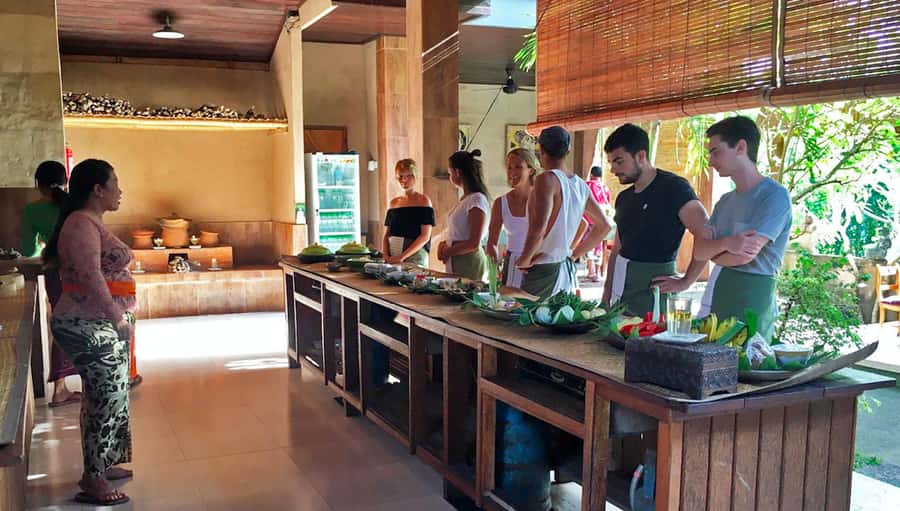
- Small-group hands-on cooking (max 15): you chop, pound, mix, cook, and take turns at the stations
- A full feast of 7 courses: 3 starters, 4 mains, and 1 authentic dessert
- Take-home recipes and notes: you get written guidance to recreate the dishes later
From Ubud to Laplapan: what your half-day really feels like
This is a straightforward, good-value cooking day with a clear mission: help you understand Balinese food by making it yourself. You’ll get hotel pickup in Ubud, then head out with a live English guide. After that, the day unfolds like a local routine: buy ingredients, learn how staple food grows, cook together, then eat together.
The magic isn’t that you’ll learn big “chef secrets.” It’s that the day teaches you how flavor is built in Balinese cooking—through herb and spice combinations, smart texture work (chopping, mixing, pounding), and balance across starters, mains, and a real dessert. If you’ve been craving more than a tasting tour, this one hits the sweet spot.
Also, the group size is limited to 15 people, which matters. In a class that small, you’re not standing around waiting your turn. You’re doing tasks. Several reviews mention that staff keep it paced and hands-on, with lots of opportunities to participate.
You can also read our reviews of more tours and experiences in Bali.



A note on timing: morning vs afternoon
If you pick the morning class, you get the fresh market tour included. The afternoon class is shorter and skips the market stop. So, if your main goal is understanding ingredients (and picking your own spices), go morning.
The market stop: where you learn what you’ll actually cook
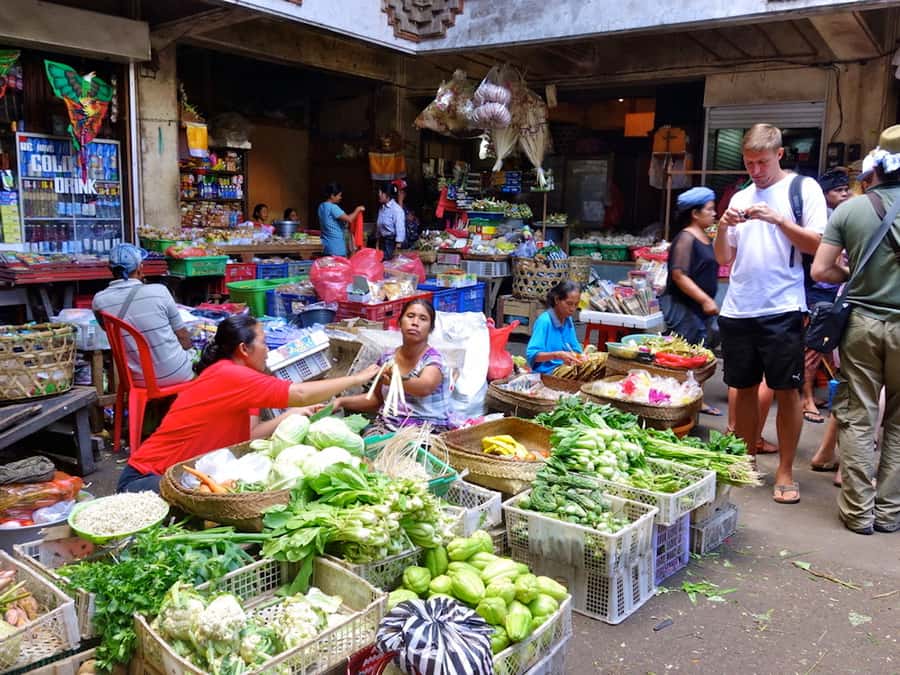
The day starts with a fresh food market visit, and it’s one of the best parts because it connects food to everyday life. You’ll walk through what’s available—vegetables, herbs, meat, and spices displayed for selection—then help choose what ends up in your cooking.
This isn’t just sightseeing. It’s the moment you learn how markets shape meals. In Bali, many dishes depend on fresh aromatics and spice mixes that can’t be replicated by guessing from a supermarket shelf at home. At the market, you get to see what the cooks are working with daily.
A couple details I’d treat as “yes, this matters”:
- You can also try different fruits during the market visit, which helps you understand the broader taste palette beyond savory dishes.
- The guide explaining what you’re looking at makes the later steps much easier. When you know why an herb is there, you’re more likely to remember what to do later.
If you’re the type who likes to cook, this market stop will likely change how you shop back home.
Rice plantation + Bali’s staple crop: the stop that makes the meal click
Next comes the rice plantation visit. Bali’s cuisine runs on rice, and understanding how it’s grown makes the whole day feel less random. You’ll learn how this staple is cultivated and prepared, then take in the scenic views around you.
You’re not getting a long agricultural lecture. It’s more like the grounding chapter that tells you why the food on your plate makes sense in the Balinese diet. It also helps that your day isn’t only about spices and chopping. This stop gives your brain a breather while still feeding the theme of real local foodways.
If you’ve ever wondered why rice shows up so consistently at Balinese meals, this is where your answer starts to form.
Welcome at Paon Bali in Laplapan: cooking with a real home-team
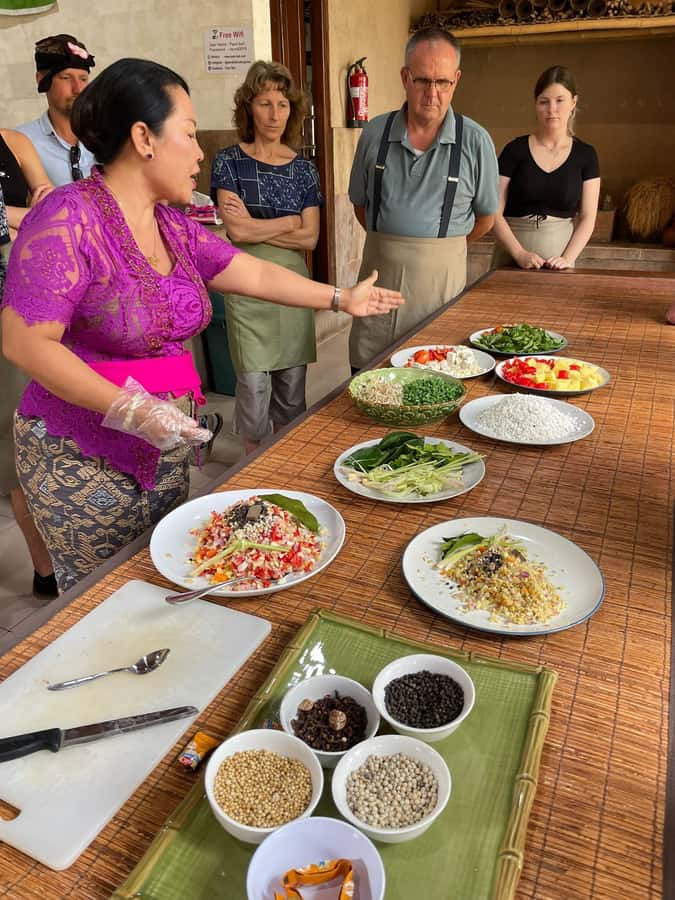
The cooking portion happens in a traditional village setting in Laplapan, where you’ll be warmly welcomed. Expect a relaxed, friendly atmosphere—staff treat it like a shared meal day, not a performance.
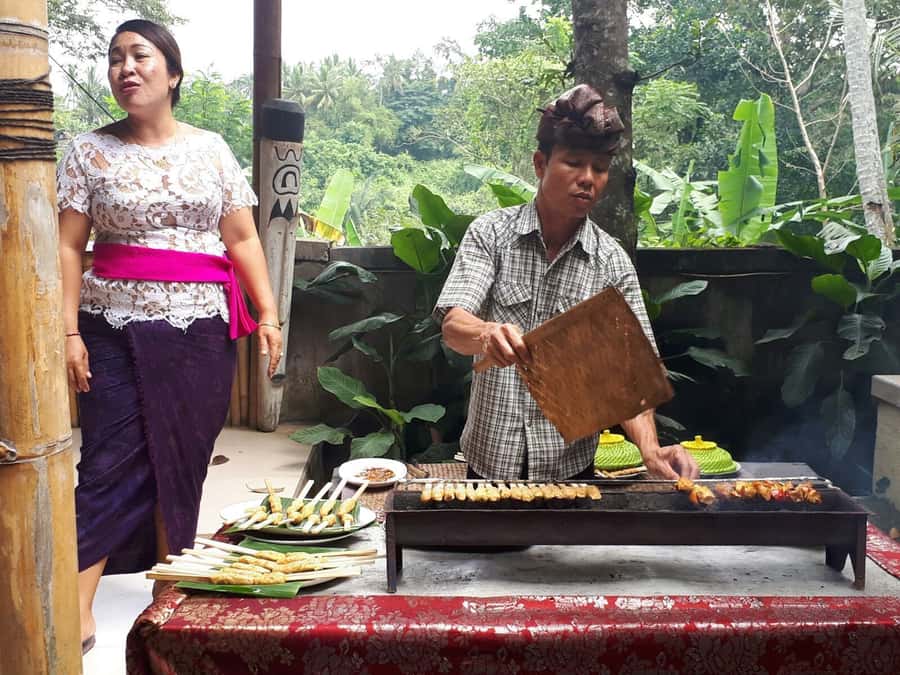
Owner Mama Pushpa (Paon Bali’s host in many reviews) comes across as the sort of person who makes the room comfortable fast. Reviews describe humor, warmth, and a steady rhythm of instruction. Even if you’ve never cooked Balinese food before, the team sets you up with clear guidance and keeps things moving.
You’ll likely see part of the family compound, and some guests mention being shown a family temple area with the chance to take photos. I’d treat it as a bonus, not a guarantee, but it fits the overall “you’re visiting a home and kitchen” vibe.






Inside the class: how you cook 7 dishes without standing still
Your hands-on class is structured around making a set menu together: 3 starters, 4 main courses, and 1 authentic dessert. With a group under 15, that means you’re not stuck watching while someone else works.
Based on the feedback, you’ll do a lot of active prep:
- chopping
- mixing
- pounding and working aromatics
- cooking at your station
- taking turns across dishes
This approach matters for your learning. If you only observe, you come home with photos. If you cook, you come home with muscle memory. The written recipes and notes you receive later help you translate that muscle memory into steps you can repeat.
Dietary options are real here, not a last-minute patch
One reason this class gets such strong reviews is that they handle substitutions when needed. Several guests mention accommodations for allergies and dietary preferences, including garlic and onion concerns, and even capsicum allergy. Another guest noted gluten-free adaptation.
So if you have a restriction, you’re not just hoping someone can guess. You should still tell the team what you need, but the evidence suggests they take it seriously and adjust recipes rather than quietly swapping ingredients without telling you.
What you’ll make: starters, mains, dessert, and the flavor logic
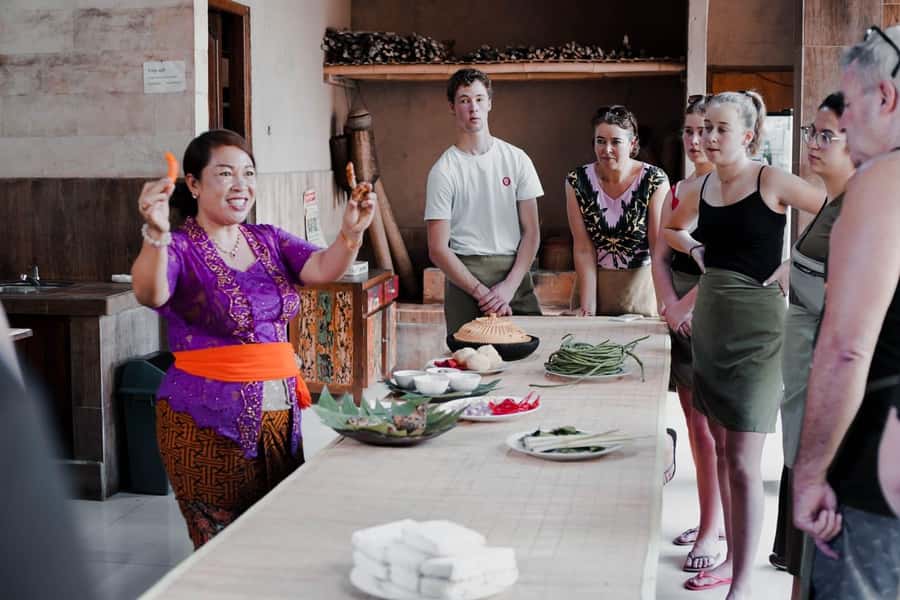
The menu includes three starters, four mains, and one dessert, and you’ll cook each one with guidance. While the exact dishes can vary by session, the process is consistent: you learn the base flavor method first—herbs, aromatics, spice handling—then apply it to multiple dishes.
Here’s what I think you’ll leave understanding:
- How Balinese cooks build flavor through fresh aromatics and spice blends.
- Why “small” steps (like pounding aromatics) change the taste and texture.
- How dishes fit together: starters aren’t just appetizers, they train your palate for the mains.
Several reviews mention that the food is not complicated in a chef-lab way. It’s practical cooking with real technique. And yes, everyone eats what they cooked, which keeps the motivation high. Nobody leaves hungry.
Lunch with what you made: tea, coffee, and a shared table
You’re not sent off afterward with a bag of disappointment. You sit down and eat the meal together. The class includes lunch, plus Balinese tea and coffee, and some reviews specifically mention welcoming drinks like ice tea.
This communal part is underrated. It turns cooking into a social experience, and you get instant feedback: if a dish tastes off, you can ask why while it’s fresh in your head.
Food is also served in a way that makes it easy to connect the “why” to the “what.” You just made it, so it’s not theoretical.
Price and value: why $35 makes sense for this setup
At $35 per person for about 210 minutes (around 4 hours), the value is stronger than you might expect—mainly because the package includes more than cooking instruction.
You get:
- hotel pickup and drop-off in Ubud
- market ingredient selection (morning class)
- rice plantation stop
- cooking lesson with all ingredients
- lunch
- Balinese tea/coffee
- recipes and notes to keep, plus a certificate
A cooking class can be cheap, but then it turns into a demo where you do very little. Here, the format is repeatedly described as hands-on with plenty of participation, and the group size stays small. That combination (active cooking + short group time + included ingredients + meal) is where the price starts to look fair.
Is it perfect for every budget traveler? No. If you’re only trying to kill time for one hour, it’s a bigger chunk of your day. But for anyone who wants a genuine cooking skill and a real meal, the math works.
Also, the team offers free cancellation up to 24 hours in advance, and there are options to reserve and pay later, which helps if your Ubud schedule is still changing.
Who should book this Laplapan cooking class from Ubud
I think this is ideal if you want:
- a real food experience, not just eating
- hands-on cooking with instruction you can repeat later
- a small group day with a friendly host
- practical recipes for Balinese home cooking
It’s also a good fit for mixed groups—reviews mention it works for different ages and that vegetarians can choose a vegetarian version of dishes.
If you’re the kind of traveler who loves markets, you’ll be happiest with the morning session. If you’re short on time and just want to cook, choose the afternoon—but accept you’ll miss the ingredient market selection.
Tips so the day feels smooth (and you cook comfortably)
A few practical tips that match the reality of the class format:
- Wear clothes you don’t mind getting splashed while cooking and chopping.
- If you’re choosing vegetarian or have allergies, tell the team clearly before the class so adjustments happen properly.
- Choose morning if you want the full arc: market → rice fields → cooking.
- Bring a light layer if you get chilled by the drive or if your schedule includes other activities.
- Don’t plan a super tight schedule right before pickup. Even though pickup is described as prompt, one note mentioned a driver arriving early and calling while someone was still on the move. Build a small buffer.
Should you book Paon Bali’s Authentic Cooking Class in Laplapan?
If you want a cooking class that feels like an actual village day, not a tourist cooking show, I’d book it. The strongest reasons are hands-on participation, a market-to-cooking flow, and the fact that you eat a complete meal made from your own work. Add in small-group limits and real recipe take-homes, and the value becomes clear.
I’d say skip it only if you’re specifically hunting for a short, low-effort activity, or if you’re traveling mainly for scenic sightseeing and don’t care about cooking. Otherwise, this is one of the most practical “learn a skill and eat well” options around Ubud.
FAQ
How long is the cooking class in Laplapan?
The experience runs for about 210 minutes, around 4 hours.
Is hotel pickup and drop-off included from Ubud?
Yes. Pickup and drop-off are included for hotels in the Ubud area. Pickup from other areas is possible as an add-on if requested.
Do I get to visit the market?
You get a fresh market tour on the morning class only.
Does the afternoon class include the market visit?
No. The afternoon class is shorter and does not include the market tour.
How big is the group?
The group is kept small, limited to 15 participants.
Can I choose vegetarian dishes?
Yes. You have a choice of meat or vegetarian dishes.
Is lunch included?
Yes. Lunch is included, along with Balinese tea and coffee.
What do I take home after the class?
Recipes and notes are provided for you to keep, and you receive a certificate.
Is there free cancellation?
Yes. You can cancel up to 24 hours in advance for a full refund.