Handmade Balinese meals meet sacred water rituals.
In Ubud, this private class puts you with Kadek and Sangayu in their family setting, then guides you through the Tirta Empul purification ritual. I love that it feels personal and hands-on, not like a quick show-and-tell cooking stop. I also like how the day mixes food with religion and everyday life, so you understand the why, not just the what.
One thing to consider: Tirta Empul has a strict temple custom—women who are menstruating may not enter or bathe—so double-check timing.
In This Review
- Key points worth your attention
- A private Balinese cooking day with purification and coffee
- Delodsema Traditional Village: cooking with a family and learning spice basics
- Tirta Empul purification ritual: sacred waters, offerings, and the key rule
- Lunch on rice terraces: learning the flow after the ritual
- Coffee plantation tour and Indonesian coffee tasting
- Price and logistics: what $30 really covers in Ubud
- Who should book this (and who should skip it)
- Should you book this Balinese cooking class?
- FAQ
- How long is the experience?
- Where does the activity start and end?
- Is pickup from Ubud available?
- What’s included in the price?
- Is Tirta Empul entrance included?
- Can I get a full refund if I cancel?
- FAQ
- Is the tour private?
- Are there any age restrictions?
- Who can’t enter the temple?
Key points worth your attention
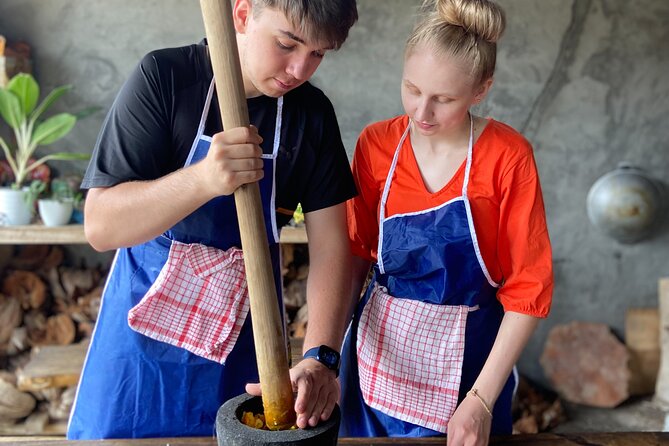
- Private, family-home cooking with hands-on prep and local serving style
- Tirta Empul purification ritual with offerings and incense guided by your host
- Lunch with rice-terrace views, plus bottled water and Balinese coffee or tea
- Coffee plantation tour and Indonesian coffee tasting after lunch
- Ubud hotel pickup may include an extra transport fee depending on your location
A private Balinese cooking day with purification and coffee
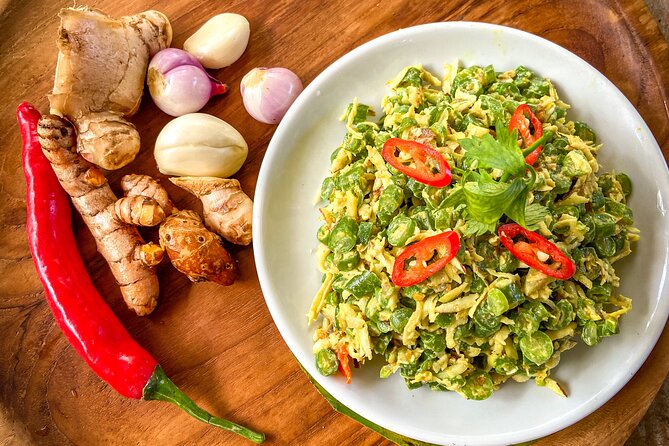
This is the kind of Bali experience that’s built on real routines: village life, kitchen skills, and temple practice. You’re not just learning recipes. You’re learning how food fits into a broader Balinese Hindu day.
The best part for me is the pacing. You cook first, then you do something very spiritual at Tirta Empul, and then you eat in a calmer setting with rice-terrace views. It’s a full day, but it doesn’t feel rushed.
At $30 per person (for a private experience), the value comes from being treated as a small group, with your hosts guiding you through both the meal and the ceremonial flow. Still, it’s not for everyone. If you’re only interested in mainstream sightseeing, the sacred-ritual piece may feel too serious or slow for your taste.
You can also read our reviews of more tours and experiences in Ubud.

Delodsema Traditional Village: cooking with a family and learning spice basics
Your day starts at Delodsema Traditional Village in the Taro/Tegallalang area (about an hour-ish drive from central Ubud, depending on traffic and where you’re staying). This village is small—around 60 families live here—so you feel like you’ve arrived somewhere people actually call home, not a theme park set.
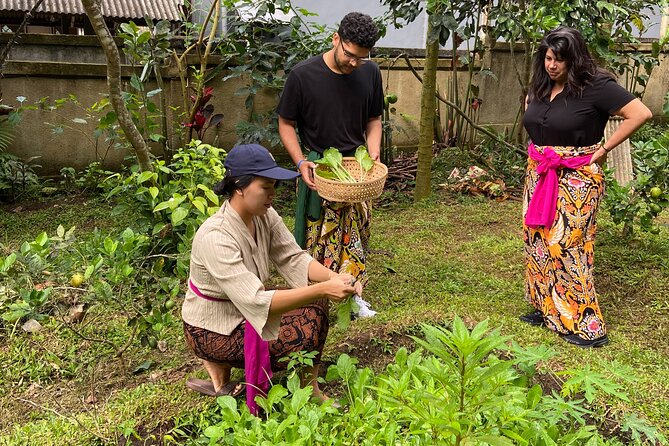
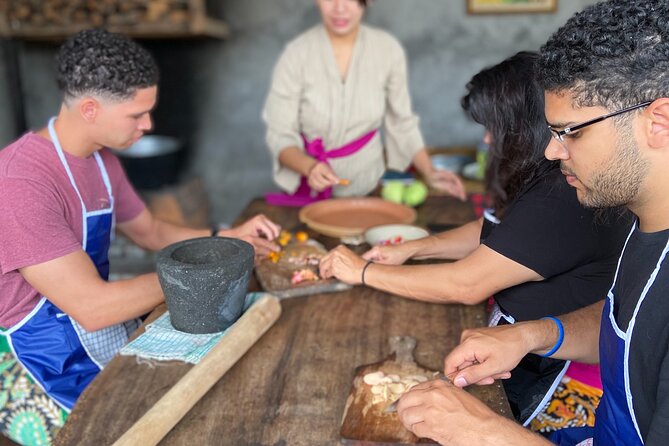
You’ll get a warm welcome drink and start meeting the ingredients before you touch the stove. Your host explains spices and traditional herbs, and you’ll handle fresh ingredients meant for your cooking. That “ingredient first” approach matters because you start to recognize flavors you’d otherwise miss.
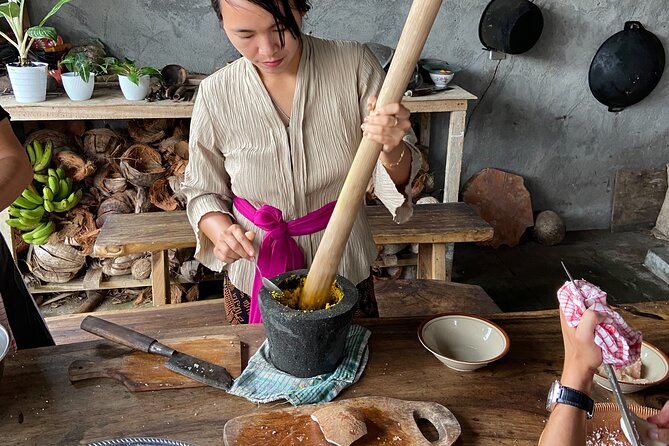
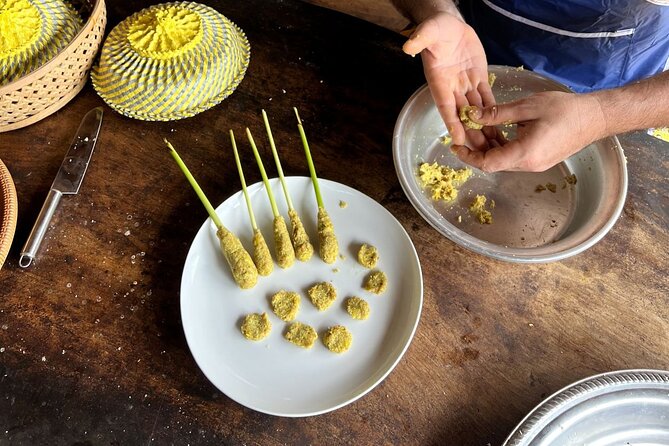
Cooking happens with your family hosts in their home setting. In fact, the class often takes place where the family and extended family live, so you’re not only learning a dish—you’re seeing how kitchens and daily life overlap. Kadek and Sangayu are the names you’ll hear guiding the experience, and they’re focused on making you comfortable while you learn.
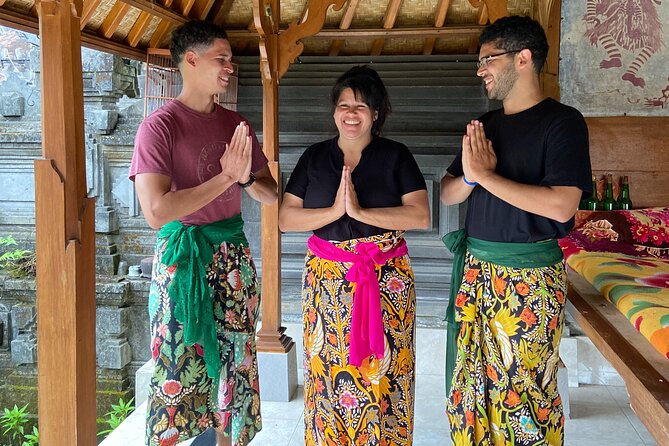
A small but important detail: you’re given a sarong as part of the included experience. Even if you think you can just wear what you brought, it’s worth being ready to follow Balinese dress expectations as they come up.
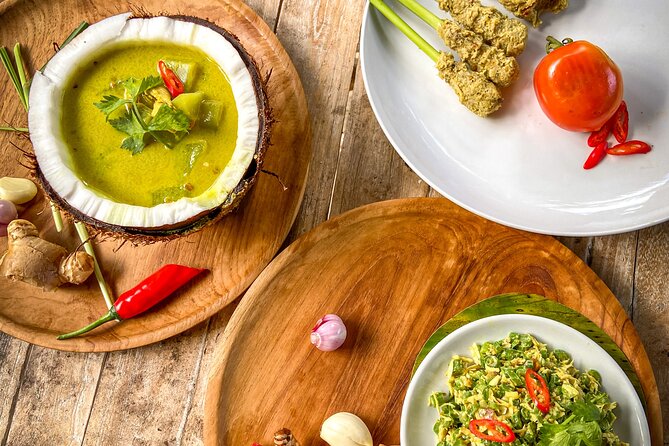
You’ll also be shown how to eat like local. Instead of a formal table setup, your meal is served in a more traditional style—dishes are set out and you eat using local habits, with guidance on what to do and how to do it. If you’ve never eaten that way, it can feel awkward for five minutes. Then it gets fun fast.
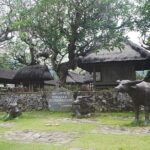
Finally, while you’re still in the village, you’ll be taken to see a temple and a house. It’s brief, but it gives context for what you’re tasting later—food is tied to daily offerings, family routines, and where people live.
Tirta Empul purification ritual: sacred waters, offerings, and the key rule
After the village cooking, the day shifts into something more ceremonial at Tirta Empul Temple. The big draw here is the private water blessing ritual, guided by your host. This is not just a quick photo stop at sacred water. You’ll gather offerings and incense, then head to the temple area with your guide.
Before you go, know one critical rule: women who are menstruating may not enter the temple and may not bathe there. If that applies to you, this is the moment to rethink the plan.
Also, check what you’re mentally packing. Tirta Empul is sacred and active. You’ll want to be respectful in posture, voice, and attention. Your guide should help you understand what to do, but you’ll still want to move calmly and follow directions.
Entrance is not included—you’ll cover that directly. That’s common for temples, but it affects your total budget. If you’re trying to keep costs tight, budget separately for the Tirta Empul entry part.
What’s likely to surprise you in a good way is how personal the ritual can feel when it’s done with your group and your guide. The host isn’t treating this like content for strangers. It feels like helping you participate correctly.
Practically, expect temple water areas to be slippery and sacred-procedures focused. Bring clothes you don’t mind getting wet or splashed. Even with a towel in your bag, you’ll want to feel comfortable moving and changing your footing.
Lunch on rice terraces: learning the flow after the ritual
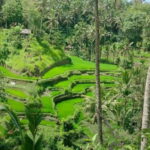
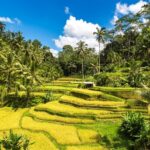
Once the purification part is done, you’ll move into the part that most people come for: Balinese lunch with rice-terrace views. This matters because the food isn’t presented like a separate attraction. It feels like part of the day that started with ingredients and moved through ceremony.
You’ll feast on a variety of dishes, and you’ll get help on how to eat like local. This is where the earlier village lesson pays off. If you learned the basic habits in Delodsema, lunch feels smoother because you’re already in the right mindset.
Included with the meal are bottled water plus Balinese coffee or tea. That’s a nice practical touch because you’re not stuck hunting for drinks while you’re still digesting temple-water nerves and village cooking smells.
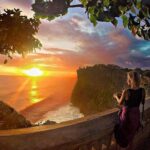
The rice-terrace view isn’t just for Instagram. It changes the pace. You’ll likely slow down here, which makes the next stop—the coffee tasting—less chaotic.
Coffee plantation tour and Indonesian coffee tasting
After lunch, you’ll visit a coffee plantation and taste Indonesian coffee. This stop works best if you like your coffee with a story attached. You don’t just get handed a cup—you get a sense of how the product reaches your table.
Because the tasting format isn’t spelled out in detail, you should expect something simple: a guided sampling and an explanation of how Indonesian coffee is used and appreciated. That’s still useful, though. Even a short tour can help you understand why certain flavors show up in local brews.
If you’re a coffee nerd, you might want to ask the guide what you’re tasting and how they recommend you drink it. If you’re not, don’t worry. The goal here is enjoyment and context, not a chemistry lecture.
One practical thought: after the water ritual and cooking, you may be thirsty or feeling a bit tired. Plan to pace your tasting so you stay comfortable for the ride back.
Price and logistics: what $30 really covers in Ubud
Let’s talk money clearly, because Bali experiences can get confusing fast.
The price is $30 per person for a private experience that runs about 2 to 3 hours (timing can shift based on where you’re picked up and how the day flows). It includes:
- Balinese sarong and welcoming snack
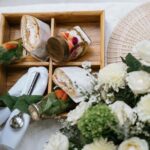
- Lunch with a variety of dishes
- Bottled water
- Balinese coffee or tea
A couple things are not included:
- Tirta Empul entrance fee (you pay at the temple)
- Transport from Ubud central area has an extra cost of IDR 350k roundtrip, if applicable to your pickup point
Pickup is described as offered from Ubud hotels, but that IDR transport fee note is the part to watch. If your hotel is outside what they consider the standard pickup zone, you may pay extra.
You’ll also get a mobile ticket, and confirmation is received at booking time. It’s set up for private groups only—your group is the only group taking part.
Two more practical notes from the rules:
- Minimum age is 18
- There’s a minimum of 2 people per booking
Finally, your start and end points are tied to the Delodsema area. Even with pickup, be ready for the day to return you to that meeting point area afterward.
Who should book this (and who should skip it)
I think this tour fits you if you want Bali that’s more than a checklist. You’ll probably enjoy it most if you care about:
- Cooking with real hosts in a family setting
- Understanding Balinese Hinduism through practice at Tirta Empul
- Having a structured day that still feels personal
It’s also a good choice if you’re tired of group classes. Private time means you can ask questions and move at a pace that doesn’t require you to keep up with six strangers.
You might want to skip it if:
- Temple rules are a deal-breaker for your group (again, the menstruation restriction is real and non-negotiable)
- You dislike religious or ceremonial experiences and prefer purely food or purely nature
- You want a long sightseeing day with major temples and lots of walking
For couples and small friend groups, this format is strong: you get personal attention, and the hosts can explain details in a way you actually remember.
Should you book this Balinese cooking class?
If you’re choosing between a generic cooking class and something with a built-in cultural backbone, this one makes the decision easy. The combination of Delodsema village cooking, the private Tirta Empul purification ritual, and then lunch with rice-terrace views plus coffee tasting gives you three different angles on everyday Bali.
The only real reason not to book is the temple rule. If it applies to anyone in your group, the experience won’t work as designed. If it doesn’t apply, and you’re open to a respectful sacred site, this is the kind of day you’ll feel in your memory because it’s not just food—it’s how the food and faith connect.
FAQ
How long is the experience?
It runs about 2 to 3 hours.
Where does the activity start and end?
It starts at Delodsema Traditional Village on Delodsema Road, Taro, Tegallalang, Gianyar Regency, Bali, and it ends back at the meeting point.
Is pickup from Ubud available?
Pickup is offered from Ubud hotels, but there may be an extra transport fee from Ubud central area of IDR 350k roundtrip.
What’s included in the price?
The experience includes a Balinese sarong, welcoming with a Balinese snack, lunch, bottled water, and Balinese coffee or tea.
Is Tirta Empul entrance included?
No. The Tirta Empul temple entrance is not included and is at your own expense.
Can I get a full refund if I cancel?
Yes. You can cancel for a full refund up to 24 hours in advance of the experience’s start time.
FAQ
Is the tour private?
Yes. It’s private, so only your group participates.
Are there any age restrictions?
Minimum age is 18.
Who can’t enter the temple?
Balinese custom does not allow women who are menstruating to enter the temple and bathe.