Coconut oil here starts in a real backyard. In this 90-minute class in Taro Village, you watch a family-style method turn grated coconut into traditional Bali coconut oil, plus you get the village setting to match.
I especially love the step-by-step guidance in English from Putu, and I love that you are not just watching oil being made. You also get a proper look around the home compound, garden, and backyard animals while enjoying coffee or tea.
One possible drawback: the process takes time, so plan on standing around for part of it (and it can be warm outdoors), and you’ll want easy transport to reach Delodsema Taro Village.
In This Review
- Key highlights you will actually care about
- Entering Delodsema Taro Village for a coconut-oil lesson with a view
- The welcome at the house: coffee, tea, and the calm pace of village life
- How the coconut oil is made: what happens during the waiting, too
- The garden walk isn’t a side quest; it’s part of the lesson
- What is included: what your money buys beyond the oil
- Price and timing: getting the most from a 90-minute stop
- Who this class suits best (and who might want something else)
- Practical tips so you enjoy it more on the day
- Should you book the Ubud coconut oil class?
- FAQ
- FAQ
- Where is the coconut oil class located?
- How long is the experience?
- How much does it cost?
- Is the class taught in English?
- Is pickup available from Ubud hotels?
- What’s included in the class besides making coconut oil?
- Do I take coconut oil home after the class?
- Is there free cancellation and flexible payment?
Key highlights you will actually care about
- Family-run Taro Village home: You start with a countryside feel and then go straight to the household where the oil is made.
- English instruction with Putu: Clear, calm teaching that keeps you on track through each step.
- You learn the real traditional workflow: Grated coconut, cooking stages, and the waiting period make the process feel authentic.
- Backyard animals and garden time: You’ll see roosters, chickens, and even a pig as part of daily village life.
- Included drinks and snacks: Balinese coffee or tea (plus traditional cake or cookies) keeps the session comfortable while you wait.
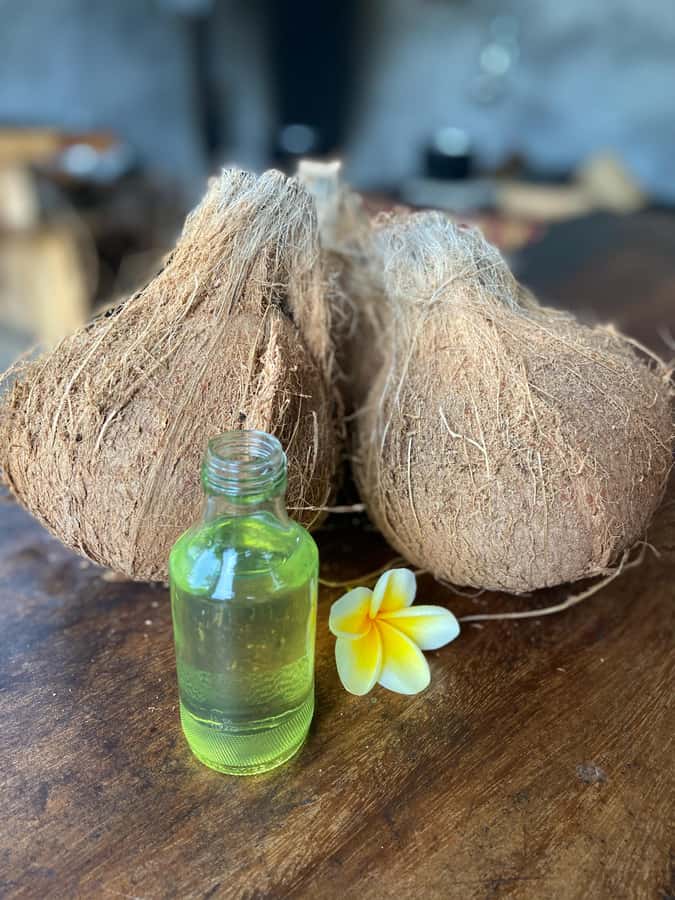
- Take-home souvenir oil: You leave with your own coconut oil from the session.
Entering Delodsema Taro Village for a coconut-oil lesson with a view
If you only think of Bali coconut oil as a jar in a shop, this class changes that fast. The experience is based in Delodsema Taro Village, north of Ubud, where you start with a real sense of place instead of being dropped into a showroom.
Before you reach the home where the oil is made, you explore local life and take in a rice terrace view. That matters because it sets expectations: this is not a rushed demonstration. It’s a village routine—one the hosts say has been passed down through their family line and used during travel.
You can also read our reviews of more tours and experiences in Gianyar.


The welcome at the house: coffee, tea, and the calm pace of village life
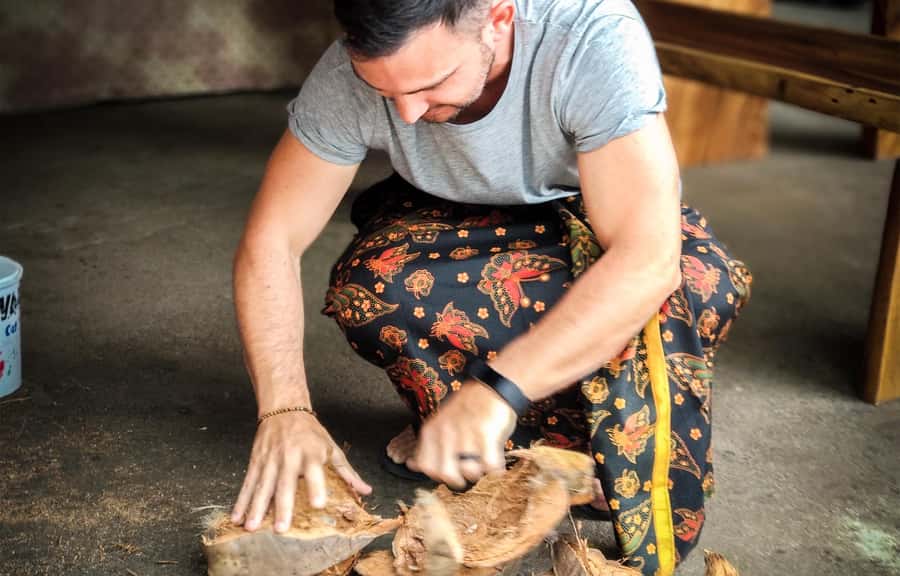
After the village walk, you head to the home base to make the Bali Original Coconut Oil. The included welcome is simple and friendly: a towel and sarong are provided, and you get coffee or tea or mineral water along with traditional cake or cookies.
The tone is what people remember most: warm hosting, relaxed conversation, and clear explanations. In particular, one English-speaking instructor, Putu, is mentioned as especially gentle and thorough—so if you worry about language barriers or unclear steps, you are in good hands.
The best part is that the setting feels lived-in. You are not just in a cooking space. You’re in a household garden with pets and fruit around you, including roosters and chickens, and even a pig in the backyard area. That background makes the oil-making feel connected to food and daily life instead of a single-purpose activity.
How the coconut oil is made: what happens during the waiting, too

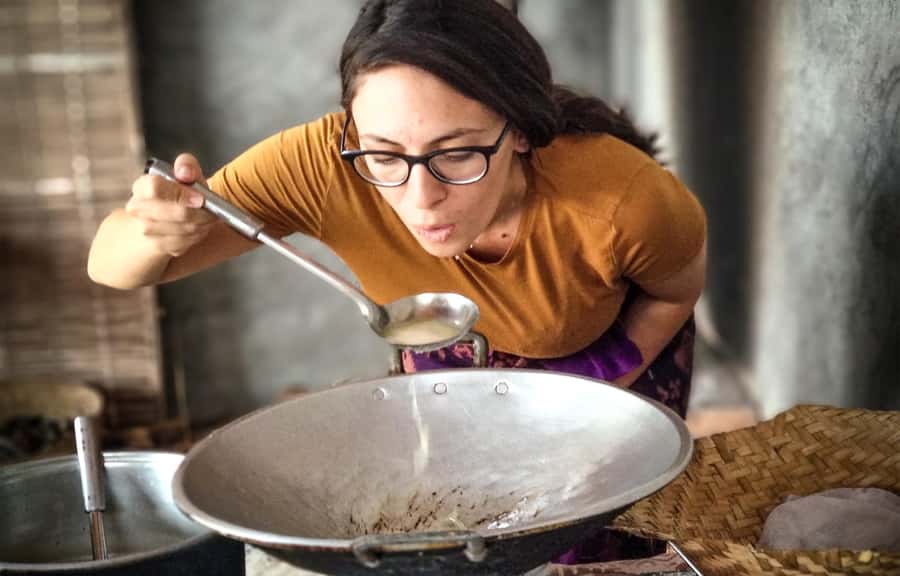
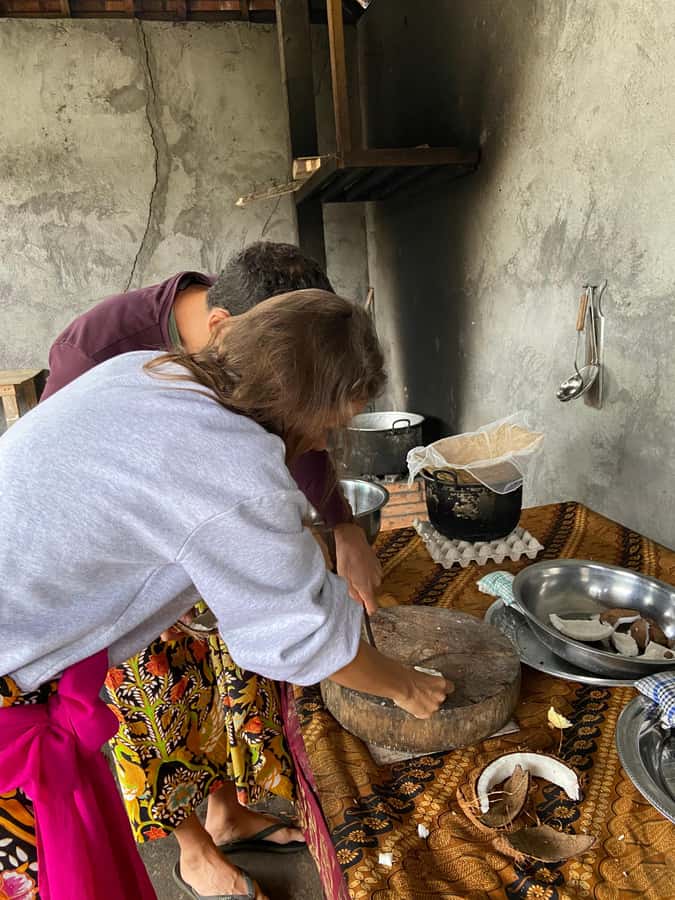
The class goal is straightforward: make 100% real coconut oil using a traditional method rather than an industrial process. What you’ll learn is the sequence behind the oil—how grated coconut becomes oil through the cooking stages, and why the traditional method takes longer than you might expect.
The session is listed as 90 minutes, but the traditional process takes more than 1 to 1.5 hours to complete. In other words, you should expect some time where you are watching, learning, and waiting while the coconut cooks and separates.
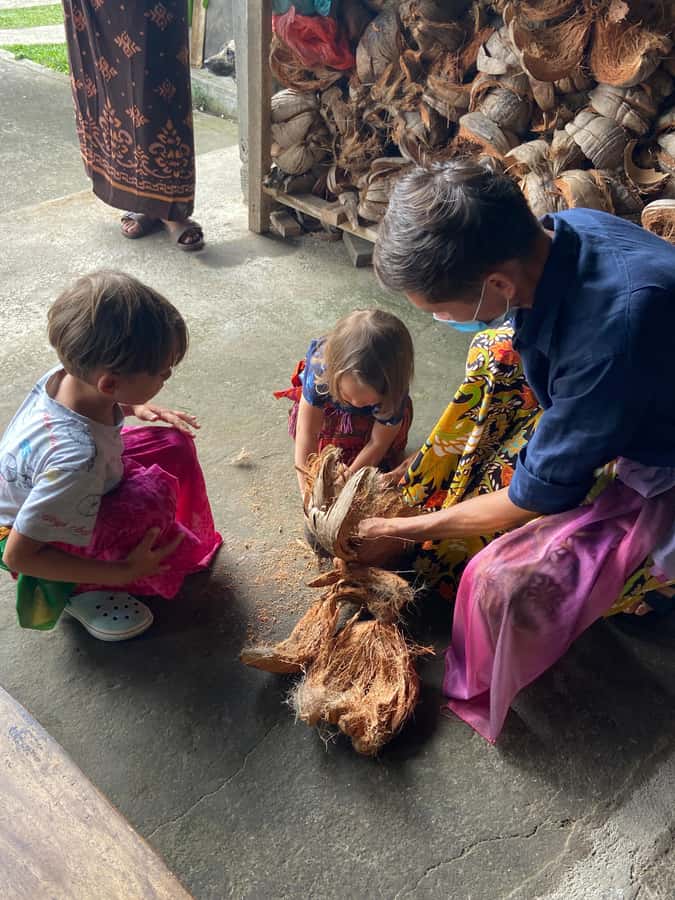
Here is where the experience stays interesting. While you wait for the oil to finish, you use the coconut grated for feeding the rosters (roosters) and pig in the backyard. That detail is small, but it’s the kind of practical rhythm that makes the experience feel honest. Nothing gets treated like waste. It’s food for animals, just like you’d expect in a working home compound.
You also slow down with fresh herbal tea during the waiting period. That is one of the smartest inclusions here: it makes the longer process feel relaxed instead of dragging, especially on a warm day.
The garden walk isn’t a side quest; it’s part of the lesson
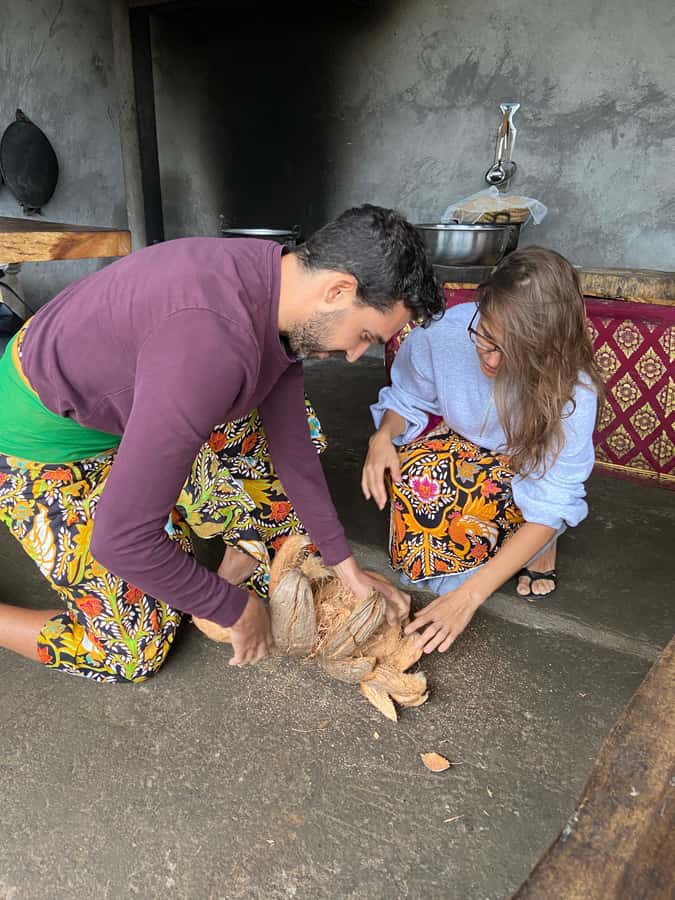
One thing people consistently appreciate is the garden time. You get shown the garden and learn how the family grows and uses things around the house, not just the coconut plants used for oil.
There is also a tasting component built in. You might have the chance to try fruits from the garden, and some people mention getting extra fruit as a gift at the end of the visit. You should treat that as a bonus rather than a guarantee, but it fits the overall feel: a family home that shares what it has.
Why this matters for you: if you come to Bali for culture and food experiences (not only for crafts), this class gives you both. You learn why coconut oil is part of local life and you see what else the household is producing and enjoying.
What is included: what your money buys beyond the oil
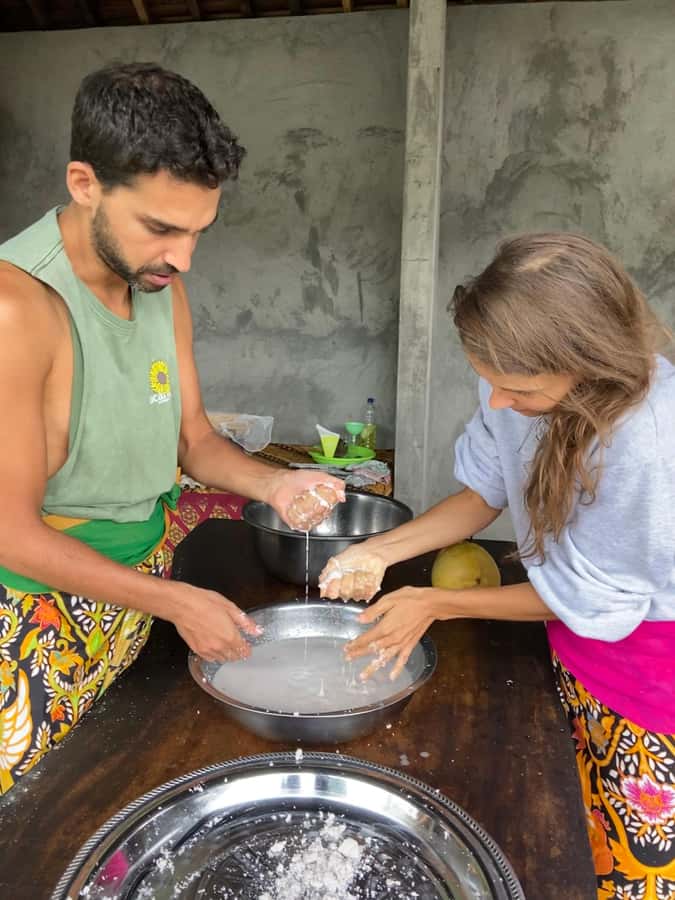
At $21 per person, the value is not only in the takeaway jar. It’s in the whole package: village exploring time, a household visit, drinks, snacks, and the tools that help you participate comfortably.
What you get included:
- Explorer-style time through Balinese countryside and the traditional village setting
- Access to the house, garden, and pets (roosters, chicken, and pig)
- Balinese coffee or tea or mineral bottle water
- Towels and sarong
- Traditional cake or cookies
- Coconut oil to take home as a souvenir
For many visitors, that combination is the real win. You are paying for a guided slice of daily life, not just the finished product. And because it’s small group friendly, it tends to feel more personal than the big, bus-based activities.





Price and timing: getting the most from a 90-minute stop
Ninety minutes can sound short until you realize the oil-making itself takes a long stretch. The schedule works because it balances active time (learning and watching key steps) with calmer parts (herbal tea and garden time).
Here is how I’d plan it:
- Put it earlier in the day if you want the walk and garden portion when you feel freshest.
- Pair it with lighter activities afterward, since you’ll be warm and outdoors for part of the experience.
- If you’re doing a Ubud sightseeing day, consider that this is north of Ubud, so factoring transport time helps your stress level.
Pickup is optional from your hotel in the Ubud area. If you are staying outside the pickup zone, your best bet is to use the meeting point reference: you can find the class on the map as Traditional Bali Coconut Oil, about 2 minutes south of Meson Elephant Park Taro. That short direction note is handy when you’re relying on a driver.
Free cancellation up to 24 hours in advance and reserve-now pay-later options make it easier to fit into a flexible itinerary.
Who this class suits best (and who might want something else)
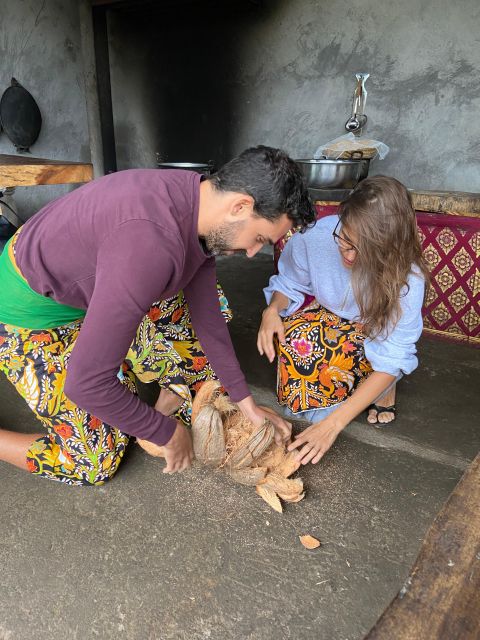
This experience fits especially well if you:
- Want something hands-on that still feels relaxed
- Like small-group activities and personal interaction
- Are interested in how everyday village processes work, not just end results
- Prefer a home-based setting over factory-style presentations
It also works nicely for couples. Some bookings are just two people at the location, and the welcoming tone seems designed for that kind of intimate setup.
You might want to choose something different if you dislike waiting around for 1 to 1.5 hours during the cooking process. Even with tea and garden time, it is still a slower activity than a typical “make a craft in 30 minutes” stop.
Practical tips so you enjoy it more on the day
A few things will help you have a smooth visit:
- Bring comfortable clothes for a warm, outdoor village setting. You’ll also have towel and sarong provided, which is great if you want to stay flexible.
- Be ready for sensory smells. Coconut oil has a strong, fragrant aroma, and the process is focused on releasing those scents.
- Ask questions as you go. Putu’s explanations are described as step-by-step, so if something clicks for you, ask right there.
- Plan for the takeaway. You’ll end with your own coconut oil souvenir, so think about how you’ll transport it back to your hotel without spills.
Should you book the Ubud coconut oil class?
I’d book it if you want a genuine village home experience and you care about the process, not just the product. At $21, it’s strong value because you get village exploration, garden time with fruits, drinks and snacks, animal-viewing context, and a take-home oil—wrapped into a small-group format.
Skip it if you are mainly chasing a fast, high-energy activity or you hate waiting. The oil-making takes real time, and the class is built around that rhythm.
If you’re in Ubud and you want one day to feel more local than planned, this is a solid choice.
FAQ
FAQ
Where is the coconut oil class located?
It’s held at Delodsema Taro Village, which is north of Ubud. You can find it on the map as Traditional Bali Coconut Oil, about 2 minutes south from Meson Elephant Park Taro.
How long is the experience?
The class is listed as 90 minutes. The traditional oil process itself takes more than 1 to 1.5 hours.
How much does it cost?
The price is $21 per person.
Is the class taught in English?
Yes. The instructor speaks English.
Is pickup available from Ubud hotels?
Pickup is optional in the Ubud area.
What’s included in the class besides making coconut oil?
You get an explorer-style look at the traditional village, plus coffee or tea or mineral water, towels and sarong, traditional cake or cookies, and the coconut oil to take home.
Do I take coconut oil home after the class?
Yes. You bring home coconut oil as a souvenir after the session ends.
Is there free cancellation and flexible payment?
Yes. You can cancel up to 24 hours in advance for a full refund, and you can reserve now and pay later.