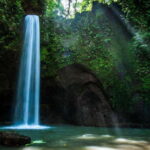
Three fountains, one quiet reset. At Ubud’s purification stop at Petirtan Ki Pasung Grigis, a revered shaman guides you through three sacred fountains and the Hindu idea of Bhur, Bwah, Swah. One important catch: women who are in their menstruation period are not allowed to do the purification.
I also like the calm, practical setup. You get the sarung & selendang to wear during the ritual, plus the required temple offerings (pejati & canang sari), so you’re not scrambling at the last second.
In This Review
- Quick hits before you go
- Petirtan Ki Pasung Grigis in Ubud: the quiet start that sets the tone
- Meet the shaman and the Jero Mangku team: how the ritual gets explained
- The three fountains (left, center, right): what each cleansing is really for
- Bhur, Bwah, Swah in plain terms: body, mind, spirit
- Natural setting at a temple between prajapati shrines
- What’s included (and what that saves you)
- Price and value check: why $12 can make sense
- Timing: 90 minutes to 6 hours, and how to plan around it
- What to wear, bring, and avoid during purification
- The vibe: respectful, focused, and quietly powerful
- Who this is for—and who should choose differently
- Location and meeting point: Petirtan Ki Pasung Grigis
- Should you book the Ubud healing & purification with shaman?
- FAQ
- How long is the purification experience?
- How much does it cost?
- Where do I meet for the activity?
- Is pickup and drop-off included?
- Is the experience offered in English?
- What is included in the price?
- What should I bring?
- Are there rules about menstruation?
- Do I have to wear a sarong and scarf?
- Is there a free cancellation option?
Quick hits before you go
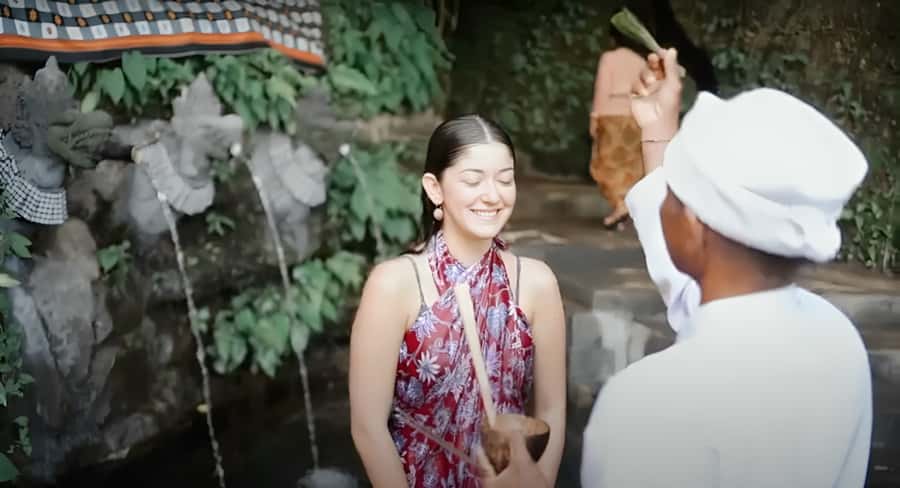
- Three fountain stops (left, center, right) for a step-by-step cleansing approach
- Balinese Hindu priest Jero Mangku handles the purification part of the ritual
- English support so you can actually understand what’s happening
- Bhur, Bwah, Swah explained through the experience, not just named
- Sarung & selendang included, plus donations to the temple
Petirtan Ki Pasung Grigis in Ubud: the quiet start that sets the tone
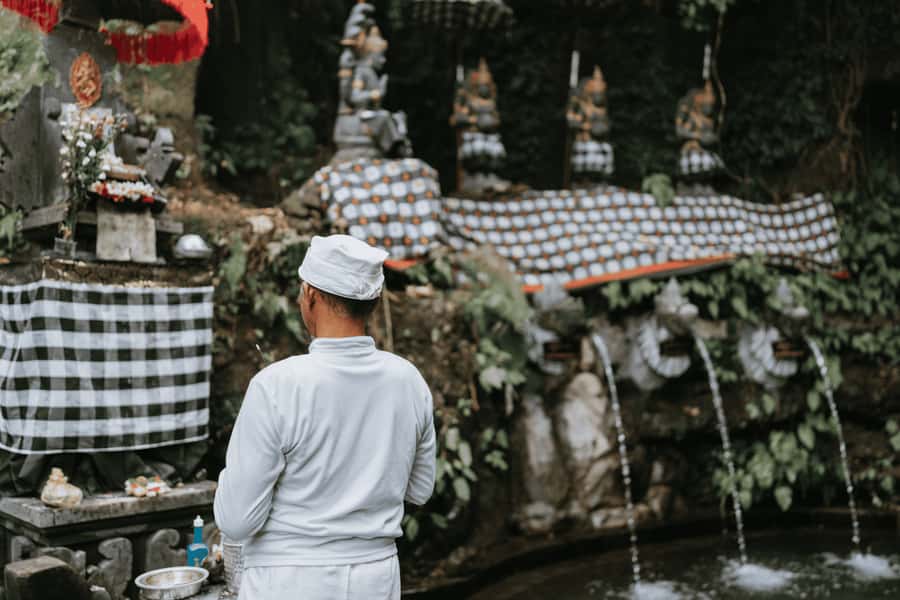
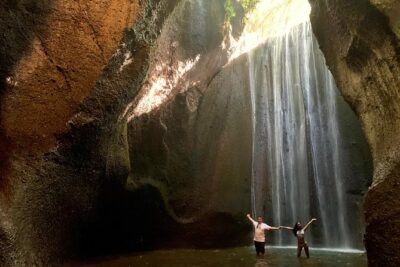
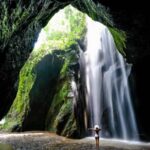
Your experience begins at Petirtan Ki Pasung Grigis, a spiritual site in the Kemenuh area (Sukawati, Gianyar, Bali). It sits between two prajapati temples and looks out over a lush village cliff, which matters because you feel the setting right away. The sound of the river and the wind moving through rice fields and swamps puts you in a different mental gear within minutes.
This isn’t a loud, showy place. It’s more about attention and calm. If you’ve been bouncing between temples all day, this kind of stillness can feel like a reset button.
You can also read our reviews of more tours and experiences in Gianyar.


Meet the shaman and the Jero Mangku team: how the ritual gets explained
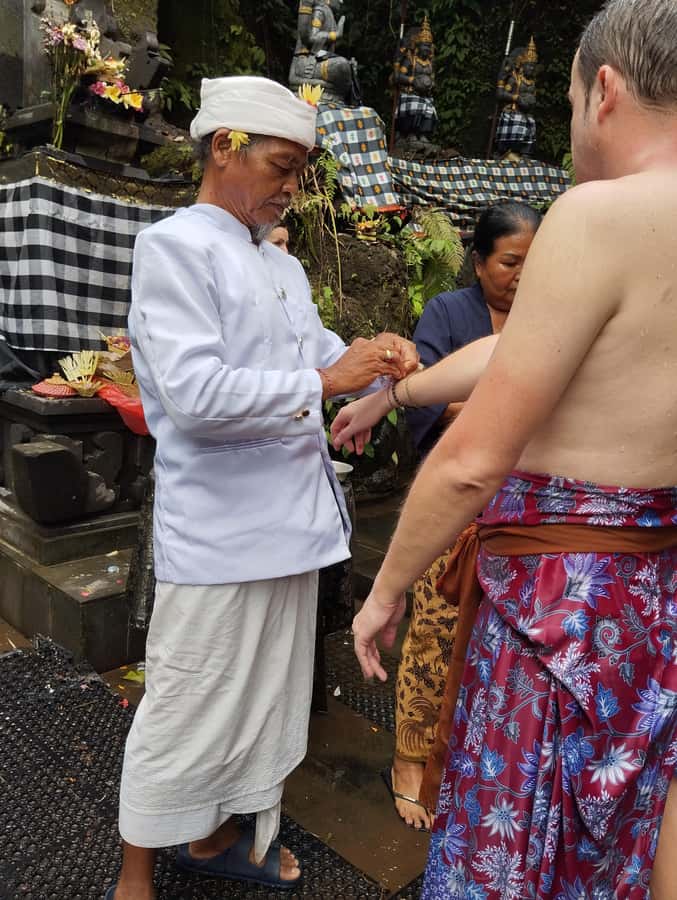
You arrive, you settle in, and then the shaman leads you through what you’ll do and why. The key value here is understanding the steps as you go. The ritual isn’t just splash water and hope for the best. You get guided spiritual insights and a clear explanation of the purification process.
There’s also an English-speaking assistant to help translate and keep things understandable. That helps a lot if you’re not familiar with Balinese Hindu practice. You’re less likely to feel lost or awkward, because someone can answer practical questions as the ritual unfolds.
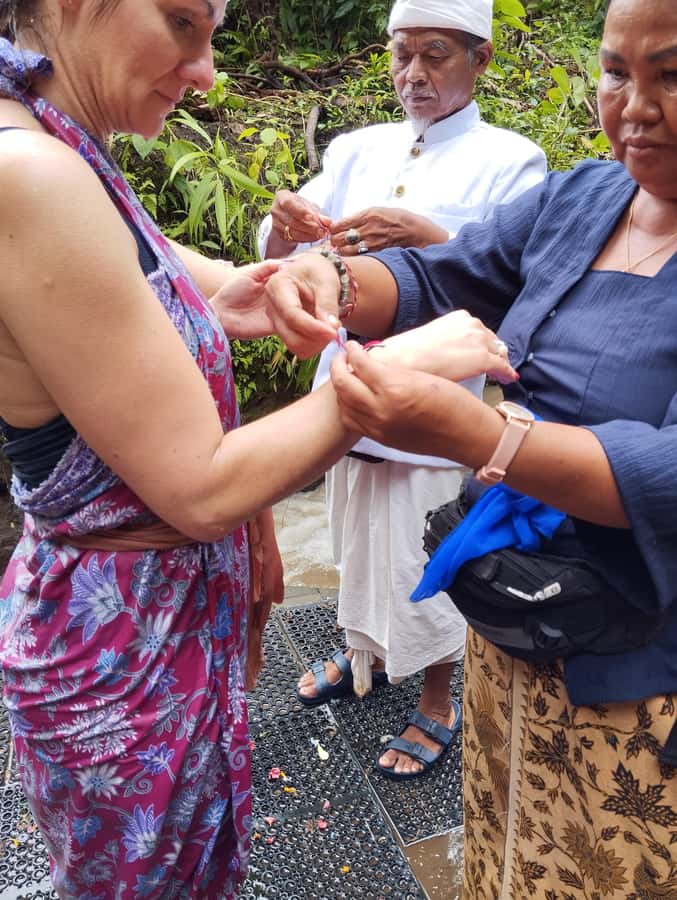
On the purification side, the Balinese Hindu priest Jero Mangku performs the purifications. So you’re getting spiritual guidance from the shaman, plus the proper religious execution from a priest. That combination is part of the authenticity you’re paying for.
The three fountains (left, center, right): what each cleansing is really for
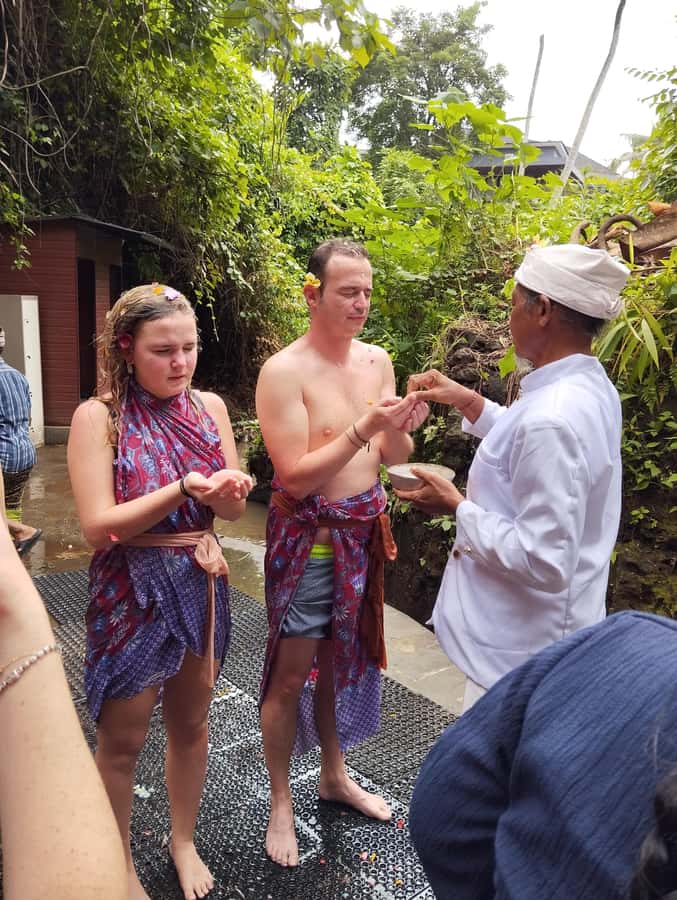
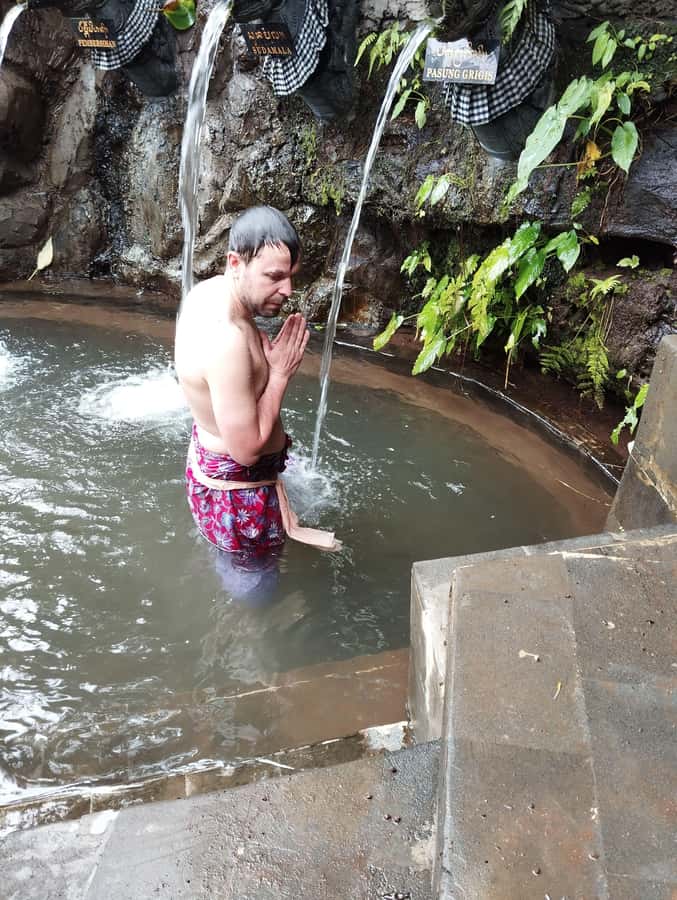
A big part of this experience is visiting three sacred fountains—the left, the center, and the right. Each one is treated as a distinct cleansing experience. In practice, that means you don’t just do one quick dip and move on. You’re guided through a sequence, with attention focused on what you’re feeling and what the ritual is meant to clear.
As you take in the holy water, the experience frames purification across physical, mental, and spiritual realms. That’s not just poetic language. It nudges you to treat the ritual as more than body-only washing. You’re encouraged to bring your mind along for the process.
What I’d suggest: go in with a simple intention you can keep repeating quietly in your head. Something like releasing stress, clearing mental clutter, or resetting your focus. The ritual becomes easier to follow when you’re working with one steady goal.
Bhur, Bwah, Swah in plain terms: body, mind, spirit
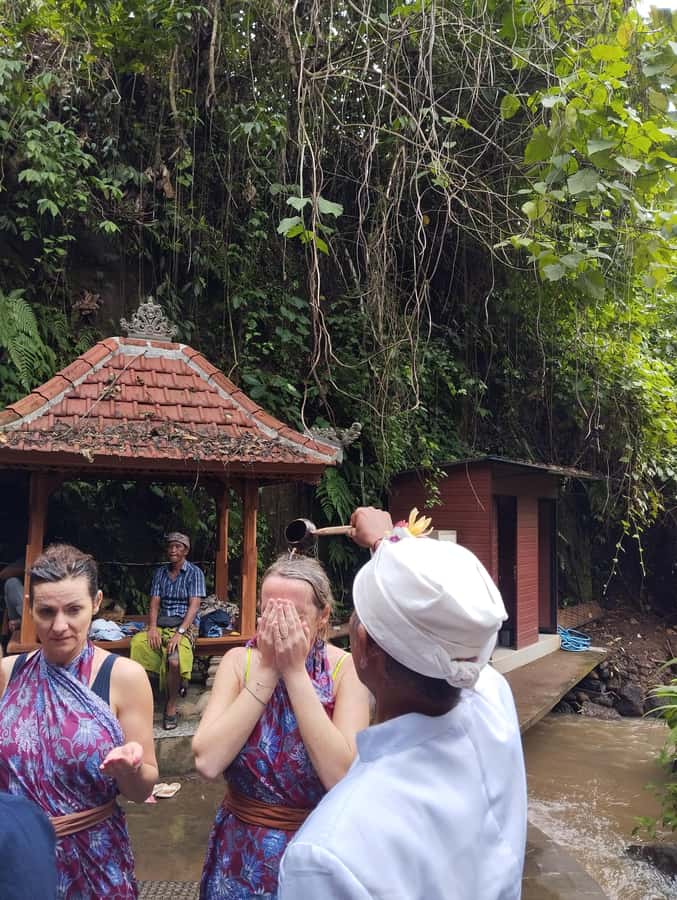
The ritual connects to the Hindu concept of Bhur, Bwah, Swah, which describes layered reality: the physical realm, the mental realm, and the spiritual realm. You don’t have to memorize Sanskrit to benefit. The value is how the concept gives meaning to each part of the purification.
Think of it like this:
- Bhur: what you experience in your body
- Bwah: what you carry in your thoughts and feelings
- Swah: what you’re trying to connect to beyond everyday stress
When the shaman explains steps and you’re standing in a calm temple area with water guided by religious practice, the concept stops being abstract. It becomes a structure you can use while you’re doing the cleansing.
If you like spiritual practices that have a clear framework, this is your kind of experience.
Natural setting at a temple between prajapati shrines
Location isn’t just scenery here. Petirtan Ki Pasung Grigis feels like it was chosen for quiet focus. You’re between temples, and the view over the village cliff helps you feel separated from the usual traffic-and-chaos rhythm of Bali.
The sounds—river, wind, and nature moving through rice fields—help you stay present. That’s not a small detail. In a purification ritual, distraction can make it harder to feel what the ritual is doing. This setting supports the “slow down” mindset.
Also, if you’re someone who finds meditation easier outdoors, this format may work better than a purely indoor session.



What’s included (and what that saves you)
This is one of those activities where most of the “guesswork” is handled for you. The listed inclusions cover the religious essentials, plus translation and basic comfort.
You’re provided with:
- Donations to the temple
- Cloth & scarf: sarung and selendang
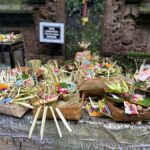
- Offerings: pejati and canang sari
- Purifications by Balinese Hindu priest (Jero Mangku)
- Local English-speaking assistant
- Pick-up and drop-off if you select that option
That’s strong value for the price point, because these are exactly the items that can trip you up when you’re on your own. Even if you’re curious and respectful, you still might not know what to bring or how to prepare. Here, the essentials are built in.
One more practical note: it also says the experience includes skipping the ticket line. That doesn’t sound like much, but in Bali heat and temple scheduling, time adds up fast.
Price and value check: why $12 can make sense
At $12 per person, the cost is low compared to how much “setup” you’re getting. You’re not just paying for an entry fee. You’re getting religious offerings, priest-led purification, and a guided spiritual explanation with English support.
The value comes from the combination:
- temple contribution already covered
- required ritual items provided
- purification led by a priest
- communication support in English
- optional transport included if you pick it
So the question isn’t only is it cheap. It’s whether you’re getting the whole experience without extra on-the-spot spending. Based on what’s included, you likely will.
The trade-off is you have less control over the pace. The duration is listed as 90 minutes to 6 hours, and that range usually depends on what’s scheduled and how the ritual timing works on-site. If your day is tight, you’ll want buffer time.
Timing: 90 minutes to 6 hours, and how to plan around it
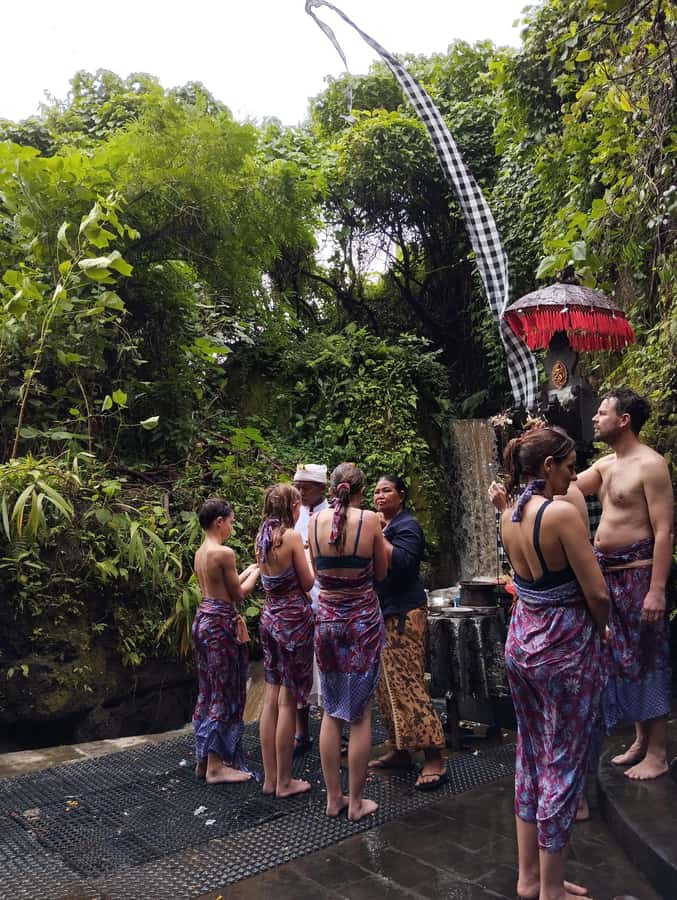
The duration is listed from 90 minutes to 6 hours. That’s a wide spread, so plan like a grown-up and don’t schedule something critical right after.
Here’s how to handle it:
- Keep your next appointment flexible
- Plan for a slow return to your hotel
- Bring a plan for hydration and snacks outside the ritual time if you need them (though this specific item isn’t listed, you might find it useful to think ahead)
Because this is a purification ritual, the experience is meant to be slow and respectful. Even if you’re tempted to rush, the setting and the steps are designed for a measured pace.
What to wear, bring, and avoid during purification
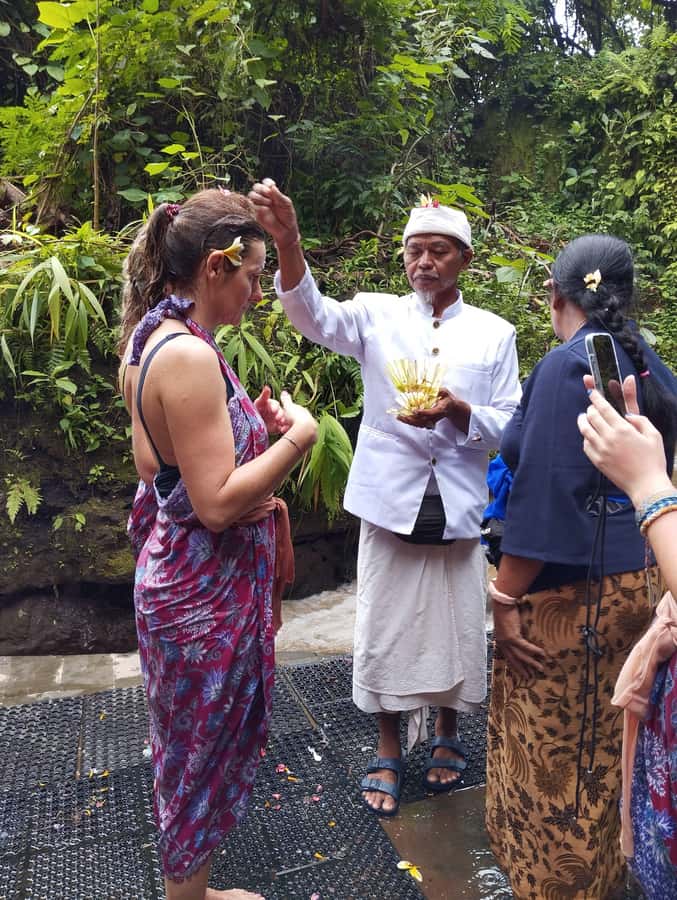
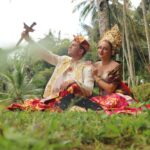
You’ll need to wear a Balinese sarong and scarf during the purifications. The good part: the sarung & selendang are included. You won’t be searching for a last-minute rental right before entering the ritual space.
What to bring is simple: change of clothes. That matters because you’ll be working with holy water during cleansing.
What not to bring:
- Weapons or sharp objects
- Alcohol and drugs
Also, the menstruation restriction is clearly stated: women in that period are not allowed to do the purification. If this applies to you, you’ll need to skip this activity and choose another way to experience Balinese spirituality that fits the rules.
The vibe: respectful, focused, and quietly powerful
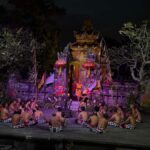
This is a spiritual practice, so it has the tone you’d expect: quiet, focused, and serious about the process. The overall feel is that you’re meant to be mentally present, not sightseeing your way through it.
One thing that stands out in the experience details is the emphasis on guidance and welcome. You’re not just left alone with ritual steps. The shaman and guide are there to explain, and the English support keeps you from missing the meaning.
If you’re the type who worries about getting it wrong, that support matters. It turns an unfamiliar tradition into something you can participate in with respect.
Who this is for—and who should choose differently
This fits best if you:
- want a guided purification ritual, not just a temple visit
- like practices that explain the spiritual logic behind the steps
- prefer quieter experiences with nature sounds and fewer crowds
- are comfortable with Balinese Hindu religious context
You may want to skip (or choose something else) if:
- you’re menstruating during your planned visit
- you’re strongly uncomfortable with water-based cleansing
- you only want a quick photo stop and zero ceremony
This isn’t a casual activity. But if you want a calm, structured ritual in Ubud, it delivers.
Location and meeting point: Petirtan Ki Pasung Grigis
The meeting point is Petirtan Ki Pasung Grigis, Jl. Ir Soetami, Br Tengkulak Mas, Kemenuh, Sukawati, Gianyar, Bali. If you didn’t select pick-up, you’ll need to get there yourself.
If you did select pick-up, it’s described as being optional at your lobby hotel. That’s useful if you’re juggling traffic, heat, and time windows in Bali.
Should you book the Ubud healing & purification with shaman?
I think you should book if you’re aiming for a real spiritual reset in a calm setting, and you want the structure of guided meaning. The combination of shaman-led explanation, priest-led purification by Jero Mangku, and included offerings and ritual clothing makes this feel like a thoughtfully run experience rather than a ticketed performance.
Skip it if you don’t want a religious process, if the menstruation restriction affects your timing, or if you can’t give it a flexible schedule. The 90 minutes to 6 hours window means you’ll need breathing room.
If you’re ready to slow down, follow the steps, and treat it as more than a photo opportunity, this is a strong value way to experience purification traditions in Bali.
FAQ
How long is the purification experience?
The duration is listed as 90 minutes to 6 hours. Check available starting times to see the length for your slot.
How much does it cost?
It’s priced at $12 per person.
Where do I meet for the activity?
You meet at Petirtan Ki Pasung Grigis, Jl. Ir Soetami, Br Tengkulak Mas Kemenuh Sukawati Gianyar Bali.
Is pickup and drop-off included?
Pickup and drop-off are available if you select the option. If not, you’ll meet at the provided meeting point.
Is the experience offered in English?
Yes. The activity includes a local English-speaking assistant, and the instructor is listed as English.
What is included in the price?
Included items are donations to the temple, sarung and selendang (cloth and scarf), offerings (pejati and canang sari), purification led by Balinese Hindu priest Jero Mangku, a local English-speaking assistant, and optional pick-up/drop-off.
What should I bring?
You should bring a change of clothes.
Are there rules about menstruation?
Yes. Women who are during their menstruation period are not allowed to do purification.
Do I have to wear a sarong and scarf?
Yes. During the purification, you are required to wear a Balinese sarong and scarf. Cloth and scarf are included.
Is there a free cancellation option?
Yes. You can cancel up to 24 hours in advance for a full refund.