Handmade silver in Bali still feels personal. In a private 3-hour class, I love that you learn real traditional silver techniques from the people keeping them alive, and you end up with your own earrings, ring, or pendant. One thing to consider: with only 3 hours, it’s best to plan for a design that you can finish with guidance rather than an ultra-detailed custom concept.
This experience takes place in a local home village setting, which changes the vibe fast. You get snacks and mineral water, plus hands-on teaching on core methods like sawing, stamping, hammering, soldering, and polishing, with tips to help your piece come out clean and wearable.
In This Review
- Key Highlights You’ll Care About
- Bali’s Silverwork: Why This Class Feels Different
- The Home Village Setting With Hana’s Family
- What You Learn: From Metal Basics to Real Hand Skills
- Making Your Own Earrings, Ring, or Pendant
- Timing and Transportation: How the Day Stays Manageable
- Price and What You’re Really Buying at $58
- Who This Class Suits Best
- Should You Book This Private Silver Jewelry Class?
- FAQ
- How long is the private silver jewelry making class in Bali?
- What can I make during the class?
- Is the class taught in English?
- What’s included in the $58 price?
- Is the class wheelchair accessible?
- What are the cancellation terms and payment options?
Key Highlights You’ll Care About
- Hana and her family guide the class in a home village, not a showroom.
- You learn five core techniques: sawing, stamping, hammering, soldering, and polishing.
- Pick what you make: earrings, a ring, or a pendant.
- 7 grams of silver is included, so your material cost is covered.
- Private transportation means less logistics stress and more time on the craft.
Bali’s Silverwork: Why This Class Feels Different
Bali is one of the last places where you can still find silver jewelry made the old way, by hand. That matters because most “handmade” products you see elsewhere are really machine-assisted or assembled from parts. Here, the focus is on skill: how the metal is shaped, joined, and finished.
The class is also a good fit if you care about craft, not just souvenirs. You’re not only watching. You’re doing. And because you’re making something personal—something you can wear—you pay attention in a way that’s hard to fake.
What I liked most is that the teaching connects the technique to the process. You learn what silver jewelry making involves and how it developed, not just how to copy one design. That gives you a better sense of why the steps exist.
You can also read our reviews of more tours and experiences in Ubud.



The Home Village Setting With Hana’s Family
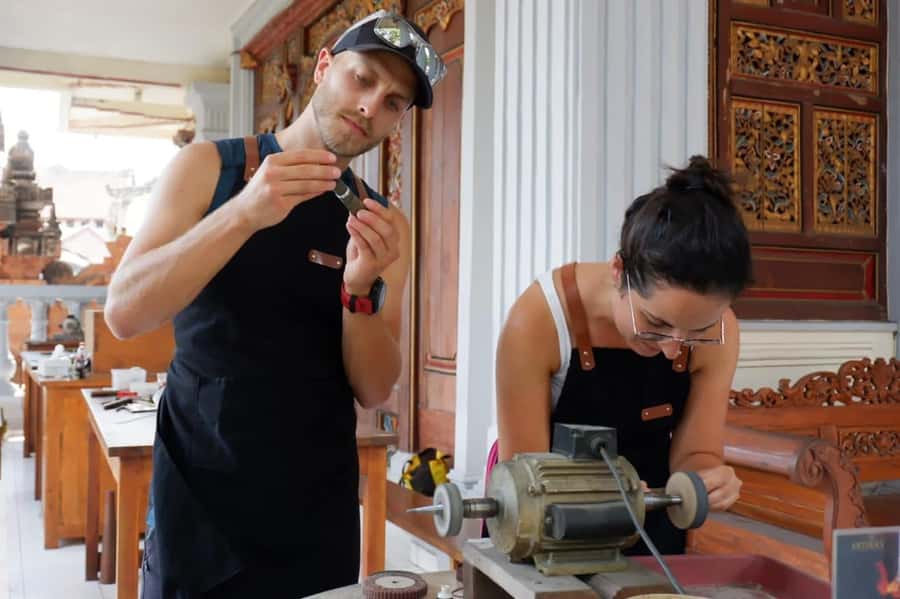
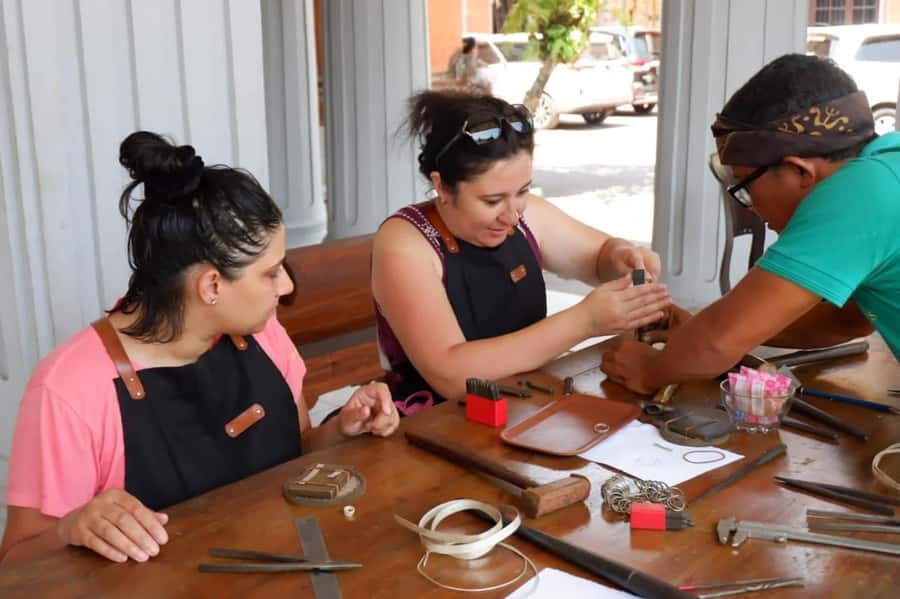
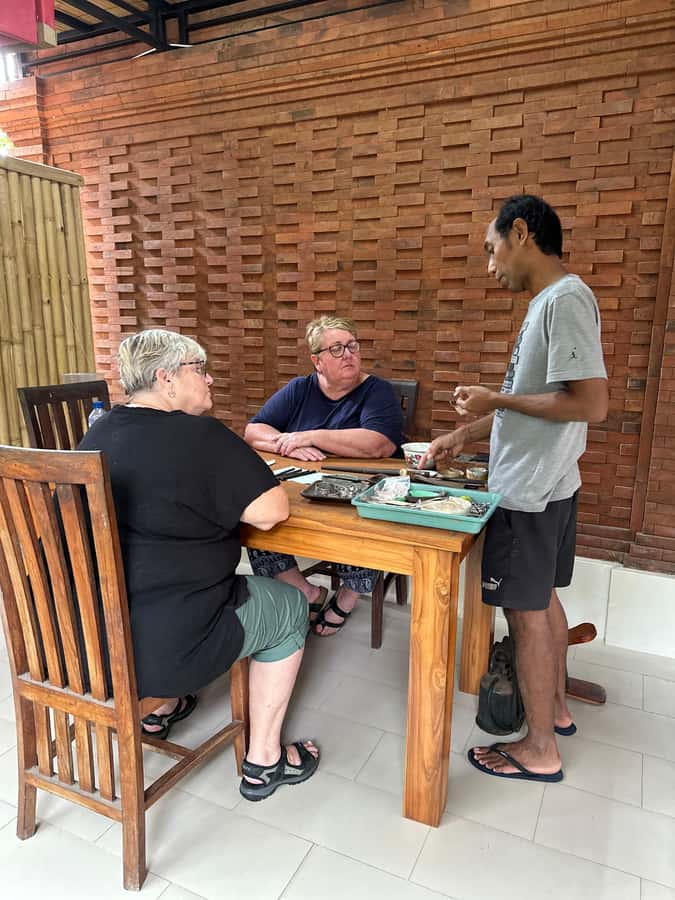
One of the biggest quality markers is where the class happens: in the home village environment with Hana and her family. That tends to feel more human than a workshop floor full of strangers. You’re meeting locals in a setting that looks and feels lived-in.
You’ll also see how hospitality is part of the experience. The class includes mineral water and snacks, and the tone is friendly. In a small craft setting, those extras matter. They keep the day from feeling rushed, and they help you focus while your hands learn new motions.
English instruction is listed, so you’re not stuck guessing what the teacher means. And with a private format, you can ask questions as you go, which is huge when you’re trying new skills like soldering and polishing.
What You Learn: From Metal Basics to Real Hand Skills
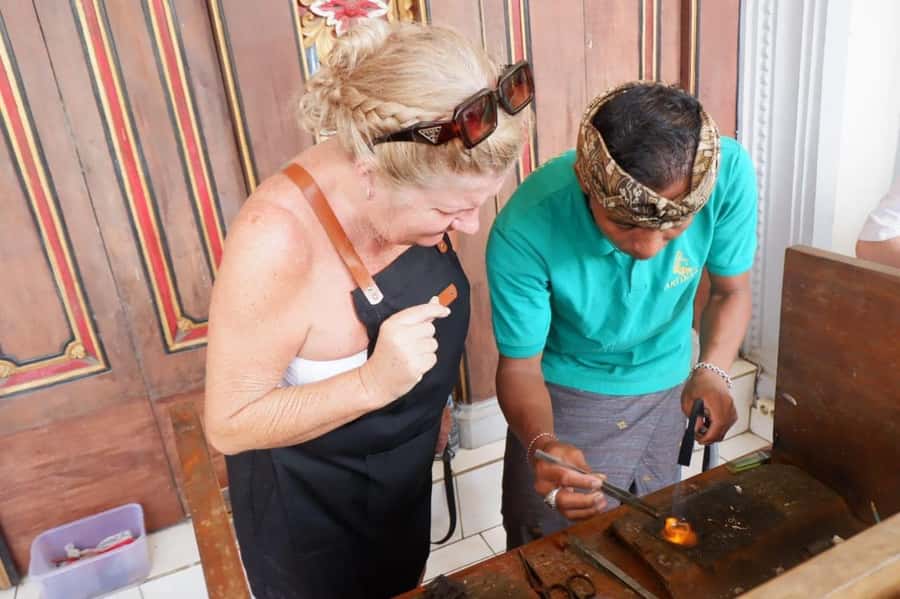
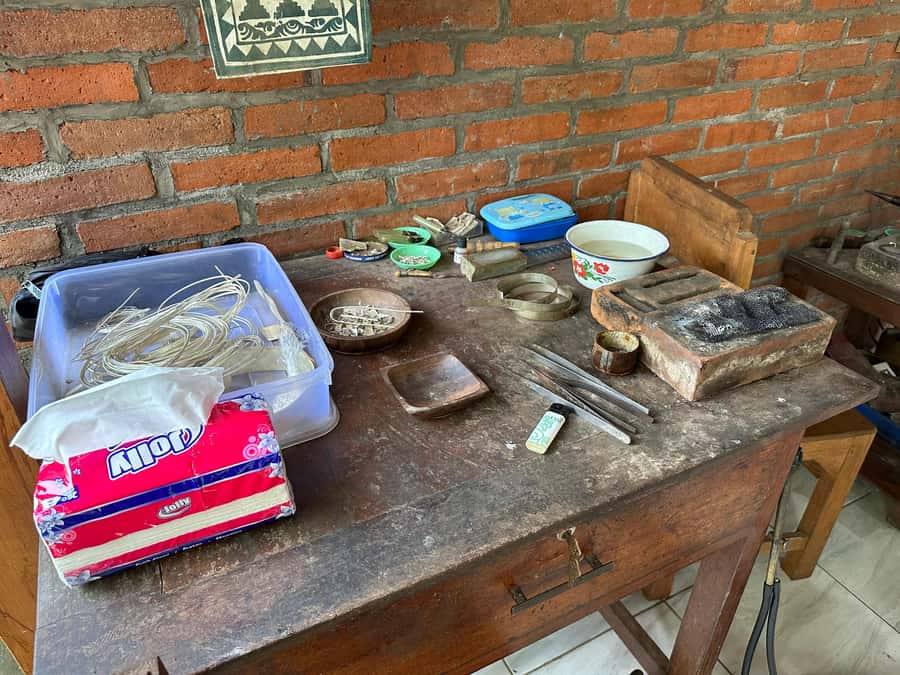
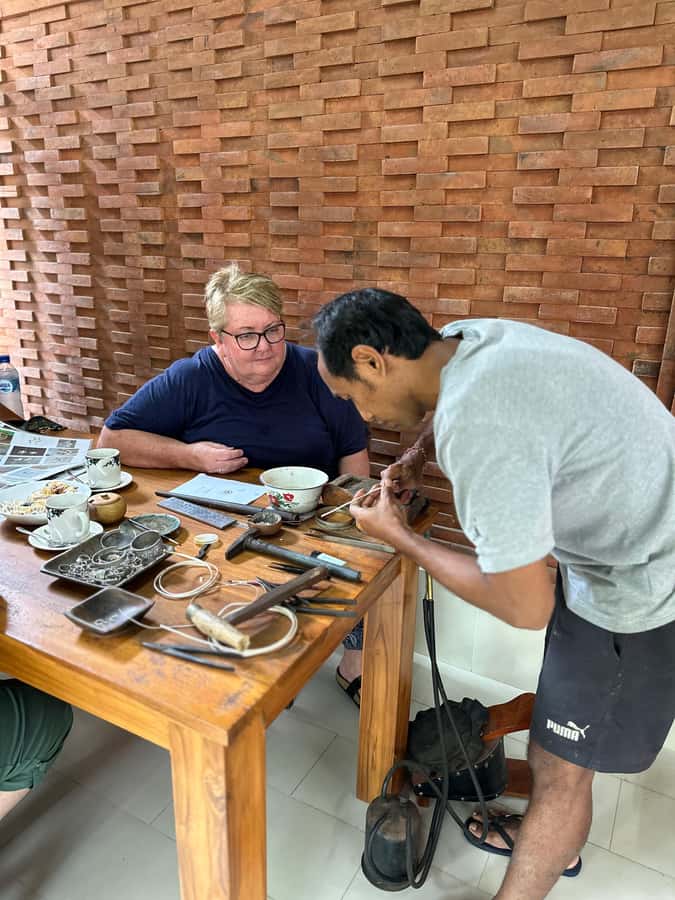
This is a hands-on silver jewelry class built around the practical steps. Over your time together, you’ll learn the basic techniques used in traditional silver jewelry making, including:
- sawing
- stamping
- hammering
- soldering
- polishing
Those sound like simple verbs, but they each solve a specific problem. Saawing helps you cut and shape. Stamping is about marking and creating pattern. Hammering refines form and texture. Soldering is the joining step that turns separate parts into one piece. Polishing is where the work goes from rough to finished.
You’ll also get tips and tricks for creating a beautiful piece of jewelry to take home. The listing emphasizes that you’re not just learning one action. You’re learning how these steps fit together, which is the real point of a craft class.
If you care about accuracy, you’ll also appreciate the learning component on what the craft is and how it developed. Even without deep technical history, having that context changes how you see the tools in your hands.
Making Your Own Earrings, Ring, or Pendant
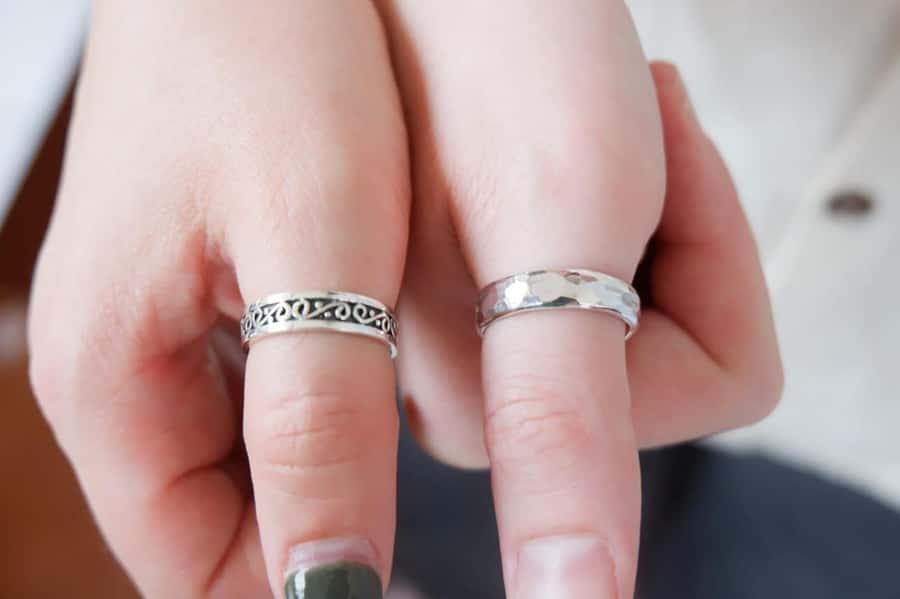
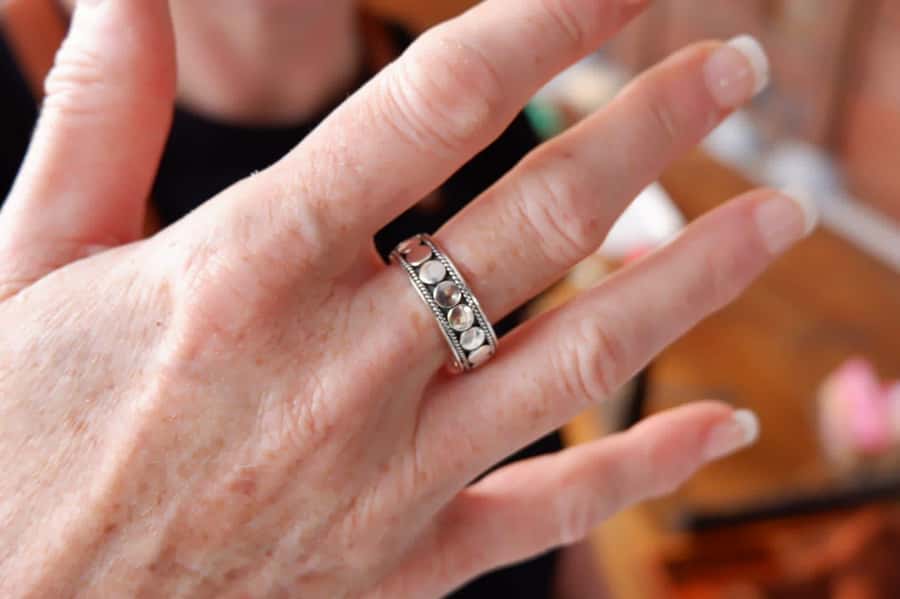
Your main goal is clear: you create your very own pair of earrings, ring, or a pendant. That’s the heart of the value here. You leave with something you shaped yourself, not a finished item pulled off a shelf.
Because it’s private and guided, you can focus on the piece you want. The class structure is designed so you can learn techniques and apply them in the same session. That matters because metalwork is not one of those crafts where you can watch for an hour and then magically make it work. You need repetition, and the teacher support helps you correct details before they become mistakes.
In a class like this, the most helpful thing you can do is choose a design that matches the time you have. With a 3-hour window, aim for something you can complete with guidance. If you show up with a very complicated concept, you might find yourself compromising on complexity just to finish cleanly.
Timing and Transportation: How the Day Stays Manageable
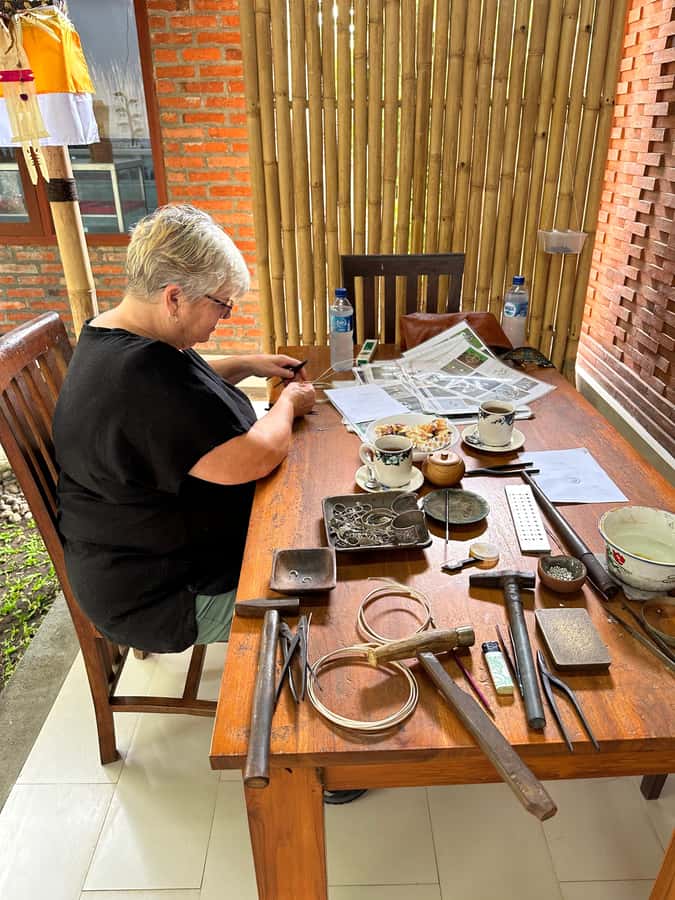
The experience runs for 3 hours. That’s a practical length for doing real work without turning it into your whole day. It also helps you fit it between other Bali plans, especially if you want craft time without losing your afternoon.
Private transportation is included. For many people, this is the underrated part of the experience. Jewelry classes can be easy to book but annoying to reach, especially if your schedule is tight or you’re not comfortable navigating on your own. With transportation included, you spend less time coordinating and more time in the workshop.
The listing also specifies that the class is wheelchair accessible. That’s a thoughtful detail to have up front, and it makes the experience easier to plan for more travelers.






Price and What You’re Really Buying at $58
At $58 per person, the first question is usually: is it worth it? Here’s the honest value math based on what’s included.
You’re paying for:
- an experienced teacher
- hands-on instruction with traditional silver techniques
- mineral water and snacks
- private transportation
- all fees and tax
- 7 grams of silver
So you’re not just buying a lesson. You’re also getting materials (7 grams of silver is included) and structured guidance to help you turn that silver into an actual finished item.
A lot of classes in tourist areas charge a similar amount but exclude material costs or add on extra charges once you arrive. This one states the main material (7 grams) and the basic logistics (transportation, fees, tax) are included. That makes budgeting simpler.
The only clearly stated extra is gratuity, which is not included. That’s normal for many services. If you feel the teacher went above and beyond, you’ll know what to do.
Who This Class Suits Best
You’ll probably love this class if you:
- want a hands-on Bali activity that feels authentic
- like learning skills, not just taking photos
- enjoy crafts where your effort creates an item you can actually wear
- want a private setup so you can ask questions and move at your pace
It may not be your best pick if:
- you want a very complex design with lots of tiny details (3 hours is a real time limit)
- you’re looking for a museum-style history tour with minimal making
The wheelchair-accessible note helps broaden who can enjoy it, and English instruction is useful for most visitors who don’t speak local languages.
Should You Book This Private Silver Jewelry Class?
If you want a Bali experience that’s both hands-on and grounded in local craft, I’d book this. The combination of a home village setting with Hana’s family, plus structured teaching through techniques like sawing, stamping, soldering, and polishing, is exactly what makes it feel real.
Also, the price feels more “fair” than many craft tours because 7 grams of silver is included along with transportation, fees, and tax. You’re not guessing what you’ll pay once you’re there.
My one booking tip: come with the idea of a finished piece you can complete within the time. If you’re flexible on complexity and focus on doing the process right, this class is the kind of thing you’ll remember for years because you’ll still own something you made.
FAQ
How long is the private silver jewelry making class in Bali?
The class lasts 3 hours.
What can I make during the class?
You can create your own pair of earrings, a ring, or a pendant.
Is the class taught in English?
Yes. The instructor is listed as English-speaking.
What’s included in the $58 price?
Included are all fees and tax, an experienced teacher, mineral water and snacks, private transportation, and 7 grams of silver.
Is the class wheelchair accessible?
Yes, the activity is wheelchair accessible.
What are the cancellation terms and payment options?
You can cancel up to 24 hours in advance for a full refund. You can also reserve now and pay later, with the option to book without paying today.
If you tell me which item you’re leaning toward (earrings, ring, or pendant) and what kind of style you like, I can suggest how to choose a design that fits a 3-hour making session.