Spices, fruit, and family temples in four hours. This Ubud-area culinary day mixes a traditional Balinese house visit with a farm walk, then puts you in the kitchen near working rice fields for a meal you make yourself. You’ll learn what’s behind the flavors, not just how to follow a recipe.
I especially like the built-in culture stops before you cook. The visit to a Balinese house, plus time at a farm where you see plants and taste local fruit, makes the cooking class feel grounded in everyday life. I also like that you finish with your own meal with a nice view, rather than eating a pre-made buffet.
One consideration: the class is small (max 8), but each cooking station is shared by two people. That means some tasks move quickly, and you’ll take turns rather than getting a one-on-one rhythm the whole time.
In This Review
- Key Things to Know Before You Go
- A 4-Hour Balinese Cooking Class in Ubud’s Rice-Field Country
- Starting at a Traditional Balinese House: Layout, Customs, and Respect
- Farm Stop and Fruit Tasting: Learning Plants That Shape the Flavors
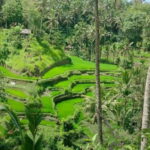
- The Walk Through Rice Fields: See Daily Life Before You Cook
- Menu Mastery: Five Main Dishes Plus Dessert (And You Really Cook)
- Welcome Coconut and Mineral Water: Small Inclusions That Help the Day Flow
- Lunch/Dinner with Sunset Rice-Field Views: Eating What You Made
- Price and Logistics: Is $33 Good Value?
- Who Should Book This (And Who Might Want to Skip It)
- Should You Book This Balinese Cooking Experience?
- FAQ
- Where does hotel pickup and drop-off happen?
- How long is the Balinese cooking experience?
- How many people are in the group?
- What languages are used during the class?
- What’s included in the price?
- What will I cook and eat?
- Are soft drinks or beer included?
- What should I bring?
- Is this activity suitable for wheelchair users?
- Can I cancel and get a full refund?
Key Things to Know Before You Go
- Traditional Balinese house visit first, so the food makes more sense right away
- Farm tour + local fruit tasting before you start chopping
- Walk to the cooking area through the rice fields, with chances to see daily village activity
- Young coconut welcome drink to start your session on a local note
- Five main dishes and one dessert so you leave with a full menu in your head
- Small group of 8 with shared stations, keeping things social but not too crowded
A 4-Hour Balinese Cooking Class in Ubud’s Rice-Field Country
This is a 4-hour Balinese cooking experience based in the Ubud area, with hotel pickup and drop-off included. The pacing is practical: you start with culture and ingredients, then you move to the kitchen, and you end by eating what you cooked while the rice fields and afternoon light do their thing.
For $33 per person, the value is in the combination. You’re not just paying for a cooking lesson—you’re paying for access to places locals actually use and care about: a traditional Balinese house, a working-style farm area, and a rice-field setting where you can cook and then enjoy your meal. You also get the basics that add up—cooking equipment, mineral water, and a recipe book.
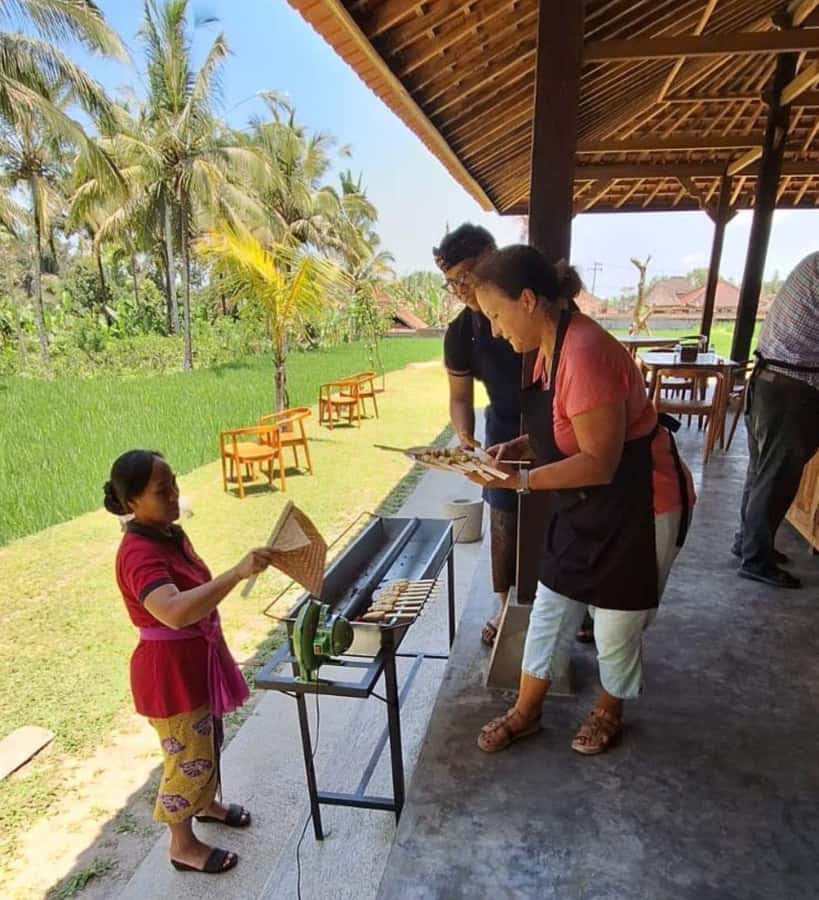
The class is led by an English- and Indonesian-speaking instructor, and the group is limited to 8 people. Expect a friendly, hands-on vibe with some supportive helpers in the background. The station-sharing is real (two people per station), so plan to work together and communicate with your partner at your bench.
You can also read our reviews of more tours and experiences in Ubud.



Starting at a Traditional Balinese House: Layout, Customs, and Respect
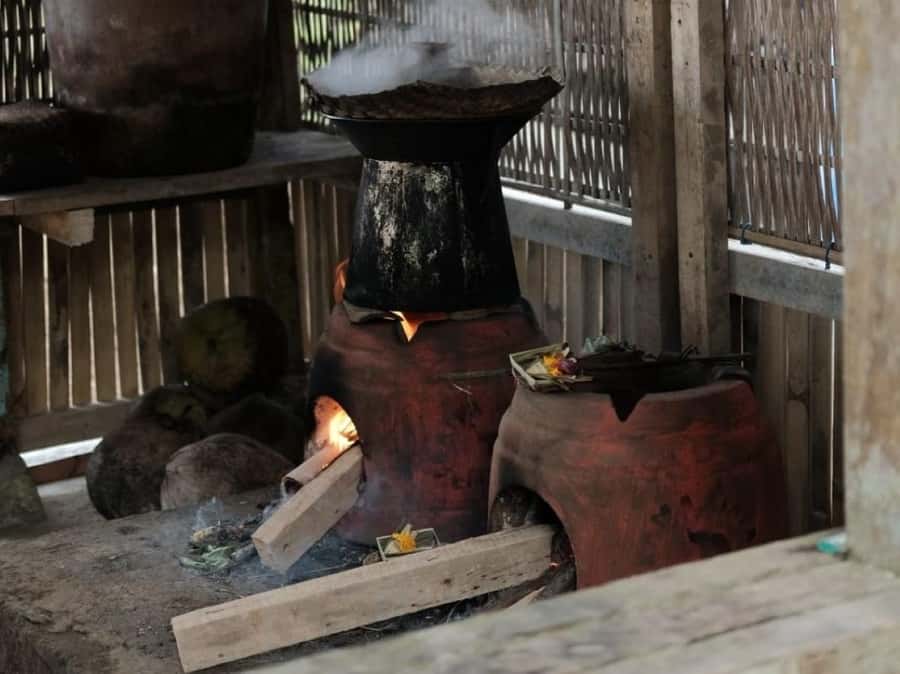
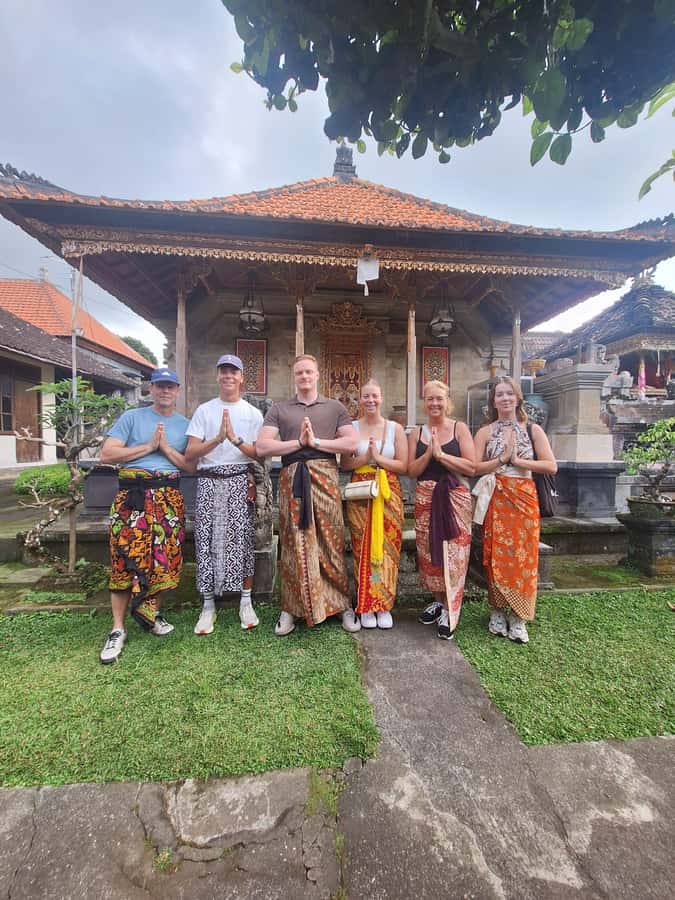
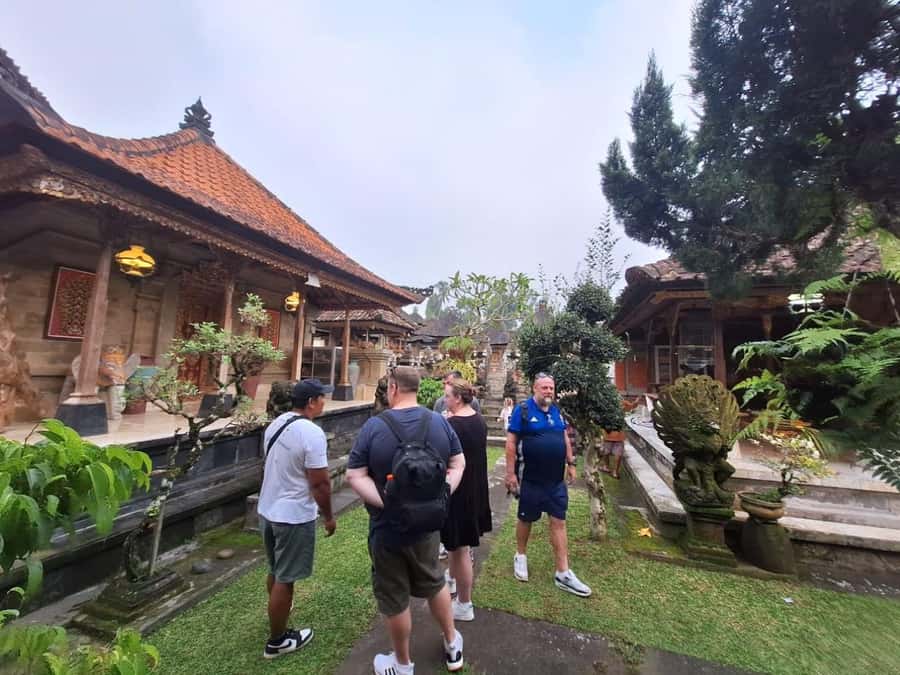
Before any cooking, you tour a traditional Balinese house. This matters more than it sounds. Balinese food is built on balance—between ingredients, textures, and the way offerings and ceremonies fit into daily life. When you see how a Balinese family structures their home and interacts with their spaces, the cooking lesson feels less like a show and more like context.
You also learn local cultural customs as part of the visit, which helps you understand why certain food elements show up the way they do. The house tour is also a good “first hour” because it lowers the intimidation factor. By the time you head to the cooking area, you already feel like you’re stepping into a real home environment rather than a classroom.
A quick practical note: you’ll likely want your camera ready here. The house experience is the kind of stop where photos can help you remember details later, especially if you’re the type who likes to connect what you cooked with what you saw.
Farm Stop and Fruit Tasting: Learning Plants That Shape the Flavors
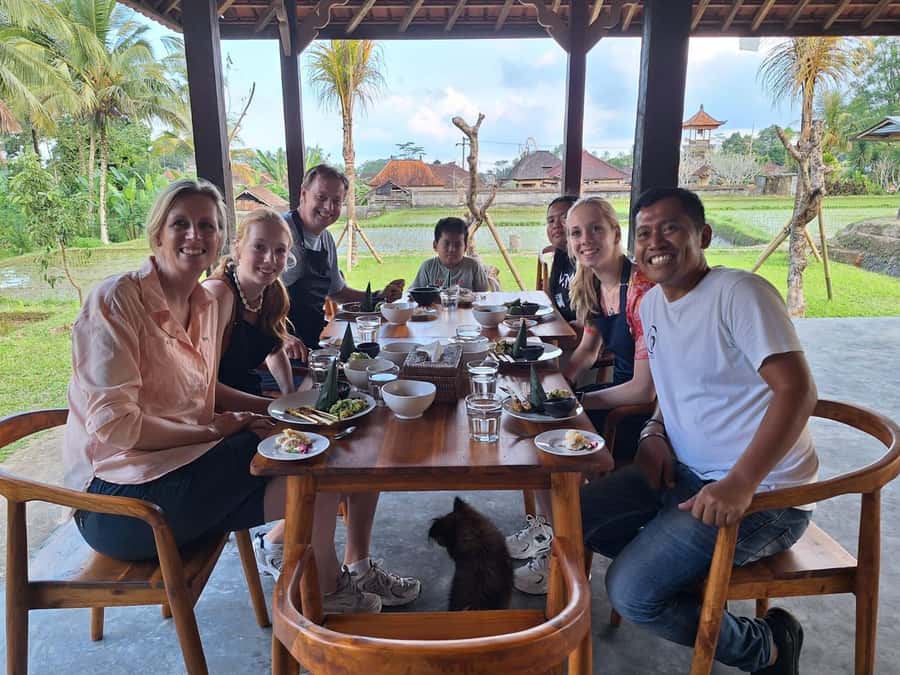
Then comes the farm tour, plus harvesting local fruit and tasting it. This is one of the most useful parts of the whole experience, because it trains your palate before the cooking starts.
Instead of treating ingredients as a list, you learn them as living plants and everyday produce. You’ll also see local people activities on the way—small moments that remind you this isn’t staged in a bubble. Food grows here, and people work with it every day.
Harvesting and tasting local fruit also makes the rest of the class easier to follow. When you later prepare dishes where fruit and aromatics play a role, you’ll understand what they taste like at the source, not only after seasoning and cooking.
The big takeaway: you’re building a flavor map. That’s what makes it easier to recreate something at home. Even if you don’t copy every ingredient perfectly, you’ll remember the role each one played.
The Walk Through Rice Fields: See Daily Life Before You Cook
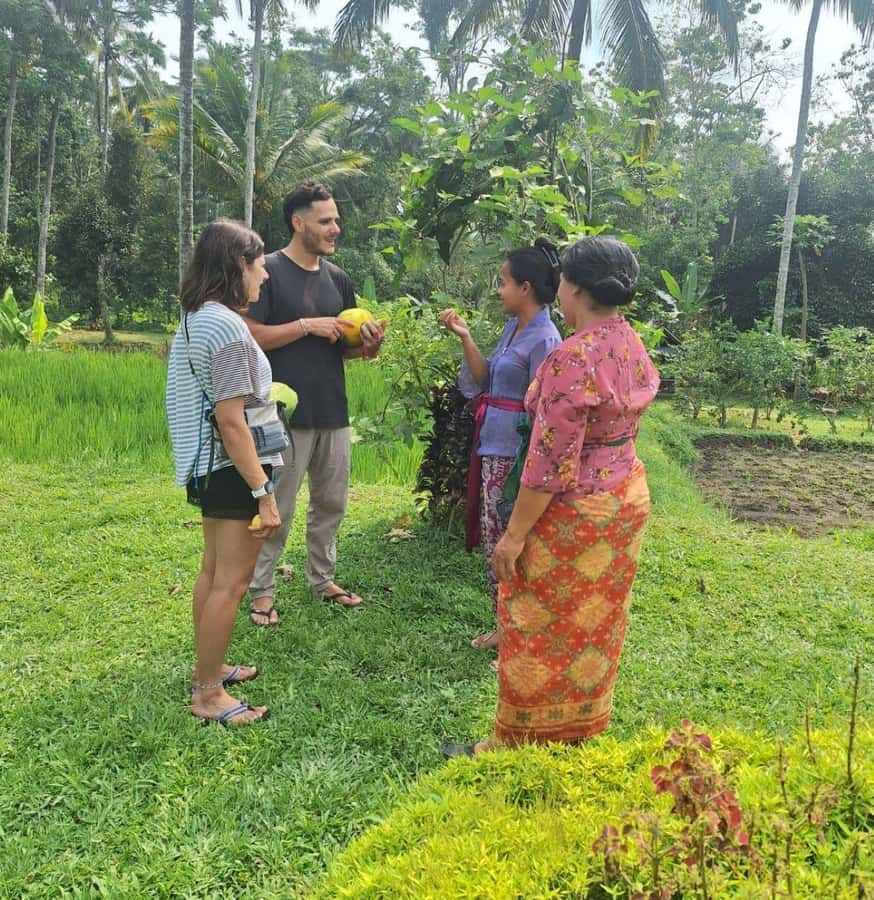
After the house tour, you walk to the cooking place near the rice fields. Along the way, you’ll see local people activities. This is a great transition step because it connects the earlier culture stop and farm stop to your kitchen moment.
I like this format because it slows you down in a good way. You’re not rushing straight from pickup to boiling pots. Instead, you get a gentle route through real scenery and everyday movement, which makes the class feel more “Bali” and less like an imported activity.
You’ll also likely feel the setting right in your hands. Cooking near rice fields changes the mood. You’re not in a tight kitchen room with fluorescent lights; you’re in a working outdoor environment where humidity, air, and the natural light all become part of how the experience feels.
Menu Mastery: Five Main Dishes Plus Dessert (And You Really Cook)
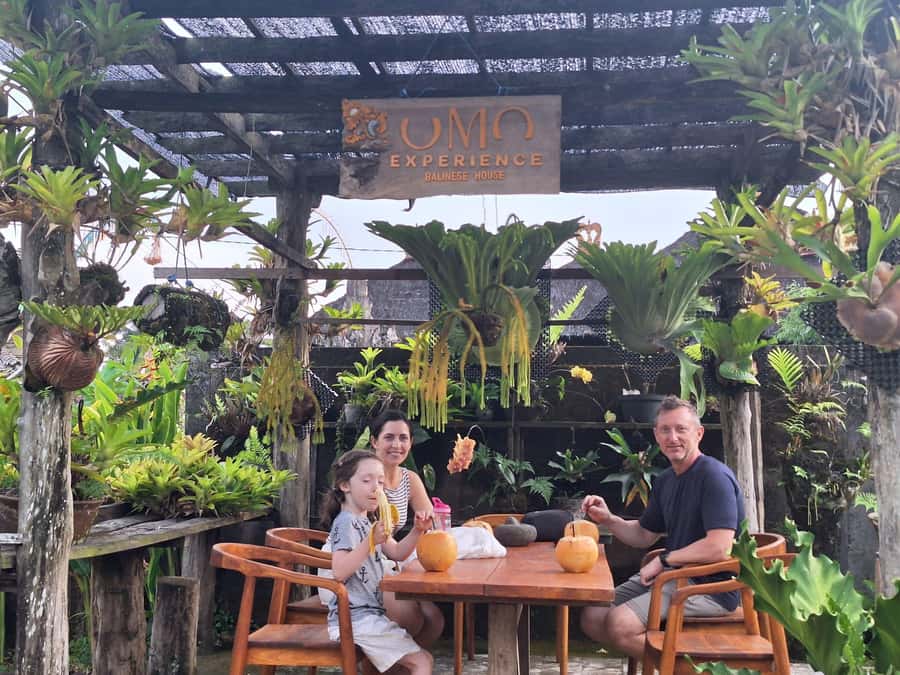
Now for the main event: you cook. You’ll receive a welcome drink—young coconut—before you start, and then you’ll work through the cooking steps guided by the instructor.
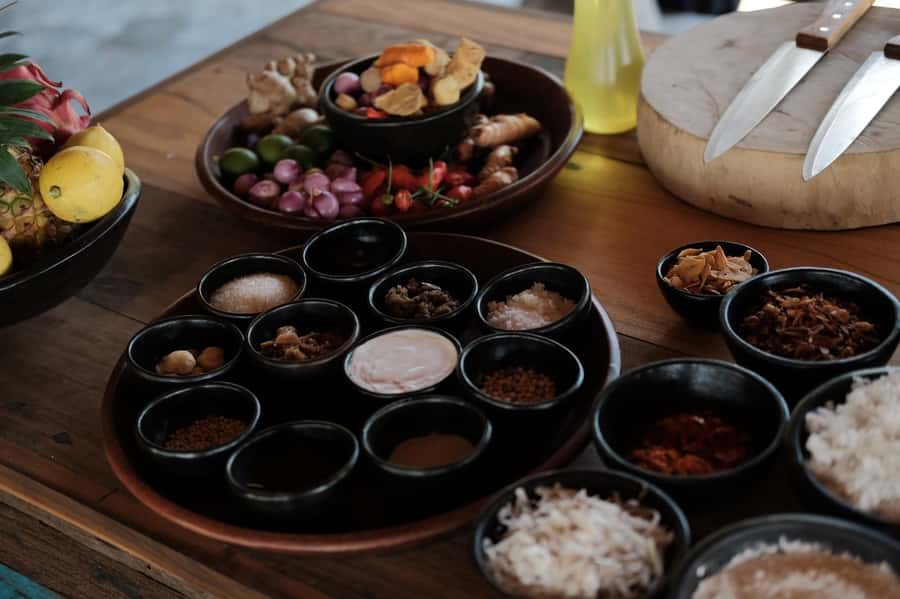
The class format is built for results. You’ll prepare a menu and learn traditional Balinese dishes with an emphasis on ingredient balance. As you chop, grind, and simmer, the instructor explains the significance of key ingredients and how they work together. That explanation is practical: it helps you understand why one spice goes in early, why another is adjusted, and how the dish stays balanced.
Here’s the menu structure you should plan around: you get to prepare five types of main dishes and one dessert. That’s a lot of food learning for a half-day class. It also means your final meal won’t be a single familiar dish that’s been repeated. You’ll get a wider view of what Balinese cooking can look like across different flavors and textures.
One detail I really value: you fully cook according to your own taste and serve it as your own creation. That doesn’t mean you’re improvising blindly. It means the instructor guides the fundamentals, and you still get agency in your plate.
With shared stations, it helps to decide early who’s doing what. If you’re pairing up, agree on roles (chopping, grinding, mixing, tasting) so you don’t spend half the class trying to coordinate.



Welcome Coconut and Mineral Water: Small Inclusions That Help the Day Flow
Some inclusions look small on paper, but they matter in real life during a 4-hour experience.
Young coconut at the start is a smart move. It’s local, refreshing, and it cues your brain that you’re about to do something hands-on. You’re also provided mineral water during the class, which is useful when you’re working in an outdoor setting and moving between locations.
Soft drinks and beer aren’t included, but they’re available for purchase. That keeps the focus on the core meal and activities without adding surprises to the bill if you want something extra.
Lunch/Dinner with Sunset Rice-Field Views: Eating What You Made
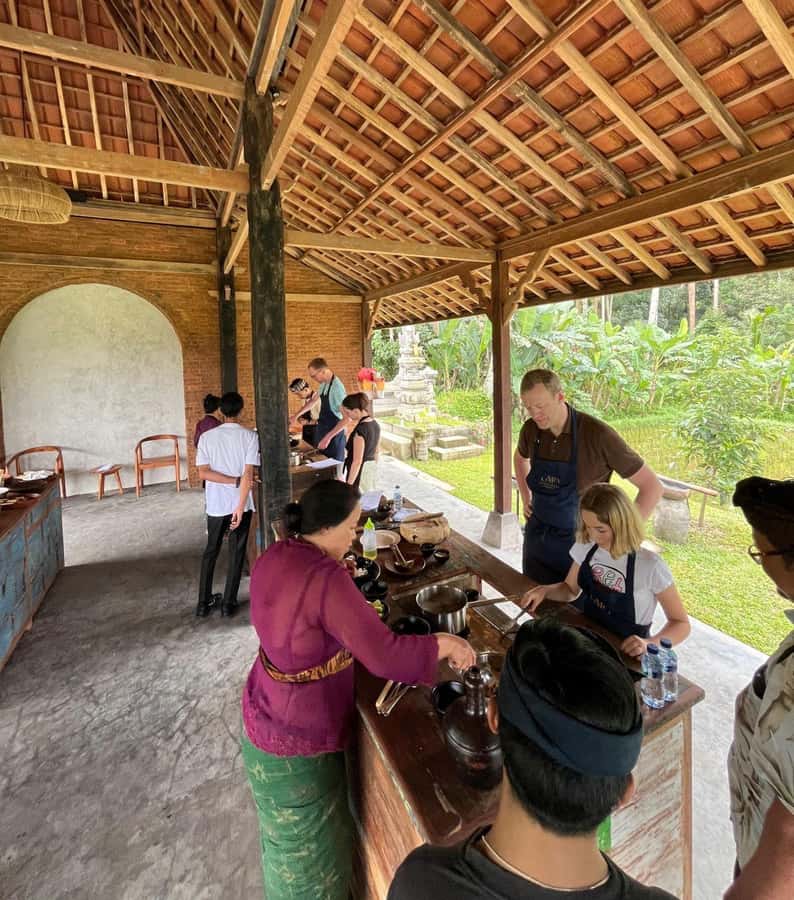
At around the halfway-to-three-quarter point, you switch from cooking to eating. You’ll enjoy lunch or dinner by tasting your own creations—served with the green scenery of rice fields, and in the afternoon you may catch a beautiful sunset view.
This is where the class turns into a memory you’ll actually keep. Cooking is work, and then you get the reward immediately. Instead of wondering whether you got the seasoning right, you get to taste your outcome while the setting is still part of the experience.
I also like that the meal is tied to the production. You’re not guessing what you made after the fact. You remember the steps, you recognize the aromas, and you can link the flavor to the ingredient choices the instructor pointed out.
If you care about photos: the rice-field view at the end is often the best natural-light moment of the day. Plan your camera use so you get both your food and the scenery, without turning the class into a photo session that distracts you from tasting.
Price and Logistics: Is $33 Good Value?
$33 for a 4-hour cooking class that includes pickup and drop-off in the Ubud area, a traditional Balinese house visit, a farm tour with fruit tasting, and the meal you cook is solid value. The money isn’t only paying for “someone teaching you recipes.” It’s also paying for access—transport, cultural stops, ingredient handling, and the equipment and recipe materials to help you recreate the food later.
Where value gets even better is the small group size. With a maximum of 8 participants, you’re not lost in a crowd. But because stations are shared, you also shouldn’t expect unlimited one-person time at each step. Think of it as a collaborative bench experience, not a solo workshop.
If you want a cooking class that feels like a slice of daily Balinese life rather than a scripted culinary demo, this price makes more sense. You’re paying for the whole arc: house → farm → rice-field cooking → meal with a view.
Who Should Book This (And Who Might Want to Skip It)
This class is a great match if you want more than cooking instruction. You’ll likely enjoy it most if you care about cultural context, ingredient origins, and eating what you worked on—especially with a rice-field backdrop.
It also works well if you’re traveling with a partner or friend. Shared stations can be a plus because you’ll talk, taste, and coordinate while learning.
A clear limitation: it’s not suitable for wheelchair users. The experience involves walking between locations and using shared outdoor areas, so physical access is a key factor.
If you want a quiet, solo, no-touch class with minimal movement, you might find the pace and shared setup less comfortable. But if you like friendly energy and hands-on learning, the small group format should feel just right.
Should You Book This Balinese Cooking Experience?
Yes, you should book it if you want a Balinese cooking class that starts with culture and ingredients, not just recipes. The combination of a traditional Balinese house visit, a farm stop with fruit tasting, and a cooking session near rice fields makes this more memorable than a kitchen-only experience.
I’d say skip it or pick another option if you need full accessibility for mobility needs, or if the idea of shared stations would feel frustrating. Otherwise, at $33 for 4 hours with pickup, a full menu (five mains plus dessert), and a meal you cooked while enjoying the views, this is a smart use of time in Ubud.
FAQ
Where does hotel pickup and drop-off happen?
Pickup and drop-off are included for the Ubud area.
How long is the Balinese cooking experience?
The duration is 4 hours.
How many people are in the group?
It’s a small group limited to 8 participants.
What languages are used during the class?
The instructor speaks English and Indonesian.
What’s included in the price?
Included: hotel pickup/drop-off (Ubud area), visit a traditional Balinese house, farm tour, harvesting local fruit, welcome drink (young coconut), cooking equipment, recipe book, mineral water, and meals you cook.
What will I cook and eat?
You’ll prepare five types of main dishes and one dessert, then enjoy the meal you cook.
Are soft drinks or beer included?
No. Soft drinks and beer are available for purchase, but they are not included.
What should I bring?
You should bring a camera.
Is this activity suitable for wheelchair users?
No, it is not suitable for wheelchair users.
Can I cancel and get a full refund?
Yes. You can cancel up to 24 hours in advance for a full refund.