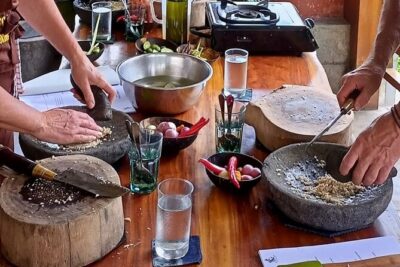
Night markets are a Bali cheat code. This Ubud night food tour helps you decode menus, follow a local route, and eat Balinese dishes you’d miss on your own. I especially like the menu guidance (so ordering doesn’t turn into guessing) and the chance to learn market life and Balinese food culture in plain, human terms. The main watch-out: street-food prep can feel a bit rough around the edges, so if you’re very picky about hygiene, go slower.
I also like that the experience is built for a real night out, not a museum-style food crawl. You start at 6:00pm, get traditional snacks first, then move from a market walk into a string of local favorite food and drink stops—about 3 hours total. With a maximum group size of 10, you’re not swallowed by a crowd, and you get tailored tips for the rest of your trip.
In This Review
- Key things that make this tour worth your time
- Why a Ubud night market tour beats guessing
- Price and value: $45 for food, drinks, and transport
- The 6:00pm start: how the night unfolds
- First tastings: traditional cakes and the Megibung theme
- Market walk: where the history and ordering help comes in
- The food and drinks stops: eating like locals, not like tourists
- Sanitation reality check: street food can feel “iffy”
- Small group nights: 10 people max, real conversation, less rushing
- Pickup, vehicle, and not having to navigate alone
- The rest-of-trip tips: what you take away
- Who should book this Ubud night traditional market tour
- Should you book it?
- FAQ
- What time does the Ubud night market food tour start?
- How long is the tour?
- How much does it cost?
- Is food and drink included?
- Is pickup included?
- What is the group size limit?
- Can I book if I’m a solo traveler?
- Does the guide help with menus?
- What happens if the weather is bad or I need to cancel?
Key things that make this tour worth your time
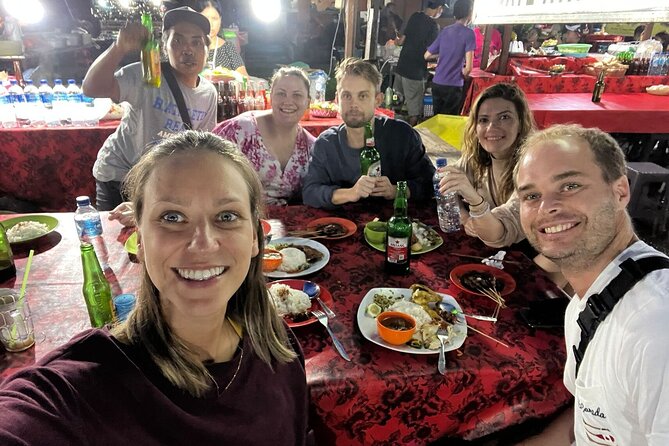
- Menu deciphering so you can order confidently (especially with spicy Balinese flavors)
- A guided market route so you’re not stuck wandering with a loose plan
- Balinese Megibung focus, starting with traditional cakes before you hit the stalls
- All food and drinks included, so you can budget easily
- Small group cap (10 people max) for a calmer night
- Guides like Wayan, Amba, and Kadek bring the story, plus practical help like bargaining
Why a Ubud night market tour beats guessing
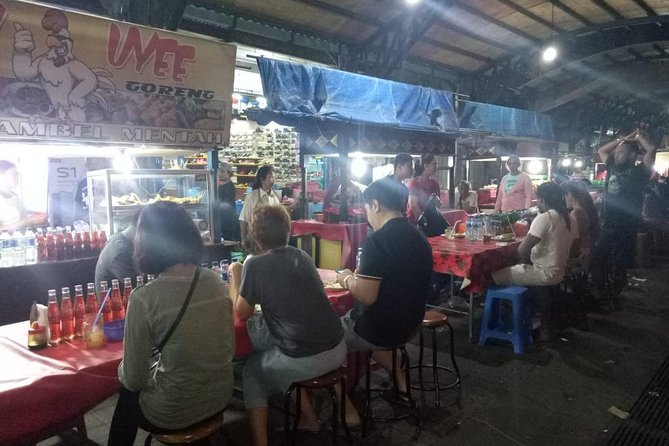
Ubud has plenty of food. The problem is figuring out what’s truly Balinese when every menu looks similar to a tourist. This tour fixes that with one simple idea: you don’t have to translate everything yourself, and you don’t have to gamble on where to eat.
The guides are the whole point. They lead the way through the night market, help you understand what you’re looking at, and steer you toward places locals actually use. That matters because a market isn’t just food—it’s where people shop, socialize, and eat in between errands. You also get cultural context about what you see, including market history, so the night has meaning beyond just tasting things.
And yes, it’s still a night market experience: you’ll walk, you’ll sample, and you’ll eat like you’re part of the neighborhood for a few hours.
You can also read our reviews of more tours and experiences in Ubud.



Price and value: $45 for food, drinks, and transport
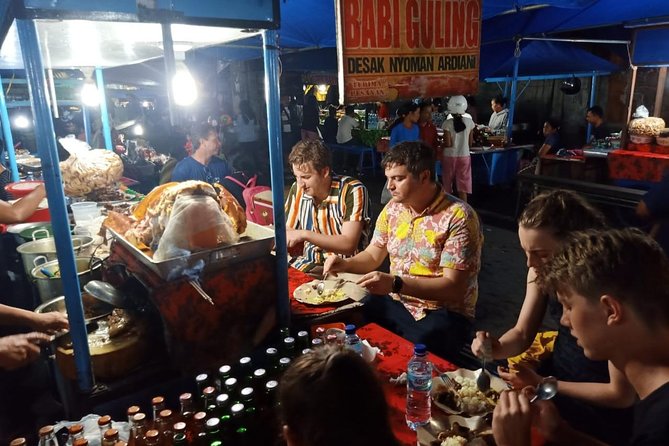
At $45 per person for around 3 hours, the value is strongest if you price it like a normal night out. You’re not only paying for food samples—you’re also paying for:
- a guide to manage the language and ordering choices
- all fees and taxes included in the price
- meals and drinks covered during the tour
- an air-conditioned vehicle with pickup offered
If you’ve ever tried to replicate this kind of evening on your own, the costs add up fast: transport, multiple meals, and the risk of ending up at places that are convenient for tourists but not very local.
One wrinkle: the tour has a minimum of two people. If you’re traveling solo, there’s an extra US$35 charge mentioned for single participation. That changes the math, so it’s worth checking your situation before booking.
The 6:00pm start: how the night unfolds
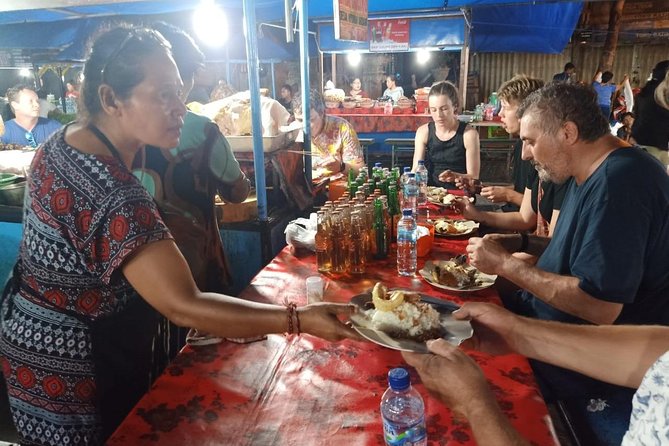
The tour kicks off at 6:00pm, right when the night market energy starts to kick in. You begin with a traditional introduction—Balinese cakes—so you’re not thrown into the busiest part of the market before you even know what to expect.
Then you shift into the main loop:
1) a walk around a famous market (with history and context)
2) a move to the guide’s favorite local food and drink spots
3) multiple tastings across the night
This pacing is smart. It gets you grounded early (what foods to look for, how to think about ordering), and then you spend the rest of the evening sampling without having to constantly stop and figure things out.
First tastings: traditional cakes and the Megibung theme
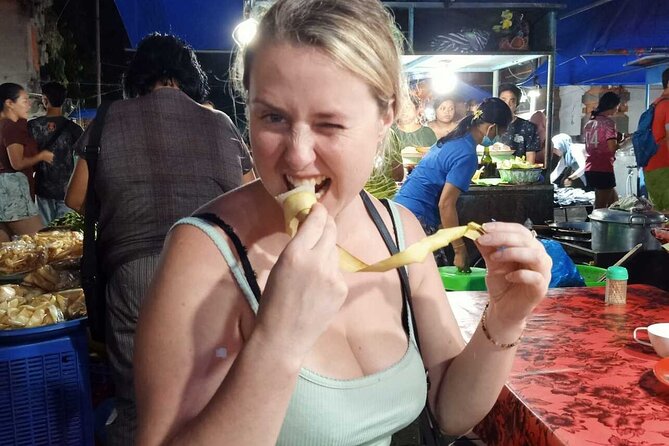
The tour is built around Balinese traditional cuisine—one term you’ll hear is Megibung, which is locally referred to as a style or concept of traditional eating. Even if you don’t know the term yet, the structure makes it easy to understand: you start with traditional cakes, then you move into savory and drink tastings that feel connected to local meals, not just random snacks.
One of the best parts of this setup is that guides ask about preferences. In the experience, spicy tolerance comes up quickly. You’ll get guidance for how to handle Balinese heat levels, which is useful because many Indonesian and Balinese foods can be much spicier than people expect.
Market walk: where the history and ordering help comes in
The market portion isn’t just a wander through stalls. You get help in a few concrete ways.
First, you learn how to read what you’re seeing. The tour includes assistance deciphering menus in another language, so you’re not stuck pointing at pictures or relying on luck. That turns the market from chaotic to manageable.
Second, you get the story behind the place. The tour includes market history and context, so you understand why certain foods and vendors are important and how people use the market during the evening.
And third, you get practical on-the-ground skills. In real examples with guides such as Wayan and Kadek, there’s been help with bargaining at the market. That can save you from overpaying and also makes the interaction feel less awkward.
If you want one simple mindset for this part: treat it like a guided lesson that also happens to taste great.





The food and drinks stops: eating like locals, not like tourists
After the market walk, the tour moves into the parts most visitors skip: the places the guide genuinely prefers for local Balinese flavors. The experience includes food and drinks, and the goal is clear—help you find traditional items, not generic tourist dishes.
You’ll also get a chance to work with your own preferences. Guides have been described as checking spice preferences, and there’s also mention that tastes and even allergies can be accommodated. That’s a big deal on a night market tour, because some dishes are easy to avoid once you know what you’re looking at—and hard to avoid if you don’t.
Expect a few standout tastings rather than one giant meal. That’s perfect for a night market setting because you can compare flavors across different stalls and stops without feeling stuffed too early.
Sanitation reality check: street food can feel “iffy”
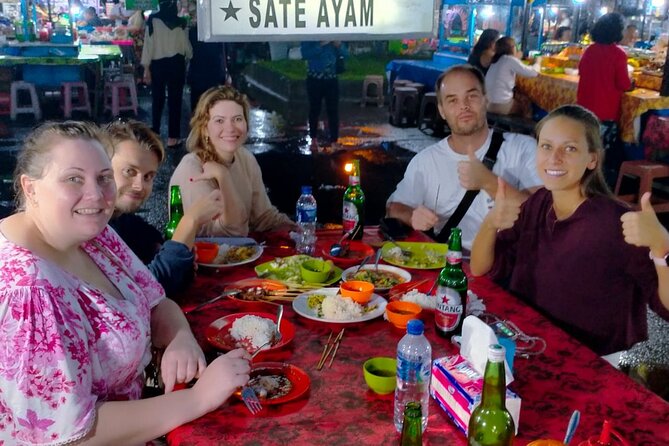
Here’s the one downside I wouldn’t ignore: not everyone felt comfortable with the food handling conditions. One of the clearest comments flagged that the food-prep environment made them nervous, especially because there weren’t the safety measures you might expect at home.
At the same time, another viewpoint was more reassuring: food is cooked on the spot, and if you’re choosing what looks freshly prepared, it can feel reasonable.
So how do you handle this if sanitation is a concern?
- Come with a calm expectation: this is street food, not plated fine dining.
- Choose items that look hot and freshly made when you get the chance.
- Bring your own hand sanitizer and use it before you eat.
This tour can be a great experience, but it’s not a promise of sterile conditions. If your tolerance for street-food setup is low, you may want to think twice or go in with your expectations adjusted.
Small group nights: 10 people max, real conversation, less rushing
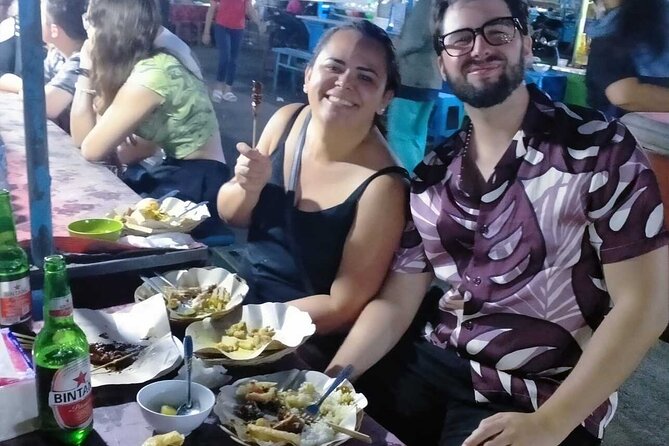
A maximum group size of 10 makes a noticeable difference. You’re more likely to get personal attention, better menu guidance, and a smoother flow through crowded market spaces.
That small-group structure also helps your guide keep track of what you like. Names that have led groups include Wayan, Amba, Kadek, and Kidak (spelled slightly differently in feedback). Across these guides, the common theme is friendly, conversational guidance—so the tour feels like a local night out rather than a scripted checklist.
Pickup, vehicle, and not having to navigate alone
One practical win: pickup is offered, and you travel in an air-conditioned vehicle. That’s underrated in Ubud, where evening heat and traffic can drain your energy before dinner even starts.
Not having to navigate also matters for markets. It’s not just about directions—it’s about timing, where to stand, and what to do when it’s crowded. A guide takes on that complexity so you can focus on eating and listening.
In some instances, groups have been picked up and dropped off at hotels, which makes the whole thing even easier.
The rest-of-trip tips: what you take away
A good food tour does two jobs. It feeds you now, and it helps you eat better later. This one includes take-away, tailored tips for the rest of your trip—so you’re not left with only photos and a full stomach.
If you love markets, those tips can help you:
- return to the right neighborhoods with confidence
- order local dishes without second-guessing
- understand what’s worth your money versus what’s made for passersby
Think of this as a shortcut to your own future self-guided food hunt.
Who should book this Ubud night traditional market tour
This tour fits best if you want:
- Real Balinese street food vibes without needing to translate everything
- a guided market walk with history and practical help
- a small-group night out (max 10 people)
- all meals and drinks included, so your budget stays predictable
It might not be ideal if:
- you’re very sensitive to street-food hygiene and dislike any uncertainty around prep areas
- you expect a neat, restaurant-style setting for all tastings
- you’re traveling solo and don’t want the extra US$35 single-participant charge
It’s also worth noting: service animals are allowed, and the tour says most travelers can participate. The experience does depend on good weather, since it’s outdoors.
Should you book it?
I’d book this if you want a smarter way to eat at night in and around Ubud—especially if language is your usual pain point. The mix of menu help, local guiding, and included food and drinks makes it a strong value at $45. The small group size keeps it friendly and manageable.
I’d pause if sanitation worries are a deal-breaker for you. In that case, you could still enjoy Balinese food, but you might prefer a more controlled dining setup. If you’re okay with street food as a style of travel, this tour is exactly that: a guided, local night where you learn what to order and why it matters.
FAQ
What time does the Ubud night market food tour start?
The tour start time is 6:00 pm.
How long is the tour?
It runs for about 3 hours (approx.).
How much does it cost?
The price is $45.00 per person.
Is food and drink included?
Yes. All meals and drinks are included during the tour.
Is pickup included?
Pickup is offered, and you travel in an air-conditioned vehicle.
What is the group size limit?
The tour has a maximum of 10 travelers.
Can I book if I’m a solo traveler?
The tour requires a minimum of two people. If you go as one person, there is an additional US$35 charge.
Does the guide help with menus?
Yes. The tour includes help with deciphering menus in another language, and the guide leads the way so you don’t have to navigate.
What happens if the weather is bad or I need to cancel?
The experience requires good weather. If it’s canceled due to poor weather, you’ll be offered a different date or a full refund. For cancellations, you can cancel for a full refund up to 24 hours in advance; within 24 hours, the amount paid isn’t refunded.
If you want, tell me your travel dates and whether you’re going solo or as a pair, and I’ll help you sanity-check the value for your exact situation.