This is the kind of Bali day that feels practical, not touristy: you’ll learn by doing, from the first market stop to the final dessert. I like the hands-on cooking part because you actually touch ingredients and learn the steps. I also like the small group setup (max 14, shared cooking stations) because you get guidance without the chaos. One consideration: the class depends on your day working smoothly—on at least one occasion, a booking didn’t run as scheduled due to a Hindu holiday and a communication gap, so plan to confirm and stay reachable.
You’ll follow a clear path: meet in Ubud, see how people shop for daily ingredients, harvest from an organic garden, then cook and eat what you made. The cooking is guided in English with a friendly, funny instructor, and you end with a meal plus a downloadable recipe PDF so you can recreate it later.
In This Review
- Key points before you go
- Sens Hotel Pickup to Market Start: How the Day Gets Moving
- Local Market Tours: Learning What Goes Into Balinese Cooking
- Organic Farm Harvest: Picking Your Own Ingredients in Ubud
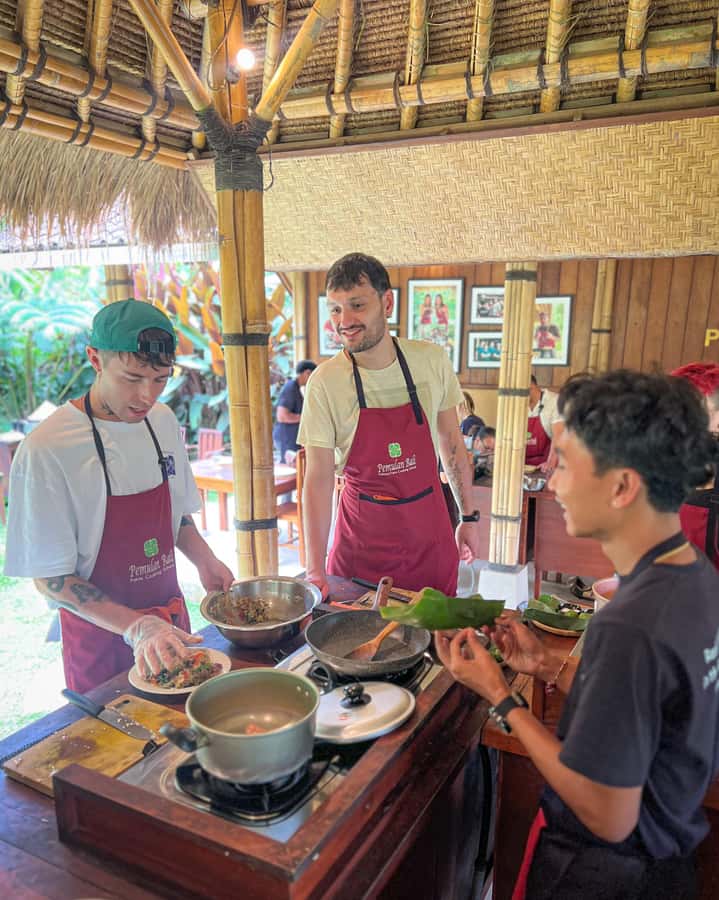
- The Cooking Class Itself: Step-by-Step, Shared Stations, Real Participation
- What You’ll Cook: Regular, Vegetarian, and Advanced Options
- Regular Menu (6 courses)
- Vegetarian Menu (6 courses)
- Advanced Class (8–10 courses)
- The Feast and the Recipe PDF: What You Take Home
- Price and Value in Ubud: What $29 Gets You
- Common Pitfalls and How to Prepare
- Should You Book Pemulan’s Ubud Organic Farm Cooking Class?
- FAQ
- FAQ
- Where is the meeting point for the Pemulan cooking class?
- Is transportation included?
- What’s included in the morning part of the experience?
- Can I choose a vegetarian menu?
- How many courses are cooked in the regular class?
- Is the experience suitable for wheelchair users and can I bring a pet?
Key points before you go
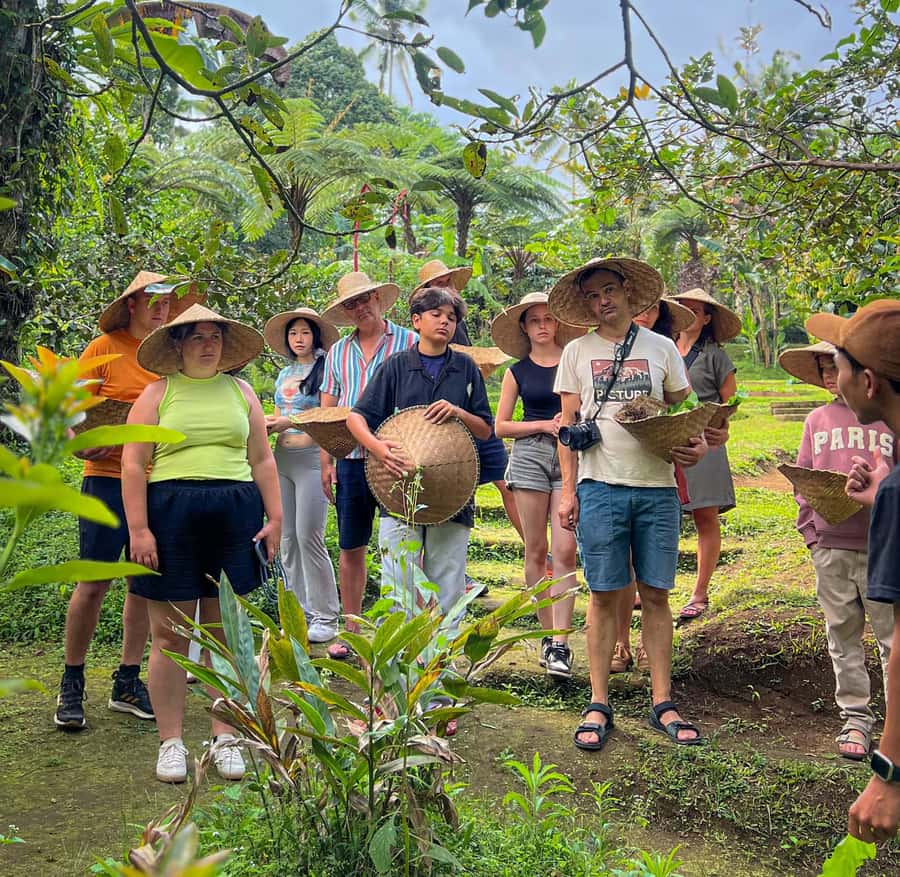
- Pick your own veggies at an organic farm, then cook with what you harvested
- Morning market tour focused on real ingredients and how Balinese people shop
- English instruction with step-by-step help (and time for questions)
- 6-course meals in the Regular or Vegetarian options, with an Advanced 8–10 course option
- Max 14 people and shared stations (2 people per station), so you’ll work together, not watch
Sens Hotel Pickup to Market Start: How the Day Gets Moving
The day begins in Ubud with transportation by air-conditioned car from the meeting point: across from Sens Hotel, under the big Banyan Tree. It’s a nice setup for a cooking class because you’re not figuring out where to go with a bag of ingredients later. You also avoid burning time on a long commute before you’ve even tasted your first snack.
Once you’re gathered, the flow is simple: market first, then farm, then the cooking. That order matters. It turns what could be a routine class into something you can remember. You start seeing the ingredients as daily food, not as a menu photo. And by the time you’re back at the farm kitchen area, the flavors make sense.
The class is listed as an English-taught experience, and the instructor is described as warm and funny with excellent English. That combination matters more than people think. Food gets confusing fast when you don’t understand the steps clearly. Here, you’re meant to follow instructions at a pace that works.
You can also read our reviews of more tours and experiences in Ubud.



Local Market Tours: Learning What Goes Into Balinese Cooking
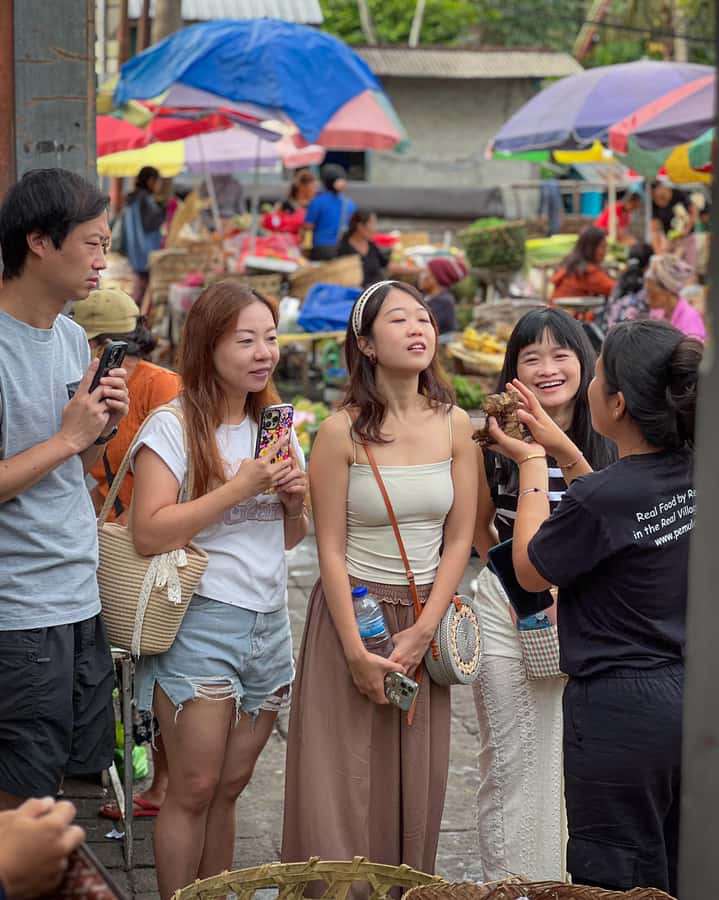
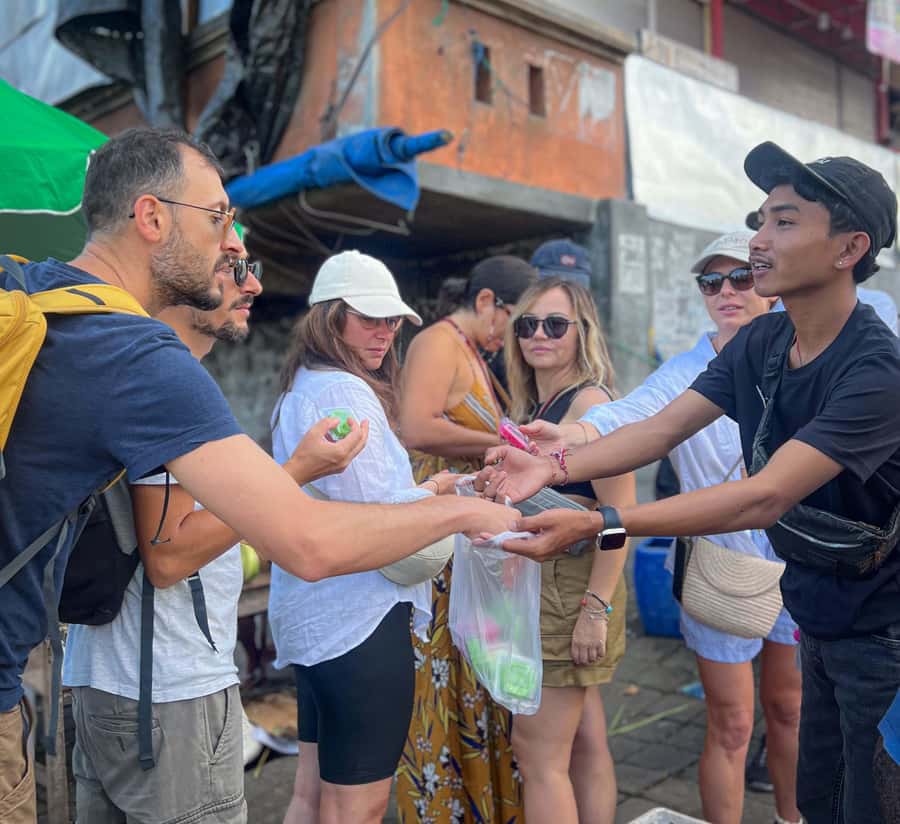
If you like food culture, the market stop is usually the best “pre-game.” You get a morning class that includes a local market tour, and you’ll see lots of produce—fruits and vegetables—along with ingredients used again and again in Balinese cooking.
What you learn here is practical:
- how ingredients are chosen for freshness
- what forms they come in (whole, sliced, grouped)
- how everyday foods show up in real meals
Some cooking classes jump straight into chopping, which can leave you wondering why you’re doing each step. This one gives you context first. The market also gives you a chance to taste some items, which helps your palate get ready for the savory, spicy, and sour notes that show up across Balinese dishes.
One tip: bring sunglasses and expect to walk around. A market is not a seated activity. Comfortable shoes help a lot, especially if the ground is uneven.
Organic Farm Harvest: Picking Your Own Ingredients in Ubud
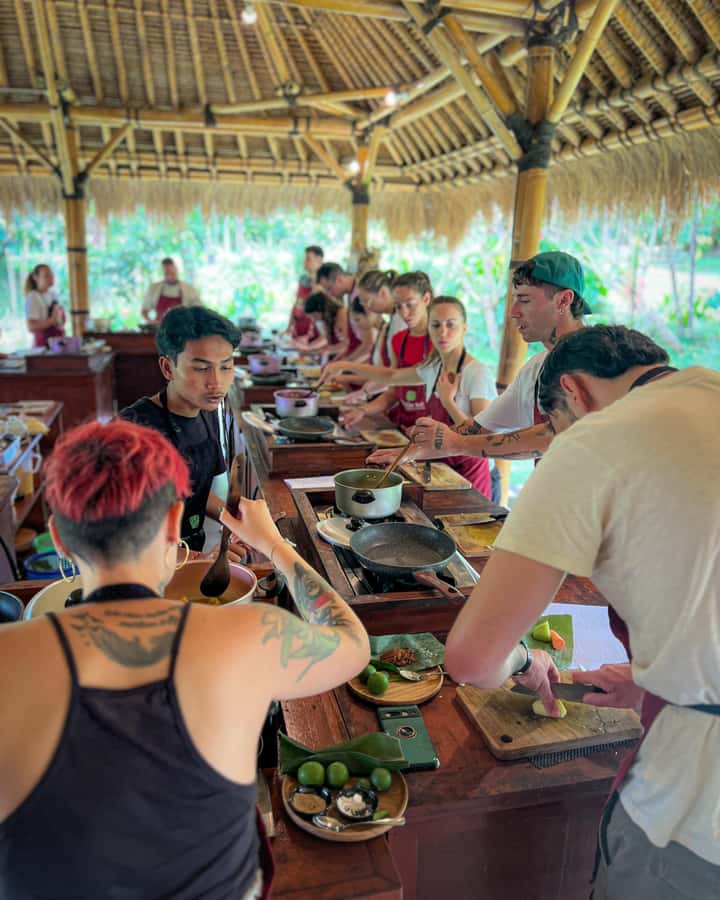
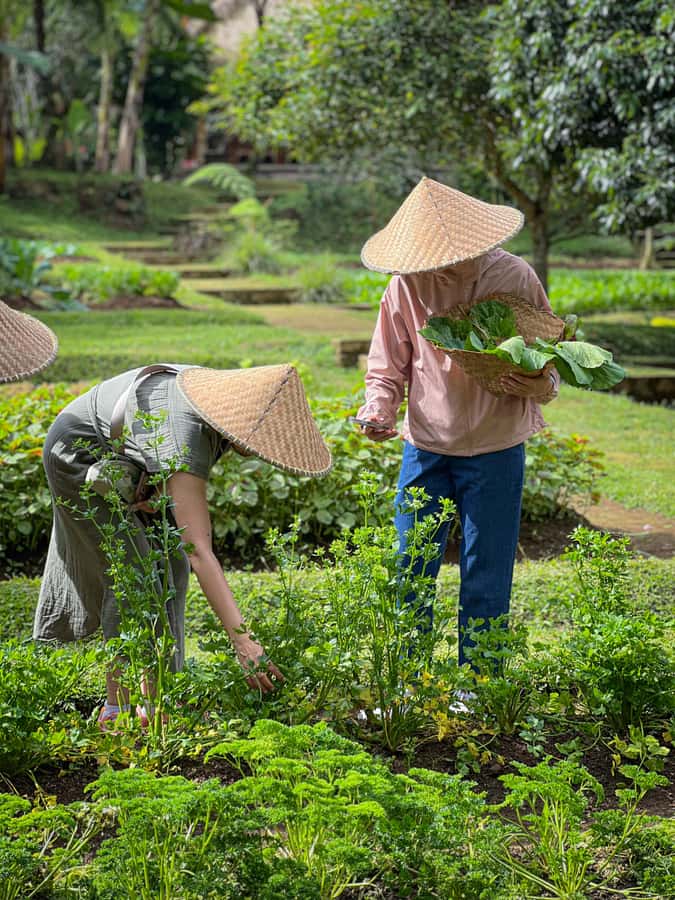
After the market, you head to the organic farm cooking school for an organic farm tour and harvesting some ingredients yourself. This is where the experience turns from educational to personal. You’re not just cooking with ingredients—you’re responsible for bringing parts of the meal to life, right from the garden.
You’ll connect with nature in a hands-on way. That matters if you get tired of “watch and taste” tours. Instead, you get the satisfaction of harvest-to-plate cooking, which makes the final flavors feel more meaningful.
There’s also a useful lesson built in: the ingredients you pick are tied to the garden’s actual supply. That makes the cooking feel grounded in how food really works in Bali—seasonal, practical, and made for daily eating.
Plan for a bit of farm activity. Even if it’s relaxed, you’ll likely be moving around and handling fresh produce. If you’re the type who loves taking photos, a camera is listed as something to bring, and you’ll have plenty of moments where you’ll want a memory.
The Cooking Class Itself: Step-by-Step, Shared Stations, Real Participation
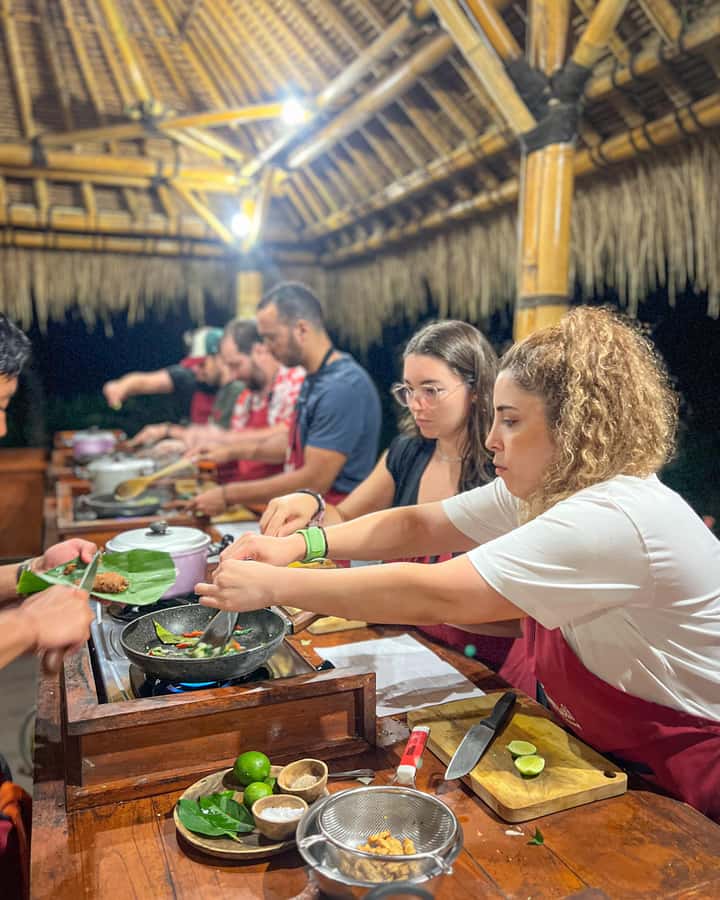
Now for the core: the hands-on cooking class. This is where you stop being a spectator and start learning techniques you can actually repeat later.
Two details shape how the class feels:
- Small group size (maximum 14 people)
- Each cooking station is shared between 2 people
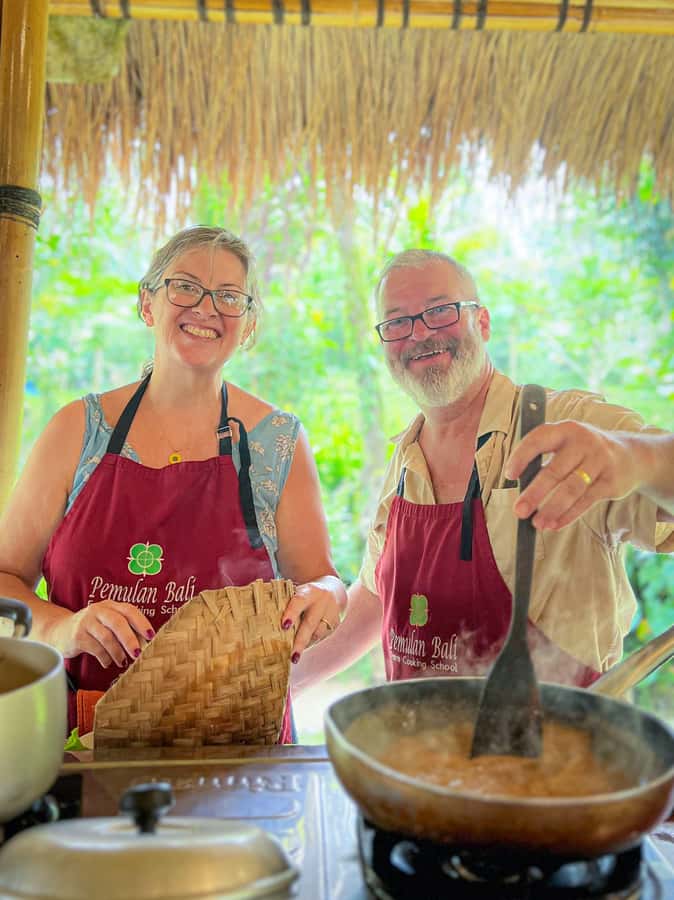
That shared-station setup is a big deal for learning. It forces cooperation, but it also keeps you from being stuck waiting while someone else uses the tools. It’s a good model for a class that’s meant to stay relaxed and interactive.
Your instructor will guide you step by step, and the teaching style is described as patient, taking time with questions. That’s important because Balinese cooking often includes combinations of ingredients that require correct ratios and timing. When you’re doing it with support, you get it. When you’re doing it alone without context, you can end up guessing.
Expect to work from appetizer to dessert. The experience is structured so the class ends with a sit-down feast of the dishes you prepared, rather than a quick taste and a push to leave.
What You’ll Cook: Regular, Vegetarian, and Advanced Options
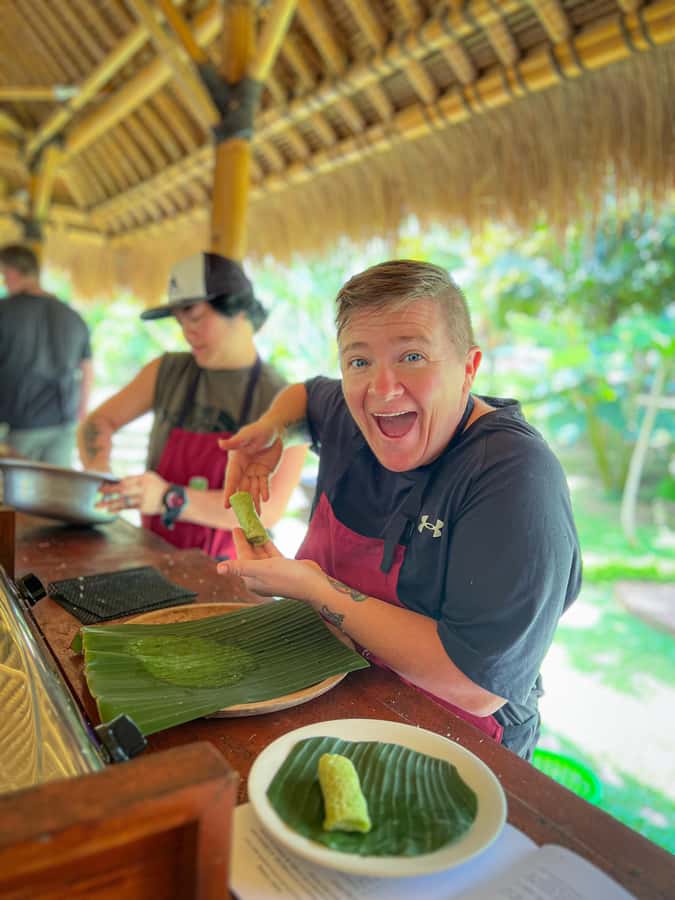
One of the smartest parts of this experience is that it’s not one-size-fits-all. You have menu choices that change what you learn and taste.




Regular Menu (6 courses)
You’ll cook a sequence that includes:
- Balinese chicken curry
- traditional pork kebabs
- tuna with raw sauce
- mixed green salad with coconut and spice
- sweet and sour tempe
- dessert: crispy banana fritters or black rice pudding
This is a very balanced set. You get meat and fish dishes, a salad element, a tempe-based option, and a dessert that gives you a classic sweet finish.
Vegetarian Menu (6 courses)
If you choose vegetarian, the menu includes:
- tempe curry
- steamed vegetables with peanut sauce
- fried corn with Balinese spices
- dessert: banana fritters or black rice pudding
This option keeps the course count the same, so you still get the full structure of learning and eating. Tempe is a recurring theme here, and peanut sauce shows up in a way that helps you understand how vegetarian Balinese food still delivers depth.
Advanced Class (8–10 courses)
For food enthusiasts who want more practice, the advanced option adds more dishes. It’s presented as a next step for people who want to push their Balinese cooking skills further.
If you’re unsure, choose based on how quickly you want to be challenged. The regular 6-course class is already plenty of work. The advanced option makes sense if you cook at home a lot and want more repetition with different flavors and techniques.
The Feast and the Recipe PDF: What You Take Home
At the end, you sit down and eat the meal you made. That sounds basic, but in a cooking class it’s often not guaranteed in a satisfying way. Here, the meal is part of the point: you get to taste everything in context and see how your efforts add up on a plate.
Another strong value add: you receive a recipe book as a downloadable PDF. That’s huge if you travel and later forget the exact ingredients or the order of steps. It also helps you cook the dishes again without relying on memory.
During the class, you’ll have mineral water, coffee or tea. Soft drinks and beer are available for purchase, which gives you choice without pushing an all-day alcohol plan.
Price and Value in Ubud: What $29 Gets You
At $29 per person, this sits in the affordable range for a real hands-on food experience—especially because several big pieces are included.
You’re getting:
- transportation in an air-conditioned car from the Ubud meeting point
- local market tours (morning class only)
- organic farm tour and harvesting some ingredients
- the hands-on cooking class
- the meal you cook
- mineral water plus coffee or tea during the class
- a downloadable recipe PDF
When you count those parts, the price starts to make sense. You’re not just paying for a kitchen session. You’re paying for a whole food education day: markets for ingredient context, a farm for the sourcing story, and a structured class that ends with a full meal.
If you’re deciding between a basic cooking show and a market + farm + hands-on setup, the extra inclusions are why this feels like better value than many one-room classes.
Common Pitfalls and How to Prepare
A cooking class in the tropics is not the place for flimsy footwear. Bring comfortable shoes and sunglasses. You’ll be on your feet and outside parts of the time, especially around market and farm areas. A camera is listed too, because you’ll likely want to capture the harvest and the cooking moments.
Two practical notes to keep your day smooth:
- It’s not suitable for wheelchair users.
- Pets aren’t allowed, though assistance dogs are allowed.
Also, the small group format is friendly, but shared stations mean you’ll be working closely with your partner at the station. If you don’t love teamwork, you might still enjoy it—cooking is easier when you can hand off tasks quickly—but it’s good to know.
Finally, keep one eye on day-of communication. One past booking issue described a missed run at the meeting point because nobody arrived, tied to a Hindu holiday and a lack of mobile data. You can’t prevent holidays, but you can reduce stress by staying reachable and checking details before you go.
Should You Book Pemulan’s Ubud Organic Farm Cooking Class?
You should book if you want a real hands-on Bali food day with structure. It’s a great fit for:
- food lovers who like learning by doing
- travelers who enjoy markets and ingredient sourcing
- people who want a recipe they can use later (that PDF is practical)
- anyone who prefers smaller groups and guided instruction in English
You might skip it if you need wheelchair access or you want a class with no standing, no shared station setup, and no farm or market walking.
For most visitors to Ubud, this is a solid choice because it connects ingredients to culture. You come away with skills, not just photos—and you get a full meal at the end, not a tiny sample platter.
FAQ
FAQ
Where is the meeting point for the Pemulan cooking class?
The meeting point is across from Sens Hotel, under the big Banyan Tree.
Is transportation included?
Yes. You get transportation in an air-conditioned car from the Ubud meeting point.
What’s included in the morning part of the experience?
The morning includes a local market tour as part of the class.
Can I choose a vegetarian menu?
Yes. There’s a Vegetarian Menu (6 courses) option.
How many courses are cooked in the regular class?
The regular option is a 6-course menu.
Is the experience suitable for wheelchair users and can I bring a pet?
It is not suitable for wheelchair users. Pets are not allowed, but assistance dogs are allowed.