The smell of spices hits before you even cook. This Ubud class pairs a morning market and rice-field visit (on the morning option) with a hands-on vegan-style Balinese cooking lesson. You’ll love making the dishes yourself with step-by-step guidance (including chef-style teaching), and you’ll also love that the price includes pickup in central Ubud plus a full lunch or dinner buffet. One thing to consider: the morning market stop may be a hard watch if you’re sensitive to animal welfare.
You’ll start early, meet your host at the front of Ubud Palace, and then spend the day learning how Balinese flavors come together. The guides I’ve seen described here, including Tata and Yogi, seem to keep things clear and fun, not stiff or lecture-heavy. Expect hot weather too—this is Bali, and the kitchen can feel intense on a warm day.
In This Review
- Market Morning and Rice Paddies: Why This Class Starts Outside the Kitchen
- Ubud Pick-Up, Timing, and Meeting at Ubud Palace
- Inside the Kitchen: Hands-on Balinese Vegan Cooking You Actually Do
- The Teaching Style: Guides Like Tata, Yogi, and Komah
- Lunch or Dinner Buffet: Eating What You Cook
- Afternoon Option: Canang Offering and Skipping the Market
- Price and Value: Around $23 With Pickup, Cooking, and Food
- What to Bring (and What to Skip)
- Who This Ubud Class Is Best For
- Should You Book This Cooking Class in Ubud?
- FAQ
- What time do they pick you up in Ubud?
- Where is the meeting point?
- Is the market tour included?
- Do you visit rice paddies?
- How many dishes will I cook?
- Is this class vegetarian or vegan?
- What’s included with the price?
- Is alcohol included?
- Is the class wheelchair accessible?
Market Morning and Rice Paddies: Why This Class Starts Outside the Kitchen
If you book the morning class, the day starts with a local market tour and a rice paddies visit before you touch a cutting board. It’s a smart setup because it explains the ingredients behind the food. You’re not just learning recipes—you’re seeing how people source staples, recognize quality, and talk about what’s in season.
The market portion runs around 25–30 minutes, so it’s not a long wandering marathon. You’ll walk through and learn how vendors sell and buy, and you’ll get ideas for the kinds of ingredients used in Balinese vegetarian and vegan dishes. Then you’ll head to the rice paddies to see rice in context—how it grows and why different varieties matter in Bali, including mention of harvest timing.
This outside-the-kitchen time also helps the cooking part make sense. When you know what you’re buying and why certain ingredients show up again and again, the recipes feel less like a list and more like a system you can repeat.
Practical note: there’s an important trade-off. One person flagged animal-welfare concerns during the market stop. If that’s a deal-breaker for you, consider booking the afternoon class option instead, where the class can skip the market tour.
Ubud Pick-Up, Timing, and Meeting at Ubud Palace
This tour is built around a 7:30am pickup in the Ubud area center only. If you’re staying outside that zone, the note says you can meet the shuttle at the front of Ubud Palace. The meeting point is also listed as the front of Ubud Palace, and the experience ends back at that same spot.
That early start matters for two reasons. First, morning is when local markets run and rice-field explanations are easier to plan. Second, starting before the hottest hours helps keep the whole day comfortable—though, even with an early start, cooking in Bali heat can still feel intense.
The group format is designed to move smoothly. Guides are described as organized with good communication, and drivers are noted as efficient. You should still plan like it’s a morning activity: bring a little water habit, and don’t count on having time to shop elsewhere before the class begins.
You can also read our reviews of more tours and experiences in Ubud.



Inside the Kitchen: Hands-on Balinese Vegan Cooking You Actually Do
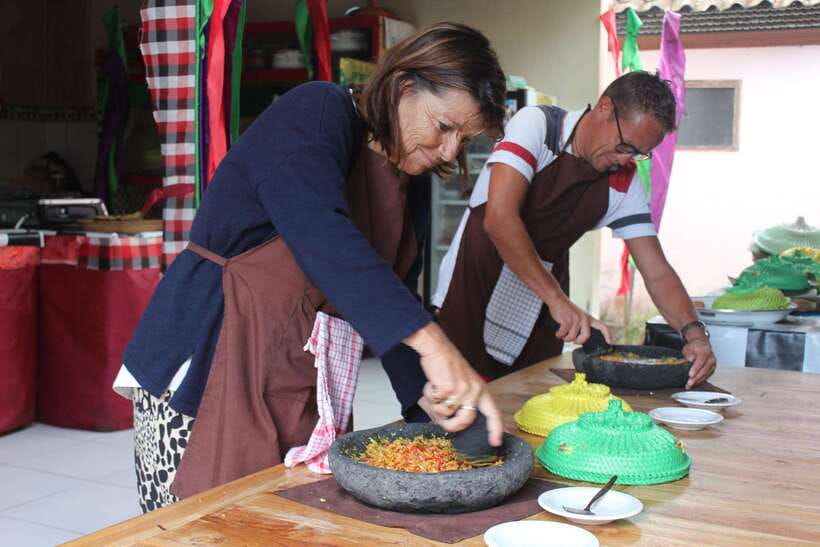
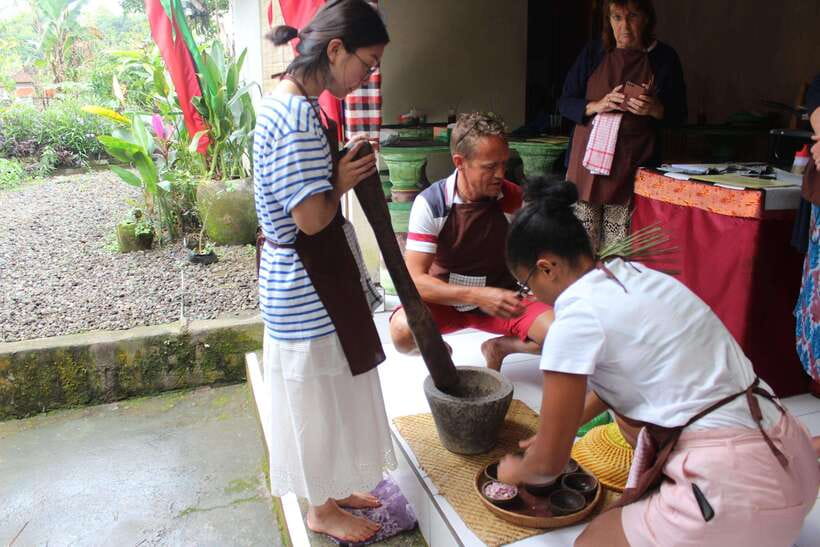
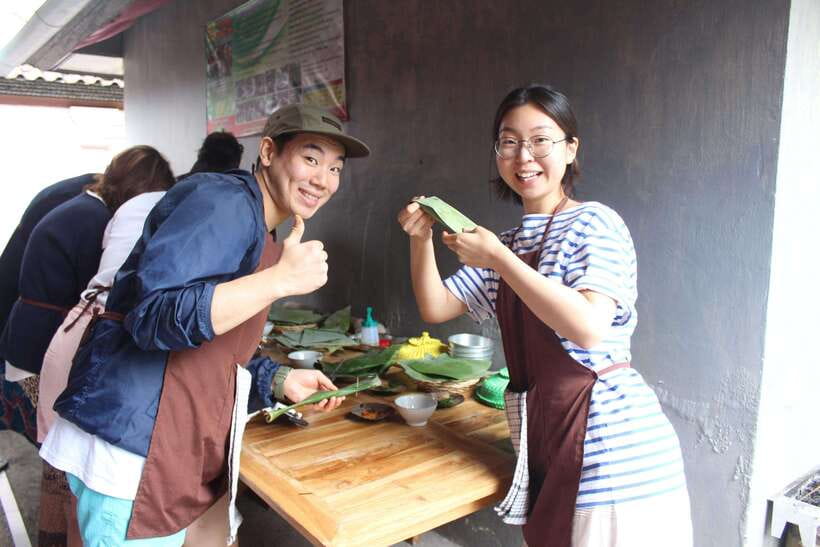
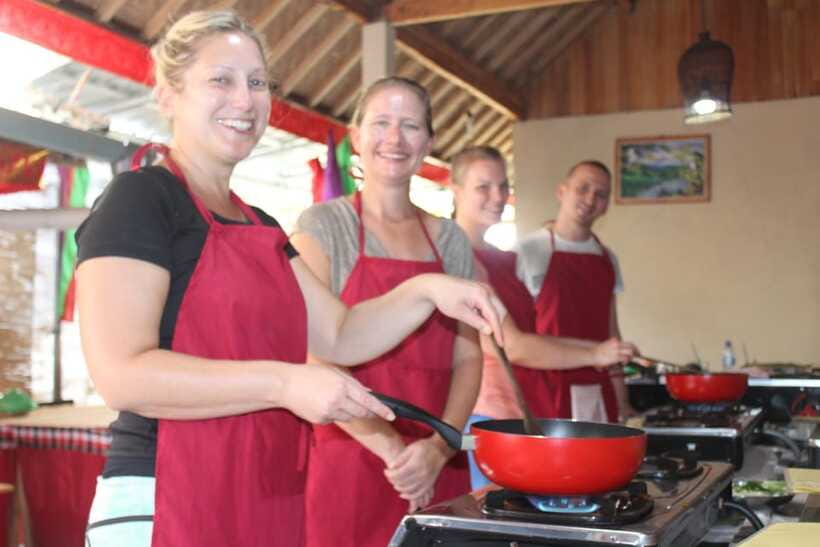
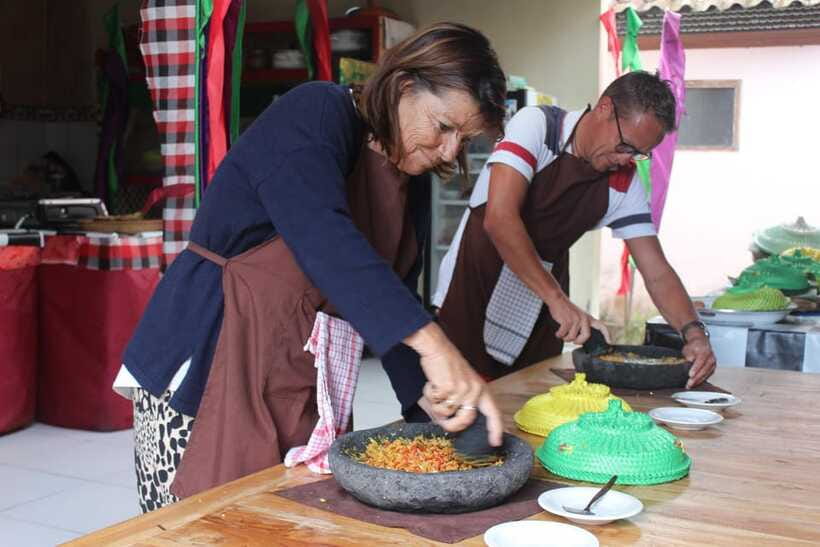
This is a true hands-on cooking class. The menu items are made by you using your own hands, with a guide stepping in step by step. The class focuses on Balinese cooking with vegetarian and vegan-friendly preparation.
The program description says you’ll cook at least 9 recipes of food, while the summary highlights 8 dish preparation. In plain terms: you’ll come away with a lot of cooking practice and a long list of meals you can recreate later. The format also includes food tasting during the session, so you’re not waiting until the end to judge results.
What you’ll likely notice in how the class runs:
- Clear stations and set-up so you’re not constantly waiting for equipment.
- A focus on learning methods, not just memorizing flavors.
- A chance to taste as you go, so you can adjust thinking during cooking.
You’ll also get a copy of the recipes as a PDF. That matters because a cooking class can feel fun in the moment but useless later if you don’t get the details written down. With the PDF in your pocket, you can recreate the dishes at home without guessing measurements or steps.
The Teaching Style: Guides Like Tata, Yogi, and Komah
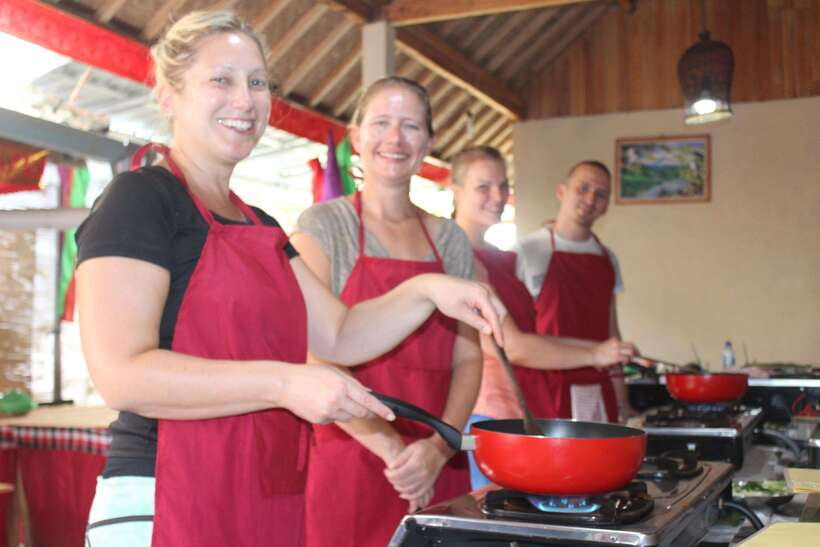
Cooking classes succeed or fail on the teacher. Here, the vibe seems strong and practical. Tata is mentioned as a friendly, knowledgeable tour guide, and Yogi is described as humorous and effective—someone who keeps things light while still teaching.
Komah is mentioned as a teacher who made the class fun and shared lots of food and culture information. Another name you may hear is Harry, described as doing an excellent job with the market and rice-field parts, giving plenty of info.
Even if you don’t get the exact same guide, the structure seems consistent: the guide runs the process, keeps materials organized, and helps you understand what each ingredient does. If you like cooking but don’t want to be thrown into a chaos kitchen, this style is a good fit.
Lunch or Dinner Buffet: Eating What You Cook
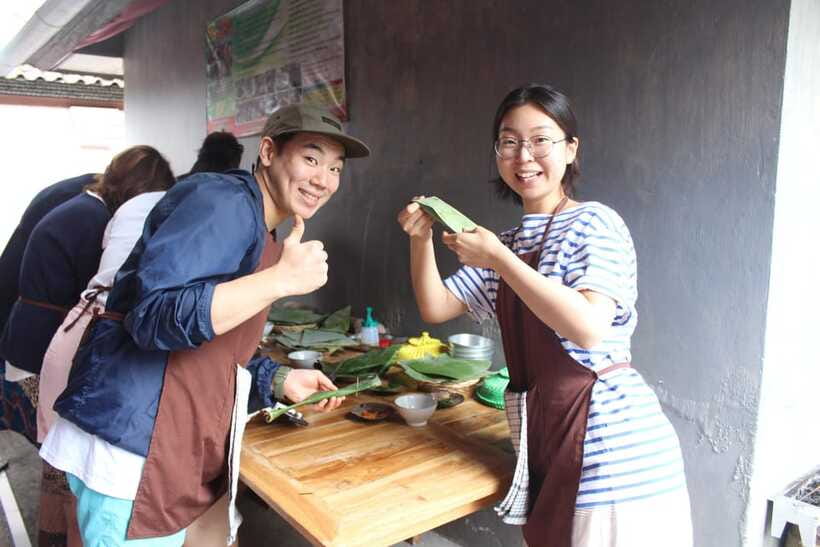
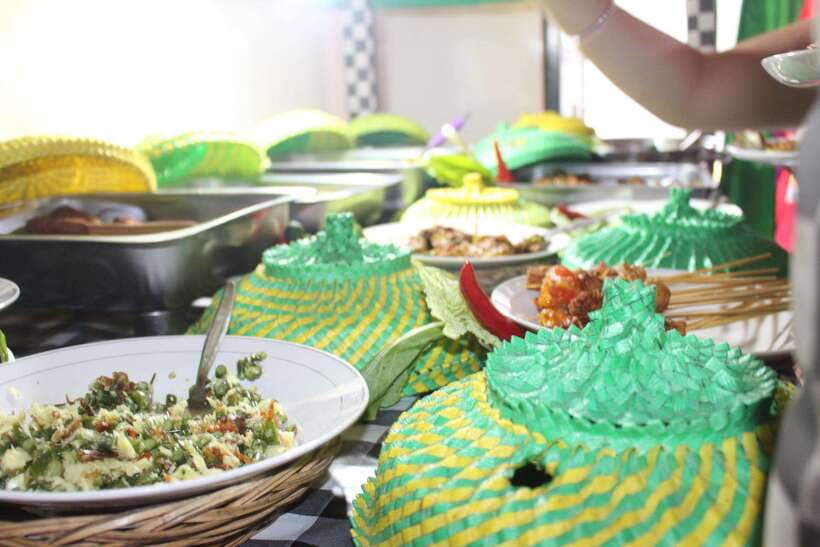
After the cooking portion, you eat together. The experience includes a lunch or dinner buffet, and since you cooked the food yourself, you’re tasting with context. That makes the meal more satisfying than a “watch and then eat” class.
You also get mineral water listed as included, plus water is mentioned as readily available in the experience setup. If you’re heat-sensitive, this is worth noting. One person mentioned cold bottled water during an afternoon class with limited fan power, which lines up with the reality that kitchens can get sweaty in Bali.
Food here is built for vegetarian and vegan formats, and the class is described as inclusive for different eating styles. For example, one couple was vegan and meat-eater at the same time, and the class accommodated both.
If you’re bringing someone who doesn’t normally eat vegan food, this class can still work. You’re not forced into a single identity; it’s built around Balinese dishes with vegetarian/vegan-friendly cooking.
Afternoon Option: Canang Offering and Skipping the Market
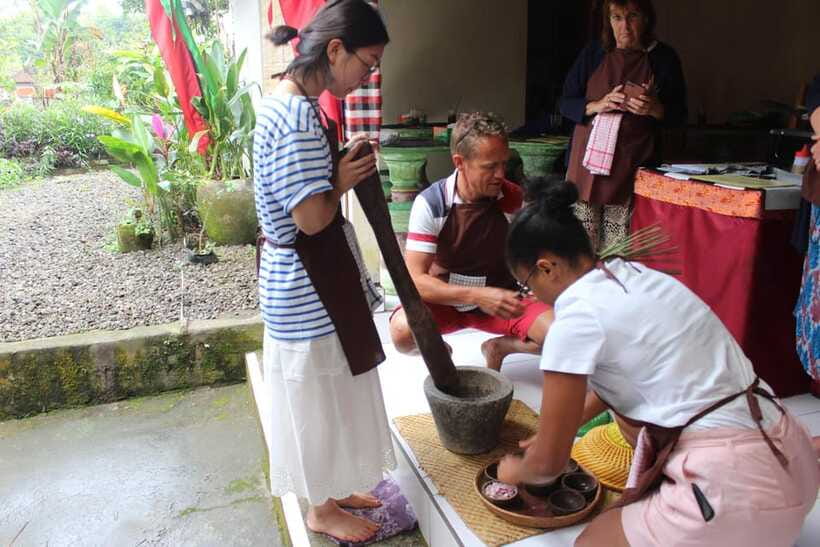
There’s an afternoon class option that can include making a Hindu offering called Canang. If you take that slot, you avoid the morning market and rice paddies stops (since the market tour is only available with the morning class).
This afternoon structure can be a better match if:
- You’re not excited about the market portion.
- You want the cooking focus without extra early walking.
- You prefer a more food-centered day.
Even then, expect cooking time and heat. One note says the afternoon kitchen setup may feel warm depending on airflow, with limited fan use. Bring a hat mindset, even if you’re not told to bring a hat—just treat it like outdoor cooking conditions.





Price and Value: Around $23 With Pickup, Cooking, and Food
At $23 per person, this can be good value—mostly because you’re not just paying for cooking. You’re paying for:
- Pickup and drop-off in central Ubud
- Kitchen equipment
- A recipe PDF
- Food tasting
- A lunch or dinner buffet
- A local host/guide
- Morning option add-ons: market tour and rice-field visit
- Mineral water
That’s a lot packed into a single fee for Bali. And because it’s a hands-on class, the value increases if you’ll actually cook at home later. The PDF matters here. If you only want photos and a snack, you might feel like you’re doing work for the price. If you want skills and recipes you can reuse, it’s easier to justify.
Also note what’s not included: alcohol drinks. So if you plan to drink, budget separately.
What to Bring (and What to Skip)
This is a simple “come ready” situation.
Bring:
- Cash (explicitly requested)
Skip:
- Oversize luggage (not allowed)
You’ll be cooking and moving around, so pack like you’ll be hands-on and potentially in warm conditions. Wear something comfortable you don’t mind getting a little food dust on. And if you’re doing the morning market tour, think about walking comfort: it’s short, but it’s still a walk.
Who This Ubud Class Is Best For
This works especially well for:
- Vegetarian and vegan eaters who want Balinese flavors, not a “global salad” version of Bali.
- People who want cultural context for ingredients, not just cooking steps.
- Anyone who likes learning by doing and wants a practical skill they can repeat at home.
- Couples and groups with mixed preferences, since the class is described as able to accommodate different diets within the same session.
It may be less ideal if:
- You’re uncomfortable with animal-welfare issues during a market visit (then choose the afternoon option).
- You use a wheelchair. It’s listed as not suitable for wheelchair users, and there are steep steps to get upstairs to the kitchen.
Should You Book This Cooking Class in Ubud?
Book it if you want a real, practical Bali food experience: a market start (if you choose morning), rice-field context, then cooking and tasting with a clear recipe handoff. The value at around $23 improves a lot because you’re getting pickup, a proper meal, and a recipe PDF—not just a show.
Skip the morning option and go afternoon if the market stop might bother you, or if you’d rather focus on cooking and the cultural offering element (Canang). Choose afternoon also if you want less early-morning movement.
If you’re heat-sensitive, plan to dress light and stay hydrated. The kitchen can be warm, and even with fans, it may not be a cool-room experience.
If you want one souvenir that’s actually useful, this class delivers: skills, dishes you can remake, and a meal that tastes like effort.
FAQ
What time do they pick you up in Ubud?
Pickup is listed as 7:30am for the Ubud area center.
Where is the meeting point?
The guide waits at the front of Ubud Palace, and the activity ends back at the same meeting point.
Is the market tour included?
The market tour is included only if you book the morning class. The note says market tour is not available for the afternoon class.
Do you visit rice paddies?
Yes, the local rice field visit is listed as part of the morning class option only.
How many dishes will I cook?
The summary says you’ll make 8 Balinese dishes by hand. The detailed description also says you’ll learn at least 9 recipes of food, so expect a larger set of dish instructions than just one template.
Is this class vegetarian or vegan?
The program is described as Vegetarian and Vegan cooking, and the class supports different eaters in the same session.
What’s included with the price?
Included items list pickup/drop-off (Ubud center area only), mineral water, kitchen equipment, recipe PDF, food tasting, a lunch or dinner buffet, and a local guide/host.
Is alcohol included?
No. Alcohol drinks are not included.
Is the class wheelchair accessible?
No. It’s listed as not suitable for wheelchair users, with steep steps to reach the kitchen area.