Ubud has a way of turning sightseeing into something you can feel, not just see. This Ubud surrounding tour strings together five standout stops—monkeys, rice terraces, sacred holy springs, coffee, and a waterfall—so you get a real sense of how Bali connects daily life, religion, and nature. I especially love the private guide/driver attention and the fact that the tour includes entrance tickets with hotel round-trip transport. The main drawback to plan around is time and logistics: it’s a full day of stops, and the last parts involve water and temple rules, so you’ll want the right clothes and a bit of patience in traffic.
Here’s what makes it practical: you’re not stitching together tickets, rides, and directions. Instead, the route is built so each stop has a clear purpose—spiritual, scenic, and hands-on—while your driver helps you move efficiently between areas around Ubud.
In This Review
- Key highlights at a glance
- Price and logistics: what $63 really buys you
- Sacred Monkey Forest Sanctuary: watching Bali’s wild side (with rules)
- Tegalalang rice terraces: short trekking energy without the grind
- Tirta Empul Temple: holy spring purification and temple etiquette
- Segara Windhu Coffee Plantations: luwak coffee, explained and tasted
- Kanto Lampo Waterfall: swim time and photo-friendly rock
- What’s included (and what you’ll pay for) during the day
- Who this tour fits best (and who might want a different plan)
- My booking verdict: should you sign up?
- FAQ
- How long is the Ubud surrounding tour?
- Is hotel pickup and drop-off included?
- Are entrance tickets included?
- Is lunch included?
- What should I bring for the temple and waterfall?
- Is this tour private?
- What if the weather is bad?
Key highlights at a glance
- Hotel pickup and private transportation to cut the hassle of getting around Ubud
- Entrance tickets included for major sites, so your day feels simpler
- Sacred Monkey Forest in Padangtegal village, with plenty of time to watch the behavior (and follow the rules)
- Tegalalang rice terraces with a short trekking feel across rice-field paths
- Tirta Empul Holy Spring purification with the temple’s bathing fountain stations
- Kanto Lampo waterfall time to soak and take photos, if you come prepared
Price and logistics: what $63 really buys you
At $63 per person, this tour is priced like a “value half-day to full-day” experience, not an ultra-luxury day. You’re paying for more than rides: the plan includes private transportation, bottled water, and entrance tickets across the key cultural stops. In places like Ubud, that combination matters—admission fees plus figuring out transport can add up quickly if you do it on your own.
Also, it’s designed to be easy to organize. You get round-trip hotel pickup, you receive a mobile ticket, and the operator lists group discounts if that matters for your party. The tour length is flexible on the day (listed as roughly 1 to 10 hours), but the route you’re taking—five major stops—usually works best as a longer afternoon into early evening. If you’re trying to pack this around another reservation, keep a buffer for traffic.
One more thing: this experience is weather-dependent. If conditions aren’t good, you’ll be offered a different date or a full refund. That’s not just fine print; it directly affects the waterfall stop and outdoor time.
You can also read our reviews of more tours and experiences in Ubud.

Sacred Monkey Forest Sanctuary: watching Bali’s wild side (with rules)
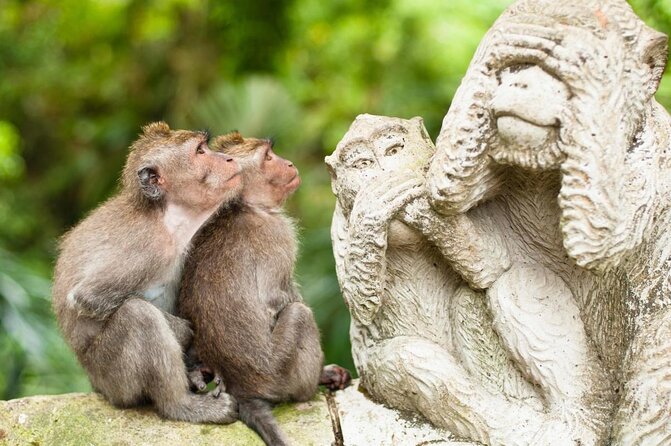
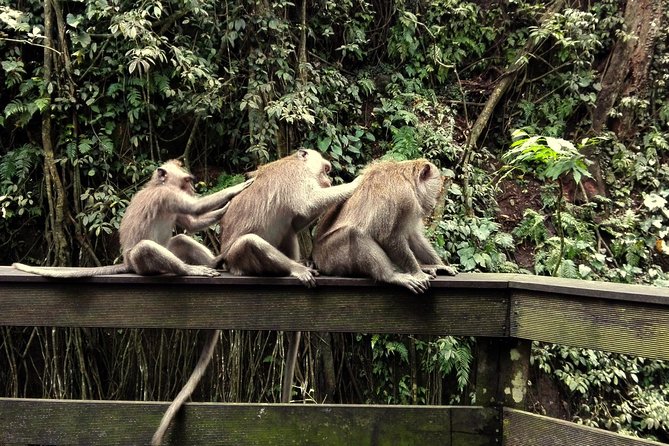
Your first stop is the Sacred Monkey Forest Sanctuary, located in the village of Padangtegal. That village connection is more than trivia—think of the forest as part of a living community, not just a photo spot.
You’ll have about 1 hour there, which is enough to:
- observe monkey behavior up close (fast hands, quick movement, and plenty of curiosity)
- take photos without feeling rushed
- slow down and notice how the area blends worship, daily life, and conservation
Practical advice: treat this like a temple area plus a wildlife zone. Keep your belongings zipped and secure, don’t tease or reach toward the monkeys, and follow whatever guidance the site staff or your guide gives on the day. Monkeys are clever, and they learn fast what people carry.
The payoff of starting here is that you’re already in the right mindset for Bali—playful and slightly chaotic in a way that feels very local, not staged.
Tegalalang rice terraces: short trekking energy without the grind
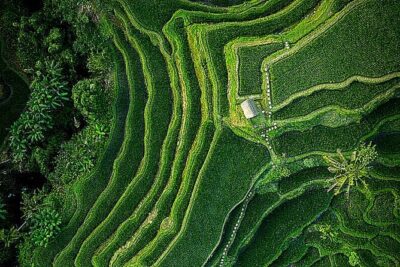
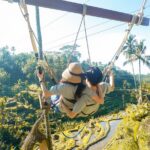
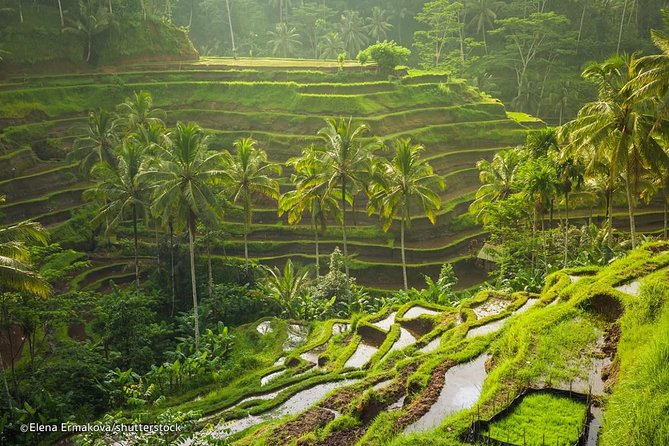
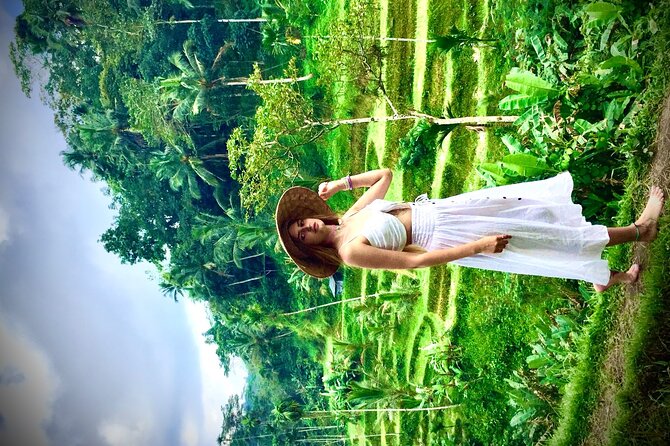
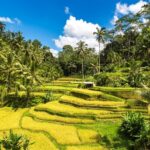
Next comes Tegalalang Rice Terrace, about 30 minutes from central Ubud. This is one of the most recognizable rice-terrace views on the island, but the tour keeps it grounded: you’re there to explore and walk a bit, not just stand in one viewpoint.
Expect about 1 hour for this stop, and yes, there’s a “little trekking on rice fields” vibe. That can mean:
- easy paths along terraces where you can photograph layers of green
- short walking sections between viewpoints
What I like about this part of the day is that it gives you a slow-moving counterpoint to temples and animals. You get open air, big sightlines, and a sense of scale for how rice farming shapes the land.
The only consideration: wear shoes you’re comfortable walking in. Some paths can be uneven, and you’ll probably step around locals, steps, and small slopes while trying to find the best angle for photos.
Tirta Empul Temple: holy spring purification and temple etiquette
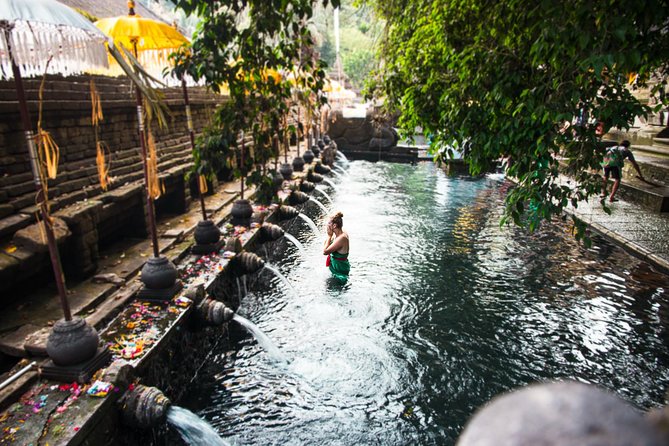
Then you go to Tirta Empul Temple, also known as a Holy Spring temple. This stop is the most spiritually active part of the day.
You’ll have about 1 hour 30 minutes, and the key difference from other temple visits is that it’s not only about looking. You can do purification at the holy spring stations. The description notes two fountain stations involved in the purification flow—so plan your time around moving through those areas and following the ceremony pace rather than rushing for photos.
What you’ll likely feel here: it’s calmer. Even if you’re watching others participate, the setting encourages you to slow down. And it’s one of those places where photos aren’t the main event—what matters is respecting the ritual.
What to bring for Tirta Empul: come ready to get wet. The tour instructions specifically suggest you prepare a swim suit and extra clothes, because purification involves water, and you’ll want to change afterward. Also, dress respectfully; you’re in an active worship site, not a casual viewpoint.
If you want one lesson from this stop, it’s that Bali’s “culture” isn’t only dance halls and craft markets. It’s also daily spiritual hygiene—something practiced in a public sacred space.
Segara Windhu Coffee Plantations: luwak coffee, explained and tasted
The route then heads to Segara Windhu Coffee Plantations. This is where you get a more hands-on, food-and-culture stop.
The tour centers on Bali’s famous luwak coffee—the civet coffee story. The tour description explains the basics: the luwak (civet) eats selected coffee beans, and after digestion the beans are processed into coffee. The idea is built around selection of the good beans, then producing the final coffee from those processed results.
You’ll spend about 1 hour here, and the itinerary lists the stop as admission ticket free, which helps with overall value. The overview also says there’s a chance to try the island’s famous luwak coffee, though it doesn’t spell out whether tasting is included or purchased on-site—so treat it as a “try if available” moment.
My take on this kind of stop: it can be either educational or overly salesy, depending on the operator and how the presentation is handled. Here, the fact that you’re getting a full hour (not a 10-minute “smell this” pause) is a good sign that you’ll have time to understand the process and decide whether you want to taste.
If you’re a coffee person, it’s a fun culture angle. If you’re not, still use it as a quick break from temples and outdoor walking.
Kanto Lampo Waterfall: swim time and photo-friendly rock
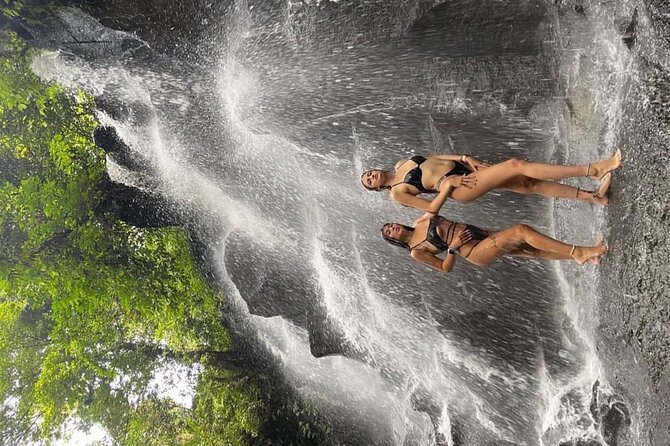
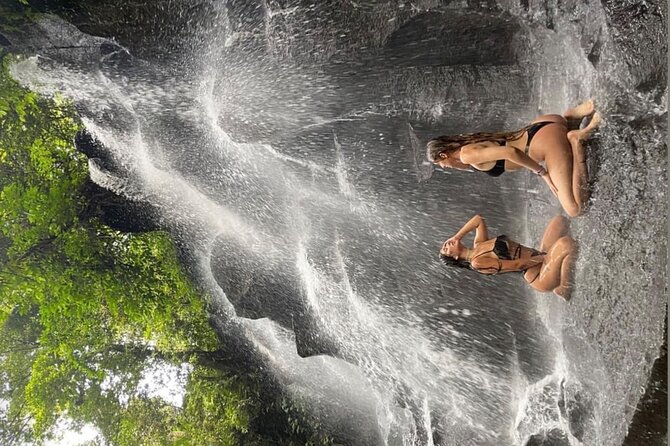
Finally, you end at Kanto Lampo Waterfall (Air Terjun Kanto Lampo). The tour description frames it as a spot locals know well for soaking and pictures, with water that flows over a rock that’s very photogenic.
You’ll have about 1 hour here. That time is your chance to:
- see the falls properly (not just a quick walk-by)
- soak in the water if conditions allow
- take photos from the classic angles people aim for
This is also where the earlier advice becomes important. The operator explicitly tells you to bring swim suit and extra clothes. That’s not optional comfort—it’s part of being able to enjoy the experience rather than just watch from the sidelines.
One practical note: because it’s outdoors, weather affects the experience. If rain makes water too rough, expect adjustments or rescheduling. If you get good conditions, it’s a memorable finish to a very culture-and-nature-packed day.
What’s included (and what you’ll pay for) during the day

Included:
- Private transportation (hotel pickup and return)
- Bottled water
- Entrance tickets for the stops listed as included in the tour
Not included:
- Lunch
- Dinner
That’s a straightforward setup, and it’s worth planning around. You’ll likely want to eat before you start, or plan for a simple meal after the tour. If you get hungry between stops, you’ll either snack on your own or buy something nearby—nothing is promised as part of the package.
Who this tour fits best (and who might want a different plan)
This works well if you want a “one day around Ubud” plan that mixes:
- wildlife viewing (Monkey Forest)
- scenic walking (Tegalalang terraces)
- spiritual purification (Tirta Empul)
- a cultural food angle (luwak coffee at Segara Windhu)
- an outdoor finale (Kanto Lampo waterfall)
It’s also a good choice when you prefer private attention. The tour is described as private, so you’re not stuck with a huge group pace. In the one review included here, the driver is praised for taking the group to every spot they wanted and for explaining each venue, plus offering future transportation contact help. That kind of service matters because you’re doing five locations, and you want them to feel connected, not like separate errands.
Who might reconsider?
- If you’re hoping for a slow, very restful day, the schedule may feel tight because it stacks major stops with travel time.
- If you don’t want any wet experiences, you may not enjoy the Tirta Empul and waterfall components as much—both involve water and changing clothes.
My booking verdict: should you sign up?
I’d book this tour if you want a practical, ticket-included way to see the Ubud area’s best-known cultural and natural stops in one flow. The biggest strengths are the private transportation, the entrance tickets included approach, and the fact that the day isn’t just sightseeing—it includes purification at Tirta Empul and a coffee stop tied to a real local product story.
I’d skip it or choose a different route if you’re short on time, dislike temples involving water, or want meals handled for you. You’ll manage lunch/dinner on your own, and you’ll want to pack for getting wet.
If your goal is an efficient day that still feels like Bali (not a checklist), this is a solid bet.
FAQ
How long is the Ubud surrounding tour?
The tour duration is listed as about 1 to 10 hours, depending on timing and how the day runs.
Is hotel pickup and drop-off included?
Yes. The tour includes round-trip transportation from your hotel, and it ends back at the meeting point.
Are entrance tickets included?
Admission tickets are included for the main stops in the route, with one coffee plantation stop listed as free for admission.
Is lunch included?
No. Lunch and dinner are not included.
What should I bring for the temple and waterfall?
Bring a swim suit and extra clothes so you can participate comfortably in the water ceremony at the temple and the waterfall.
Is this tour private?
Yes. It’s described as private, with only your group participating.
What if the weather is bad?
This experience requires good weather. If it’s canceled due to poor weather, you’ll be offered a different date or a full refund.
If you want, tell me your travel dates and whether you want a heavier focus on temples, nature, or coffee, and I’ll suggest a good time-of-day to start this so the day feels smoother.