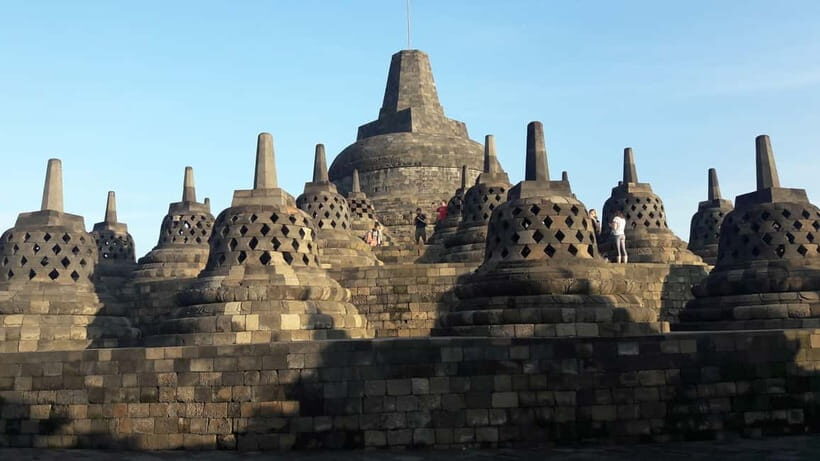
White sand meets your first scuba lesson. This beginner-friendly day in Bali’s Tulamben Bay pairs simple gear training with a close-up look at the famous USAT Liberty wreck, right off the shore. You get a calm, guided start in clear blue water, plus the option to apply your experience as credit toward a PADI Open Water Diver course.
I especially like how the setup keeps you close to the action—less time traveling, more time actually feeling comfortable. And I like that the day is built around confidence: shallow-water practice with equipment first, then two longer underwater sessions, with coaching that stays safety-first.
The main drawback is logistics. If you’re staying far from Tulamben (like Seminyak), the transfer can eat most of the day due to traffic, and you must also plan for the 18-hour rest rule before any upcoming flight.
In This Review
- Key things I think you’ll care about
- A 9-hour Tulamben Bay day built for calm first-timers
- Hotel pickup and the real travel-time test
- What you learn before you ever go underwater
- Two underwater sessions near the shore (and why that matters)
- Tulamben Bay: white sand, clear water, and a wreck you can’t miss
- USAT Liberty wreck: what you can realistically expect to see
- Sea life around the wreck: stingrays and plenty of variety
- The equipment, the crew, and how to make the day easier
- Price and value: what $119 includes (and why it’s not just a “try it”)
- Who this works for (and who should skip it)
- Should you book this Tulamben Bay beginner scuba experience?
- FAQ
- How long is the Bali: Tulamben Bay beginner scuba experience?
- What does it cost?
- How many people are in the group?
- What’s included in the price?
- Do I get equipment and tanks provided?
- Is lunch included?
- Do I practice in shallow water first?
- Is there pool practice before the first underwater session?
- Can this beginner experience count toward a course?
- Are there age and health limits?
Key things I think you’ll care about
- Two sessions with a real wreck: the USAT Liberty is close to shore, so you don’t lose time getting there
- Confidence training first: gear familiarization and basic buoyancy help you relax sooner
- Small group size (2 people max): more attention from the instructor when you’re new
- Pool practice option: you may rehearse key skills before your first underwater session
- Hands-on support: porters carry equipment, and the crew handles the heavy stuff
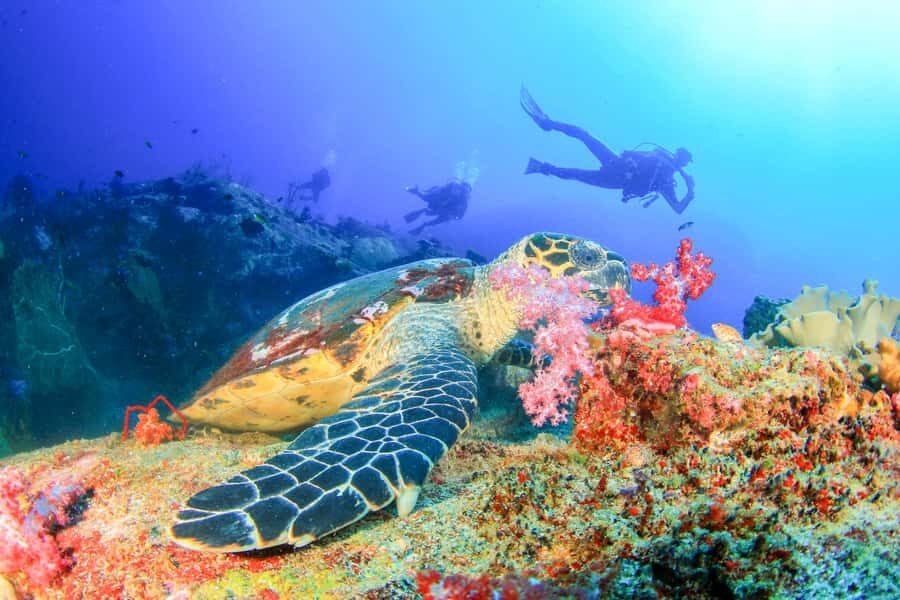
- Marine life you can spot easily: you’re likely to see stingrays plus fish like moray eel and trigger fish
A 9-hour Tulamben Bay day built for calm first-timers
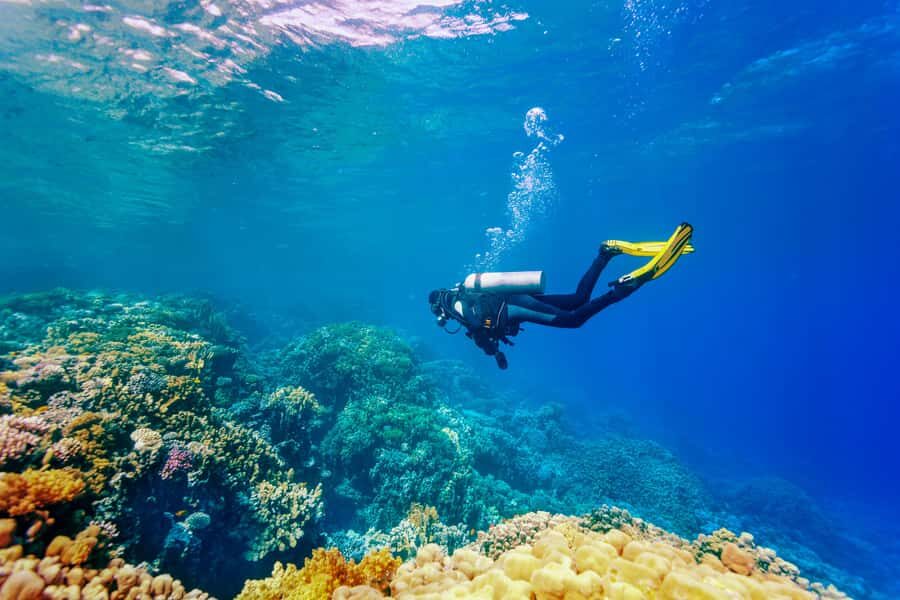
This is the kind of Bali scuba experience that makes sense when you’re new, nervous, or both. You’re not thrown in at the deep end. The plan is to start with the basics—how equipment works, how breathing should feel, and how to stay relaxed—so the rest of the day feels more like learning a skill than surviving a stunt.
The format is also friendly to your energy. The total time is about 9 hours, including hotel pickup and drop-off. You’ll spend your morning focused on getting comfortable, then move into two underwater sessions, with lunch between them so you don’t start the second half tired and hungry.
One more practical point I like: the site is right in front of where you’re set up. That matters because traffic and long transfers can already be a lot on Bali. If you’re going to spend a day doing this, you want the day to be used for the actual underwater time, not cruising across the island.
You can also read our reviews of more tours and experiences in Bali.



Hotel pickup and the real travel-time test

Let’s talk transfers, because they’re the make-or-break detail for many people.
Pickup coverage includes areas around Center Kuta, Legian, Seminyak, Sanur, and Nusa Dua. Your pickup time is confirmed by email one day before, and they’ll pick you up from your hotel lobby in those zones. That’s straightforward, and it usually saves you from having to coordinate transport yourself.
But the bigger issue is travel time. Tulamben is on Bali’s north-east coast, and from the south (Seminyak especially), the drive can be long due to traffic. In some cases, people describe spending nearly the whole day on the road if they’re far away. So if you’re optimizing your trip, I’d treat this as a full-day commitment, not a quick half-day add-on.
If your hotel is in remote areas like Uluwatu/Pecatu, Canggu, or Ubud, plan on a small extra pickup/drop-off charge of US$27 per group cost. That keeps the experience flexible, but it’s good to budget for it.
What you learn before you ever go underwater
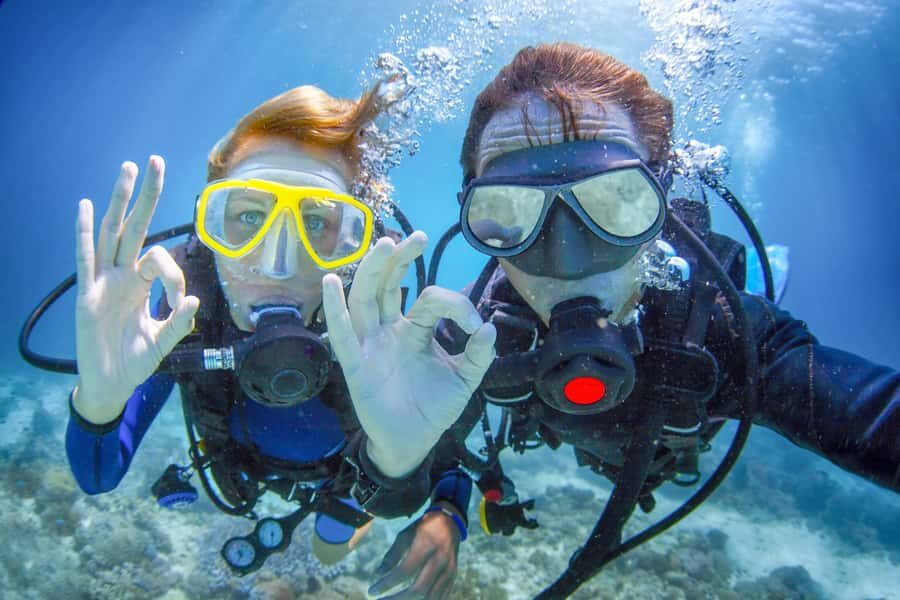
The beginner structure here is simple: learn how the gear works, then practice in the shallows so your body has time to get used to the sensation.
You’ll get an introduction to using scuba equipment in shallow water. That usually means you’ll practice the basics with the instructor right there, helping you connect the physical motions to what you’re feeling. The goal isn’t to impress. The goal is to keep you calm and give you a repeatable routine.
Two things I think are genuinely valuable for first-timers:
- Relaxation and reassurance techniques. This kind of coaching helps you manage the mental side of scuba, which is often harder than the physical side.
- Quick comfort with hand signals and basic communication. When you’re new, you want to know how you’ll communicate underwater without guessing.
Also, if you’re offered the optional pool practice, it’s a smart extra step. Even if you don’t know exactly what will feel unfamiliar yet, rehearsing key skills in a controlled environment tends to lower anxiety before you’re in open water.
Two underwater sessions near the shore (and why that matters)
This experience includes two underwater sessions. In practice, you’ll likely get the best benefits from this format if you think of it like learning in two chapters: first, test your comfort; second, build on what you learned.
Between your sessions you’ll have a complimentary lunch plus light refreshments. That’s not just nice—it helps you avoid the classic beginner mistake of feeling sluggish, cold, or distracted by hunger during the second half.
The other advantage is proximity. The underwater site is described as being right in front of the setup location in Tulamben, so you should spend less time on moving logistics and more time on the actual water experience. And because the USAT Liberty wreck is extremely close to shore, the day’s anchor point becomes simple: you’re not fighting time to get to the wow moment.
From the names I saw associated with instruction—people like Yoda, Toto, Erwin, Dewa, and Nyoman—the consistent theme is patience. The instructors are there to help you get set up, explain what to do, and keep safety top of mind.
Tulamben Bay: white sand, clear water, and a wreck you can’t miss
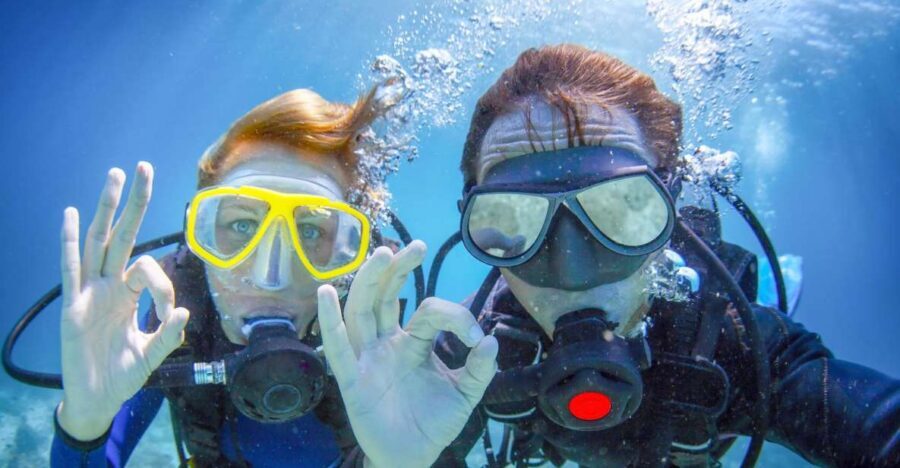
Tulamben Bay is the kind of place where the coastline already looks like it’s meant for water activities. You get white sandy shoreline scenery, clear blue water, and a relaxed beach vibe above the surface.
Then the day shifts underwater to the main reason many people come here: the wreck of the USAT Liberty. The wreck is so close to the shore that it’s basically a short swim away. For beginners, that closeness matters. You’re more likely to feel in control if you know the route back is straightforward and you’re not doing an all-day expedition just to reach the first major point of interest.
One more reality check: visibility and fish behavior can vary day to day. Some people are excited mainly by the wreck structure and the overall underwater scene; others hope for bigger or more dramatic animals. The good news is that Tulamben’s ecosystem tends to deliver variety even on non-perfect days.






USAT Liberty wreck: what you can realistically expect to see
The USAT Liberty wreck is the headline, and you’ll get a close view inside the ship structure. For first-timers, seeing the inside can be a big deal because it changes the underwater experience from scenic to truly memorable.
What I think is especially helpful for your expectations:
- The wreck is near shore, so you’re not spending a long time traveling to reach it.
- You’ll likely feel you’re exploring a real site, not just drifting over sand.
- The wreck itself creates natural interest even if the biggest fish aren’t constantly in view.
Some descriptions also mention good visibility around the wreck, which helps you see details and helps you feel more oriented. If you’re the kind of person who gets excited by structure, ladders, and the idea that this is a real piece of history underwater, you’ll probably love the USAT Liberty portion.
If you’re more focused on giant animals, your experience will still be worthwhile—but you may find your highlights center more on the wreck and the smaller life around it than on constant large-fish action.
Sea life around the wreck: stingrays and plenty of variety
This is one of the reasons Tulamben works well for beginner scuba—there’s usually plenty to look at without chasing it.
Commonly mentioned marine life includes:
- blue-spotted stingrays
- octopus
- scorpion fish
- sweet lips
- trigger fish
- moray eel
- and more fish alongside coral and reef life
This lineup is useful because it gives you a mix: some animals are out in the open, others blend into the scene, and some you might see only briefly. As a beginner, you’re learning buoyancy and breathing too, so having a site where you can enjoy frequent small moments is a win.
If you’re hoping for specific animals (like stingrays), don’t treat it like a guarantee. But based on the kinds of sightings people describe here, you have a solid chance of seeing something cool quickly.
The equipment, the crew, and how to make the day easier
One reason this experience feels manageable is that the operational details are handled for you.
All dive equipment rental is included, including tanks and weight belts. You also get porters to help carry equipment. That matters because beginner gear can feel heavy and awkward on land, and lifting it yourself while you’re already nervous is not a great combo.
You’ll also have an experienced instructor, with languages listed as English and Indonesian. Many first-timers need both clear instruction and calm reassurance, and the instructor role here is clearly central. People associated with this activity describe guides as patient and focused on safety, including hands-on help with equipment and guidance on what to do underwater.
A small practical tip from the experience vibe: bring a change of clothes and towel, plus sunscreen. You’ll be out and about, on boats or around the water area, and the day includes time between activities.
Price and value: what $119 includes (and why it’s not just a “try it”)
At $119 per person for a 9-hour day, this can look like a splurge—until you see what’s included.
You’re getting:
- hotel pickup and drop-off
- marine park entry fees
- boat and porter fees
- lunch and light refreshments
- free water, tea, and coffee at the dive center
- an experienced instructor
- all equipment rental, including tanks and weight belts
For many travelers, the biggest value is that most of the hidden extras are already covered. If you tried to DIY a similar day, you’d likely pay separately for transport, access fees, gear rental, and guide time. Here, the price is bundled around doing the underwater training properly.
Also, there’s a potential future value angle: if you decide to continue, this experience can be used as a credit toward a PADI Open Water Diver course. Even if you’re just curious now, that option can make your next step cheaper and more structured.
Who this works for (and who should skip it)
This is clearly designed for beginners and for people who want a guided introduction without chaos.
It’s suitable for:
- first-time scuba participants who want shallow-water coaching
- anyone who likes a structured plan: gear practice first, then two underwater sessions
- travelers who want a wreck-focused underwater day (USAT Liberty is the big reason to come)
It’s also set up for small attention. The group is limited to 2 participants, which is great when you’re learning and may need extra help.
But it’s not for everyone. It’s not suitable for:
- children under 10 years
- pregnant women
- people with heart problems
- people with respiratory issues
And there’s one timing rule that can quietly ruin your plans if you ignore it: you must have at least 18 hours to rest before a flight to reduce nitrogen in your body. If you don’t have that buffer, you won’t be allowed to participate.
Should you book this Tulamben Bay beginner scuba experience?
If you want a beginner-friendly way to experience real underwater life and the USAT Liberty wreck without taking on a complicated planning headache, I think this is a smart choice. The big selling points for you are the small group, the shallow-water coaching, and the fact that the wreck is close enough to keep the day focused on what you came for.
Book it if:
- you’re a beginner who wants patient instruction and a safety-first pace
- you’re comfortable committing to a full day (especially if staying in southern Bali)
- you can meet the 18-hour rest requirement before flying
Skip it if:
- your schedule is too tight around flights
- you’re not able to take on long transfers
- you fall into any of the health categories listed as not suitable
If you fit the basics, this is the kind of Bali day that can turn a curiosity into a skill—and do it with enough calm support that you actually enjoy being underwater for the first time.
FAQ
How long is the Bali: Tulamben Bay beginner scuba experience?
The experience lasts 9 hours.
What does it cost?
It costs $119 per person.
How many people are in the group?
It’s a small group limited to 2 participants.
What’s included in the price?
Hotel pickup and drop-off, marine park entry fees, boat and porter fees, lunch and light refreshments, water/tea/coffee at the dive center, an experienced instructor, and all scuba equipment rental including tanks and weight belts.
Do I get equipment and tanks provided?
Yes. All equipment rental is included, including tanks and weight belts.
Is lunch included?
Yes. Lunch is served between your two underwater sessions.
Do I practice in shallow water first?
Yes. You learn how to use scuba equipment in shallow water as part of the beginner training.
Is there pool practice before the first underwater session?
You may have the option to practice in a swimming pool before your first underwater session.
Can this beginner experience count toward a course?
Yes. If you decide to go further, the day can count as a credit toward completing a PADI Open Water Diver course.
Are there age and health limits?
You must be at least 10 years old. It’s not suitable for pregnant women, people with heart problems, or people with respiratory issues. Also, if you have an upcoming flight, you must have at least 18 hours to rest; otherwise you won’t be allowed to participate.