Bali in one long, well-paced day. This trip strings together Ubud’s Monkey Forest, the holy spring ritual at Tirta Empul, rice terraces at Tegalalang, and a classic sunset finish at Tanah Lot. I especially like the mix of sacred sites and real countryside, and I like that the schedule leaves room to breathe instead of turning it into a nonstop checklist. The main drawback: it’s a lot of driving and some temples have stairs, so it can feel full-on if you’re not up for moderate walking.
This is built for people who want major highlights without sacrificing the feel of Bali. You ride with an air-conditioned vehicle, follow a driver-guide who can explain what you’re seeing, and end the day with that sea-temple view when conditions cooperate. Price-wise, at about $32 per person for an 8–9 hour outing with pickup, transport, and guide time, it can be good value—especially if you don’t want to plan the route yourself.
One more reality check: Tanah Lot is timed for sunset, but fog can happen. You’ll still see the temple and rock setting, but the dramatic light may not always show up.
In This Review
- Key points at a glance
- The value of a $32 Bali highlight loop
- Pickup, drop-off, and the reality of driving time
- Sacred Monkey Forest Sanctuary in Ubud: macaques and old temple shade
- Tirta Empul: holy spring temple and the optional purification ritual
- Tegalalang rice terraces: Subak views and a needed break
- Tanah Lot at sunset: sea temple on a rocky spine
- How the pacing works over 8–9 hours
- Entrance tickets: included only if you choose that option
- Guide impact: when explanations make the temples click
- Photos and flexibility: the best kind of tour help
- What to pack (so the day feels easy, not stressful)
- Modest dress and the temple rules you should know
- Who this tour suits best (and who should skip it)
- The languages and group setup that affect your experience
- How to get the most out of Monkey Forest, Tirta Empul, rice terraces, and Tanah Lot
- Should you book this Bali Ubud–Tegalalang–Tanah Lot day trip?
- FAQ
- What’s the total duration of the Bali day trip?
- Where does pickup happen for this tour?
- Where are drop-offs located at the end of the day?
- Are entrance tickets included?
- Is lunch included?
- Can I join the purification ritual at Tirta Empul?
- What should I wear for temple visits?
- Is the tour guided, and what languages are available?
- Is this tour suitable for everyone?
Key points at a glance
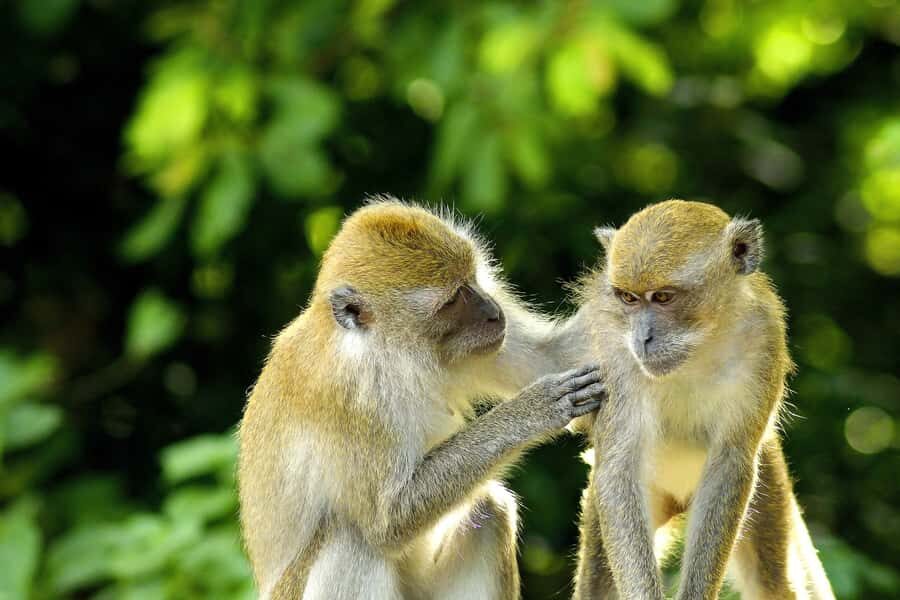
- Monkey Forest Sanctuary: ancient temple ruins plus long-tailed macaques in a protected reserve
- Tirta Empul: a major holy spring temple where the purification ritual is optional
- Tegalalang Rice Terrace: Subak-style rice-field views with real photo time built in
- Tanah Lot: the sea temple stop timed for sunset views
- High praise for guides: multiple guides are repeatedly singled out for calm driving, good explanations, and photo help
The value of a $32 Bali highlight loop
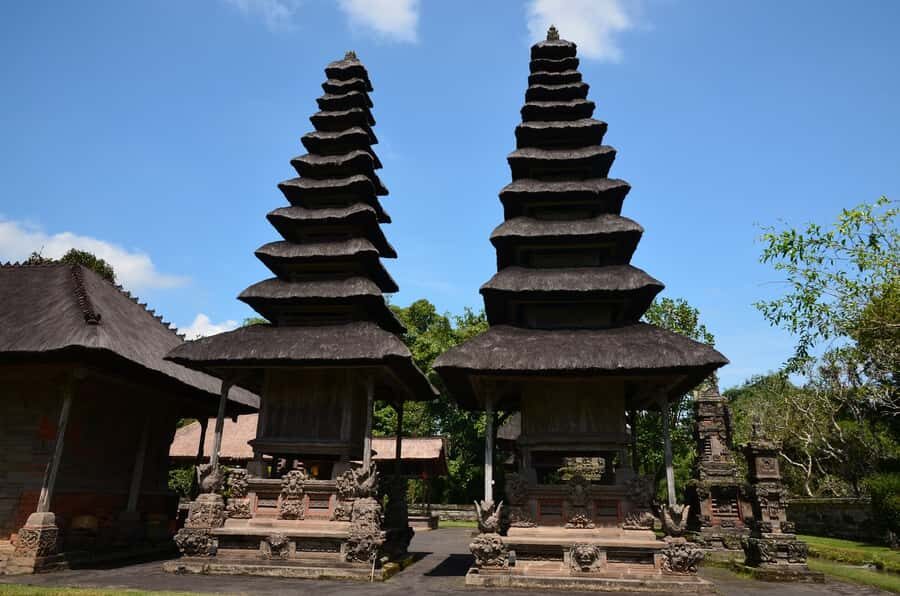
At around $32 per person, this day trip packs a lot into one pass across Bali. You’re paying for pickup, air-conditioned transportation, a driver-guide, parking fees, local donations, and (depending on your selected option) entrance tickets. Lunch and drinks are on you, and that’s usually the only extra cost you’re likely to feel during the day.
The time also matters. You’re out roughly 8–10 hours depending on traffic, which is exactly the kind of schedule that fits visitors who have limited days in Ubud or want to see the south coast without a full overnight change. You get four big stops, not three, and you still get breaks rather than constant sprinting.
You can also read our reviews of more tours and experiences in Bali.
Pickup, drop-off, and the reality of driving time
Pickup is offered from several areas, including Jimbaran, Jalan Nusa Dua, Canggu, Sanur, Uluwatu, Seminyak, Ubud, Candidasa Beach, and Kuta. Drop-off is also flexible, returning you to places like Ubud, Sanur, Seminyak, Canggu, Jimbaran, Kuta, Uluwatu, and Jalan Nusa Dua.
Traffic is the wildcard on any Bali day. The tour’s length can stretch to about 10 hours, and that’s simply the cost of covering Ubud up north and the coast down south in one day. If you hate sitting in traffic, plan for that upfront and keep your expectations realistic.
Sacred Monkey Forest Sanctuary in Ubud: macaques and old temple shade
The day starts in Ubud at the Sacred Monkey Forest Sanctuary, a protected nature reserve where long-tailed macaques live freely among ancient trees and temple ruins. You’ll walk shaded pathways and get a guided-style visit (plus a photo stop), with time to watch the monkeys go about their business.
What I like about this stop is that it’s not just about animals. The sanctuary setting mixes forest greenery with temple structures, so it feels like you’re stepping into a working sacred space rather than a zoo-like display. Even if you’re not a “monkey person,” the atmosphere is part of the point.
Practical tip: comfortable shoes help a lot here. You’ll want a sun hat and sunscreen too, since even shaded reserves can still catch bright Bali light between stretches.
Tirta Empul: holy spring temple and the optional purification ritual
Next up is Tirta Empul Temple in Tampaksiring, one of the island’s most important holy spring sites. The holy water system is central to Balinese spiritual life, and you’ll have time to explore the temple complex with a guide.
The key detail: participation in the purification ritual is optional. You can watch and learn without stepping into the ritual. If you do participate, follow the guide’s lead for what’s allowed and how to prepare.
Dress codes matter here. You’ll need modest clothing, with shoulders and knees covered, and sarongs are usually available at the temples. Also note a hard stop: women who are menstruating are not permitted to enter the temple area under local customs.
Tegalalang rice terraces: Subak views and a needed break

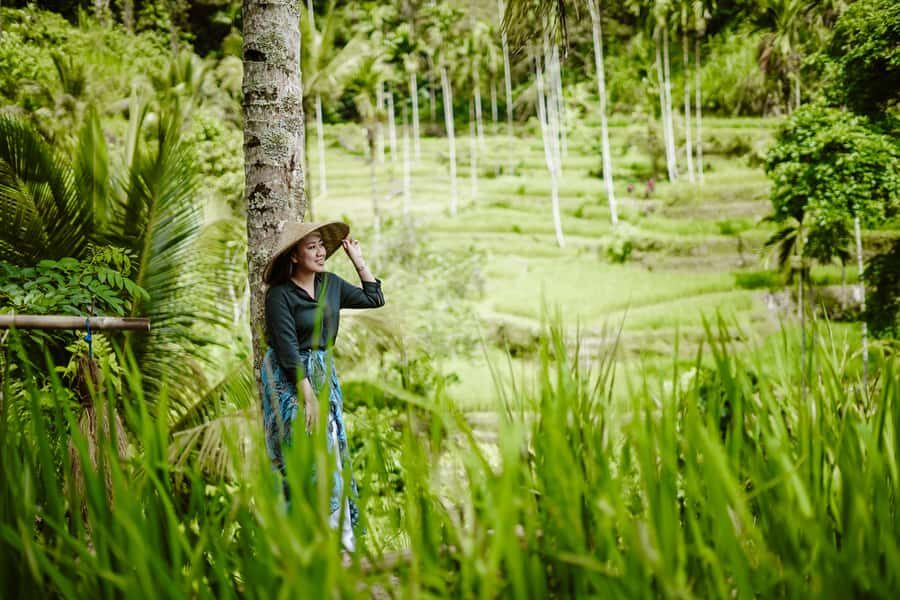
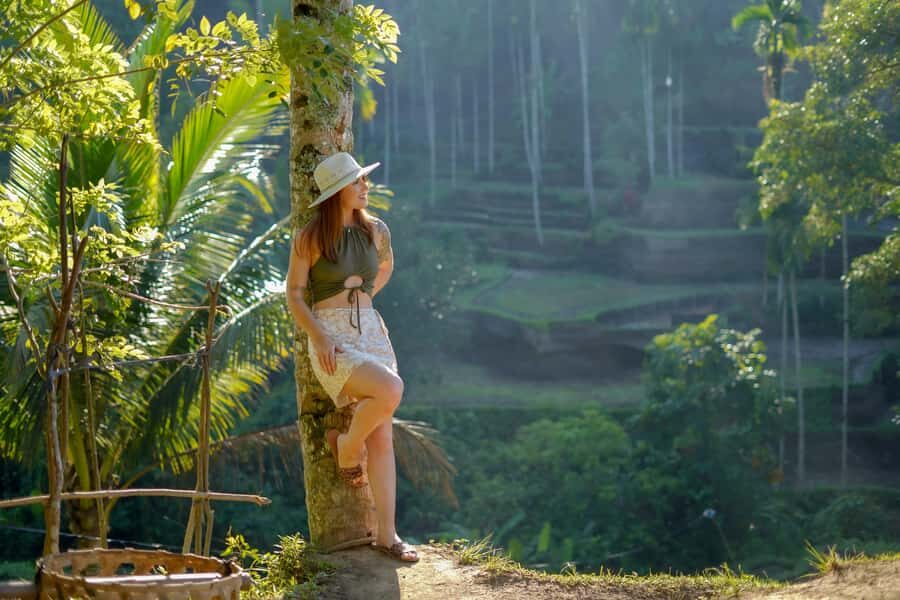
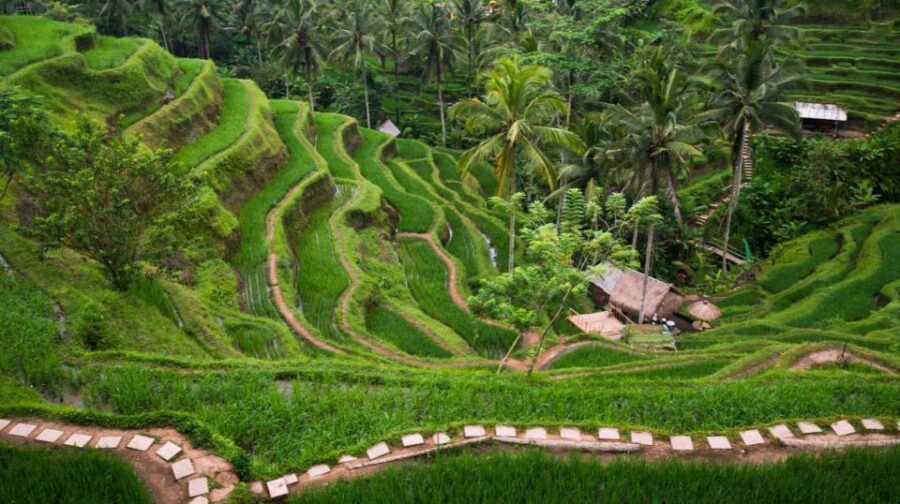
Then you shift from temple spirituality into countryside scenery at Tegalalang Rice Terrace. This is where layered rice fields show off Bali’s traditional Subak irrigation system. You’ll get a photo stop, plus about an hour of break time with free time for exploring.
This is a good stop for two reasons. First, it’s visually one of Bali’s most photogenic areas, with strong geometry in the terraces and viewpoints. Second, it breaks up the “temple-temple-temple” feel with something calmer and open-air.
Keep your expectations balanced. Rice-terrace areas can get busy, and there are often lots of people angling for photos. Still, this is exactly the kind of scenery that makes a one-day tour feel worth it—because it’s Bali beyond just buildings.


Tanah Lot at sunset: sea temple on a rocky spine
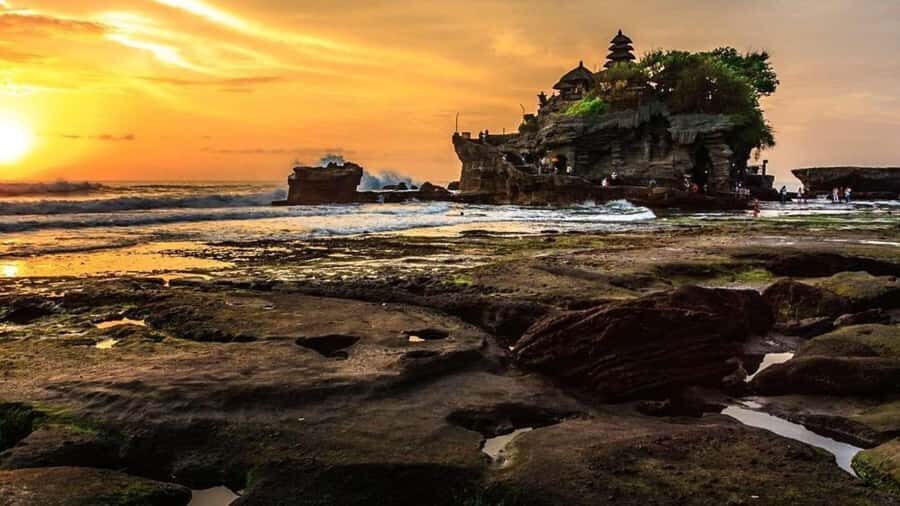
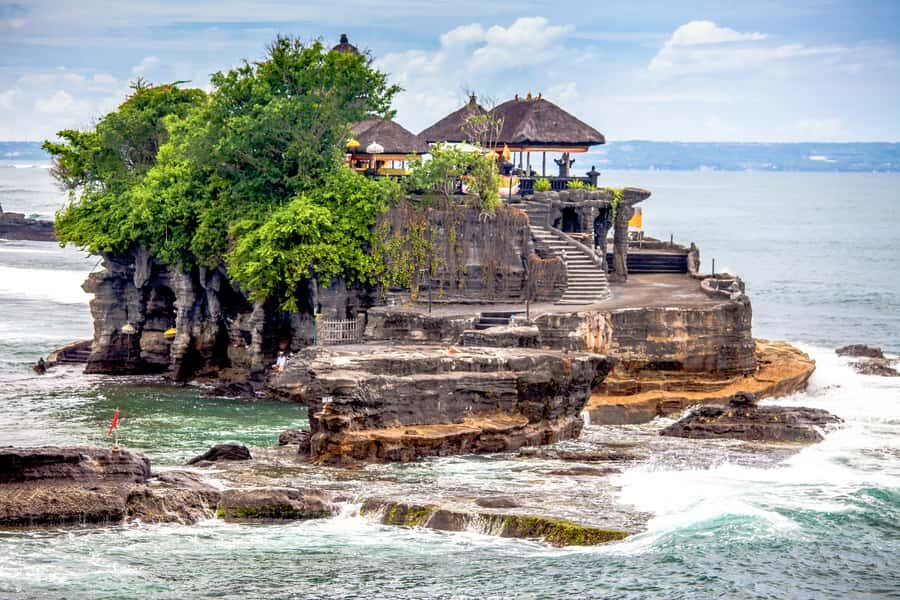
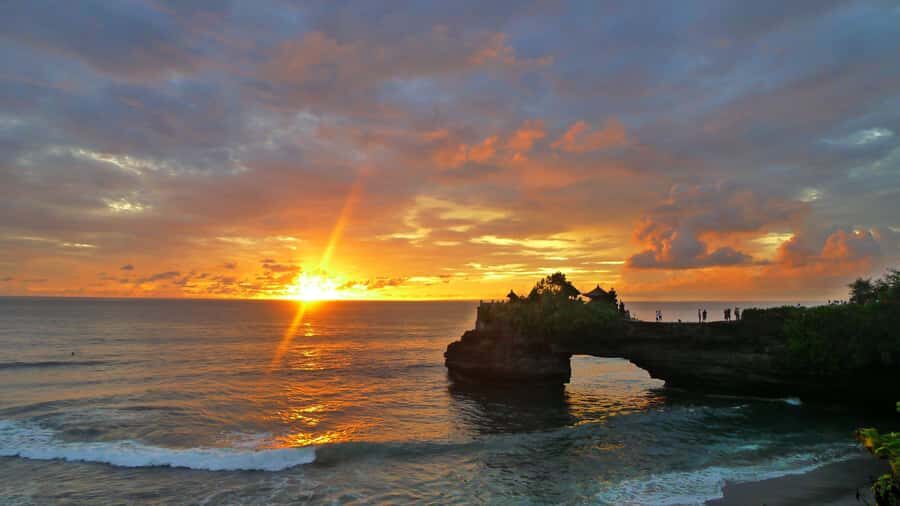
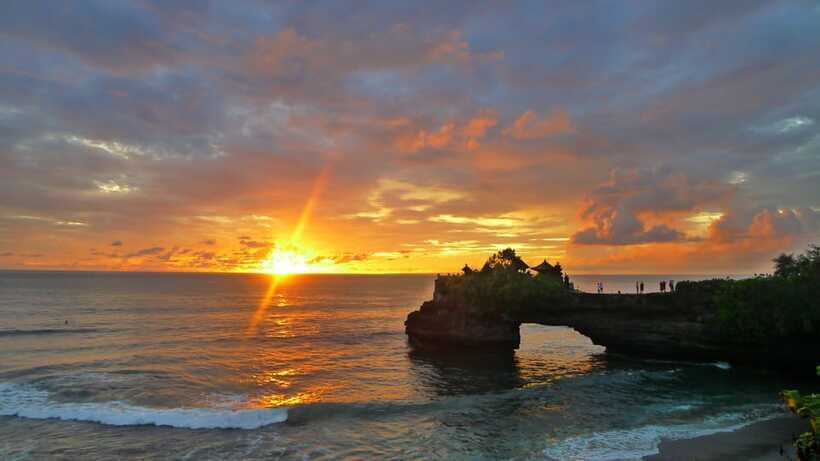
Late afternoon brings you to Tanah Lot Temple, the famous sea temple built on a rocky formation overlooking the ocean. The visit is timed for sunset, which is the main reason this stop belongs on your itinerary.
If conditions are clear, the setting is dramatic: waves, dark rock, and the temple silhouette with evening light. If fog or haze rolls in, you’ll still see the temple and coastal rock setting, but the full sunset payoff can be muted. One traveler experience noted fog that blocked the sunset view, which is a reminder to treat sunset as a target, not a guarantee.
You’ll likely do some walking and expect uneven ground near viewpoints. Comfortable shoes pay off again here.
How the pacing works over 8–9 hours
This tour is “one day, four locations.” That sounds simple, but pacing is everything. The tour includes guided visits at Monkey Forest, Tirta Empul, and Tanah Lot, with Tegalalang giving you more free time.
Walking is moderate, with some stairs at temples and the rice terrace. That’s fine for most people who can handle a few flights, but it can feel tiring if you’re not used to uneven steps or heat. Bring water if you tend to get thirsty, since lunch and drinks aren’t included.
Also, note the weather operating style. The tour runs in most weather conditions, but the itinerary may adjust if needed. That’s normal in Bali, and it’s better to accept schedule flexibility than to fight it.
Entrance tickets: included only if you choose that option
Entrance tickets are listed as included only if you select the option that covers them. If your booking doesn’t include tickets, you may need to pay entrance fees at the sites you visit. Either way, you’re not left completely guessing, but it’s smart to check what your specific option covers.
Don’t forget that parking and local donations are included as part of the tour. That helps keep the day from turning into surprise add-ons.
Guide impact: when explanations make the temples click
This is where the tour really tends to win people over: the driver-guide. Many guides are praised for being friendly, patient, and willing to answer questions, and several are specifically named.
I’ve seen examples like Jon and Jonathon credited for professional handling and accommodating driving. Wayan and Agung show up for patient explanations and detail on custom and history. Guides like Popo and Oppa are praised for good English and clear context, while Andrian, Agus, Gede, and ADI are mentioned for taking their time, explaining Hinduism and temple practices, and helping with photos.
The practical takeaway for you: if you want deeper meaning, ask questions at each site. A good guide will know what you’re really asking, whether that’s how the sawas operate, how purification works, or why certain temples are placed where they are.
Photos and flexibility: the best kind of tour help
One of the most useful things guides can do is handle photo timing and positioning. Multiple guide mentions include help with taking pictures and scouting better spots at the rice terrace and around temples.
There’s also a common theme: guides who are flexible with the day. One experience described a guide adjusting the plan to fit the traveler’s preferences, even swapping a Monkey Forest choice for a coffee tasting. Another experience mentioned an added spa option (optional add-on). That doesn’t mean every day will look identical, but it does mean it’s worth communicating your interests early.
If you care about photos, tell your guide at the start: where you want sunrise/sunset shots, whether you prefer wide landscape angles or temple close-ups, and how mobile you are on stairs.
What to pack (so the day feels easy, not stressful)
You’ll be out most of the day, so pack for heat, sun, and walking. The tour suggests:
- Comfortable shoes
- Sun hat
- Camera
- Sunscreen
- Comfortable clothes
- Cash
Cash is a good idea because lunch isn’t included, optional add-ons may come up, and you may need money for entrance tickets depending on your option.
Also, plan your clothing around temples. Shoulders and knees need coverage. Sarongs are usually available at temples, but having clothing that already fits the dress code can save time at each stop.
Modest dress and the temple rules you should know
Temple etiquette is not optional on this route. You’ll need modest dress for temple visits, covering shoulders and knees. Sarongs are usually available at temples, which helps if you forgot to plan your outfit.
One rule you should take seriously before you go: women who are menstruating are not permitted to enter the temple area according to local customs. If this applies to you, check with your guide before arrival so you don’t end up stuck outside a site.
If you’re sensitive to rules or want to avoid awkward moments, bring clothing that hits the standard immediately. You’ll spend less time adjusting and more time enjoying.
Who this tour suits best (and who should skip it)
This makes the most sense for visitors who want a single-day overview: culture plus nature plus sea views, without building your own route. It’s especially strong if you like guided explanations and you want a sunset temple finish.
It may not fit:
- Pregnant women
- People with mobility impairments
- Wheelchair users
- People with low fitness
- Babies under 1 year
- People over 70
If you’re unsure, focus on the walking and stairs piece. The tour is described as moderate walking with some stairs at temples and rice terraces. If that’s hard for you on a normal day, this route may feel too demanding.
The languages and group setup that affect your experience
The live tour guide is offered in English, German, Korean, and Japanese. That matters because the biggest value here is understanding what you’re seeing at Tirta Empul and around temple customs.
Private group availability is listed. If you go private, you’ll likely get more control over pace and photo stops, but you should still expect the day to be structured around the four main areas.
Pickup for the private-group option is noted as only available in the Ubud area, including places like Padang Tegal, Penestanan, Mas Village, Lod Tunduh Village, Payangan Village, Kedewatan, Tegalalang, Sebatu, and Sukawati. If you’re not staying near Ubud, you’ll want to match your lodging location to pickup options.
How to get the most out of Monkey Forest, Tirta Empul, rice terraces, and Tanah Lot
Here’s the trick: don’t treat this as four separate attractions. Treat it like one story.
Start with the sanctuary and forest space at Monkey Forest. Then shift to purification and holy water practice at Tirta Empul. After that, take the open-air countryside pause at Tegalalang. End with coastal worship and sunset at Tanah Lot. That arc—from forest life to spiritual ritual to working rice systems to sea temples—helps the day feel connected instead of rushed.
For better results, ask your guide what you should pay attention to at each stop. For example, rice terraces aren’t just pretty steps; they’re tied to Subak irrigation traditions. Tirta Empul isn’t just a temple; it’s tied to purification practices. When you know what to look for, the photos turn from snapshots into memories.
Should you book this Bali Ubud–Tegalalang–Tanah Lot day trip?
Book it if you want a one-day hit list that still feels thoughtful: Monkey Forest for atmosphere, Tirta Empul for real spiritual context, Tegalalang for countryside views, and Tanah Lot for that coastal sunset moment.
Skip it if your top priority is slow travel or if you know you won’t enjoy stairs and heat. Also skip if you’re uncomfortable with temple dress rules. If you’re sensitive to weather outcomes, treat sunset at Tanah Lot as a best-case target, not a promise.
If you do book, you’ll get the most value by choosing comfortable shoes, dressing for temples on day one, and leaning on your guide for explanations and photo positioning. And if you have a specific interest—religion, rice farming, photography—tell your guide early. That’s when the day shifts from just seeing places to understanding why they matter.
FAQ
What’s the total duration of the Bali day trip?
The duration is about 8–9 hours, and it can extend to roughly 8–10 hours depending on traffic.
Where does pickup happen for this tour?
Pickup is available from several Bali areas, including Jimbaran, Jalan Nusa Dua, Canggu, Sanur, Uluwatu, Seminyak, Ubud, Candidasa Beach, and Kuta.
Where are drop-offs located at the end of the day?
Drop-off options include Candidasa Beach, Sanur, Seminyak, Canggu, Jimbaran, Kuta, Uluwatu, Jalan Nusa Dua, and Ubud.
Are entrance tickets included?
Entrance tickets are included only if you select the option that includes them.
Is lunch included?
No. Lunch and drinks are not included.
Can I join the purification ritual at Tirta Empul?
Yes, participation is optional. You can walk through the complex and learn, and join the ritual only if you want.
What should I wear for temple visits?
Modest dress is required for temples, with shoulders and knees covered. Sarongs are usually available at temples.
Is the tour guided, and what languages are available?
Yes, there is a live tour guide. The listed languages are English, German, Korean, and Japanese.
Is this tour suitable for everyone?
No. It is not suitable for pregnant women, wheelchair users, people with mobility impairments, people with low fitness, and babies under 1 year. It’s also listed as not suitable for people over 70.