A village day feels like visiting family. This 6-hour trip from Ubud takes you into quiet lanes between rice fields, where a Balinese family shows you daily farm life and spiritual traditions up close. You get a French- or English-speaking guide, plus a small group size, so the day feels personal instead of rushed.
I love the rice-cultivation walk and how it explains what goes into growing staple food on Bali. I also love the hands-on crafts, from making coconut oil to creating colorful offerings from leaves and plant fibers.
The only real consideration is the 6-hour pace, with some walking through village paths and fields. If you dislike heat, uneven ground, or long stretches, bring your comfort gear and plan to take it slow.
In This Review
- Key highlights you’ll actually use
- A 6-hour village day that starts right in Ubud
- Rice fields and daily farm life near Ubud
- Coconut oil production: the most practical skill of the day
- A homemade lunch cooked the wood-fire way
- Offering-making: colors, materials, and meaning
- Coffee, conversation, and small moments that land
- Price and value: what $72.08 buys you in the real world
- Small-group logistics: why this format feels calmer
- Who should book this Balinese family village day
- Before you go: practical tips for a smoother day
- Should you book this day with a Balinese family near Ubud?
- FAQ
- Where does the tour start and what time?
- How long is the experience?
- Is pickup from Ubud included?
- What’s included in the price?
- What language is the guide?
- How many people are in the group?
- Is there an admission ticket fee?
- Are service animals allowed?
- Can I cancel for a refund?
Key highlights you’ll actually use
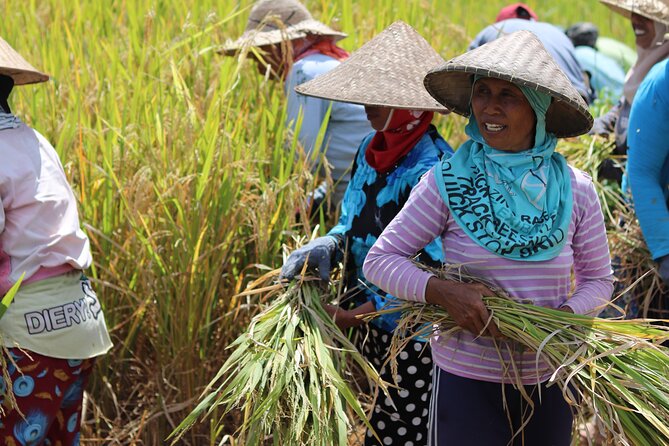
- Rice fields + practical farming methods you can see, not just hear about
- Coconut oil production with real step-by-step, not a demo from across the room
- Wood-fire local lunch in a home setting (included)
- Offering-making where you learn the materials and the meaning
- Small group (max 5) for better questions and a calmer pace
A 6-hour village day that starts right in Ubud
This is a day designed for people who like their Bali human-scale. You start in the morning from Coco Supermarket in Ubud (8:30 am), then you move out to a nearby village area where daily life is the main event. The schedule is simple: walk, learn, make things, eat well, and talk with your hosts.
The group size matters. With a maximum of 5 travelers, you’re not fighting for attention. In practice, that means you can ask follow-up questions about rice growing, coconut oil, or offerings without your guide having to speed through everything.
You’ll also have comfortable transport—an air-conditioned vehicle—and you’ll be back at the same pickup point at the end. That adds up if you’re touring Ubud and you want less logistics stress, more village time.
You can also read our reviews of more tours and experiences in Ubud.



Rice fields and daily farm life near Ubud
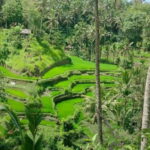
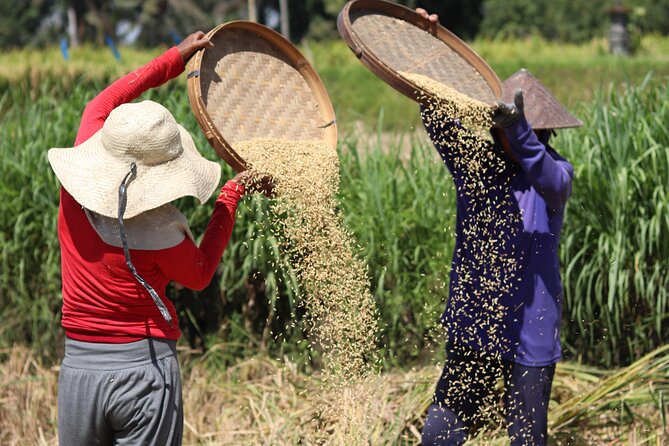
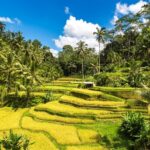
The day begins with a walk through rice fields to see how rice cultivation happens locally. This isn’t about taking a pretty photo and moving on. You’re looking at how daily routines connect to food production: where people work, what they pay attention to, and how farmland becomes part of everyday rhythm.
What I like about this setup is that it’s a living system. You’re not being asked to memorize a lecture. Instead, you watch the process, then you ask questions in plain language with your guide. That’s how farm knowledge sticks.
Expect to be outdoors for part of the day. You’re moving between fields and village areas, so wear shoes you don’t mind getting slightly dusty and bring something to handle morning sun. Even if the route feels manageable, it’s still a walk you’ll feel in your legs after a few hours.
Coconut oil production: the most practical skill of the day
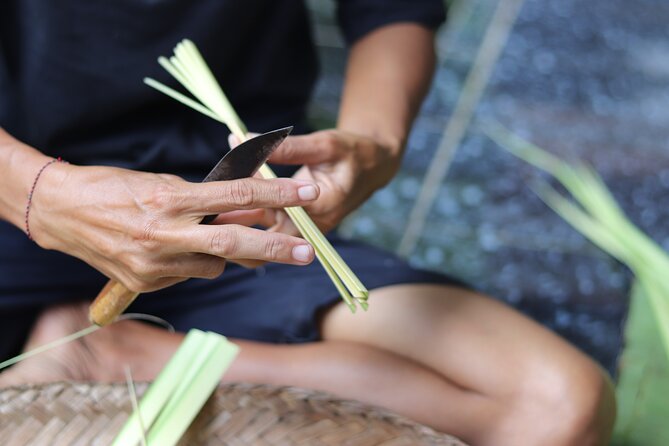
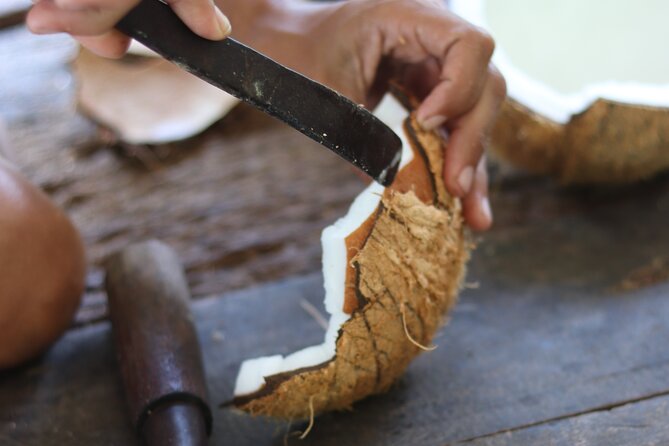
One of the best parts here is coconut oil production. Bali uses coconut widely—food, cooking, and personal care—so this isn’t just a craft you admire. It’s a technique you can understand and picture yourself using later.
You’ll see artisanal production with the family, and the vibe is hands-on. One review highlighted the joy of making coconut oil yourself, which tells you the learning isn’t passive. That matters because you’ll remember the steps and the logic behind them, not just the final product.
Even if you’re not planning to become a coconut oil producer, you’ll walk away with something useful: a better sense of how everyday ingredients become practical goods. It also helps you connect dots when you’re eating in Bali later. When you know where coconut oil comes from, you taste with more curiosity.
A homemade lunch cooked the wood-fire way
Lunch is included, and it’s served at the inhabitant’s house. That’s a big deal for value and for tone. A wood-fire lunch in a family home doesn’t feel like a restaurant stop. It feels like the day’s work ends with a meal shared in the middle of normal life.
From the information provided, you’re eating local cuisine, and you also get coffee and/or tea. The best meals on Bali days are the ones that feel like a continuation of what you’re learning—rice, coconut, offerings, and the family’s day all connected.
If you’re picky with spice levels, you can still enjoy this. The guide will likely help set expectations, but your safest move is to be honest about dietary needs when you meet your guide. You can’t assume every ingredient will fit your preferences, since this is a home kitchen rather than a mass-prep setup.
Offering-making: colors, materials, and meaning
This is the spiritual section of the day, but it’s presented in a grounded, practical way. You’re introduced to making offerings—intertwining leaves and plant fibers to create colorful forms. Then you learn about their meanings, not just how to tie the materials together.
I like this because it treats religion as something lived, not staged. Offerings aren’t only for ceremonies. They’re part of daily respect and routine. When you make them with your hands, the process feels more believable. You understand why they matter.
In one review, the host’s personality really shaped the experience. The guide or host—named Gaia in one account and Ganyar in another—came across as passionate, funny, and generous with explanations. That kind of host energy makes the teaching feel natural instead of formal.
Heads-up: your hands may get a little messy. That’s normal. Bring an attitude that enjoys small imperfections. This is craft time, not a polished photo session.



Coffee, conversation, and small moments that land
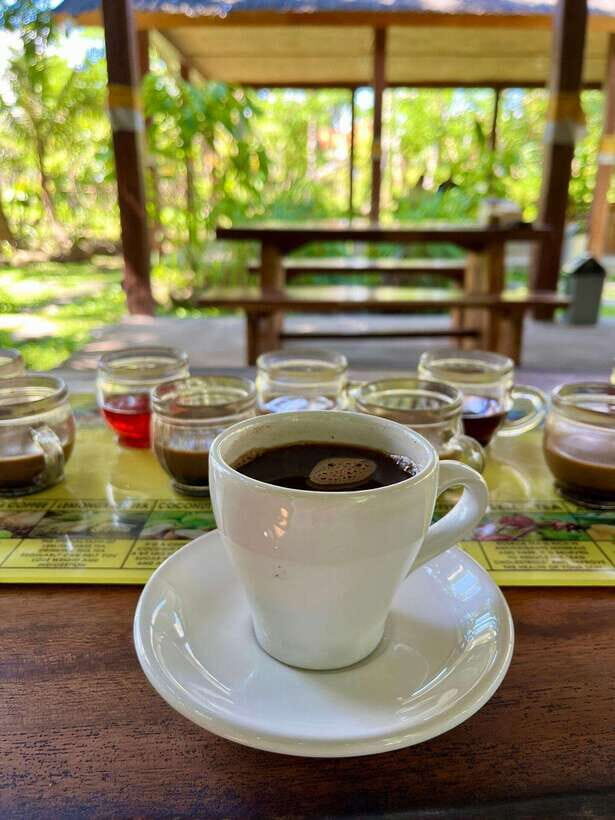
Between activities, you’ll get homemade coffee and time to talk. This isn’t just a beverage stop—it’s a social pause built into the day. You’re learning from a family who actually lives here, so questions come easily once you’ve warmed up with the rice fields and crafts.
One review mentioned how important French language support was, especially for a family with kids (ages 7 and 12). If you’re traveling with children, this kind of day can work well because it’s visual, hands-on, and easy to ask questions about. Kids often love anything that involves making something with their hands.
If you’re traveling solo or as a couple, the small-group size also helps conversation. You’re not just nodding along—you can ask what something means, how often it’s made, or what it takes to keep a family farm running.
Price and value: what $72.08 buys you in the real world
At about $72.08 per person for a roughly 6-hour day, you’re paying for more than a checklist. You’re paying for access to a family’s home life, a guided explanation in French or English, and meals plus transport.
Here’s what’s included:
- Lunch at the inhabitant’s house
- Coffee and/or tea
- Air-conditioned vehicle
- All fees and taxes
- Donation
- French or English-speaking guide
- Admission ticket listed as free
- Mobile ticket
And what’s not included:
- Tip
That included package is why this can be good value, especially if you’d otherwise pay for transport and a separate meal. The donation and local fees also matter in a village setting. You’re not just visiting—you’re contributing to the day’s exchange.
One more detail: the tour is booked on average 36 days in advance. That suggests demand, so if you want specific dates, you shouldn’t wait too long.
Small-group logistics: why this format feels calmer
This tour caps at 5 travelers. In Ubud, where many experiences are packed like schedules on wheels, a small group changes how the day feels.
With fewer people:
- Questions don’t get swallowed
- You can move at a steady pace between activities
- The host can actually explain details, instead of running a script
Also, service animals are allowed, and most travelers can participate. So unless you have mobility limits beyond what you can comfortably manage, this is built to be approachable.
The day starts at 8:30 am, which is helpful. You get into the outdoors early when it’s easier to move and before the hottest parts of the day settle in.
Who should book this Balinese family village day
This is a great fit if you want:
- A real village setting near Ubud (not just a viewpoint)
- Hands-on culture—rice, coconut oil, and offering-making
- A small group where language support matters
It’s also smart for families. One review specifically praised the way it worked for kids, with a guide speaking French and answering questions.
You might rethink it if:
- You hate walking outdoors for hours
- You want a totally hands-off cultural experience (this isn’t that)
- You’re looking for a standard museum style itinerary
Before you go: practical tips for a smoother day
A few simple moves can make this kind of village day feel effortless:
- Wear closed-toe shoes you’re okay getting a bit dusty.
- Bring a light layer for early morning air and sun protection for later.
- Bring small cash in case you want to tip, since tips aren’t included.
- If you have dietary restrictions, communicate them clearly to the guide when you meet. This is a home lunch situation.
Also, since the day runs about 6 hours, treat it like an activity day rather than something you squeeze between late dinner plans. Plan to rest afterward.
Should you book this day with a Balinese family near Ubud?
Yes, if you want a calmer, more personal taste of Balinese daily life. The combination of rice field walking, coconut oil production, wood-fire homemade lunch, and offering-making is exactly the kind of package that builds understanding, not just photos.
It’s also a good value because lunch, coffee/tea, guide support, transport, fees/taxes, and even the donation are built in. With a max group size of 5, you’ll feel like you’re with the family, not watching a performance.
Book it if your travel style includes hands-on learning and respectful cultural exchange. Skip it if you want a low-walk, low-effort day or you prefer tourism that stays fully controlled.
FAQ
Where does the tour start and what time?
The tour starts at Coco Supermarket on Jalan Raya Pengosekan in Ubud. The start time is 8:30 am, and the activity ends back at the meeting point.
How long is the experience?
It runs for about 6 hours.
Is pickup from Ubud included?
Pickup is offered, and the tour is arranged around the Coco Supermarket meeting point.
What’s included in the price?
The price includes lunch, coffee and/or tea, an air-conditioned vehicle, all fees and taxes, a donation, and a French or English-speaking guide.
What language is the guide?
The guide speaks French or English.
How many people are in the group?
The tour has a maximum of 5 travelers.
Is there an admission ticket fee?
The admission ticket is listed as free for this experience.
Are service animals allowed?
Yes, service animals are allowed.
Can I cancel for a refund?
Yes. Free cancellation is available up to 24 hours in advance for a full refund.