Rinjani at sunrise is pure willpower. This 2 days 1 night trek from Senaru takes you up toward the crater rim camp, with time for real breaks, proper meals, and big-sky views over Segara Anak and the surrounding islands. I especially liked how the trip stays small (max six people) and how everything gear-and-food related is handled by the team, not you.
What makes the experience feel smooth is the structure: meet, register at the park office, hike by marked points with stops, then camp at Senaru Crater Rim around the 2,641 m level. I also like the emphasis on organization—guides run the pace, porters handle the heavy carry, and you get breakfast/lunch/dinner during the trek.
The main consideration is effort. This is a challenging hike with steep sections as the trail shifts from forest to higher grassland, so you’ll want solid moderate fitness before you sign up.
In This Review
- Key points I’d bookmark before you go
- Why This 2 Days 1 Night Rinjani Trek Works So Well
- Day 1: Senaru Park Registration to Crater Rim Sunset
- Camping at the Crater Rim: What It Feels Like at Night
- Day 2: Sunrise, Breakfast, and the Return to Senaru
- Price and Value: What $190 Covers (and What to Budget Extra)
- The Real Challenge Level: Steep Climb, Big Altitude, Managed Pace
- What You’ll See: The Crater Rim View Set
- Practical Gear Notes (Based on What’s Not Included)
- Who This Trek Is Best For
- Should You Book This Rinjani Trek Adventure?
- FAQ
- How long is the Mount Rinjani trek?
- What time does the trek start?
- What’s included for food and water?
- Do I get camping gear for the overnight?
- Are porters included?
- What are the items not included that I should bring?
- Is the Mount Rinjani entrance fee included in the price?
- Is pickup and drop-off included?
- What is the cancellation policy?
Key points I’d bookmark before you go
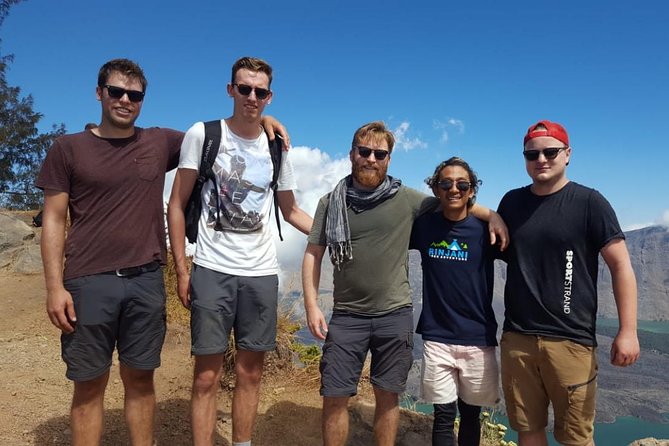
- Small-group trekking (up to six people) keeps the pace more personal and the group easier to manage on rough ground
- Overnight at Senaru Crater Rim (2,641 m) gives you sunset-and-sunrise views instead of a quick in-and-out climb
- Guides + professional porters means you hike with less weight and focus on the trail
- Meals and water are included (breakfast, lunch, dinner) so you’re not budgeting for every snack halfway up
- Camping gear is provided including tent, sleeping bag, and a 4 cm mattress, plus a toilet tent
- Day 1 starts early (7:00 am) with park registration, so you’ll feel the day move fast
Why This 2 Days 1 Night Rinjani Trek Works So Well
If you want Mount Rinjani without committing to a week-long slog, this format hits a smart sweet spot. You get two hiking days, plus one night camped high enough to watch the horizon change colors. For many people, the biggest win is simply time with the mountain—not just passing through it.
The small group size matters more than you might think. When you’re hiking at altitude, you’re not just moving your legs. You’re managing your breathing, energy, and concentration on uneven ground. A group capped at six tends to mean fewer delays at rest stops and easier communication with your local guide.
I also like that you’re not doing logistics-by-yourself. The trek includes meals and water during the hike, plus the practical camping setup: tent, sleeping bag, mattress (listed as 4 cm), and a toilet tent. That’s the kind of value that keeps your planning simple and reduces the chance you’ll show up with the wrong gear.
One more point: you’re climbing from Senaru area (it starts around 601 m for registration) to the crater rim (2,641 m). That altitude jump can feel intense, and having guides and porters helps you keep your effort steady instead of blowing up early.
You can also read our reviews of more tours and experiences in Lombok.

Day 1: Senaru Park Registration to Crater Rim Sunset
Day 1 starts with an early rhythm. You meet first, then you eat breakfast and head to the Rinjani National Park office in Senaru (around 601 m) for registration before the trek begins. This is a good moment to get your bearings. You’re not just walking out of a hotel and hoping for the best—you’re getting lined up with the process.
The hike begins through dense tropical forest. In practice, that means you’ll likely feel cooler shade at the start, and you’ll also notice the trail is not just “uphill.” There are regular breaks along the way. You’ll stop at Pos 1 and Pos 2 for rest and snacks, which is exactly what you want on a multi-hour ascent.
Then the altitude climbs enough that the tempo shifts. At Pos 3 (2,000 m), you get a longer lunch break. This pause helps you reset before the steep part. After lunch, the trail continues upward and the scenery changes: forest gives way to grassland, and the grade becomes more demanding.
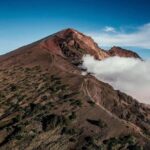
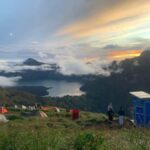
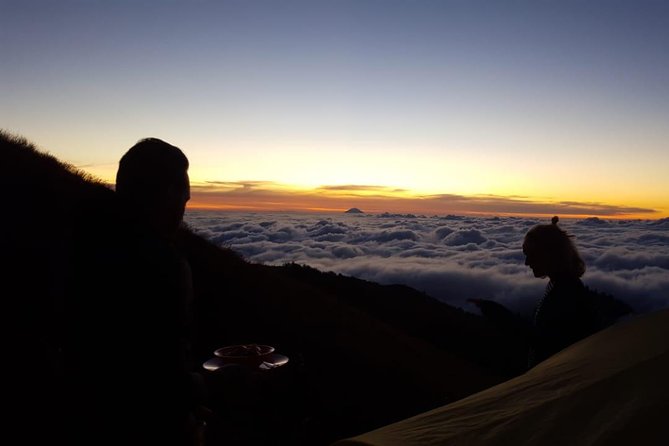
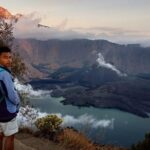
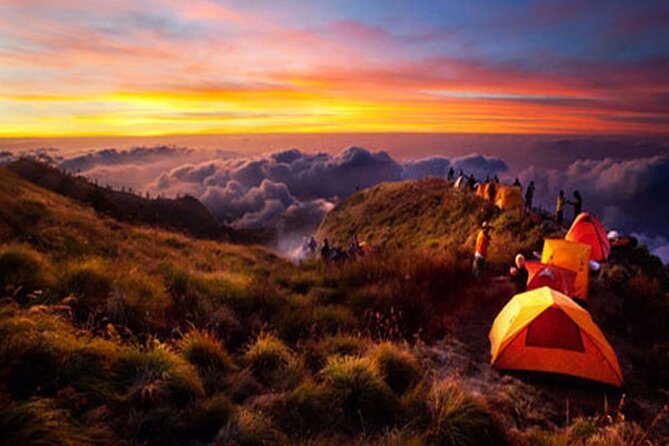
Eventually you reach the Senaru Crater Rim at 2,641 m, where you camp for the night. This is where the payoff starts. You’ll have sunset views over Segara Anak Lake and a wide panorama that can include Mount Agung in Bali, the Gili Islands, the Rinjani summit, and Gunung Baru Jari (a newer volcanic cone within the crater). Even if the sky is only partly clear, the crater rim viewpoint tends to feel dramatic because you’re looking across the volcanic bowl rather than just up a mountain.
Camping at the Crater Rim: What It Feels Like at Night
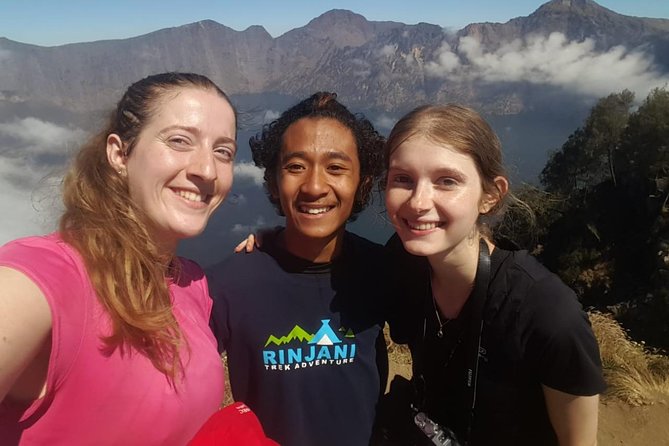
Your night isn’t spent in a fancy lodge. It’s a camp setup at the rim, and that changes the vibe in a good way. You’re higher up, close to the crater view, and far from noise. It’s the kind of night that makes you pay attention to small things—like wind, temperature drop, and whether the clouds are moving.
What helps a lot is that the essentials are included. Your tent, sleeping bag, and 4 cm mattress are provided, and there’s a toilet tent on-site. That means you can focus on being comfortable enough to sleep rather than scrambling for last-minute rentals or borrowing gear.
Also, your guide isn’t just a walking companion. The team manages the rhythm: you hike to camp, you eat dinner, and you’re set up to catch sunrise. If you’re the type who wants things to be taken care of, you’ll appreciate that the experience is run as a system, not just a series of random stops.
One realistic note: you are at altitude. Conditions can change quickly around crater rims. Even if you expect clear skies, you should be ready for cooler temperatures at night and early morning. Bring layers you can close up and warm enough for sleeping outdoors.
If you’re chasing the highlight (sunrise), this overnight structure is what makes it possible. A same-day trek can show you the mountain, but it can’t recreate the stillness and sky-waiting moment of the crater rim camp.
Day 2: Sunrise, Breakfast, and the Return to Senaru
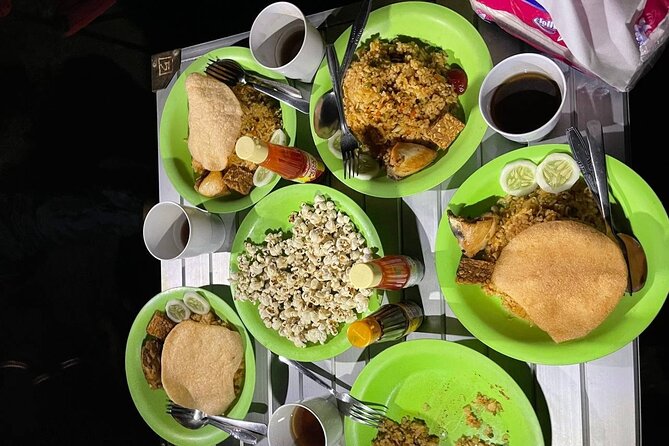
Day 2 starts with sunrise and then breakfast. That early start is one of those trade-offs you actually want. When you’re high on the rim, sunrise tends to land differently than sunset because the crater and surrounding peaks shift with the light.
After breakfast, you begin the return trek toward Senaru. The descent has its own kind of challenge. Even if it’s “easier” than the steep climb, your knees and balance do more work on uneven ground. The good part is you still get planned rest and snack breaks.
You stop at Pos 2 again for a longer lunch break. This helps you avoid the common mid-day slump that can hit after a high-altitude night. Then you keep hiking until you reach Senaru, arriving at around 1:00 pm.
From there, you’ll be transported to your next destination. That final handoff matters because you’re often too tired to negotiate transport after a challenging couple of days. The experience is set up so you finish the mountain portion and then move on without extending your stress.
Price and Value: What $190 Covers (and What to Budget Extra)
At $190 per person for a guided 2 days 1 night Mount Rinjani trek, the price is best understood as a package for the “hard-to-replicate” parts: guiding, meals, porter labor, and camping equipment.
Included components that usually cost real money on their own:
- Food and water during the trek (breakfast, lunch, dinner)
- Trekking and camping equipment: tent, sleeping bag, 4 cm mattress, toilet tent
- Professional porters to carry your food and trekking equipment
- Local guide support
Those pieces are why the value feels strong. Instead of spending your time comparing rental shops and negotiating staffing, you get a managed experience where you’re meant to hike and enjoy the views.
That said, not everything is included. The entrance fee for Mount Rinjani is listed separately: IDR 400,000 per person. Also, accommodation before the trek is listed as IDR 250,000 per person (so plan for where you’ll sleep the night before you start). And while the overview describes hassle-free pickup and drop-off, the “not included” section also mentions transportation around the trek. So I’d treat transportation as a “confirm this in writing” item before you pay, especially if you’re starting from the airport or a specific hotel.
Finally, bring your own small items that aren’t included: head lamp and walking stick are listed as not provided. Tips for guide and porters are described as not mandatory, which is good to know if you want to budget tightly. Just remember: at these altitudes, good support is doing actual work.
The Real Challenge Level: Steep Climb, Big Altitude, Managed Pace
This trek is labeled for moderate physical fitness, but the mountain doesn’t care about labels. What matters is the profile: you start at roughly 601 m, register with the park office, then climb through tropical forest, cross into grassland, and tackle a steeper final push to the crater rim at 2,641 m.
The practical advantage here is pacing and workload management. Your guide leads the route, stops are built in at Pos 1, Pos 2, Pos 3, and on the way back, and porters take care of carrying food and trekking equipment. That doesn’t remove effort—it just prevents you from turning the hike into a gear-carry contest.
If you’re used to hiking on trails with some elevation, you’ll likely feel challenged but supported. If you’re coming from a sedentary routine, you might struggle more with the steep parts and altitude breathing. In both cases, the guides and planned breaks matter, but you still need to bring reasonable stamina.
Your best strategy for success is simple: go slower than you want on the first half of Day 1, use the snack breaks, and don’t treat the steep sections as a sprint. This is the kind of trek where steady effort earns you the view at the rim.
What You’ll See: The Crater Rim View Set
The crater rim camp is built around viewpoints, not just distance. From Senaru Crater Rim, you get a wide volcanic panorama that can include:
- Segara Anak Lake inside the crater bowl
- Mount Agung in Bali
- The Gili Islands
- The Rinjani summit area
- Gunung Baru Jari, described as a newer volcanic cone within the crater
The “why” is important. You’re not just hiking to a single point. You’re getting layered scenery: lake + peaks + islands, all viewed from a high rim. That combination is what makes the overnight portion so worth it. You can see the terrain shift from afternoon light to sunset and then again at sunrise.
Also, because sunrise is part of the plan, you’ll care about weather. If visibility is poor, the view may be less dramatic. The experience is described as requiring good weather, and if it’s canceled due to poor conditions, you’re offered another date or a full refund. That’s exactly how it should work with a hike where timing and visibility matter.
Practical Gear Notes (Based on What’s Not Included)
Even though your main trekking and camping gear is provided, you still need a few personal items and smart clothing choices.
From the provided info, these are not included and you should plan to bring:
- Head lamp
- Walking stick
Beyond that, you should dress for altitude and temperature swings. At crater rim elevation and early morning sunrise time, it’s often cooler than you expect. I’d pack layers that you can add/remove as your body heats up on the climb and then cools down at camp.
Also think about footwear. Your tour involves steep and uneven terrain with forest-to-grassland changes. Good grip matters more than style. If your boots are worn smooth, the descent will remind you.
If you want the most comfort from provided gear, bring personal comfort items too (like anything you need for hygiene). The toilet tent is included, but you should still bring what you personally require to feel comfortable.
Who This Trek Is Best For
This is a strong fit if you want:
- A guided Mount Rinjani experience with porters and meals
- Overnight time at the crater rim for sunset and sunrise
- A manageable group size (max six) that makes the hike feel organized
It’s also a good match if you don’t want to spend your trip micromanaging equipment. The tour includes the camping setup, plus food and water, which cuts down decision fatigue.
I’d be more cautious if:
- You don’t have moderate fitness for steep hiking at altitude
- You’re counting on the climb being “easy” or purely scenic
- You need exact pickup/drop-off details guaranteed without confirming (because transportation inclusion is stated differently in different parts of the provided info)
If you’re the kind of person who enjoys structured days—briefing, registration, planned breaks, camp setup—this trek style will suit you.
Should You Book This Rinjani Trek Adventure?
I’d book it if you want the crater rim sunrise experience with the parts that usually make treks stressful already handled: guide leadership, porters for the carry, meals, and camping gear. The $190 price feels fair because you’re paying for organization and logistics, not just a “walk to a view.”
I’d think twice or at least confirm details first if you’re sensitive to steep altitude hikes or if your pre-trek lodging and transport plans aren’t flexible. Budget the IDR 400,000 entrance fee and the IDR 250,000 accommodation before trekking if you need it. And pack a head lamp and a walking stick since they’re listed as not included.
If you’re ready for effort and you care about seeing Rinjani’s crater world at sunrise, this 2 days 1 night plan is one of the most time-efficient ways to do it from Senaru.
FAQ
How long is the Mount Rinjani trek?
It runs for 2 days (about 2 days total), with a camp overnight at the Senaru Crater Rim.
What time does the trek start?
The start time is listed as 7:00 am, with the meeting beginning at the tour company’s meeting point/area.
What’s included for food and water?
Food and water during the trek are included, with breakfast, lunch, and dinner.
Do I get camping gear for the overnight?
Yes. The trekking equipment includes a tent, sleeping bag, a 4 cm mattress, and a toilet tent.
Are porters included?
Yes. There are professional porters who carry your food and trekking equipment.
What are the items not included that I should bring?
Head lamp and a walking stick are listed as not included.
Is the Mount Rinjani entrance fee included in the price?
No. The entrance fee is listed as IDR 400,000 per person.
Is pickup and drop-off included?
The experience describes hassle-free pickup and drop-off, but the not-included section also mentions transportation. You should confirm exactly what transportation is covered for your dates.
What is the cancellation policy?
Cancellation is free. You can cancel up to 24 hours in advance for a full refund, and the trek requires good weather—if it’s canceled due to poor weather, you’ll be offered a different date or a full refund.