Somehow, the fastest way to understand Balinese food is to cook it. This Ubud class takes place in a traditional Balinese-style kitchen in Laplapan Village, with English help and fresh local ingredients that actually taste like the tropics.
I love that it’s not just eat-and-leave. You learn the methods, the roles of spices, and how Balinese cooks use tropical plants, roots, and herbs.
I also love the payoff: you finish with a full meal you helped make, plus recipes for recreating the dishes later. One possible drawback is pickup coordination—this is Ubud-only, and you’ll want to wait in the lobby about 10 minutes early so you don’t miss the ride.
In This Review
- Key highlights you’ll care about
- Ubud cooking, the traditional way: Laplapan Village kitchen time
- Your menu choice: vegetarian or non-vegetarian
- Before you cook: the market and the rice story
- Cooking in a step-by-step rhythm (and why it works)
- Lunch that’s part of the lesson, not an afterthought
- The spice flavor difference you’ll start noticing
- Price and value: is $30 worth it?
- Practical logistics that can make or break your day
- Who this class is best for
- Should you book this Ubud Balinese cooking class?
- FAQ
- How long is the cooking class?
- Do I get to choose vegetarian or non-vegetarian food?
- What’s included in the price?
- Is hotel pickup available everywhere in Bali?
- What language are the instructors/guides?
- What will I do during the class?
- Are alcohol or drugs allowed?
- Do I receive recipes to take home?
- Can I cancel if my plans change?
- Is it suitable for infants?
Key highlights you’ll care about
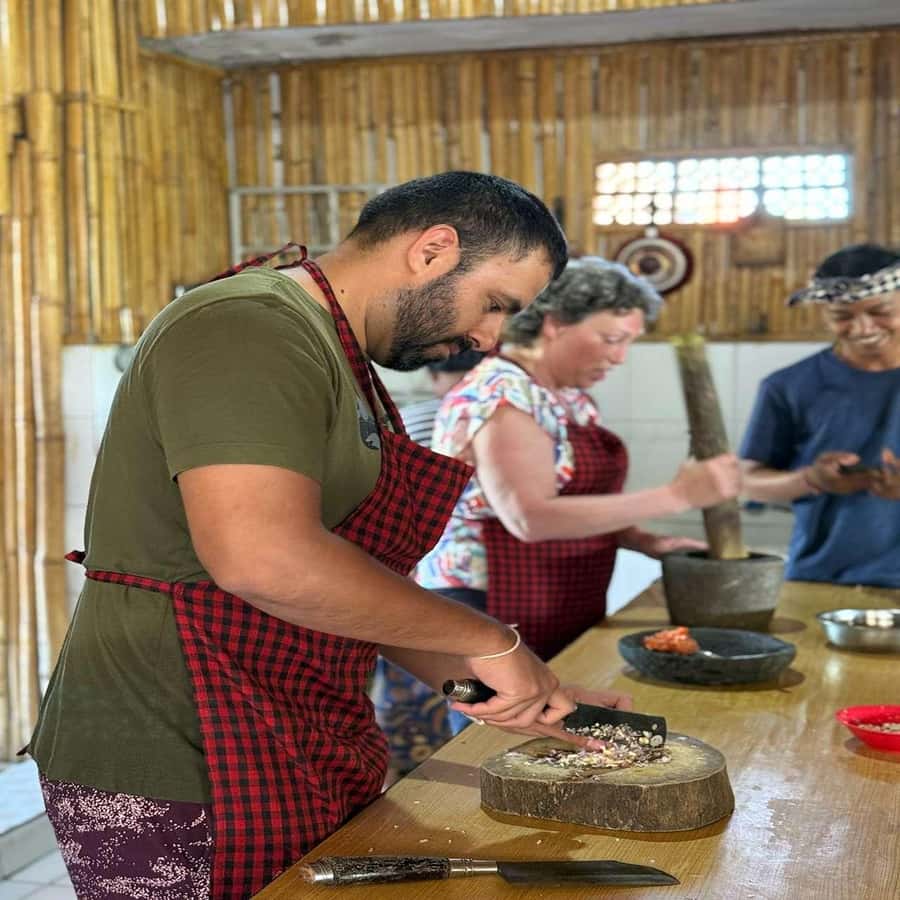
- Traditional kitchen setup in Laplapan Village for a real village feel, not a staged demo.
- Choose vegetarian or non-vegetarian so you can match your preferences without missing the core class.
- Market and rice-farming time that explains where staples come from, not just how to cook them.
- English-speaking local guides who help you follow steps without guessing.
- You cook and then eat what you make, so the learning lands in your stomach.
- Recipes at the end so you can repeat at home instead of only remembering smells.
Ubud cooking, the traditional way: Laplapan Village kitchen time
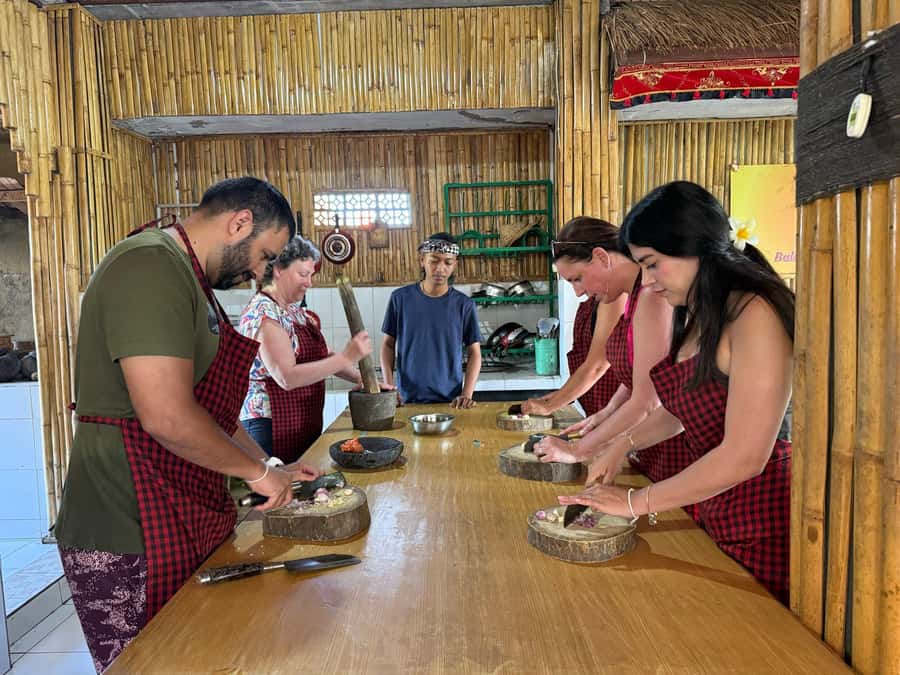
If you’re in Ubud and you want more than a casual food stop, this style of cooking class makes sense. The class runs in a traditional Balinese-style kitchen you’d recognize as something you’d see in villages across the island. That matters. A kitchen set up like this nudges you into the rhythm of Balinese cooking—small steps, lots of fresh aromatics, and constant attention to how ingredients behave.
The experience is also built around a safe, friendly atmosphere. Local hosts and English-speaking guides stay close as you move through the process, so you’re not standing around holding a spoon while everyone else knows what to do. And because you’re cooking in a real setup, you’re more likely to notice the details that make Balinese flavors different: the way spices layer, the way herbs smell when they hit heat, and how tropical ingredients get used for fragrance as much as for flavor.
One other practical point: the duration is listed at about 2 hours, and that timeframe is tight enough to fit into a busy Ubud day. A couple of people noted the class ran a bit longer, and that’s common with hands-on cooking—because when you’re learning, it takes the time it takes. Plan your next activity with a little buffer.
You can also read our reviews of more tours and experiences in Gianyar.



Your menu choice: vegetarian or non-vegetarian
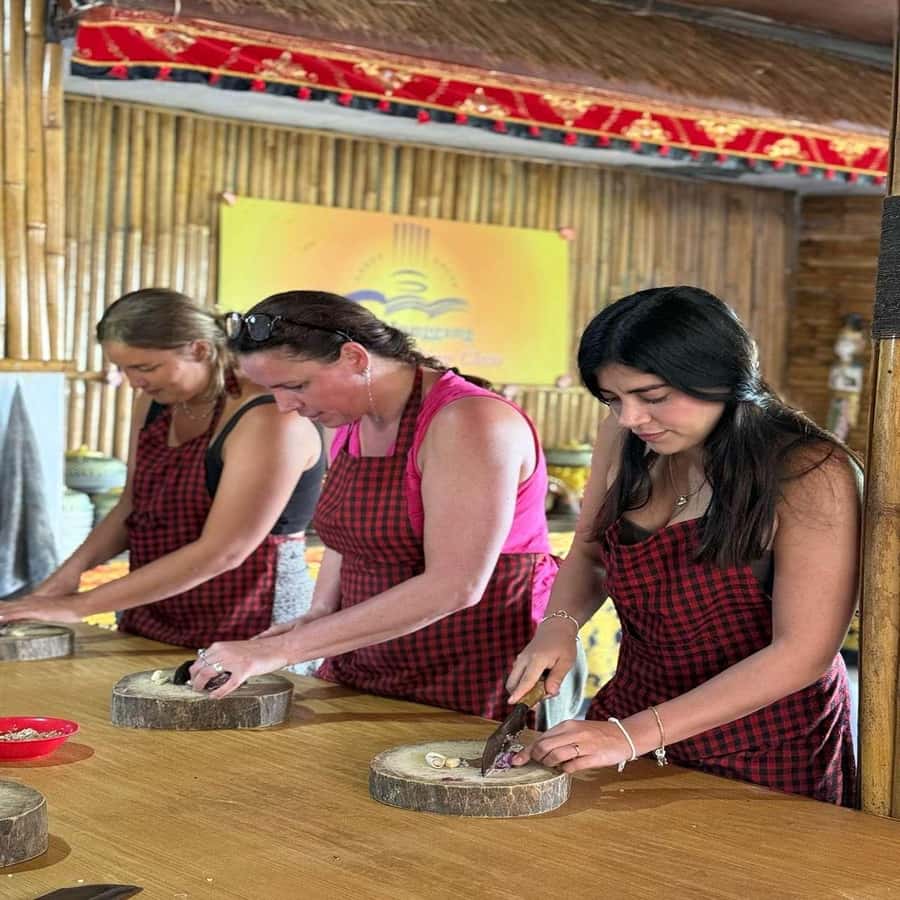
Balinese cooking is spice-driven, but it’s not one-size-fits-all, and this class respects that. Before you start, you pick a vegetarian or non-vegetarian menu option. That’s a smart choice because it keeps you in the cooking flow from the start, instead of watching half the class and then eating something different later.
If you choose vegetarian, you’ll still get the core Balinese flavor approach: herbs and aromatics working together, not just substituting one ingredient for another. If you choose non-vegetarian, you’ll experience the dishes as they’re typically cooked in the Balinese context—again, with the key idea that spices and tropical ingredients are the engine.
Either way, the class guide walks you through the menu you selected, and you make the dishes yourself. That’s the major difference between cooking with instruction and cooking with observation. With this format, you’re not just tasting what someone else can do.
Before you cook: the market and the rice story
One of my favorite parts of food learning is when it starts upstream. Here, that happens through time spent exploring a local or traditional market, and then meeting farmers and learning about how rice is grown.
Even if you’ve eaten rice your whole life, Balinese rice culture adds a different layer of understanding. Rice isn’t just a side dish. In an area like Ubud, it’s tied to daily life, farming knowledge, and the island’s food identity. Seeing how farmers grow rice helps you connect the “ingredient” you buy at home with the actual work that makes the ingredient reliable and flavorful.
The market portion also changes how you shop afterward. You learn what to look for when spices, herbs, roots, and tropical plants are the backbone of flavor. And because you’re preparing food in a traditional kitchen right after, your brain keeps linking ingredient to result instead of forgetting everything by lunchtime.
Cooking in a step-by-step rhythm (and why it works)
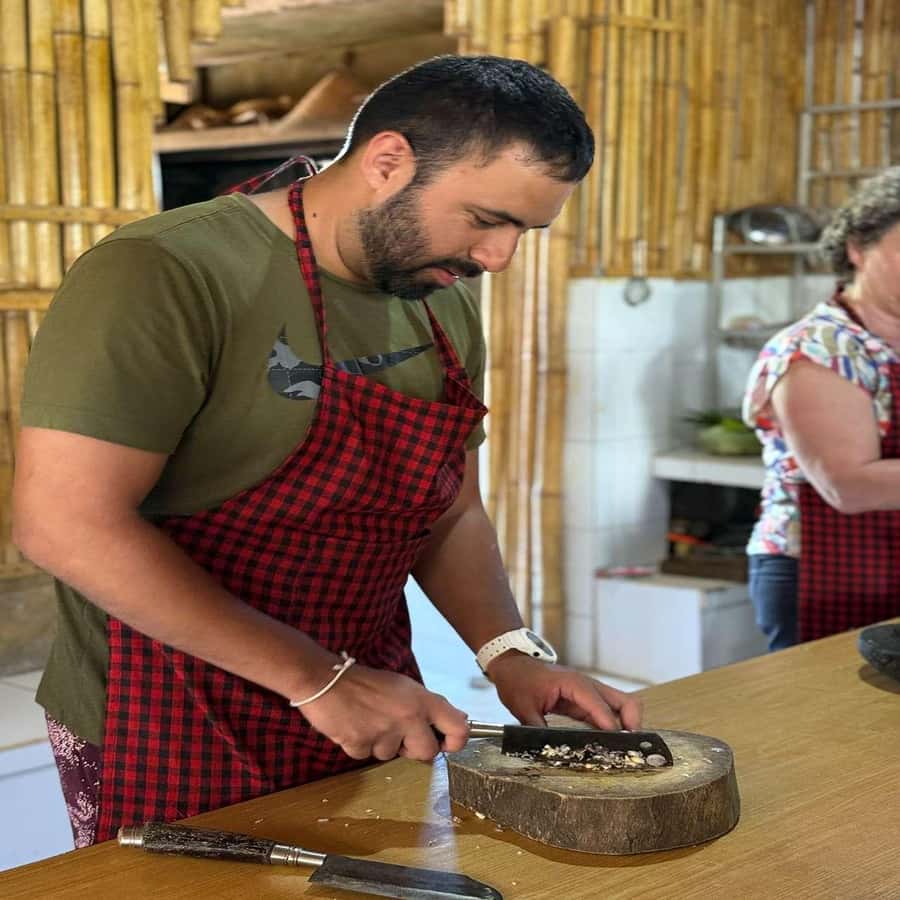
The class is structured like a guided cooking session that ends with you eating what you made. That seems simple, but the value is huge. You learn because you’re doing: chopping, mixing, stirring, tasting, and adjusting.
You also learn the traditional methods behind Balinese food, including how cooks use tropical plants, roots, and herbs. This is more useful than memorizing a recipe line by line, because you’re learning the logic of the flavors. When you get home, you’ll be able to adapt. You’ll know how to treat fresh aromatics and how spice blends behave once they hit heat.
The process is also supported by hands-on coaching from your English-speaking local guides. That’s important in a cooking class, because small misunderstandings can ruin a dish. Good instruction helps you avoid that. And if you have dietary concerns, at least from what the class format supports, the hosts are geared toward accommodating different needs by offering the vegetarian/non-vegetarian menu choice up front.
A practical tip: this is real cooking time, not a quick demo. Bring a mindset that you might get slightly messy. And come hungry, because the class ends in a proper meal.
Lunch that’s part of the lesson, not an afterthought
You get lunch as part of the experience, along with a welcome drink. What makes this good value isn’t just that lunch is included. It’s that lunch reflects the dishes you cooked.
That means your final meal is not separate from your learning. You’re eating your effort, and you can go back in your mind to what you did at each step. If something tasted too strong or too mild, you can connect the taste back to the spice stage or herb stage. That feedback loop is how you actually improve your cooking later.
One review detail that really matters: the meal is described as filling enough to cover the rest of the day. For many people, that’s the real win. In Ubud, where good meals can add up, a class that functions as both a lesson and a lunch saves you money and planning.






The spice flavor difference you’ll start noticing
Balinese food has a specific character, and spices play a major role in creating that unique flavor profile. The class doesn’t just toss spices into a bowl and hope for the best. You learn how spices fit into the cooking logic—when aromatics go in, how heat changes the smell, and why certain ingredients are used for fragrance as much as punch.
This is the part that sticks after you leave. Once you understand how Balinese cooks build flavor, it becomes easier to recognize the signature tastes when you eat again—whether it’s the scent of a fresh herb, the way a blended spice paste smells before cooking, or the way tropical ingredients soften and round out flavors.
If you’re the type who reads a menu and wonders what makes one dish taste different from another, this class gives you a practical answer—spices plus method, not just mystery seasoning.
Price and value: is $30 worth it?
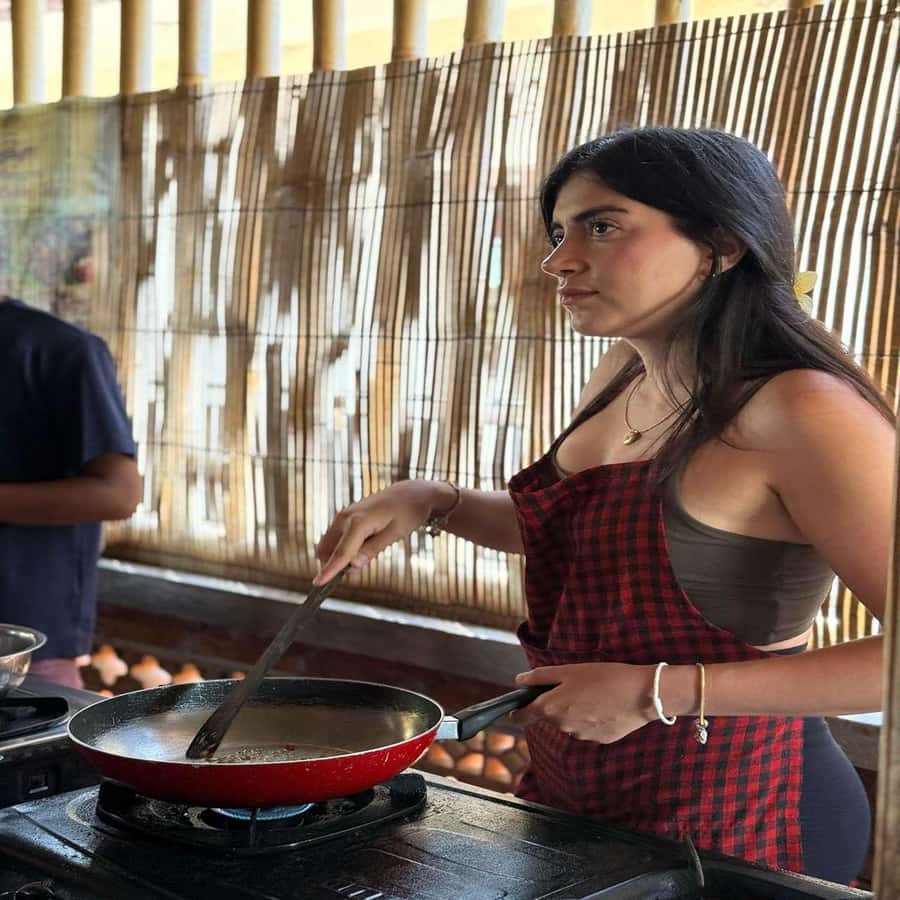
At $30 per person for about two hours, this class sits in a reasonable range for Ubud. But the better question is what you get for that price.
You get:
- Hotel pickup and drop-off within Ubud
- Lunch plus a welcome drink
- A hands-on traditional cooking class in a village-style kitchen
- English-speaking guidance during cooking
- Recipes at the end
- Time that includes a market and a rice-farming visit
That combination is what makes the value stand out. You’re not paying only for the kitchen lesson. You’re paying for the whole “from ingredient to meal” arc, plus transport and food.
Also, the class duration is short enough to reduce the opportunity cost. In Ubud, half-day activities can quietly turn into full-day plans. Here, the format is built around about two hours in the activity window, so you can keep your schedule flexible and still get a meaningful cultural experience.
If you’re traveling on a tight budget, the inclusion of lunch matters a lot. If you’re traveling for food, the inclusion of recipes matters even more—you’re buying knowledge you can use at home.
Practical logistics that can make or break your day
This is a pickup-included experience, but with a key limit: pickup is only available in the Ubud area. If you’re staying outside that zone, there may be an extra charge. So if your hotel is near the edge of Ubud, it’s worth confirming the pickup location early.
Timing is also practical. You’re instructed to wait in the hotel lobby about 10 minutes before the scheduled pickup time. That’s not a suggestion—it’s how you avoid the classic “we were there and you weren’t” problem. One person even called out that they were missed on pickup, which is exactly why you should be early and ready.
Once you’re at the class, the atmosphere is described as safe and friendly, and the hosts are there to guide you. The most important “logistics” once cooking starts is simply being ready to participate: wear clothes you don’t mind getting a little aromatic on you, and expect that hands-on cooking takes focus.
Who this class is best for
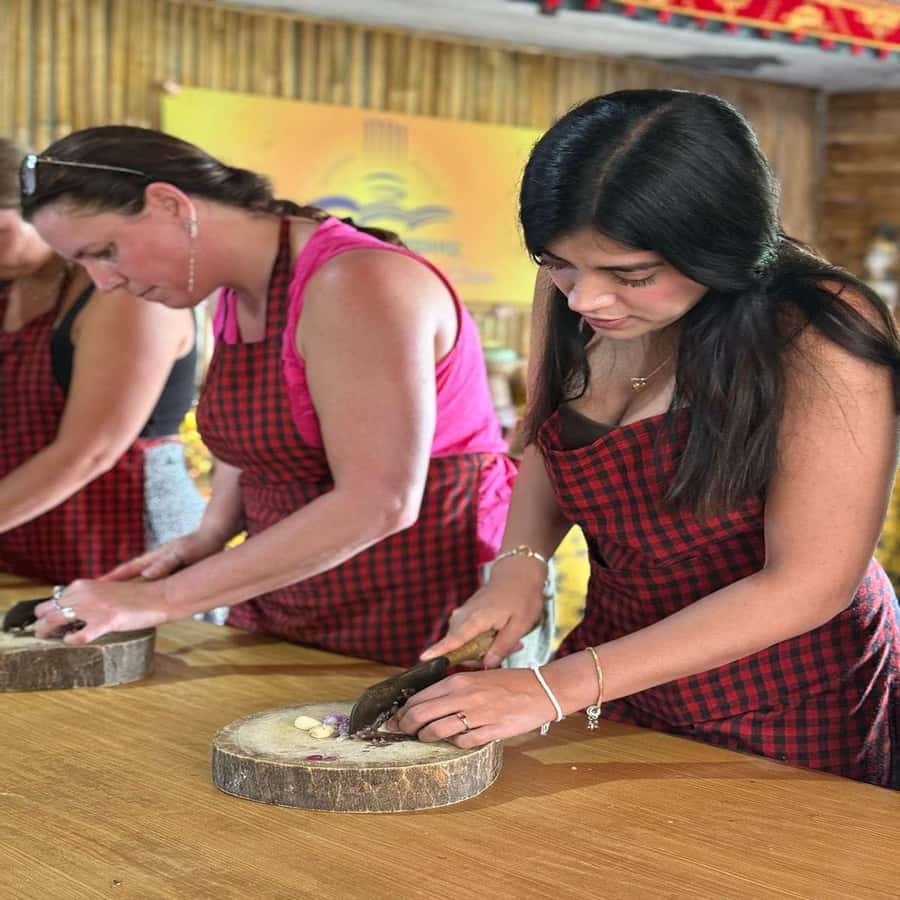
This is a good fit if:
- You want hands-on instruction, not just tasting.
- You’re curious about how Balinese cooking uses tropical herbs, roots, and spices.
- You like food experiences that include the ingredient source story, like the market and rice farming.
It’s also a great option for people who want a vegetarian path without losing the authenticity of the cooking approach. The vegetarian/non-vegetarian menu choice keeps the experience coherent.
If you prefer a quieter activity or you’re extremely time-sensitive, note that cooking classes are naturally interactive and can run slightly long depending on the flow. Still, for most schedules, it stays within that tight 2-hour window.
And because alcohol and drugs are not allowed, the class is designed to stay focused on the activity and the meal.
Should you book this Ubud Balinese cooking class?
I’d book it if you want a genuine food skill, not a souvenir meal. The traditional village-style kitchen, the spice-and-method focus, and the market plus rice-farming time create a complete arc. Add in pickup, lunch, and recipes, and $30 feels like fair value for what you actually do and learn.
Skip it—or at least rethink it—if you’re outside the Ubud pickup zone and you don’t want to deal with potential extra transport costs. Also, if you’re expecting a super-fast show-and-tell, this is hands-on cooking, so you’ll be actively working and eating for the whole block of time.
If your goal in Ubud is to understand the flavors and bring something home you can cook again, this class is one of the most practical ways to do it.
FAQ
How long is the cooking class?
The activity duration is listed as about 2 hours.
Do I get to choose vegetarian or non-vegetarian food?
Yes. You can choose a vegetarian menu or a non-vegetarian menu option.
What’s included in the price?
Pickup from your hotel in the Ubud area, drop-off back to your hotel, lunch, and a welcome drink are included.
Is hotel pickup available everywhere in Bali?
No. Pickup is available within the Ubud area. Locations outside Ubud may require an extra charge.
What language are the instructors/guides?
The class includes Indonesian and English.
What will I do during the class?
You’ll cook the dishes yourself following traditional Balinese methods, and then you’ll have the chance to savor the meal you made. The experience also includes time at a local/traditional market and meeting farmers for rice-growing information.
Are alcohol or drugs allowed?
No. Alcohol and drugs are not allowed.
Do I receive recipes to take home?
Yes. Recipes are provided at the end.
Can I cancel if my plans change?
Yes. Free cancellation is available up to 24 hours in advance for a full refund.
Is it suitable for infants?
It’s not suitable for babies under 1 year.