Balinese dance feels like storytelling with your body. In Ubud, this class turns traditional movement into something you can actually do, guided by a professional local instructor and capped with songket/balinese clothes included. One heads-up: there’s no food included, so plan around it if you’re hungry.
The best part is how much technique and meaning you get for the price. You’ll work on postures, hand gestures (mudras), and facial expressions that carry emotion, not just choreography. The class is designed for all levels, so you don’t need dance experience to enjoy it, though you should bring comfortable clothes and show up ready to move.
In This Review
- Key Highlights You’ll Care About
- Balinese Dance in Ubud: What You’ll Learn Beyond Steps
- Class Style With a Professional Local Instructor
- 1 Hour vs 2 Hours: How to Choose Your Timing
- Warm-Up, Techniques, and the Parts That Make It Look Right
- Mudras and Facial Expressions: The Storytelling You Actually Feel
- The Cultural Context: Why Balinese Dance Matters
- Songket and Balinese Clothes: What’s Included and Why It’s Fun
- Price and Value: Is $19 in Ubud a Good Deal?
- What to Bring (and What to Skip)
- Where You’ll Start and How the Class Ends
- Who This Balinese Dance Class Is Best For
- Should You Book This Balinese Dance Class in Ubud?
- FAQ
- How long is the Balinese dance class in Ubud?
- What is included in the class price?
- Is food included?
- What language is the instruction in?
- What should I bring to the class?
- Is there anything I can’t bring or consume?
- Where do I meet for the class?
- When should I arrive?
- Who can join this class?
- Can I get a refund if I cancel?
Key Highlights You’ll Care About
- Pro guidance that focuses on the meaning, not just the steps
- Mudras and facial expressions so your movements tell a story
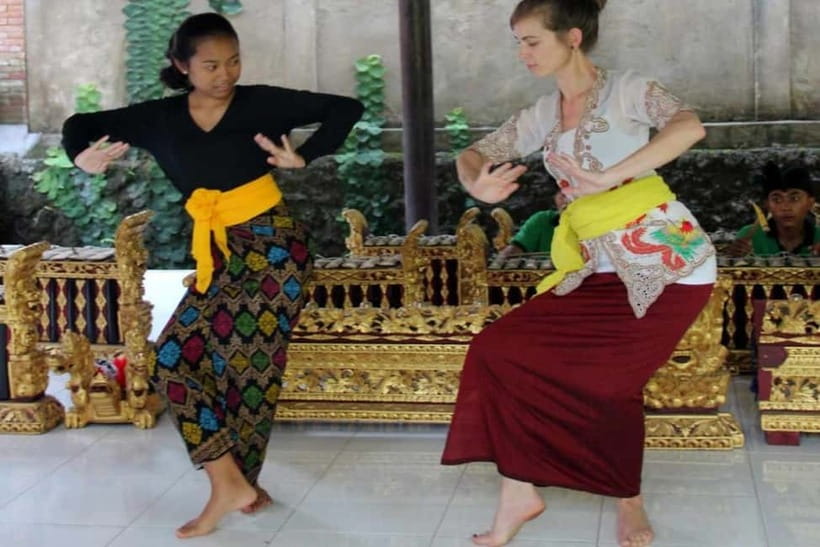
- Songket/Balinese clothes included for a proper cultural look
- 1 hour or 2 hours options, so you can match your day
- A supportive, social feel where meeting new people is part of the fun
Balinese Dance in Ubud: What You’ll Learn Beyond Steps
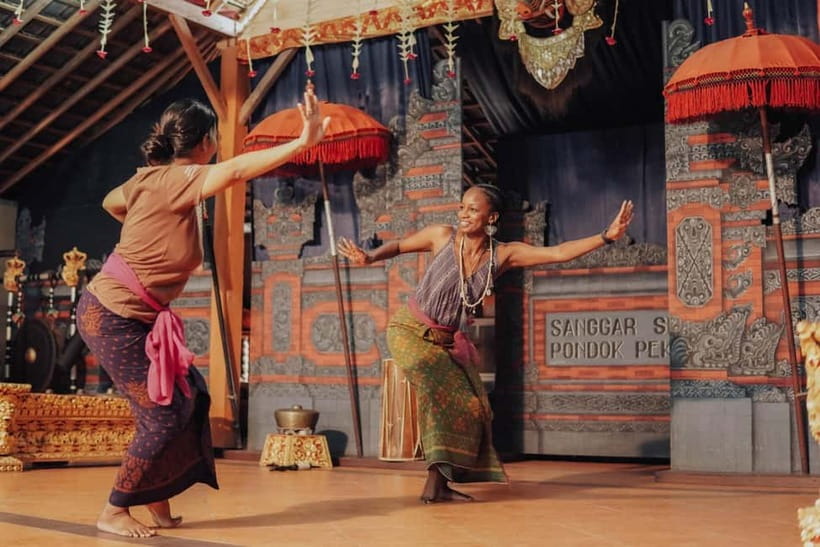
A Balinese dance class in Ubud isn’t really about “dancing” like you might do at a party. It’s closer to learning a language made of posture, hands, and face. The instructor teaches you the fundamentals you need to make the gestures and expressions land correctly, including the parts that most first-timers don’t think about.
You’ll start with postures—the body positions that give Balinese dance its recognizable shape. Then you move into hand gestures (mudras), which are more specific than they sound. Even if you feel awkward at first, the class format is meant to get you from general movement to recognizable technique.
And yes, facial expressions matter here. You’ll practice the expression side of the dance because in Balinese performance, the face carries emotion and story beats. That’s what makes the class fun even if you never consider yourself a dancer.
You can also read our reviews of more tours and experiences in Ubud.



Class Style With a Professional Local Instructor
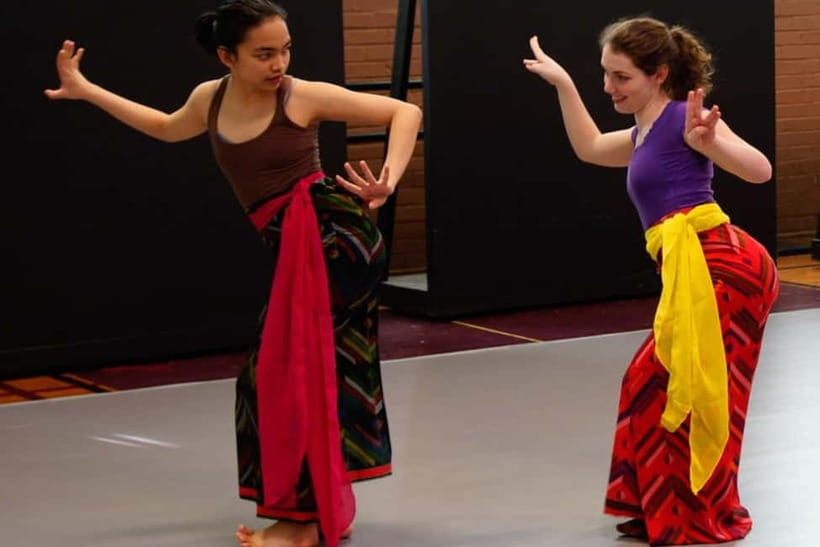
This is led by a local instructor, and the tone is practical. You’re not thrown into the deep end. Expect guidance that helps you understand what you’re doing and why it matters. The teaching style is also described as attentive, with lots of focus on making the learning process smooth and enjoyable.
One reason this experience gets strong marks is that instruction feels genuinely encouraging. A review notes the teacher is amazing, and another calls out lots of attention and fun lessons in a calm, serene setting. In plain terms: you’re more likely to feel guided than judged.
Also, the class can feel social in a good way. In one case, the learner ended up dancing alongside another participant from Italy. That kind of pairing and friendly energy is common in group classes, and it helps you relax into the choreography.
1 Hour vs 2 Hours: How to Choose Your Timing
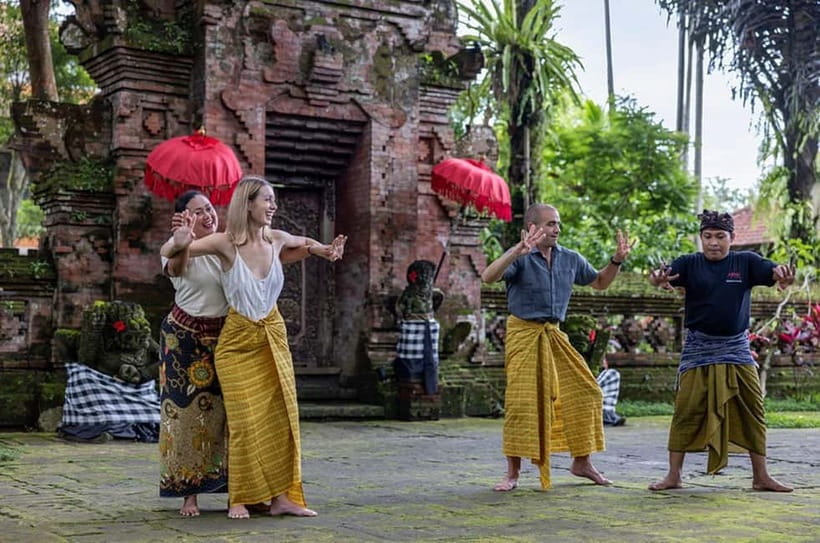
You’ll see two session lengths offered: 1 hour or 2 hours. That matters because the longer option gives more time for warm-up, practice, and cultural context. If you’re the type who likes to learn steps properly (not just “get through them”), the 2-hour class is usually the better fit.
If your schedule is tight—maybe you’ve got temple plans, a spa slot, or a day trip—choose the 1-hour option. It should still cover the essentials: technique basics, choreography practice, and the cultural explanation that connects the dance to real Balinese life.
Practical advice: either way, arrive a bit early. The class asks you to get there 15 minutes before the start, which helps you settle in before you start moving.
Warm-Up, Techniques, and the Parts That Make It Look Right
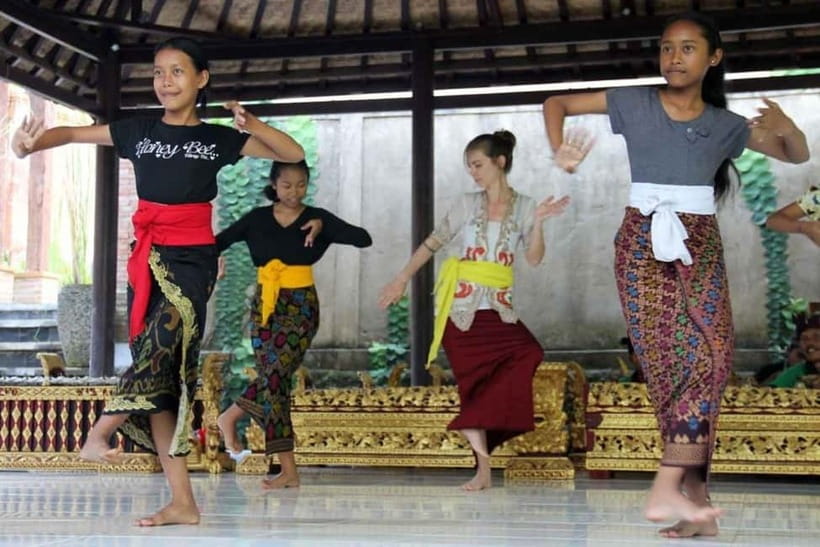
Most dance classes start with motion. This one starts with foundations. You’ll do warm-up and setup first, then work into the specific building blocks of Balinese dance.
Here’s what you can expect as you progress:
- Warm-up exercises to loosen up and get your timing
- Fundamental postures so your body shape looks correct
- Hand gestures (mudras) that are precise and meaningful
- Facial expressions that communicate emotion and story
- Choreography practice so it comes together as a sequence
Even if you’re brand new, this structure helps. You’re not just copying. You’re learning the “why” behind the movement, which makes it easier to remember when you switch from hands to posture to face.
And that’s the secret sauce: Balinese dance is a whole system. Once you understand how the pieces connect, the dance stops feeling like random steps and starts feeling like something you can express.
Mudras and Facial Expressions: The Storytelling You Actually Feel
If you want one standout reason this class is worth your time, it’s this: Balinese dance treats the body like a storyteller.
You’ll learn the mudras—the intentional hand shapes and gestures used to represent ideas, emotions, and narrative points. These aren’t just decorative. They’re part of how a performance communicates without needing spoken words.
Then you’ll practice facial expressions alongside the hands. That’s a big deal because your face changes the meaning of the gesture. When you get it right, your whole body reads like performance, not instruction.
One of the most satisfying parts of a technique-focused class is when you realize you’re starting to “speak” with your hands. You may not become a performer overnight, but you can absolutely leave knowing how to create the main expressive elements.





The Cultural Context: Why Balinese Dance Matters
This class doesn’t treat dance as an art museum piece. You’ll hear about how Balinese dance connects to everyday community life and spiritual practice.
In the session, instructors typically share the role Balinese dance plays in:
- Religious ceremonies
- Festivals
- Community events
You’ll also get stories and anecdotes that explain the significance behind the movements. Those explanations matter because they stop your learning from being purely mechanical. When you understand how dance fits into Balinese culture, you’re more likely to respect the technique and enjoy the experience more deeply.
It’s also why the class works well for short visits. Even if you only have a day in Ubud, you can walk away with context—so your Bali experience feels less like a checklist and more like contact with something local.
Songket and Balinese Clothes: What’s Included and Why It’s Fun
This experience includes songket/balinese clothes. That’s not just a souvenir moment. Wearing traditional outfits can change how you move because the garments and styling encourage a more “performance” posture.
You also get a practical photo-friendly bonus. You’ll have the option to take pictures with your camera (it’s specifically listed as something to bring). Just don’t let the camera ruin your focus—best results happen when you learn first, then shoot.
A small but meaningful point: included costumes help you avoid the common tourist problem of dressing up only after the class. Here, your look supports the learning moment from the start.
Price and Value: Is $19 in Ubud a Good Deal?
At $19 per person, this class is priced like a value activity—and it makes sense. For that cost, you get:
- A local/professional instructor
- A structured dance lesson (either 1 hour or 2 hours)
- Learning time for postures, mudras, and facial expressions
- Cultural storytelling and context
- Songket/Balinese clothes included
- Instruction in English
That’s a lot included for the price, especially the instructor-led part and the cost coverage for outfit rental or use.
The one clear limitation is what’s not included: food. If you’re coming straight from a meal gap, you might want to grab something before or plan for a snack after.
Also, think about your time value. If you can spare two hours, it’s usually easier to get comfortable with the choreography and leave feeling like you truly learned something. If you’re tight on time, the 1-hour option still offers technique and cultural context, just with less practice time.
What to Bring (and What to Skip)
This is a movement-based class, so keep it simple.
Bring:
- Camera (if you want photos)
- Comfortable clothes (easy to move in)
Not allowed:
- Alcohol and drugs
That no-alcohol rule is practical. Dance classes tend to work better when everyone stays alert and comfortable, especially when you’re learning posture and expression.
One more practical tip: wear clothing you can move in without constant adjusting. You want your hands and face to be the focus, not your outfit tugging at you.
Where You’ll Start and How the Class Ends
The meeting point can vary depending on the option you book, and the activity ends back at that same meeting point. So you’re not signing up for a long day of transportation.
You should expect a local class flow: show up, get oriented, learn the fundamentals, practice the choreography, and finish where you started. This “in-and-out” format is great if your Bali schedule is already packed.
Who This Balinese Dance Class Is Best For
This experience is suitable for all ages and skill levels. So if you’re:
- Traveling solo and want an easy social activity
- In Bali for a few days and want a cultural activity that’s hands-on
- Interested in learning the meaning behind movement, not just watching
- A beginner who wants structure and coaching
…this class fits well.
It’s also a good option if you want something different from standard tours. You’re not just viewing Bali. You’re doing Bali—through movement, technique, and stories.
If you’re traveling with very young children, note the rule: it’s not suitable for babies under 1 year.
Should You Book This Balinese Dance Class in Ubud?
Book it if you want a short, structured cultural activity where you learn real technique—mudras, facial expressions, and posture—with a professional local instructor. At $19 and with songket/Balinese clothes included, it’s a strong value compared to lots of “watch and take photos” options.
Skip—or at least reconsider the timing—if you’re hoping for food to be part of the experience, because food isn’t included. Also, if you hate being in a group setting where you’ll practice in front of others, a dance class can feel intimidating at first. The teaching style here aims to be supportive, but your comfort matters.
If you can handle comfy clothes, show up a little early, and enjoy learning something physical, you’ll likely leave with a new appreciation for Balinese performance—and a few moves you can explain afterward.
FAQ
How long is the Balinese dance class in Ubud?
The class is offered in two lengths: about 1 hour or about 2 hours.
What is included in the class price?
Inclusions are the dance class time (1 hour or 2 hours), a local/professional instructor, and songket/balinese clothes.
Is food included?
No. Food is not included.
What language is the instruction in?
The class is taught in English.
What should I bring to the class?
Bring a camera and comfortable clothes.
Is there anything I can’t bring or consume?
Alcohol and drugs are not allowed.
Where do I meet for the class?
The meeting point may vary depending on the option booked, and the activity ends back at the meeting point.
When should I arrive?
Please arrive 15 minutes before the activity start time.
Who can join this class?
It’s suitable for all ages and skill levels, but it is not suitable for babies under 1 year.
Can I get a refund if I cancel?
Cancellation is allowed up to 24 hours in advance for a full refund.