Ubud’s past is walking distance away. This 3-hour story walk links temples, bridges, and royal sites to how Ubud grew from outskirts into a cultural hub. What I like most is the tight storytelling thread and the small-group feel that makes the walk feel personal, even when you’re just two or three blocks from downtown. One thing to plan for: you’ll be on foot for up to 3 hours around old stone and uneven temple steps, so it is not ideal if stairs or steep bits are a struggle.
I also like that the route is built for seeing meaning, not just taking photos. You’ll start at Campuhan, spot the meeting of two rivers, then move through art history and palace grounds, including a royal gate tied to a 116-year-old sculptor. Expect rain or shine, and bring a reusable bottle so you can refill water and help cut down on plastic in local rivers.
Key points at a glance
- Campuhan’s two-river setting: a gentle start with real spiritual atmosphere
- Pura Gunung Lebah Campuhan Temple: multi-tier shrines and place-based context
- Puri Lukisan Museum: how Balinese and Western art history share the same room
- Ubud Royal Palace grounds: royal gate stories and power-adjacent architecture
- Special access to a Balinese compound: you see more than the public edges
- Small group size (max 8): better questions, better pacing, more attention
In This Review
- Morning Ubud on Foot: Where Modern Streets Meet Old Meaning
- Campuhan Temple at Pura Gunung Lebah: Shrines, River Views, and a Real Welcome
- Campuhan Bridge: The Two-River Story and Why It Matters for Ubud’s Growth
- Museum Puri Lukisan: The Palace of Paintings and the Balinese-Western Link
- Ubud Royal Palace (Puri Agung Ubud): The 116-Year-Old Sculptor and Royal Gate Meaning
- Puri Kantor: A Quieter Piece of the Puzzle
- Value and Price: What $27 Includes and Why It’s Not Just a Walking Tour
- Small Group Size and Guide Style: Better Questions, Better Pace
- Weather, Getting Around, and What to Bring (So You Enjoy It)
- Who Should Book This Story Walk in Ubud?
- Should You Book Ubud’s Journey from Past to Present?
- FAQ
- How long is the Ubud Past to Present walking tour?
- What time does the tour start?
- Where do I meet the guide?
- What is included in the $27 price?
- Is the tour rain or shine?
- Does the tour offer pickup or drop-off?
- What should I bring?
Morning Ubud on Foot: Where Modern Streets Meet Old Meaning
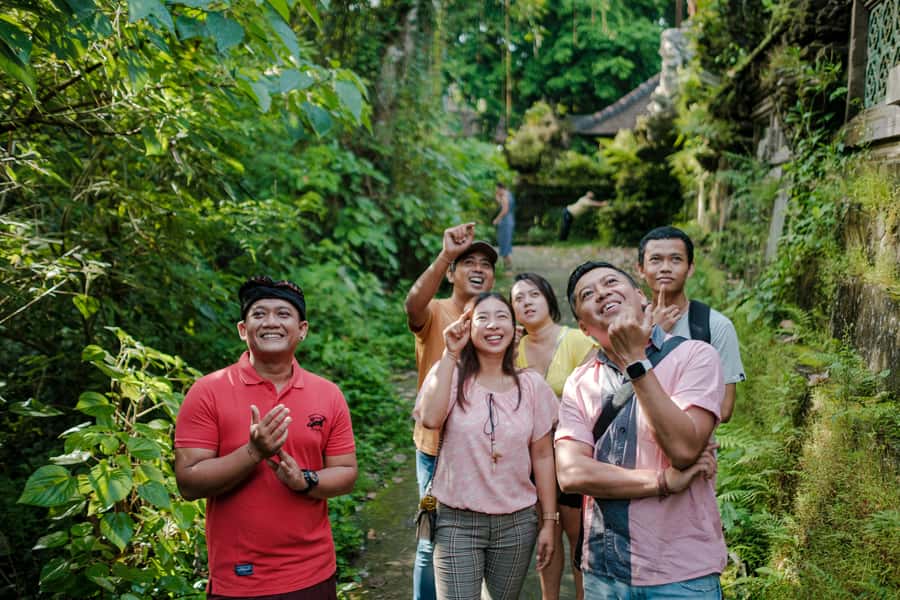
This walk is designed for travelers who feel bored by simple sightseeing. Instead of hopping between landmarks, you connect them with a timeline: how the area you see today grew into the Ubud people come to for art, spirituality, and culture.
The pacing is also part of the value. At about 3 hours, you get time to slow down at key spots and still cover several major sites without turning it into a marathon. It runs from 8:30am, and the company notes other start times for private tours.
And yes, you’re walking in an actual town. That’s the point. You’ll pass from more everyday urban pockets into sacred and historic areas, and your guide helps you read what you’re seeing, like why this location matters and how it ties to broader change.
Campuhan Temple at Pura Gunung Lebah: Shrines, River Views, and a Real Welcome
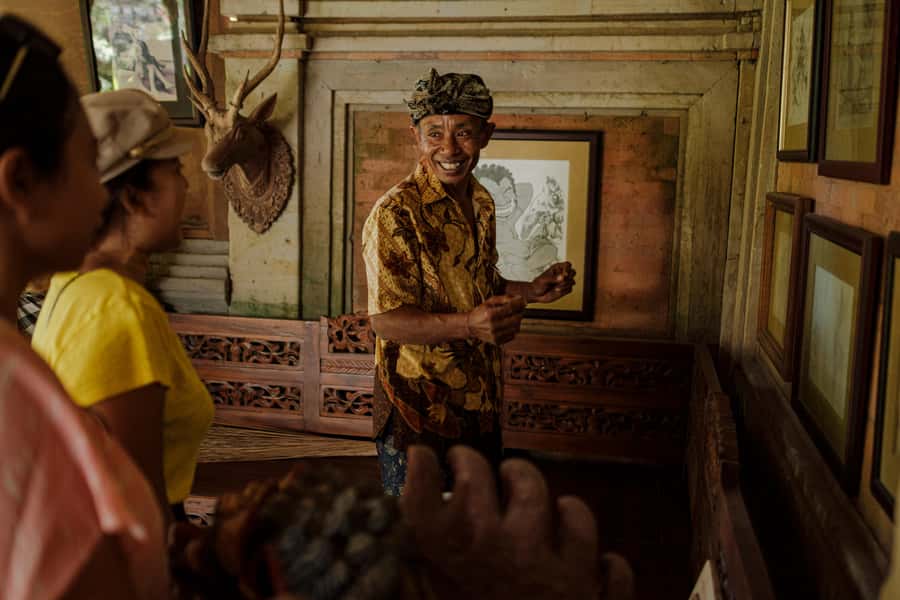
You start at Pura Gunung Lebah (Campuhan Temple) near the Campuhan area, close to where you’ll likely be oriented around Murni’s Warung and the Antonio Blanco Museum zone (the exact meeting spot gets emailed after booking).
Campuhan is one of those places in Ubud where the setting does half the talking. The walk description calls out the magical meeting of two rivers, and that matters because it helps you understand why people build here in the first place. When you stand near the water and see the way the landscape shapes routes and views, temple architecture starts making sense beyond decoration.
At Pura Gunung Lebah, you’ll also encounter a multi-tiered shrine to the gods. Guides tend to explain what you’re looking at—where attention goes during rituals, how the setting supports the spiritual purpose, and why the temple’s look belongs to Balinese practice rather than generic tourism.
Practical note: temples mean stairs and uneven stone. Even with good shoes, you’ll be climbing and shifting your footing.
You can also read our reviews of more tours and experiences in Ubud.



Campuhan Bridge: The Two-River Story and Why It Matters for Ubud’s Growth
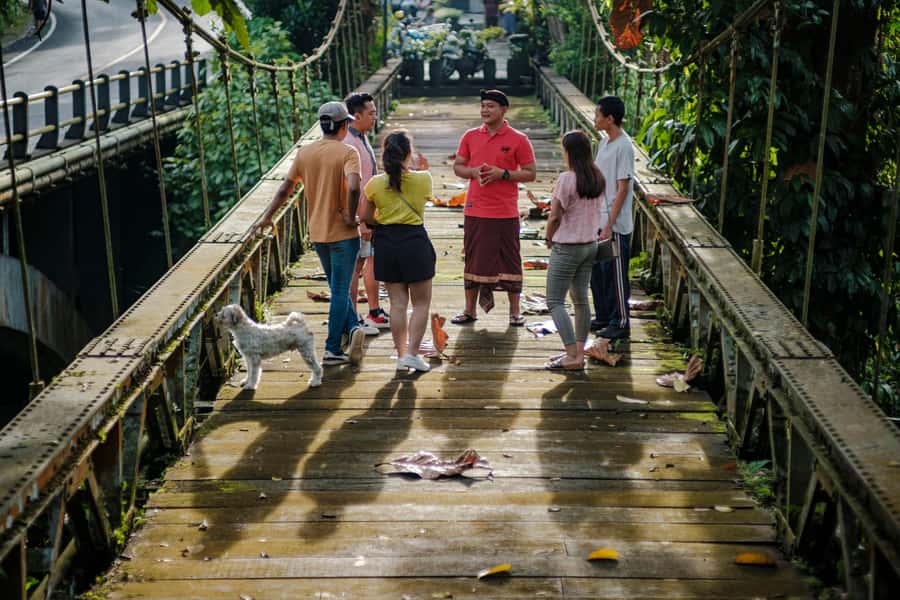
After the temple, you move to Campuhan Bridge, where the “two rivers meet” theme becomes something you can actually look at. This is a smart stop because it anchors the rest of the tour: once you understand the landscape, you can follow the story of how Ubud developed around it.
What I like about this portion is that it turns a scenic viewpoint into a geographic lesson. Your guide talks about development here—how this area moved from suburbs toward a downtown hub—so the walk does not feel random once you leave the bridge and start reaching more civic and cultural sites.
This is also where the walk’s small-group size earns its keep. With a group limited to 8 participants, you can ask questions and not feel like you’re slowing down a bus of people.
Museum Puri Lukisan: The Palace of Paintings and the Balinese-Western Link
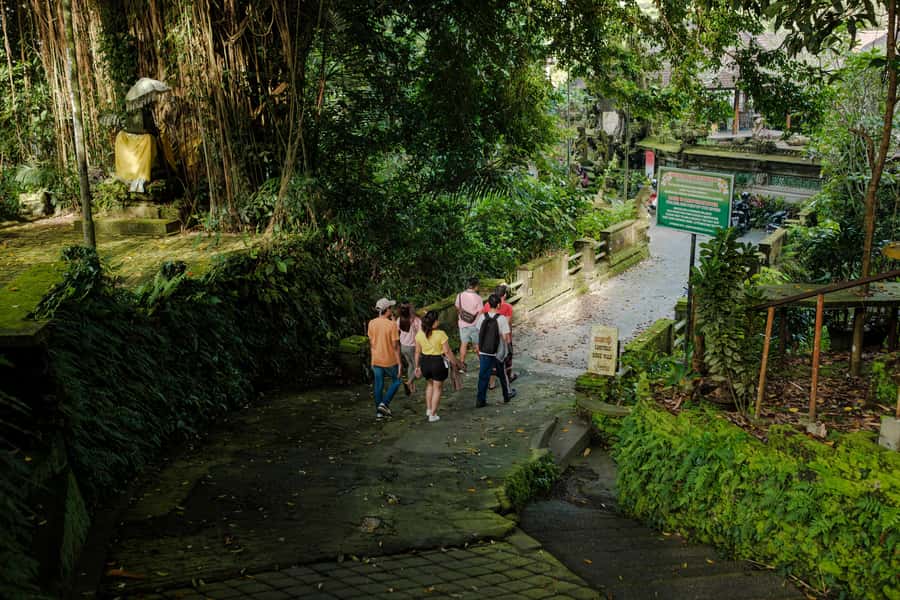
Next comes Museum Puri Lukisan (The Palace of Paintings). This is one of the strongest stops for travelers who want more than temple photos. The walk description specifically points to a testament to the early alliance between Balinese and Western artists, and this is the place where that idea becomes visual.
The value here is context. A lot of art museums are just rooms with labels. Puri Lukisan works better when you know why it exists, how cross-cultural artistic relationships formed, and how Ubud became a magnet for artists while still rooted in local creative traditions.
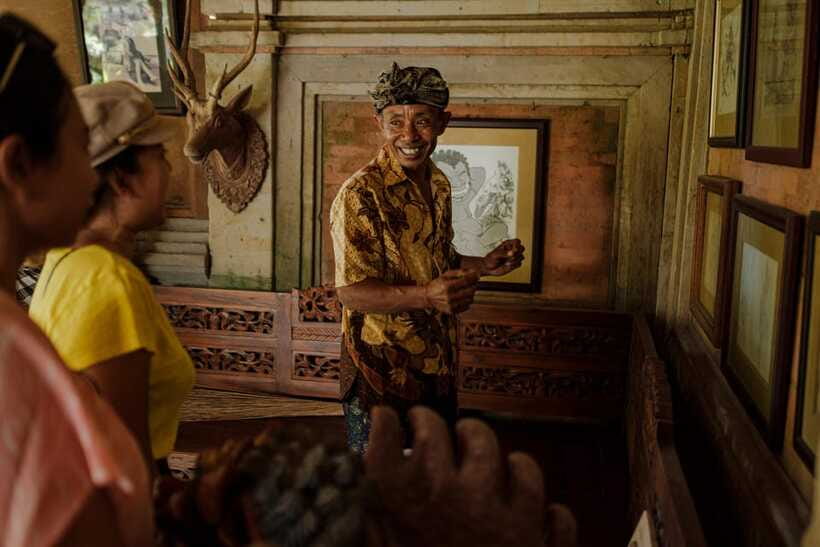
If you like learning through stories, you’ll appreciate the way a good guide can connect artwork, architecture, and the bigger cultural shift happening around Ubud. In the feedback you can see a pattern: guides like Joe and Win (and Bagus alongside them) often use extra tools such as printed photos to help you place scenes in time, so the museum experience feels like part of the same narrative, not a detour.
Also, the museum ticket is included (listed as Rp 95,000), which helps keep the tour value cleaner.
Ubud Royal Palace (Puri Agung Ubud): The 116-Year-Old Sculptor and Royal Gate Meaning
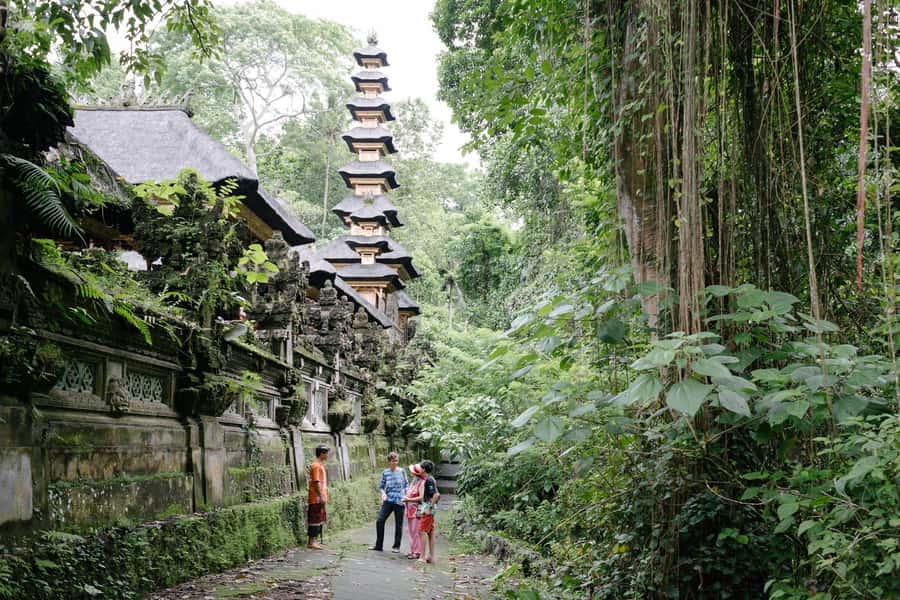
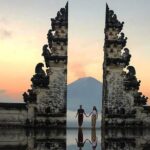
Then you shift into power and ceremony at Puri Agung Ubud (Ubud Royal Palace). This stop includes the tour highlight about a royal gate built by a 116-year-old sculptor. It’s the kind of detail that makes you stop and look again, because it’s not just an old doorway. It’s evidence of craft, time, and continuity.
Royal architecture can feel intimidating if you do not know how to read it. Here’s where I think this tour does well for first-timers: you do not just see structures, you get a sense of why they exist in this particular place and how palace life connected with wider community rhythms.
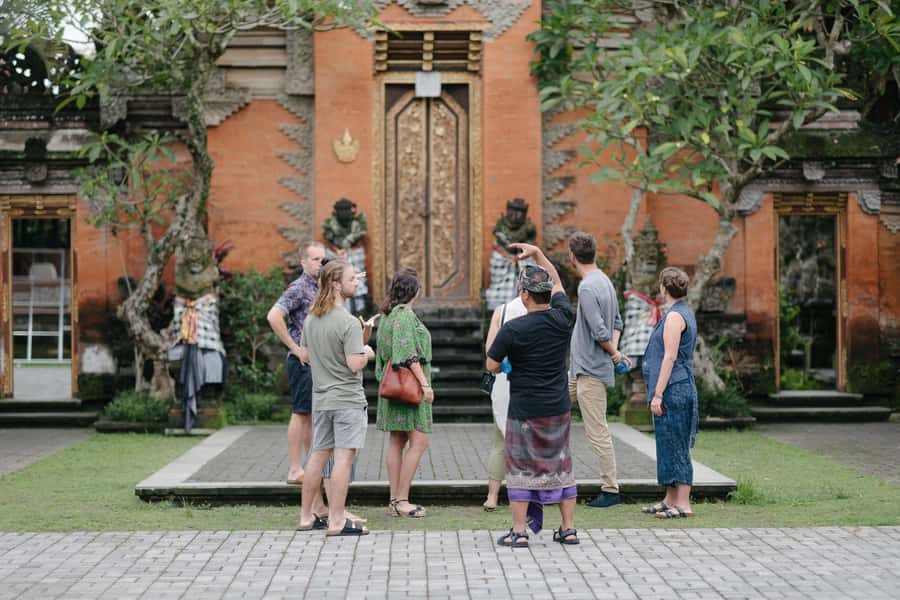
You’ll also notice that the walk includes special access to a Balinese compound. While the exact entry details can vary by site rules, the big takeaway is that you get more than the outer pass-by view.
Practical note: palace areas still bring stairs and uneven ground. If you’re bringing a small camera bag or a phone on a strap, keep it secure and keep your step.
Puri Kantor: A Quieter Piece of the Puzzle

The route continues to Puri Kantor, which rounds out the story by adding another layer beyond the big, obvious landmarks. I like this kind of stop because it often keeps the tour from turning into a highlight reel. You see how formal spaces connect to the administrative and everyday sides of old Ubud life.
This is also where the walk’s theme of old among new becomes easy to feel. One minute you’re near structured palace grounds; the next, your guide is helping you understand how the area shifted into the “modern Ubud” you walk through today.
It’s a good reminder that history is not just temples on a postcard. It’s how people organized community, how arts and ideas traveled, and how power sat in the middle of daily movement.






Value and Price: What $27 Includes and Why It’s Not Just a Walking Tour
At $27 per person for a 3-hour small-group tour, the math works best when you look at what’s covered. Included in the price are:
- A local English-speaking guide
- The guided walking route
- Museum Puri Lukisan entrance ticket (Rp 95,000)
- Special access to a Balinese compound
- Local discounts
That entrance fee matters because museums in Bali can add up fast. By rolling the ticket into the tour, you reduce decision fatigue and make it easier to plan your day.
And the “why” behind the pricing is the guide effort. The strongest feedback you’ll see repeatedly is about guides making the experience feel personal and highly structured—guides like Jo, Joe, Win, and Bagus are repeatedly praised for being polite, thoughtful, and able to answer questions with real detail.
One more point: you are also getting extras sometimes. Some guides mentioned in the feedback have carried items like umbrellas, mosquito spray, water, local snacks, and even sun lotion. That’s not something you should assume on every day, but it tells you the guides are paying attention to comfort and practical needs.
Small Group Size and Guide Style: Better Questions, Better Pace

This tour caps at 8 participants, and the feedback shows why that matters. In at least one case, the group was so small it became effectively private, which made the storytelling feel like a conversation rather than a lecture.
Guides such as Jo are praised for balancing conversation with guiding duties and for making sure everyone feels included. Win and Bagus show up in feedback as especially strong at connecting themes across geopolitics, spirituality, art, and culture, not just telling isolated facts.
If you like photos, you might also enjoy knowing that Joe is described as a strong photographer for capturing memories along the route.
Weather, Getting Around, and What to Bring (So You Enjoy It)
This is a rain-or-shine walk. If conditions turn severe, the operator says they’ll contact you before the start time. So build in the mindset that weather is part of the day, not something that ruins it.
For gear, keep it simple:
- Comfortable shoes are non-negotiable
- Consider bringing a light layer for humidity shifts
- The company asks you to bring a reusable water bottle for refills to reduce plastic impact on Bali’s rivers
Also, plan for an urban environment. The tour does not include pickup or drop offs from your accommodation, so you’ll need to get yourself to the meeting area near Antonio Blanco Museum, around Murni’s Warung.
Who Should Book This Story Walk in Ubud?
I think this tour fits best if you:
- Want Ubud explained as a place that changed over time, not just a checklist
- Appreciate walking tours with meaning, where each site connects to a broader theme
- Prefer small groups and room for questions
- Are comfortable with stairs and uneven surfaces around historic landmarks
It may be less ideal if you need step-free routes or if you struggle with steep gradients and patchy sidewalks.
If you’re the kind of traveler who likes to understand why art and architecture look the way they do, Museum Puri Lukisan and the palace stops will feel especially rewarding.
Should You Book Ubud’s Journey from Past to Present?
I’d book it if you want your morning in Ubud to feel like it has a spine. The itinerary is built around a clear thread: past to present, guided by landscape, spiritual sites, art history, and palace architecture. At $27 with the museum ticket included and with small-group limits, the value is strong for what you get.
You should reconsider only if walking uneven stone and stairs for up to 3 hours is not something you can manage. If that’s you, save this for a day when you can move comfortably and enjoy the pace.
If you’re trying to pick one “explain Ubud” activity, this is a solid choice—because it helps you see Ubud as a living timeline, not a set of disconnected spots.
FAQ
How long is the Ubud Past to Present walking tour?
The tour runs for 3 hours.
What time does the tour start?
The listed start time is 8:30am. For private tours and other times, you can contact the provider.
Where do I meet the guide?
The meeting point is near the Antonio Blanco Museum. The exact meeting point is emailed upon booking, and it is also described as being near Murni’s Warung.
What is included in the $27 price?
The price includes a local English-speaking guide, the walking tour, the Museum Puri Lukisan entrance ticket (Rp 95,000), special access to a Balinese compound, and local discounts.
Is the tour rain or shine?
Yes, it operates rain or shine. If conditions are severe, such as an intense downpour, the provider will call before the start.
Does the tour offer pickup or drop-off?
No. The tour does not provide pickup or drop-offs from your accommodation.
What should I bring?
Bring comfortable shoes. The provider also asks you to bring a reusable bottle for water refills.