Your first wave in Uluwatu feels unreal.
This 90-minute surf lesson around Uluwatu is built around real wave reading and real coaching, not just standing on a board and hoping. You meet at Balangan Beach, get local guidance in English, and (if conditions line up) you’re working toward that first clean stand.
What I like most is the way the lesson is structured for your level, from first-timer to someone trying to improve turns and timing. I also like the constant feedback style you get from Curly and his team, including clear tips and safety-first instruction while you’re in the water.
One thing to consider: it’s not for everyone. This experience isn’t suitable for non-swimmers, and it’s also not recommended if you have back problems or if you’re traveling with kids under 10.
In This Review
- Quick highlights
- Balangan Beach start: where the lesson begins and why it matters
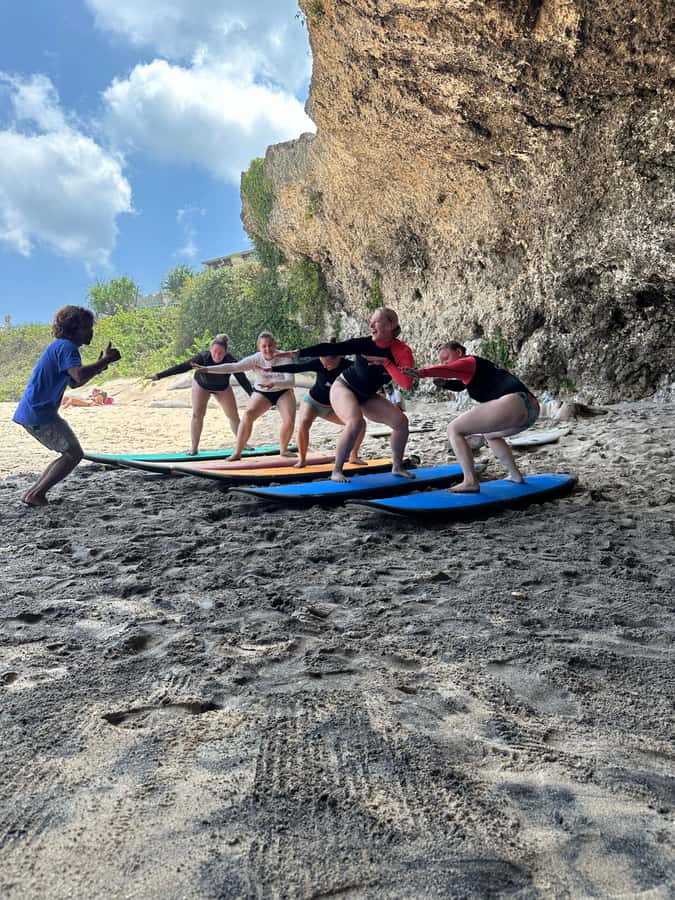
- The 90 minutes: theory on land, then straight to the waves
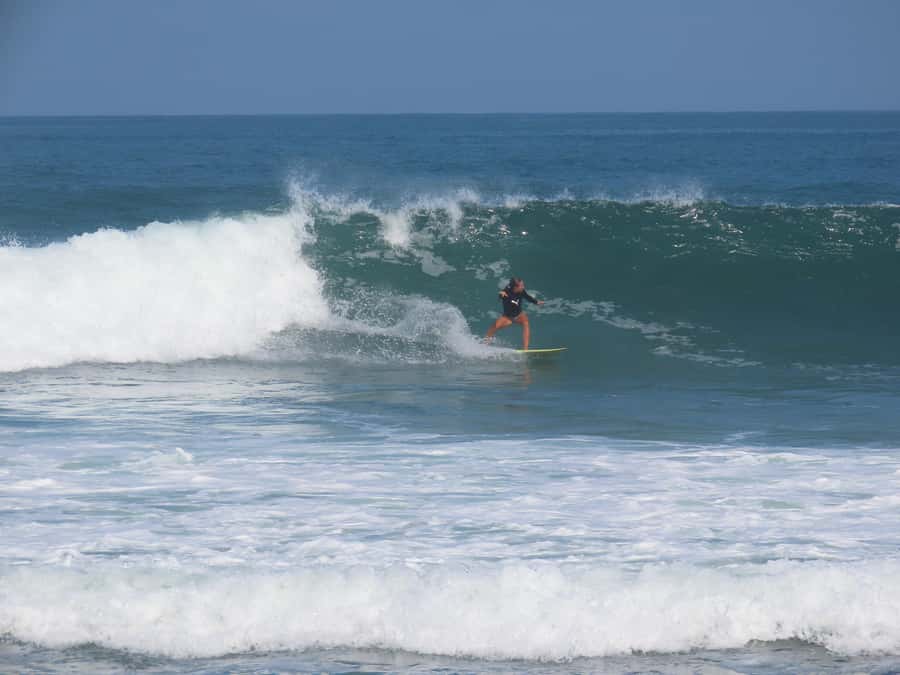
- In the water at Uluwatu: standing up, reading waves, and staying safe
- What you’ll work on, wave by wave
- Safety is not optional
- Private feel with a small group: getting attention without crowds
- Gear and comfort: board rental, rash guard, and what to pack
- What you might get after the lesson: photos and improvement notes
- Price and value: what $32 buys in Bali surf coaching
- Who should book this Uluwatu surf lesson
- A practical plan for your day in Uluwatu
- Should you book this surf lesson at Balangan Beach and Uluwatu?
- FAQ
- Where do I meet for the lesson?
- How long is the surf lesson?
- Is this lesson private or small group?
- What’s included in the price?
- What should I bring?
- Who shouldn’t book this experience?
Quick highlights
- Balangan Beach meeting point with the spot chosen based on tides and wind
- English-speaking instructor with long surf experience and coaching background
- Small group up to 5, with a lesson plan tailored to your goals
- Board rental and rash guard included, so you start surfing sooner
- Theory on land first, then time in the water with ongoing wave-by-wave coaching
- Photos and video option available to purchase after your session at the cafe
Balangan Beach start: where the lesson begins and why it matters
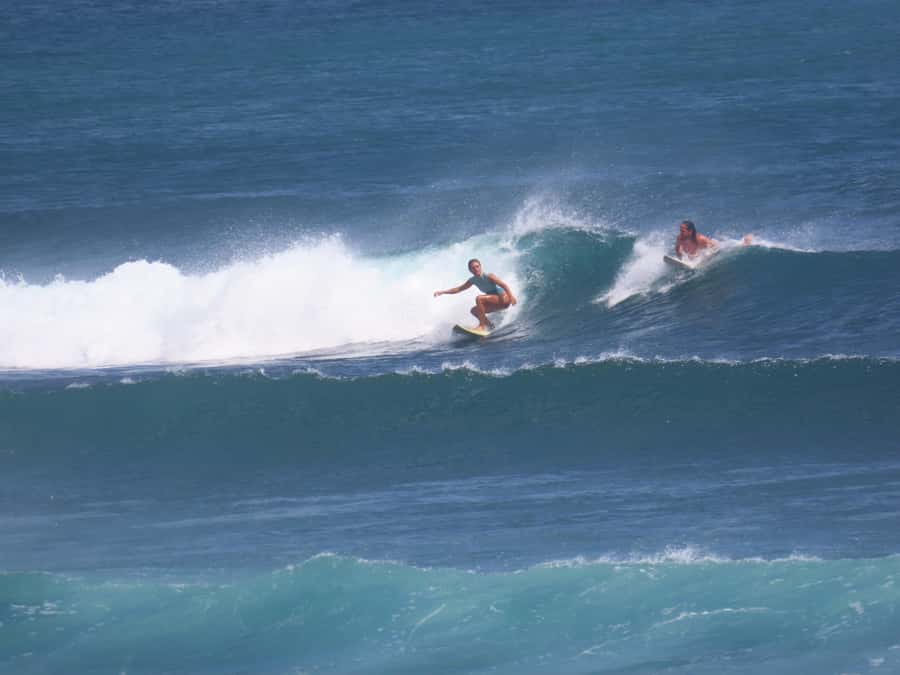
The lesson kicks off at Balangan Beach. That location alone is a big part of why this works so well for visitors: it gives you an easy, organized starting point in the Uluwatu region, instead of wandering around trying to figure out where to go.
But what I really appreciate is the approach to conditions. The instructor studies tides and wind ahead of time and decides where on the beach makes sense for the session. In Uluwatu, surf quality can change fast, sometimes even within the same hour. A coach who plans around that means you spend more time practicing the skills you came for, not just paddling in waves that don’t fit your level.
You can also read our reviews of more tours and experiences in Uluwatu.


The 90 minutes: theory on land, then straight to the waves
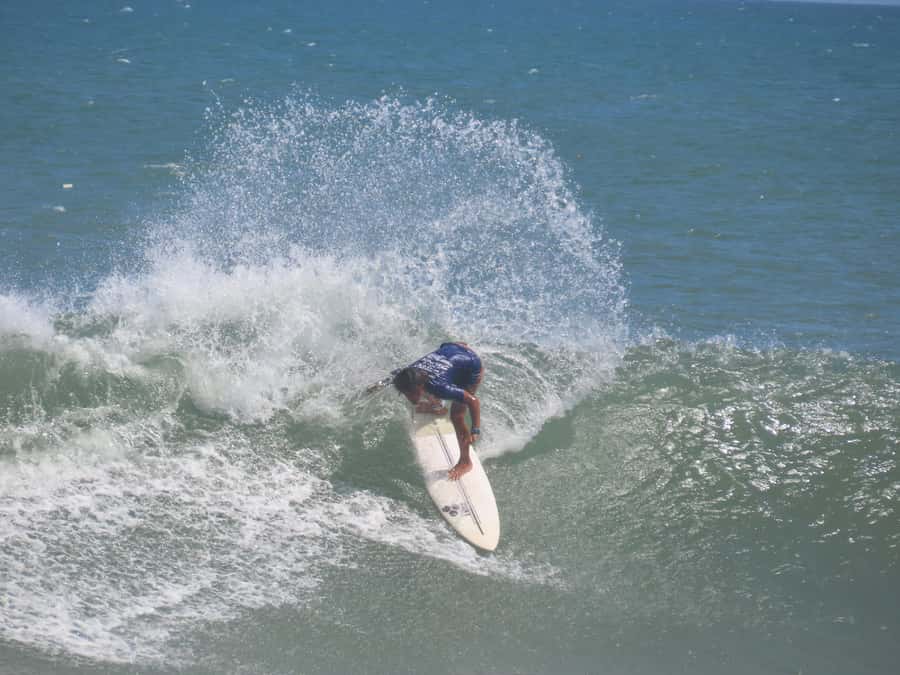
This is a tight, 90-minute session, not a half-day “maybe you’ll catch something” outing. Expect a short, practical setup on land first. People in the reviews describe a theory part before getting in the sea, with guidance on how to position the board, how to stand, and how to manage the basic mechanics of catching a wave.
In plain terms, the land time helps you:
- understand what you’re aiming to do in the water that day
- get your footing and balance sorted before you’re dealing with moving waves
- avoid common beginner mistakes that waste effort and make you nervous
Then you head out into the water and the coaching switches to real-time. The instructor gives feedback while you’re paddling, timing your takeoff, and trying to stand. That rhythm matters because surfing is one of those sports where the fix has to be immediate. If you only hear advice after you wipe out, it usually doesn’t stick. Here, you’re getting pointers during the attempt.
And yes, the atmosphere is friendly. Reviews mention jokes and a fun vibe, which sounds small, but it changes the whole lesson. When you’re relaxed, you’re more willing to try again after the wipeout.
In the water at Uluwatu: standing up, reading waves, and staying safe
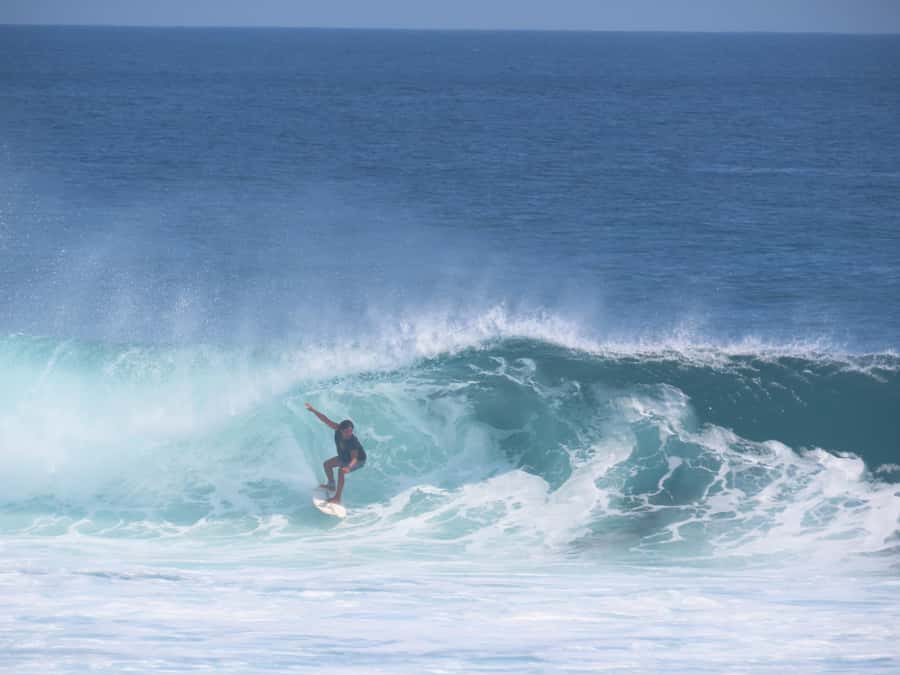
Catching waves at Uluwatu isn’t only about strength. It’s timing, balance, and wave selection. This lesson leans hard into those basics, with coaching that keeps you thinking about what the ocean is doing.
What you’ll work on, wave by wave
Beginner coaching tends to focus on the moment that matters most: getting from lying down to standing up. One review mentions both the learner and their sister starting from zero and still standing and riding a couple times by the end. Intermediate surfers in the reviews talk about more advanced focus too, like learning how to read waves and improve skills such as turns, tricks, or pumping.
If you’re somewhere in the middle, that’s where this lesson format shines: the coach can adjust what matters for your current level, instead of forcing you into a one-size-fits-all plan.
Safety is not optional
The instruction style is consistently described as safety-focused, with clear directions and encouragement to follow guidance. Surf lessons should feel structured like that. If the waves get bigger or steeper, you want a coach who can push you without playing games with risk.
Also, the lesson rules are straightforward: listen to the instructor, and don’t bring smoking or alcohol/drugs into the mix. It keeps everyone on the same page.






Private feel with a small group: getting attention without crowds
This experience lists a small group limited to 5 participants. You still get that personal coaching feel, even though it’s not purely one-on-one in a strict sense all the time.
Why that matters: in group surf lessons, the instructor’s attention can thin out. Here, the cap stays low, so you’re more likely to get frequent feedback and individualized corrections when something isn’t working—like your takeoff angle, stance, or timing.
Reviews repeatedly mention that the instructor is patient and helps you feel comfortable. That’s a big deal for first-timers. Fear is normal. If you’re tense, you’ll fight your board instead of guiding it. A coach who can coach your mindset while also fixing your technique gets you further.
Gear and comfort: board rental, rash guard, and what to pack
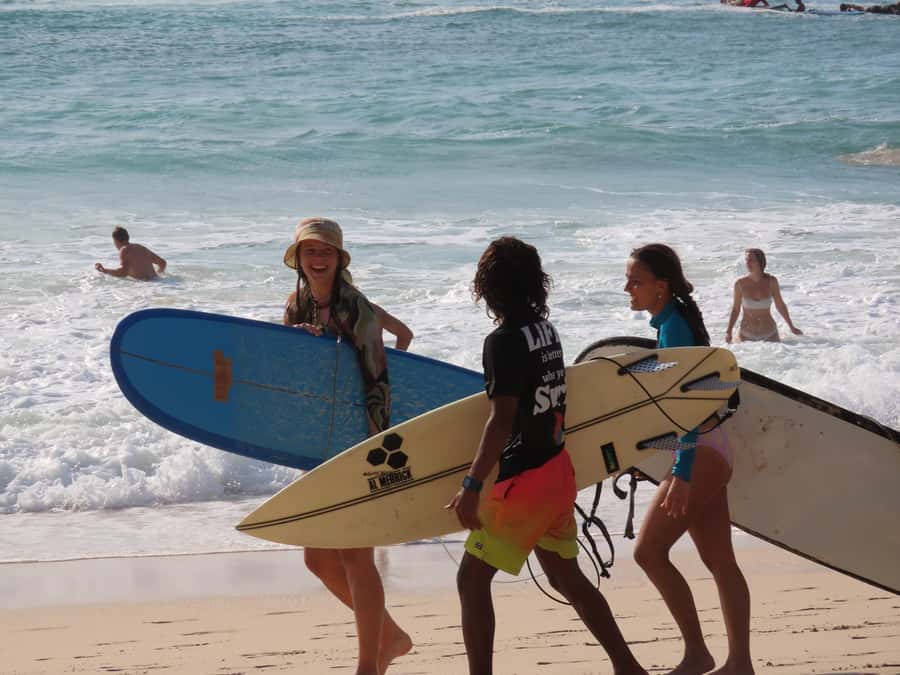
The lesson includes surfboard rental and a rash guard. That’s good value because it removes two common friction points:
- You don’t have to hunt down gear after arriving in Bali
- You can focus on technique instead of dealing with equipment that might not fit
You still need to bring the essentials listed for the day:
- a change of clothes
- a towel
- sunscreen (and ideally a hat for sun protection)
- water
One extra practical thought: the sun in this part of Bali can be relentless, even when the wind makes you feel cooler. Sunscreen and hydration help you last through the paddling and the stop-start of learning.
Also, bring a towel because you’ll want to dry off quickly after you’re done. That’s not glamorous advice. It’s the difference between feeling okay and feeling miserable while you try to recover.
What you might get after the lesson: photos and improvement notes
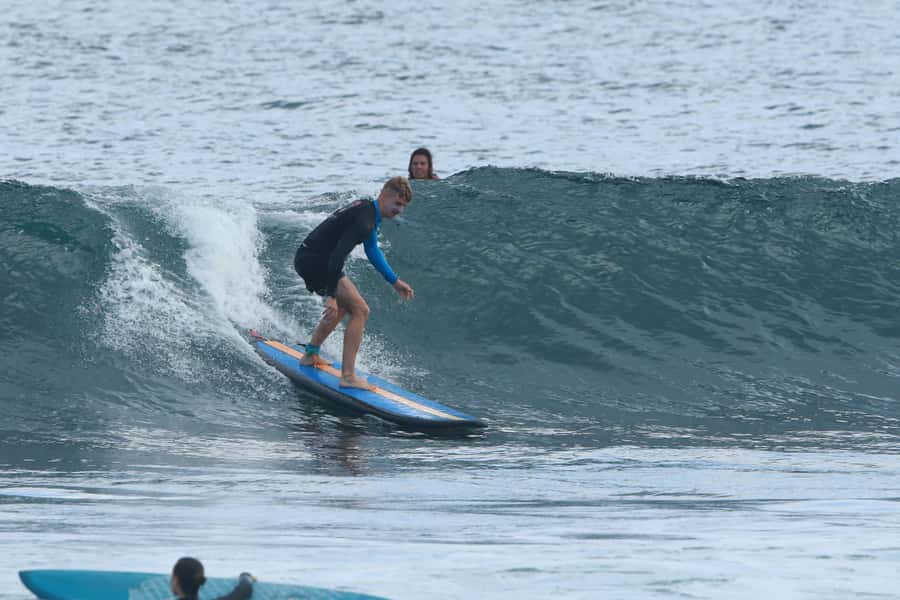
A few reviews mention something extra: photos and videos taken by the team at a cafe, and those files are available to purchase afterward. If you want proof of your progress—or just a way to remember your first session in Uluwatu—this is a nice bonus.
More important than the media, though, is the feedback loop. At least one review describes the instructor going over photos to show where you can improve your form. That matters because surfing improvements usually come from spotting one or two specific issues you can’t easily notice in real time.
If you’re aiming to progress beyond the basics, asking the coach what to focus on next is a smart move. You’ll get more from your second session if you know what to practice.
Price and value: what $32 buys in Bali surf coaching
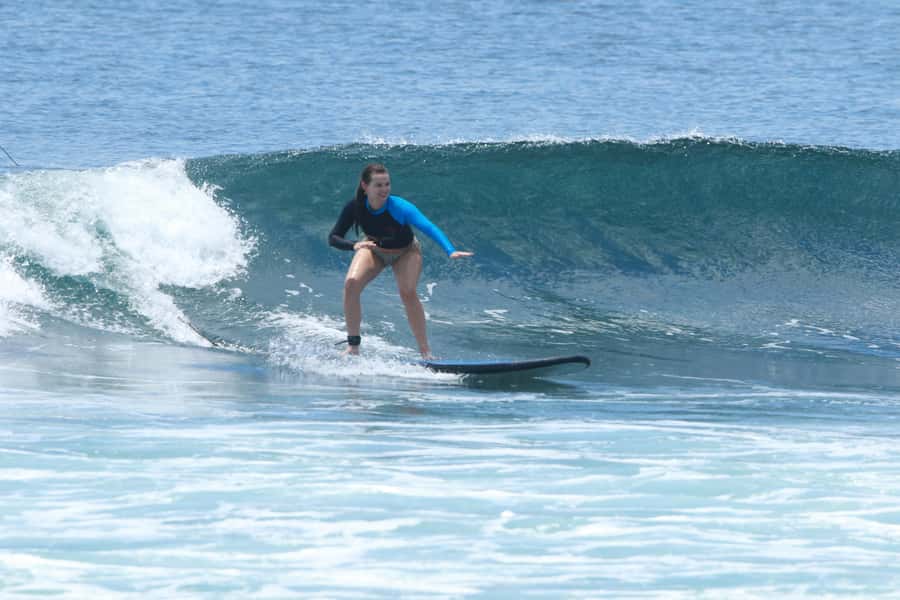
At $32 per person for about 90 minutes, this isn’t priced like a huge production tour. It’s priced like a real surf lesson with equipment support and coaching time built in.
Here’s what you’re getting that makes the price feel reasonable:
- Professional surf instructor (English)
- Board rental and rash guard included
- time spent on both instruction and in-water practice
- a lesson tailored to your skill level and goals
- small group size (up to 5)
When surf lessons cost more, it’s often because they’re longer, include transportation, or inflate the gear part of the package. In this case, you’re paying for coaching time and execution. For many visitors, that’s the sweet spot: you want an experience that produces actual progress, not just a scenic beach walk.
If you’re a total beginner, getting even a couple of clean standing rides by the end is a meaningful return on money. If you’re intermediate, consistent feedback during the session can help you improve faster, because you’re not repeating the same mistakes.
Who should book this Uluwatu surf lesson
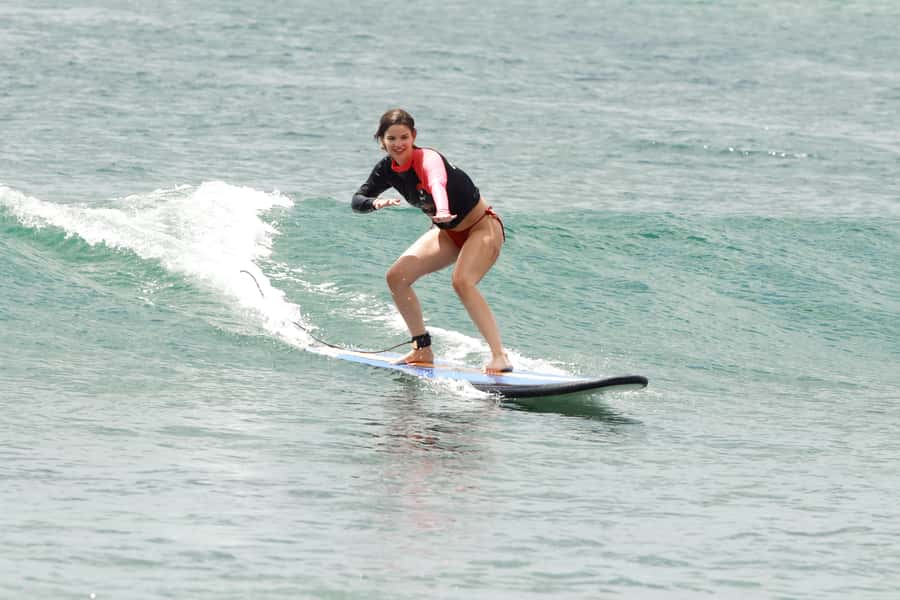
This lesson fits best if you:
- want to learn to surf around Uluwatu with local coaching
- like the idea of a structured lesson with a short theory start
- prefer small-group instruction rather than huge crowds
- want constant feedback while you’re actually trying to ride waves
It’s probably not your match if:
- you don’t swim (the experience is not suitable for non-swimmers)
- you have back problems
- you’re traveling with kids under 10
And if you’re the type who gets nervous in the ocean, the coaching style described in reviews is exactly what you want: encouragement plus clear instruction, not tough love.
A practical plan for your day in Uluwatu
You’ll have the best session if you treat it like training, not sightseeing. Before you go, check weather and surf conditions as suggested, and dress accordingly.
When you arrive, focus on:
- listening to the instructor’s setup plan for where you’ll practice
- staying hydrated
- applying sunscreen before you’re out in the sun for long
And in the water, do what your coach asks the moment they ask it. Surf is one of those sports where small adjustments snowball.
If you’re thinking of improving quickly, your goal for this first lesson should be clarity: understand the stance, the timing, and what to try next time. You don’t need perfection on day one. You need direction.
Should you book this surf lesson at Balangan Beach and Uluwatu?
If you’re coming to Bali specifically to learn (or to level up), I think this is a smart booking. The big reasons are simple: small group size, English-speaking coaching by Curly 17, included board and rash guard, and a lesson structure that gets you into waves with real guidance.
Book it if:
- you want beginner support that still pushes you to try
- you want coaching feedback while you ride, not just a lecture
- you’d rather get progress than spend half the day figuring out the ocean
Skip it if:
- you can’t swim or you have concerns around back stability
- you’re expecting an all-day tour with lots of extra stops and logistics
FAQ
Where do I meet for the lesson?
You meet at Balangan Beach.
How long is the surf lesson?
The experience runs for about 90 minutes (with a 1.5-hour surf lesson included).
Is this lesson private or small group?
It’s designed as a tailored lesson, and the group size is limited to up to 5 participants.
What’s included in the price?
You get a professional surf instructor, surfboard rental, and a rash guard, plus the 1.5-hour lesson.
What should I bring?
Bring a change of clothes, a towel, sunscreen, and water.
Who shouldn’t book this experience?
It’s not suitable for children under 10, people with back problems, and non-swimmers.