Five hours, six Jakarta stops. Monas and Sunda Kelapa in the same half day makes this tour a smart hit-list day, especially if you want big landmarks plus hands-on culture without a full-day commitment. I like the way the route strings together iconic religious sites and old-town streets, then finishes where the maritime story is still visible. One possible drawback: English quality can vary by guide; in one case, the English-speaking guide Eddie reportedly wasn’t fluid, so you may want to ask follow-up questions if anything is unclear.
This is the kind of tour that works well because it’s timed—4 to 5 hours is long enough to see a lot, but short enough that you’re not exhausted by lunch plans. You also get an air-conditioned ride with an English-speaking guide, plus bottled water and entrance fees where they’re scheduled. Still, keep your expectations realistic: Monas and Istiqlal can be closed on specific days, and you may only be able to stop outside.
In This Review
- Key highlights worth your time
- Price and what $50 buys you in Jakarta
- How pickup, vehicle comfort, and timing shape the day
- Merdeka Square and Monas: what you’ll see (and when it’s closed)
- Istiqlal Mosque and Jakarta Cathedral: big architecture in one short walk
- Kota Tua Old Town: Dutch-era streets you can actually walk
- Makutharama Puppet Studio: wayang kulit plus hands-on time
- Kota Intan Drawbridge and Sunda Kelapa: heritage that still works
- Practical tips so the schedule feels easy
- Where this tour fits best (and where it doesn’t)
- Should you book this Jakarta highlights tour?
- FAQ
- How long is the Jakarta Half-Day Highlights Tour?
- Does the tour include hotel pickup and drop-off?
- Are there days when Monas or Istiqlal Mosque are closed?
- If Monas or Istiqlal are closed, do you still see them?
- What’s included in the price?
- Can I cancel for a full refund?
Key highlights worth your time
- Monas at the center of Merdeka Square for an instant independence landmark view
- Istiqlal Mosque and Jakarta Cathedral on the same block for faith + architecture contrast
- Kota Tua cobblestones and Dutch-era textures for easy photo walking
- Makutharama Puppet Studio for wayang kulit and a puppet-making workshop
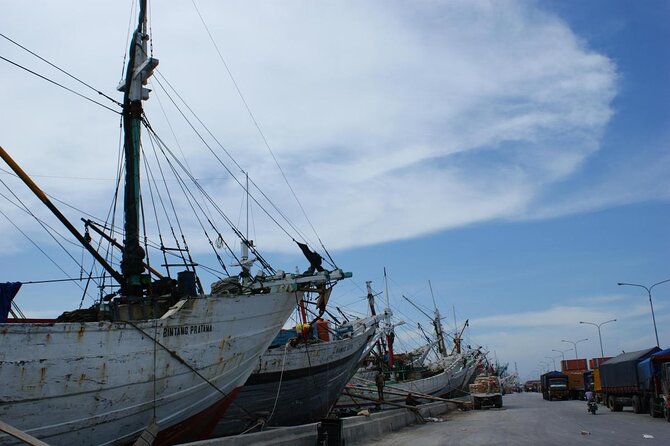
- Sunda Kelapa Harbor and pinisi schooners where maritime tradition still moves
- Small group size (max 6) that keeps the pace manageable
Price and what $50 buys you in Jakarta
At $50 per person for a half-day, the value is strongest when you compare it to what you’d pay for transportation, an English-speaking guide, and multiple paid entries on your own. The tour includes hotel pickup and drop-off, an air-conditioned vehicle, bottled water, parking fees, and entrance fees (where applicable). That bundle matters in Jakarta, where timing and traffic can make self-planning stressful fast.
What I like is that you’re not just ticking off names. You’re moving through several different “faces” of the city: the independence symbol of Monas, major religious architecture at Istiqlal and Jakarta Cathedral, the Dutch colonial-era streets of Kota Tua, the cultural workshop at Makutharama Puppet Studio, and finally the working heritage of Sunda Kelapa Harbor with pinisi wooden schooners. If your goal is understanding Jakarta through contrasts, this price can feel fair.
You can also read our reviews of more tours and experiences in Jakarta.

How pickup, vehicle comfort, and timing shape the day
This tour runs about 4 to 5 hours, which is ideal if you’re visiting Jakarta on a tight schedule or want a planned morning/afternoon without losing your whole day. Pickup is included, and the group is capped at a maximum of 6 travelers, so you’re not fighting for space around viewpoints or in small streets.
You’ll ride in an air-conditioned vehicle, and you get bottled water. That’s a real quality-of-life detail in Jakarta—heat and humidity can turn “quick stop” plans into a grumpy slog. The guide also helps you move efficiently between sites, which is a big deal when you’re dealing with traffic lights, pedestrian patterns, and the occasional need to pause.
Only one caution: pickup is included for hotels, but airport transfers from Soekarno-Hatta International Airport are not included. If you’re arriving late or leaving early, you’ll likely need separate transport unless your hotel pickup timing is already covered.
Merdeka Square and Monas: what you’ll see (and when it’s closed)
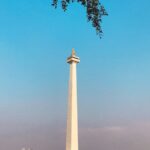
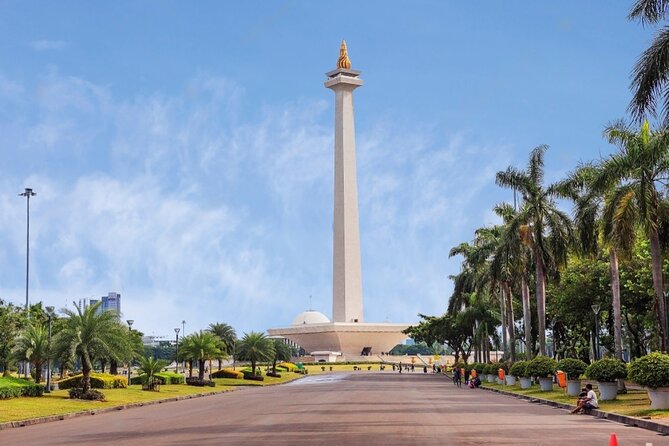
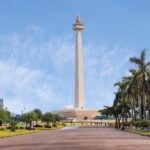
You start at Merdeka Square (Lapangan Merdeka) and the National Monument (Monas), which sits at the heart of the city. Monas is a tall independence landmark—132 meters high—and the golden flame on top represents Indonesia’s freedom. Even if you don’t go inside, the monument’s scale is the kind of “okay, wow” moment that makes your photos look like you did more than just window-shop.
Here’s the practical part. The National Monument is closed every Monday and on public holidays. When that happens, the tour note is clear: you can still stop outside. That still lets you get the key visual takeaway of the monument’s shape and location in Merdeka Square, but it may limit how much you can do at the site itself.
If you’re the type who likes to read about a place while you’re standing in front of it, Monas is a great opener. It sets the frame for everything else—religion, colonial-era streets, and maritime tradition all land better once you understand the independence theme first.
Istiqlal Mosque and Jakarta Cathedral: big architecture in one short walk
After Monas, you head to Istiqlal Mosque, described as the largest mosque in Southeast Asia. It’s an architectural standout and also positioned as a symbol of religious tolerance and harmony in Indonesia. Even when you only stop outside, the area is still worth it because the mosque’s presence dominates the block and gives you a sense of the city’s modern religious landmark power.
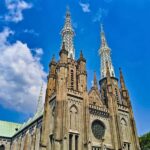
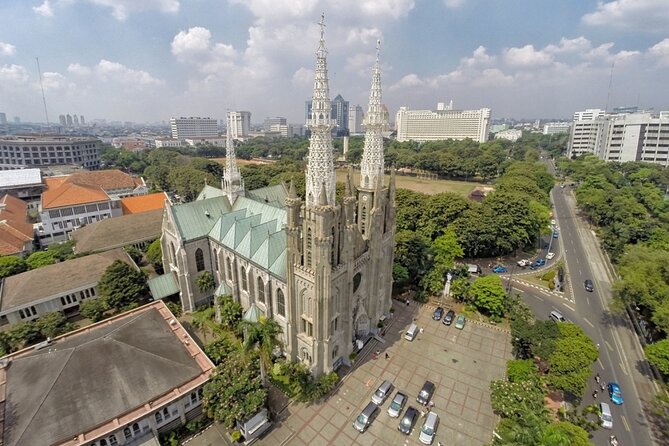
Then you cross the street to Jakarta Cathedral, a Catholic church built in 1891 in Gothic style. Having these two sites close together makes the contrast easy to grasp: one is monumental modern religious architecture, the other is a European-style church design from the colonial era. You don’t need a long “study tour” to feel the difference—just enough time to look up, walk a bit, and spot details.
Time note: Istiqlal Mosque is closed every Friday for religious purposes. If you visit on a Friday, you’ll still be able to stop outside. The good news is that Istiqlal’s exterior is visually strong, so you’re not totally shut out. The main thing to be ready for is that the experience won’t be the same as on other days.
Kota Tua Old Town: Dutch-era streets you can actually walk
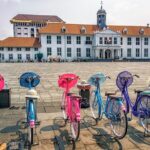
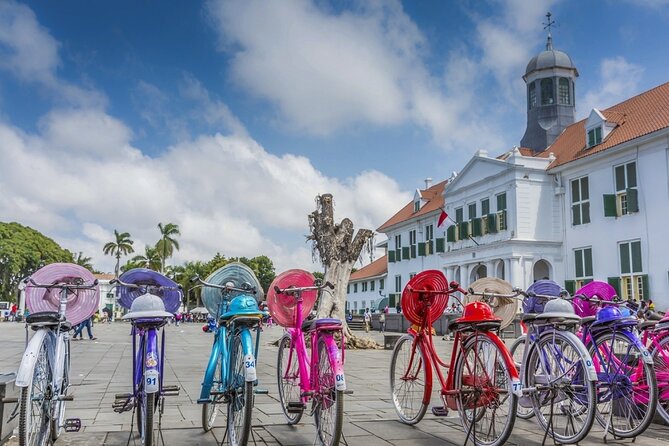
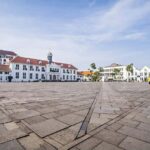
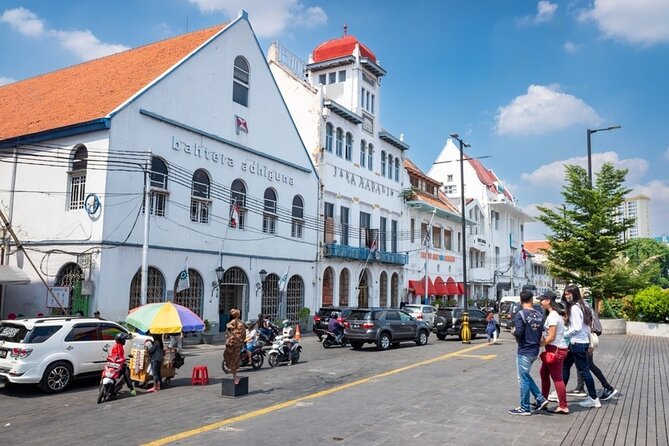
Next comes Jakarta Old Town (Kota Tua), a historical area tied to the Dutch colonial period. This is the segment where the tour shifts from monuments to texture—cobblestone streets, old buildings, and the kind of street-level details that make you slow down even if you’re trying to keep the pace.
You’ll spend about 1 hour here. With that amount of time, you can do a practical loop: walk a main strip, pause for key architecture angles, and pick a couple of spots where the old building styles are most visible. The tour also frames the area as repurposed now—historic structures transformed into museums and stores—so the street feels lived-in rather than frozen in time.
If you’re someone who likes photography and quick “walk and understand” sightseeing, Kota Tua is where you’ll feel the payoff. Just keep in mind it’s still a city street environment, so comfortable shoes matter more than fashion sneakers that don’t grip well.

Makutharama Puppet Studio: wayang kulit plus hands-on time
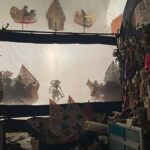
One of the best parts of this tour is the cultural stop at Makutharama Puppet Studio. Here you get a look at wayang kulit, Indonesia’s shadow puppetry tradition, which is ancient and still alive in performance.
You’ll have about 30 minutes at the studio, including live performances and puppet-making workshops. That combination is valuable because it’s not just watching from a distance. You get a chance to touch the craft process, which helps the art form stick in your memory more than a quick photo outside a venue would.
There’s a balancing act with a short time window: you won’t become a puppet master in half an hour. But that’s not the goal. The goal is to understand why this art matters—how the puppets are part of storytelling—and leave with a sharper connection to what you might see again later around Indonesia.
Kota Intan Drawbridge and Sunda Kelapa: heritage that still works
The tour includes a stop at Kota Intan Drawbridge, noted as one of the last remaining functional drawbridges from the Dutch colonial period. What makes this stop special is that it’s not just a static landmark. It’s described as functional and opens for boats to pass. That’s the kind of detail that turns a “look at it” moment into something more dynamic—you’re watching a piece of infrastructure with history still in action.
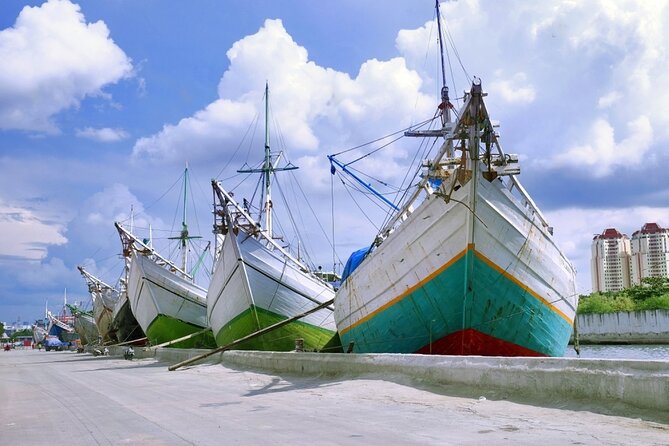
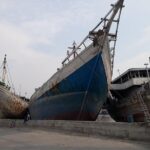
Then you head to Pelabuhan Sunda Kelapa (Sunda Kelapa Harbour), described as the historic port of Jakarta. Here, the focus shifts to maritime heritage and the traditional wooden schooners called pinisi. The tour gives you time to see them still working and moving through the harbor environment.
This final stop is where the whole half-day makes sense. You’ve seen the independence story (Monas), the spiritual architecture layer (Istiqlal and Cathedral), the colonial-era street layer (Kota Tua), and the storytelling craft (puppetry). Ending at a harbor keeps Jakarta from feeling only like a museum city. It reminds you the city is still tied to the sea.
You’ll get about 30 minutes here. It’s enough time to watch the activity and take photos, but it’s also short enough that you won’t spend the whole afternoon standing and sweating. If the day is hot, bring a hat and plan your photo moments.
Practical tips so the schedule feels easy
Because this tour is compact, you’ll enjoy it more if you help it run smoothly.
- Wear closed-toe shoes with grip for Kota Tua’s cobblestones.
- Bring a light layer if you’re sensitive to strong air-conditioning in the vehicle.
- Plan your questions in your head for each stop—Monas, Istiqlal, Cathedral, Kota Tua, puppetry, and Sunda Kelapa each have a different “story.” The guide can tie them together fast.
- Respect closure patterns: if Monas or Istiqlal are closed due to Monday/public holiday or Friday religious use, you’ll still stop outside. Arrive mentally ready for that version of the visit.
- Use the water even if you think you’re fine. The day is mostly outdoors and walking.
Where this tour fits best (and where it doesn’t)
This Jakarta Half-Day Highlights Tour is a great match if you have limited time and you want a high signal-to-time ratio. You’ll like it if you want a route that moves from major landmarks to street-level old-town atmosphere, then finishes with something hands-on (puppetry) and something working (the harbor and pinisi schooners).
It may not be for you if you’re the type who expects extended time inside big sites. Monas and Istiqlal can be closed depending on the day, and the schedule is built around short, efficient stops. Also, if you’re seeking deep museum time in Kota Tua, 1 hour may feel like a quick taste rather than a full experience.
Should you book this Jakarta highlights tour?
If your main goal is to see Jakarta’s key symbols in one planned half day, I’d say it’s worth booking. The $50 price stacks well because the tour includes pickup, transportation, entrance fees where listed, bottled water, and a guide in English. Add in the small group size (max 6), and the format feels controlled rather than chaotic.
My only “think twice” note is guide language quality. In at least one case tied to an English-speaking guide named Eddie, the English reportedly wasn’t fluent and was harder to follow. You can’t control the guide you get, but you can control how you respond: if something isn’t clear, ask the guide to repeat or explain again on the spot.
FAQ
How long is the Jakarta Half-Day Highlights Tour?
It runs about 4 to 5 hours.
Does the tour include hotel pickup and drop-off?
Yes, hotel pickup and drop-off are included. Pick-up or drop-off from Soekarno-Hatta International Airport is not included.
Are there days when Monas or Istiqlal Mosque are closed?
Yes. The National Monument (Monas) is closed every Monday and on public holidays. Istiqlal Mosque is closed every Friday for religious purposes.
If Monas or Istiqlal are closed, do you still see them?
Yes. When Monas is closed, you can stop outside the monument. When Istiqlal is closed, you can stop outside the mosque.
What’s included in the price?
The tour includes hotel pickup and drop-off, an air-conditioned vehicle, an English-speaking tour guide, driver, entrance fees, bottled water, and parking fees. It also uses a mobile ticket.
Can I cancel for a full refund?
Yes. Free cancellation is allowed up to 24 hours before the experience starts for a full refund.