Volcano fumes and warm sulfur feet in one day. I love the up-close hike at Tangkuban Perahu and the chance to watch black tea get processed step by step, then drink tea as much as you want. I also love the way the day mixes real countryside stops like rice fields and pineapple tasting with a proper hot-spring break at Sari Ater Hot Spring. One drawback: this is a long day with about 3 hours of travel from Jakarta each way, plus walking on uneven paths.
The best part is how the guides keep things working even when conditions change. On one trip, guide Ms Neti handled a misted volcano by adjusting the plan and still helped the group get the crater view later, with driver Fundi doing the heavy lifting on the road.
In This Review
- Key highlights you should care about
- From Jakarta to Bandung’s highlands: what a 12-hour day really means
- Tangkuban Perahu: hiking the active crater near Bandung
- Timing lunch and breaks around the volcano-and-tea rhythm
- Kopi Luwak Cikole: what to expect from luwak coffee tasting
- Tea plantation + government tea factory: watching black tea take shape
- Rice fields and pineapple tasting: small stops that feel real
- Sari Ater Hot Spring: sulfur soak to reset after the hike
- What’s included, what costs extra, and where the value comes from
- Private group vs. mass tour: the pace is the point
- What to bring and who should skip this tour
- Weather reality check for volcano views
- Should you book this Jakarta-to-Bandung day trip?
- FAQ
- How long is the tour?
- Is hotel pickup and drop-off included?
- Do I need to pay for lunch separately?
- Is the luwak coffee drink included?
- Do I need to walk during the tour?
- Is the tea factory open every day?
- Are entry tickets included for the volcano and hot spring?
- What should I bring?
- Is this tour suitable for wheelchair users or altitude sickness?
Key highlights you should care about
- Crater time at Tangkuban Perahu: walk along the main crater area and smell the sulfur in the air
- Tea factory visit with unlimited tea: black tea processing explained by an officer, plus plenty of tasting
- Sari Ater Hot Spring for foot soaking: warm sulfur water to reset after the hike
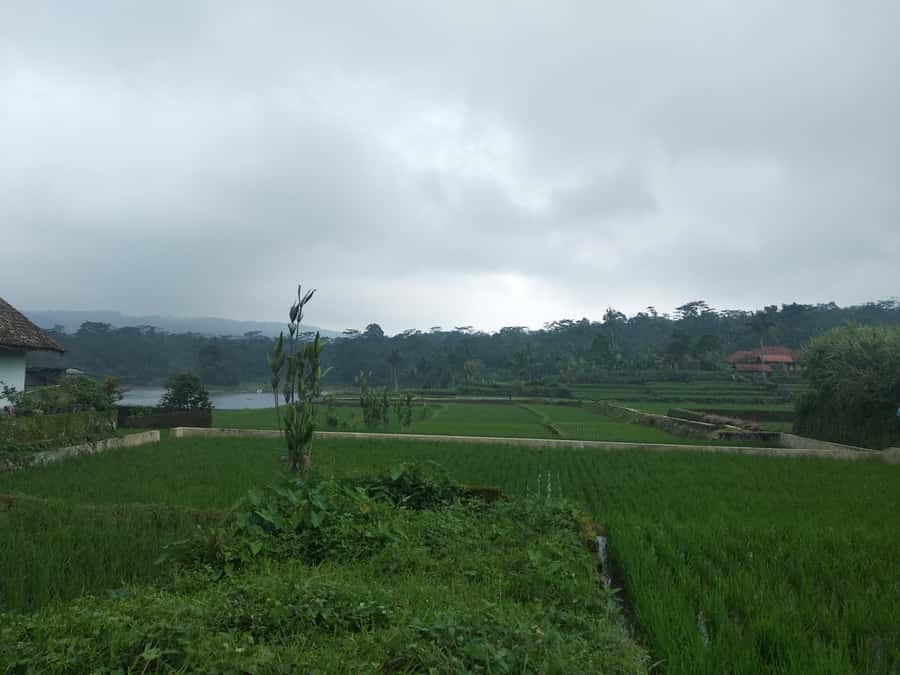
- Real highland scenery: rice fields, rubber plantations, tea valleys, and local villages along the way
- Pineapple plantation fruit tasting: fresh West Java flavor, not just a quick photo stop
- Private-group pace: your own guide and private car, no mixing with strangers
From Jakarta to Bandung’s highlands: what a 12-hour day really means
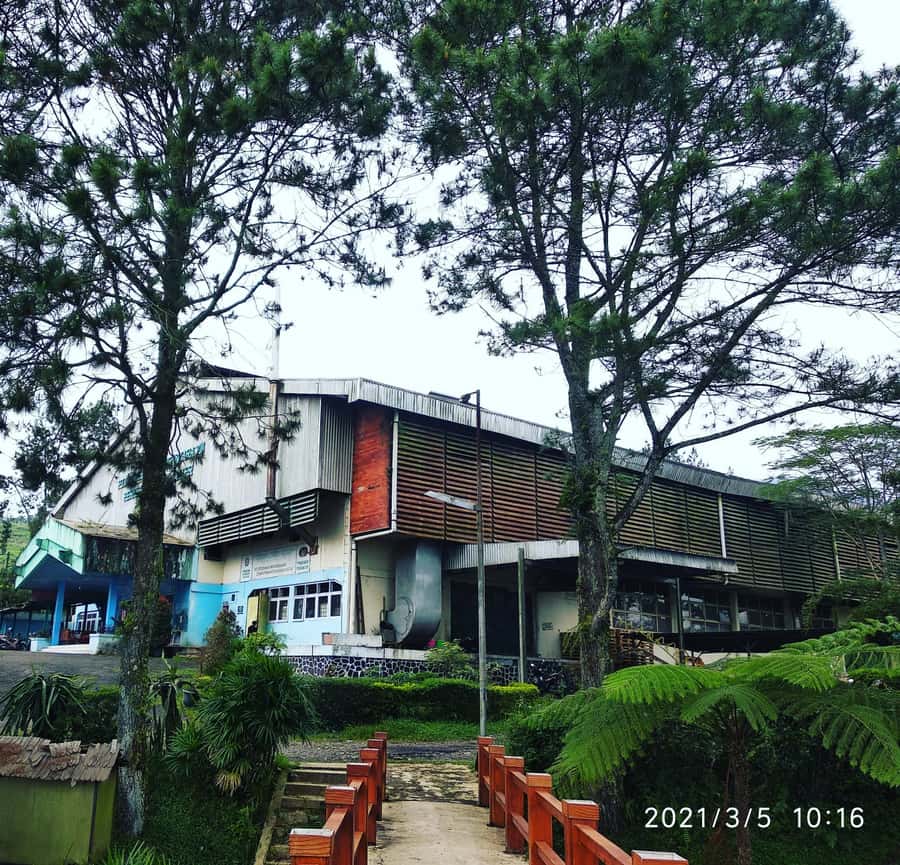
This tour is built for one big goal: swap Jakarta traffic for cool mountain air and a full menu of West Java experiences in one day. You get hotel pickup and drop-off inside Jakarta, a private car, and a live English guide. The total time on the clock is about 12 hours, and the pace is driven by that reality: there’s roughly 3 hours of travel each way from Jakarta to the Bandung area.
That travel time matters. It means the itinerary is planned tightly, with short but meaningful stops instead of long hanging-out breaks. If you’re the type who likes to linger, you’ll want to mentally switch into day-trip mode: see, walk, taste, soak, and keep moving.
I also like that the tour does not pretend everything is calm and easy. You’ll do actual walking at the volcano, you’ll explore plantation areas, and you’ll spend time at a hot spring where you may want to relax your feet (and possibly swim, since that’s part of the activity). It is not a wheelchair-friendly setup.
You can also read our reviews of more tours and experiences in Jakarta.
Tangkuban Perahu: hiking the active crater near Bandung
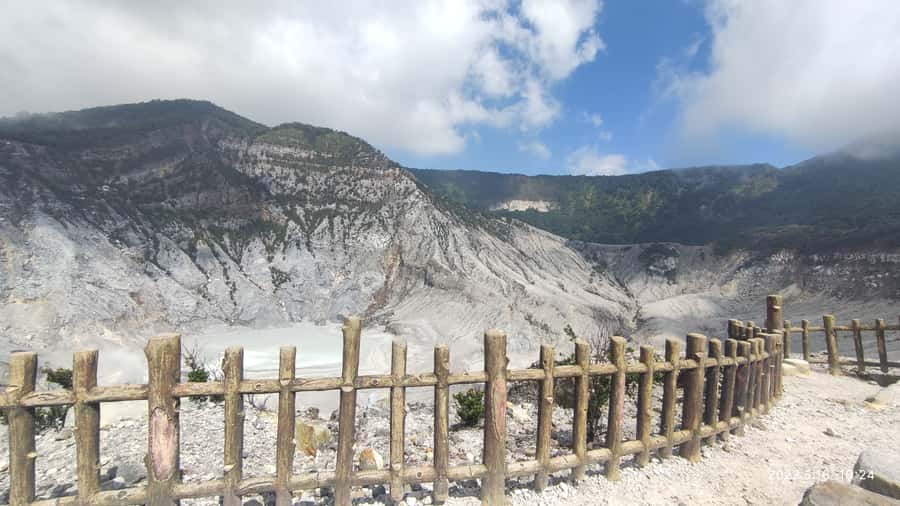
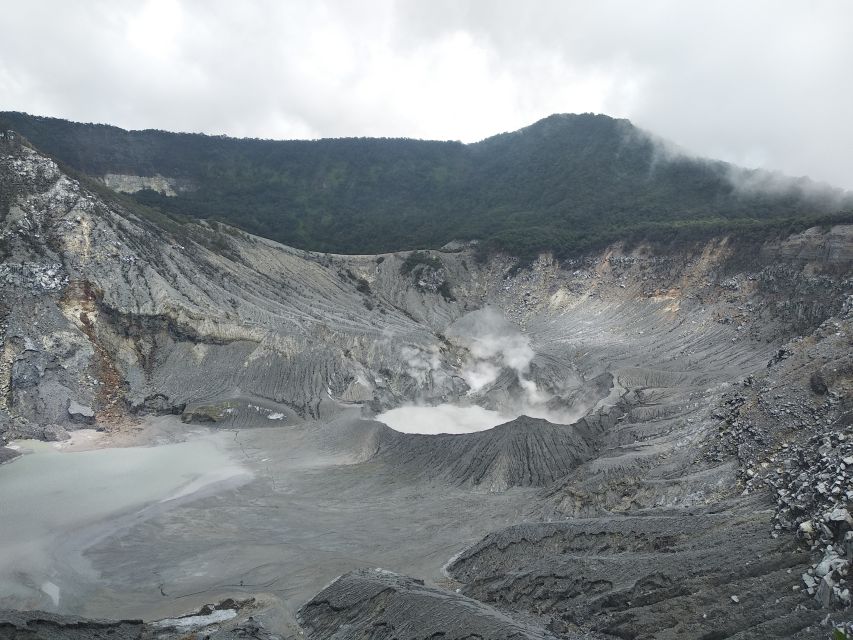
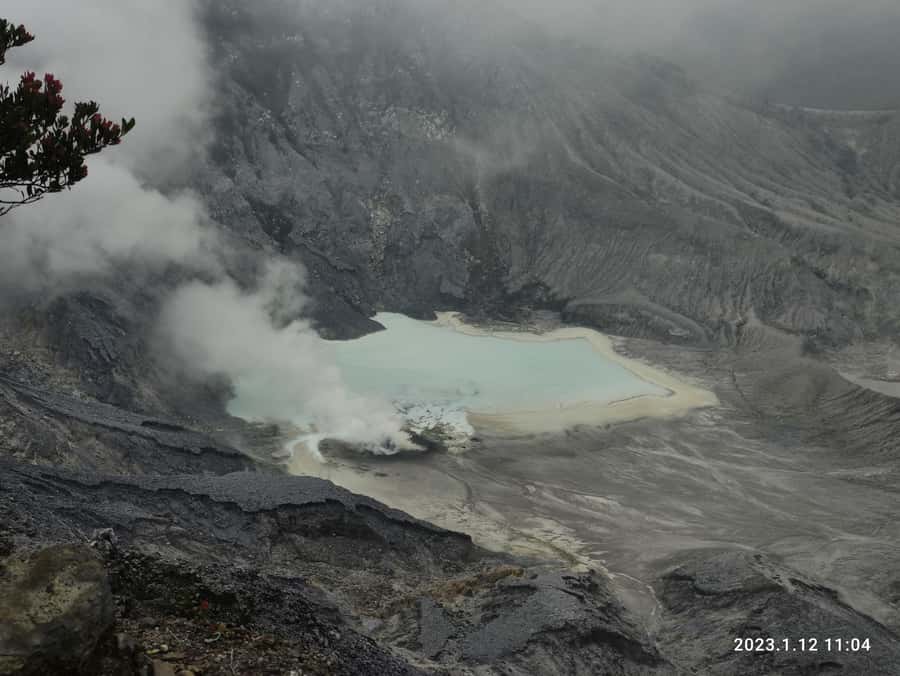
The main event is Tangkuban Perahu, an active volcano in the Bandung Regency area. Your visit is scheduled as an 80-minute hike/walk, which is long enough to feel like you did something, but short enough to fit into a 12-hour day.
What you should expect here:
- You’ll walk along paths near the main crater area
- You’ll smell sulfur as you get closer
- You’ll see fumes rising when conditions allow
- Weather can change how clearly you see the crater
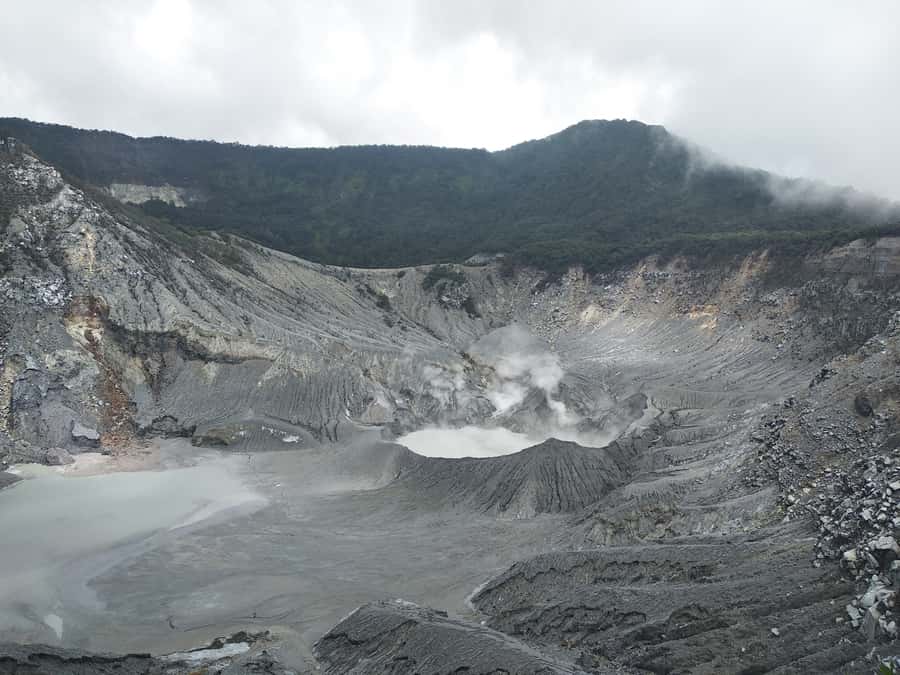
Bandung-area volcano mist is a real thing, and it can affect visibility. The good news: your guide can adjust the flow of the day when the view is poor. In at least one case with Ms Neti, the crater was misted over, so the group shifted to coffee first and returned later to try again. That flexible mindset is exactly what you want on a volcanic day.
Practical note: wear comfortable shoes. The terrain can feel slippery or uneven near crater areas. And if you’re sensitive to altitude or have any altitude sickness history, skip this tour. The activity info clearly flags it as not suitable for people with altitude sickness.
Timing lunch and breaks around the volcano-and-tea rhythm
Right after the crater stop, you’ll get lunch time in Lembang (about 70 minutes). Lunch is not included in the price, so you’ll be paying directly at the restaurant.
This is one of those small logistics details that can make or break your day. Plan for it like this:
- You’ll likely have limited time to decide what you want to eat
- Cash is recommended, since the tour instruction specifically asks you to bring it
- If you get hungry fast after hiking, eat soon after you arrive at lunch
The tour also builds in a coffee break later and a hot-spring decompression at the end. So lunch is your main meal window before the final relaxation.
Kopi Luwak Cikole: what to expect from luwak coffee tasting
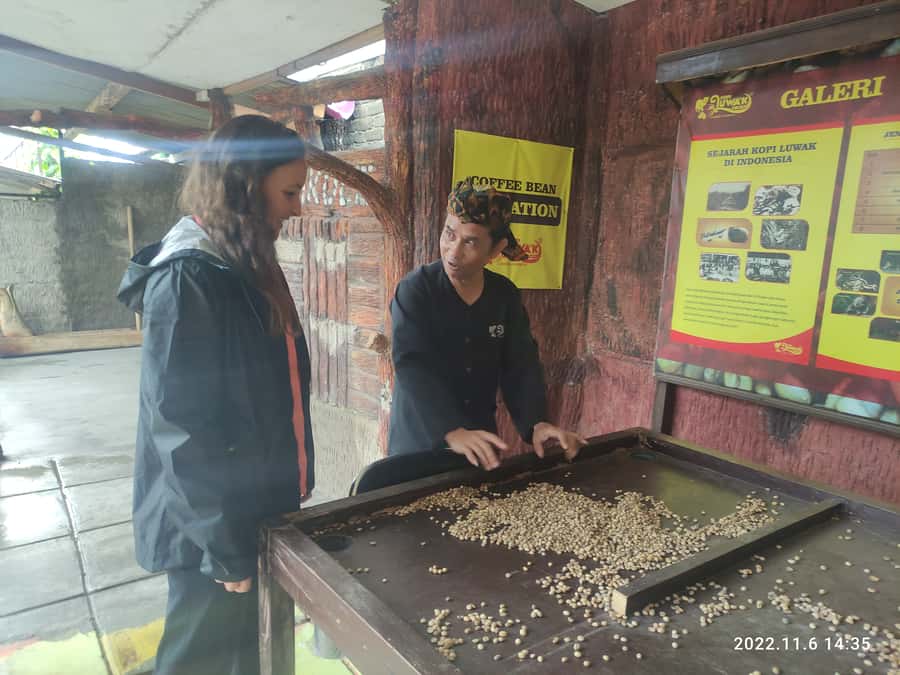
Next up is Kopi Luwak Cikole, where the tour includes a break plus visit and coffee tasting (about 1 hour). This is the part of the day that can feel a little controversial or at least curiosity-driven, mainly because luwak coffee is known for being expensive and different.
Here’s what’s clearly supported by the tour details: you can try the coffee and learn how luwak specialty coffee is made. The drink itself is not included in the price, but the tasting and visit are.
How to think about value:
- You’re paying for the experience and the explanation, not just the taste
- If you’re purely budget-focused, treat it as a tasting moment rather than a must-order drink
- If you like learning food culture and how products move from process to cup, this stop can be a highlight
If you’re going to order an extra coffee, do it with intention. The listing is direct that the luwak coffee drink is not included, which means your final cost depends on what you choose.
Tea plantation + government tea factory: watching black tea take shape
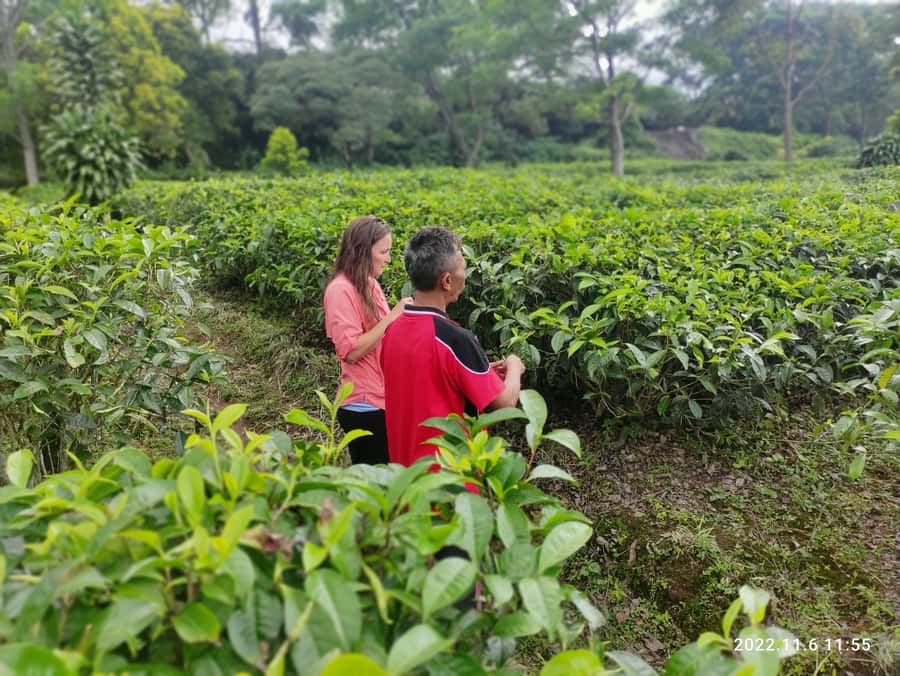
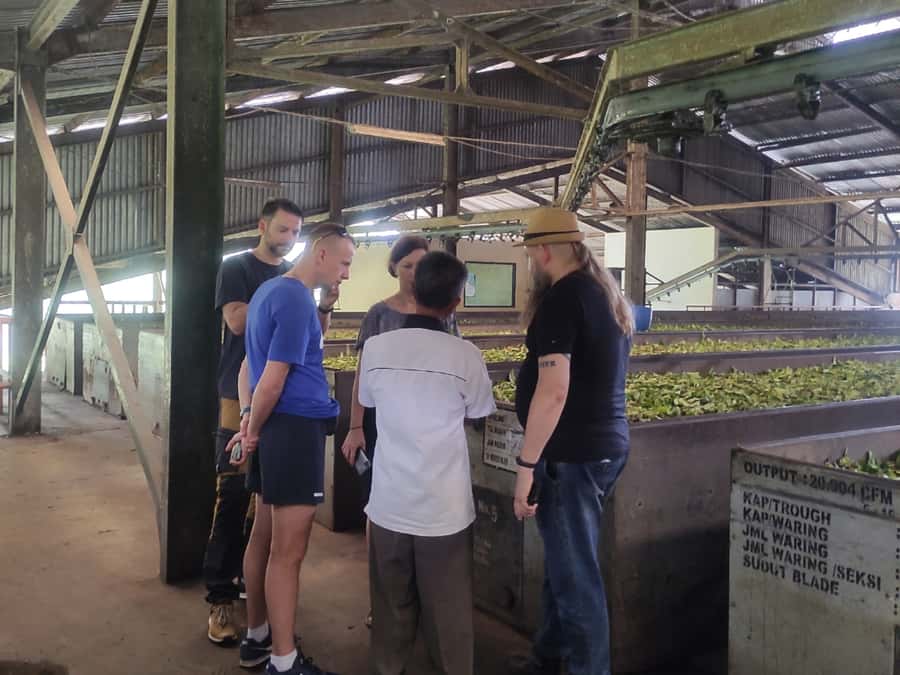
This is one of the strongest parts of the itinerary because it’s not just pretty scenery. You get a guided visit to a tea plantation area and also a government tea factory (with a local guide) focused on black tea processing.
Your stops include:
- A tea plantation visit in the Ciater / Subang area (about 1 hour at the start of the day)
- A factory component where an officer explains the process from leaf picking to packaging
- Time to walk the plantation and enjoy the valley views
- The big perk: you can drink as much tea as you want
That unlimited tea detail is more than a nice extra. It changes how you experience the factory. Instead of rushing through and hoping you remember what someone said, you can slow down, taste, and connect the explanation to what’s in your cup.
There is one key scheduling consideration: the tea factory is closed on Mondays. If your tour day lands on a Monday, you won’t see the processing inside the factory, but you can still explore the plantation.
So if tea processing visuals are a must for you, choose your day carefully. If you just want the views and the tea culture vibe, a Monday still works.

Rice fields and pineapple tasting: small stops that feel real
Some day trips are all landmarks and no everyday life. This one tries to balance both, and it does it in a practical way.
On the drive through Subang Regency and the highland areas, you pass by:
- Rice fields
- Rubber plantations
- Tea plantations and local villages
Then you get two more direct, hands-on moments:
- A pineapple plantation fruit tasting, where you can savor fresh local pineapple flavors from West Java
- A rice field stop, where you get a closer look at farmers and how people live and work
These stops can be quick, but they add texture. You’re not just looking at nature; you’re seeing agriculture as part of daily routine. I like that the tour doesn’t try to sell you a generic souvenir vibe. Fruit tasting and fields give you something you can actually remember with your senses.
If you’re a photographer, this is also where you’ll find more varied angles than just crater views.
Sari Ater Hot Spring: sulfur soak to reset after the hike
After all that walking and tasting, the tour ends with a decompression stop at Sari Ater Hot Spring in the area listed as West Java.
You’ll have about 40 minutes for visiting, sightseeing, walking, and relaxing. The key activity is soaking your feet in the warm sulfur-rich waters. That’s a very specific kind of reward after a crater hike, and it’s one you’ll feel immediately if your legs feel tight.
A few practical tips so you get the best from this part:
- Bring a towel (it’s on the packing list)
- Wear comfortable clothes for travel afterward, because you’ll want to feel normal again once the soak is done
- If you plan to swim, follow whatever on-site rules are posted, but note that the tour description frames it as something you can do
Also keep in mind the tour is not suitable for people with respiratory issues. Sulfur-rich environments can be an issue for some. If that applies to you, check first before booking.
What’s included, what costs extra, and where the value comes from
At $128 per person, the value story comes down to what’s bundled versus what you pay separately.
What’s included:
- Hotel pickup and drop-off inside Jakarta
- A tour guide (English)
- Private car
- Entry tickets for Tangkuban Perahu and Sari Ater Hot Spring
- Tea factory tour with a local guide
- Toll and parking
- Mineral water
- Fruit tasting
- Skipping the ticket line
What’s not included:
- Luwak coffee drink (tasting and visit are included)
- Lunch
- Personal expenses
Here’s how I’d judge value as a traveler: you’re buying a full day of transportation plus entry tickets plus a guide plus multiple activity stops. If you tried to do this on your own—figure out the drive, ticket entries, guides for tea processing, and timing—it would take more time and usually more stress than it’s worth.
Still, treat coffee and lunch as your two predictable budget adds. Bring some cash so you aren’t scrambling at lunchtime or if you want to buy a drink.
Private group vs. mass tour: the pace is the point
This is a private group experience. You’re in a private car and not combined with other participants. That matters because a crater day and a hot-spring day both depend on timing. If your group moves at a comfortable pace—especially with weather changes—you can usually get a better experience.
It also helps with guide attention. In the feedback tied to this tour, guide Ms Neti is repeatedly described as cheerful and helpful, with fluent English that makes explanations easier to follow. That matters at the tea factory, where you don’t want to miss leaf-picking-to-packaging steps.
Driver Fundi also came up in the feedback as patient and careful, which matters when the day includes long road time.
What to bring and who should skip this tour
The packing list is simple and practical:
- Comfortable shoes
- Towel
- Camera
- Jacket (mountain air can feel cooler)
- Comfortable clothes
- Cash
And the tour has clear limits:
- Not suitable for wheelchair users
- Not suitable for people with respiratory issues
- Not suitable for altitude sickness
Also note the rules: alcohol and drugs are not allowed, and pets are not allowed.
If you’re someone who handles hiking well and wants a structured day that mixes volcano views, tea culture, agriculture, and hot-spring relaxation, this fits nicely.
If you don’t like walking on crater paths, or you’re sensitive to altitude or sulfur environments, you’ll probably be happier choosing a different style of Bandung outing.
Weather reality check for volcano views
Weather is the wildcard here. Even when you plan well, mist can roll in at Tangkuban Perahu and reduce crater visibility.
The good part is that your guide can adjust. The day is set up with enough other stops—like tea and coffee—that you’re not stuck doing nothing. If the volcano is covered, it’s reasonable to expect the schedule to shift so you still get something meaningful before you return for a clearer view.
Pack that jacket. And go in expecting a flexible day.
Should you book this Jakarta-to-Bandung day trip?
Book it if you want one efficient day that covers a lot of West Java without feeling like you’re speed-running everything. The mix is strong: crater hiking, tea factory learning, pineapple tasting, rice field views, and a proper sulfur hot-spring foot soak.
Skip it if:
- You can’t do walking on crater paths
- You have altitude sickness concerns
- You have respiratory issues that make sulfur environments risky
- You hate long driving days from Jakarta
If your goal is culture and nature in one organized package, and you don’t mind a 12-hour schedule, this tour is a solid value for $128—especially because entry tickets, a guide, and a private vehicle are included.
FAQ
How long is the tour?
The duration is listed as 12 hours, with starting times depending on availability.
Is hotel pickup and drop-off included?
Yes. Pickup and drop-off inside Jakarta are included.
Do I need to pay for lunch separately?
Yes. Lunch at an Indonesian restaurant is not included.
Is the luwak coffee drink included?
The luwak coffee drink is not included, but there is a coffee tasting as part of the stop.
Do I need to walk during the tour?
Yes. The volcano visit requires walking, and the hot spring stop includes walking/sightseeing time as well. The tea plantation also involves exploring.
Is the tea factory open every day?
The tea factory is closed on Mondays. On those days, you can explore the plantation instead of seeing processing.
Are entry tickets included for the volcano and hot spring?
Yes. Entry tickets for Tangkuban Perahu volcano and Sari Ater Hot Spring are included.
What should I bring?
Bring comfortable shoes, a towel, a camera, a jacket, comfortable clothes, and cash.
Is this tour suitable for wheelchair users or altitude sickness?
No. It is not suitable for wheelchair users, and it is also not suitable for people with altitude sickness or respiratory issues.
If you want, tell me your travel dates (and if your day is a Monday), and I can help you decide whether the tea factory stop is likely to be included or plantation-only for your schedule.