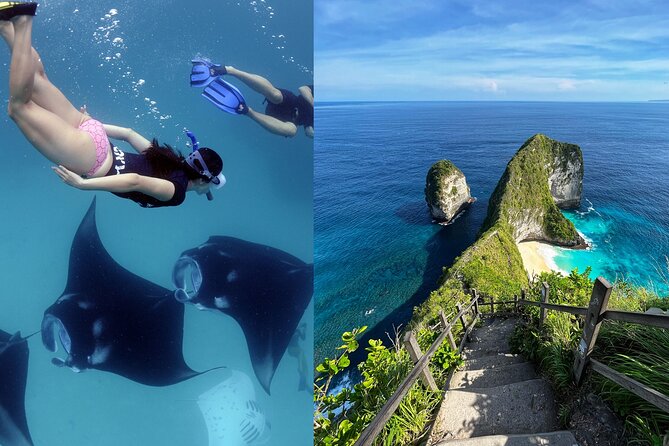
Mantas and cliffs, with an early departure. This Nusa Penida day trip is a smart combo: Manta Bay snorkeling in the morning, then Penida’s famous viewpoints like Kelingking Beach later. I like that the big pieces are handled for you (transport, boat crossings, local island land travel), and I also like the sheer variety—underwater life and dramatic coastline in one day. The catch: it’s a long day and the island stops can feel rushed, so you won’t get much slow hanging-out time.
One more practical note: the group is capped at 28 people, and the tour starts around 6:30 am from Ubud-area hotels (timing depends on where you’re picked up). Age range is listed as 7 to 75, and breakfast is strongly suggested beforehand to reduce seasickness risk.
In This Review
- Key things to know before you go
- From Ubud to Sanur: the morning pace you can’t ignore
- Fast boat to Nusa Penida: crowded boats and choppy reality
- Snorkeling at Manta Bay, Wall Point/Gamat Bay, and Crystal Bay
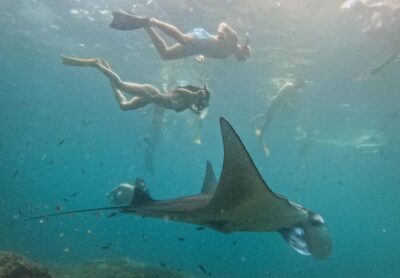
- Manta Bay: hope for mantas, focus on conditions
- Wall Point/Gamat Bay: often where the action is
- Crystal Bay: coral, color, and sometimes turtles
- Gear, life jackets, and the reality of quick water time
- Shower and changing after snorkeling: plan like towels are optional
- Lunch on Penida: local food, limited time, and hydration checks
- The island tour: Kelingking, Broken Beach, and Angel’s Billabong under time pressure
- Kelingking Beach: the main event, but expect steep walking
- Broken Beach and Angel’s Billabong: spectacular, but crowded and fast
- Roads between stops: bumpy + slow can eat your day
- Value check: what $51.57 buys you, and what it costs in comfort
- Practical packing list that saves your day
- Who this tour fits best (and who should skip it)
- Should you book this Nusa Penida snorkeling and land tour?
- FAQ
- How long is the tour?
- Where are the snorkeling stops?
- Is pickup included from Ubud?
- Is snorkeling gear included?
- What about manta rays—are they guaranteed?
- Is lunch included?
- What should I do if weather is bad?
Key things to know before you go
- You’re trading calm for speed: the island viewpoints are done in short photo-style stops, with lots of time spent on roads and between sites.
- Manta sightings are a bonus, not a promise: the itinerary targets Manta Bay, but conditions and luck decide what you see.
- Expect a group-boat feel: it’s a public fast-boat crossing, and some days it can feel very packed.
- Snorkel time can be brief at each site, so show up ready and make your movements count.
- Bring your own towel and waterproof storage: shower/changing areas and towels can be inconsistent, and phones need real protection.
- Island roads can be bumpy: you’re visiting steep viewpoints and using narrow Penida roads.
From Ubud to Sanur: the morning pace you can’t ignore
This trip starts early—plan for pickup around 6:15 to 7:15 am, depending on your hotel location. The stated start time is 6:30 am, and that early departure is the reason this works at all: you need enough daylight to fit snorkeling, lunch, and a Penida land tour.
Getting to Sanur is usually part of the value here. You’re in an air-conditioned car for the transfer, and the goal is a smooth handoff to the port check-in. Still, Bali traffic can rearrange the day. If your schedule is tight, I’d mentally budget for the possibility of delays—especially if you’re coming from central Ubud or areas where traffic can spike.
Also, do not treat breakfast like optional. The tour instructions explicitly ask you to breakfast to help with seasickness. I’d follow that advice and keep it light. Big, greasy food + choppy water is a recipe for your stomach to stage a protest.
You can also read our reviews of more tours and experiences in Ubud.


Fast boat to Nusa Penida: crowded boats and choppy reality
The crossing from Sanur to Nusa Penida runs about 45 minutes. That’s quick, which is good—until the sea is rough and the boat is packed.
A few points to plan around:
- The operator uses public fast boats on the return route, which can mean a lot of people onboard.
- You might feel squeezed for space, and fresh air can be limited depending on where you sit.
- Some travelers found conditions quite rough, with swells that make movement on deck feel chaotic.
What helps most is simple preparation. If you get even mildly nauseous on boats, bring seasickness medication and take it before you board. And yes, bring water. Also, if you have a waterproof phone pouch, use it now—not later—because once you’re busy with snorkeling gear, you’ll wish you had protected valuables from splash and spray.
One more small but useful tip: ask whether you can request seating options when that’s available. The provided info notes an option to request upstairs seating, but it’s not guaranteed for this activity—so don’t plan your comfort around it.
Snorkeling at Manta Bay, Wall Point/Gamat Bay, and Crystal Bay
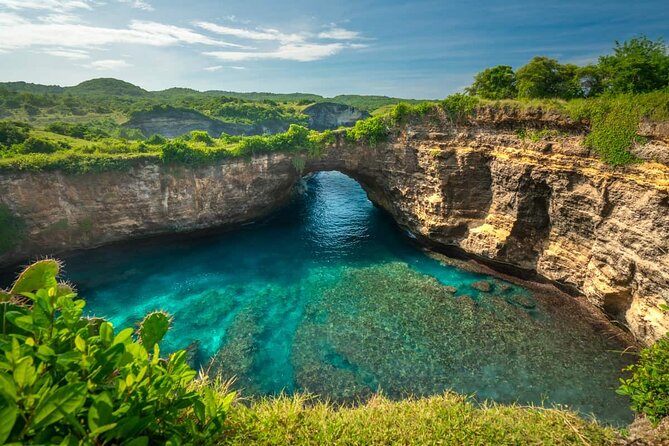
The morning snorkeling is the star attraction. You’re set up for three targeted sites on Penida: Manta Bay, Wall Point (also referenced as Gamat Bay), and Crystal Bay.
Manta Bay: hope for mantas, focus on conditions
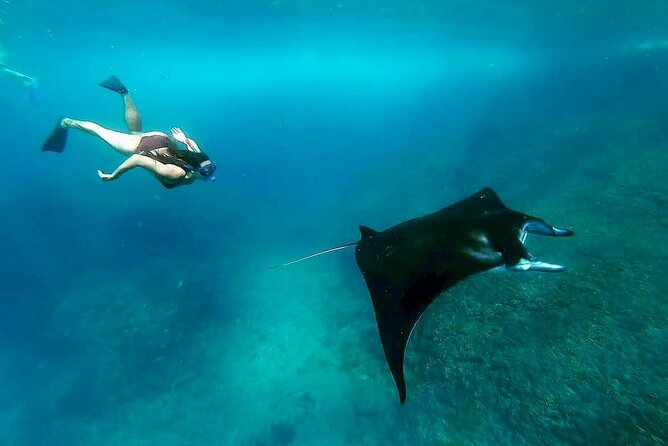
Manta Bay is the headline. When conditions are right, this is where mantas are possible. When they aren’t, you can still see coral and fish—but it’s the kind of place where your luck matters.
Time underwater can also be shorter than you’d expect. Some people report limited minutes at each stop, which changes the whole strategy: don’t spend your first minute trying to find a spot to float. Get oriented fast, keep your breathing steady, and scan calmly.
Wall Point/Gamat Bay: often where the action is
Wall Point is frequently the better bet for underwater life when visibility isn’t perfect. If the water is cloudy at Manta Bay, Wall Point can still deliver more fish and coral texture. This is the area where I’d try to slow down and actually look around, because that’s where you’re more likely to feel rewarded even if mantas don’t show up.





Crystal Bay: coral, color, and sometimes turtles
Crystal Bay is known in this itinerary for better snorkeling results. People often describe clearer water and solid coral, with turtles sometimes appearing. Even if you’re not chasing mantas, this stop can be the moment where snorkeling starts to feel like a real experience instead of just a quick dip.
Gear, life jackets, and the reality of quick water time
Snorkeling gear is included (and life jacket plus towel is included if you selected that option). In practice, you should still treat this as a shared, time-boxed activity. You’re moving fast between sites, and you’ll likely be back onboard for the next transfer.
One smart move: wear secure waterproof sandals or shoes. Penida surfaces can be slippery and rocky, and secure footing helps you focus on snorkeling rather than balancing like you’re on a movie set.
Shower and changing after snorkeling: plan like towels are optional
After snorkeling, there’s typically a shower and a changing/shower area before you head to lunch. Here’s the honest part: changing facilities can be hit or miss. Some people reported poor showers, limited space to change, or not getting a towel at the end even when they expected one.
So I recommend you treat towels like they might not be there when you need them. Bring a small microfiber towel if you can. Also pack a waterproof bag for clothes and electronics—because you’ll be juggling wet gear, sunburn timing, and the simple chaos of a group moving to the next step.
If you’re carrying valuables, bring a waterproof pouch that seals properly. Phones are the first casualties on days like this, and fixing anything in the heat later is annoying.
Lunch on Penida: local food, limited time, and hydration checks
Lunch is included, and it’s Indonesian food at a local restaurant. The big advantage is that you don’t have to find food while you’re adjusting to Penida travel rhythms. The downside is timing: many people are hungry because the day runs on schedule pressure.
Expect a straightforward meal rather than a fancy sit-down. Some people called lunch decent and tasty; others said it’s basic and not a highlight. In all cases, plan to eat, hydrate, and then get ready to move again fast—because after lunch you’ll be on the island tour immediately.
Also, do not assume you’ll be able to grab drinking water whenever you want. Some reports indicate bottled water wasn’t consistently provided, so it’s smart to carry a bottle if you can.
The island tour: Kelingking, Broken Beach, and Angel’s Billabong under time pressure
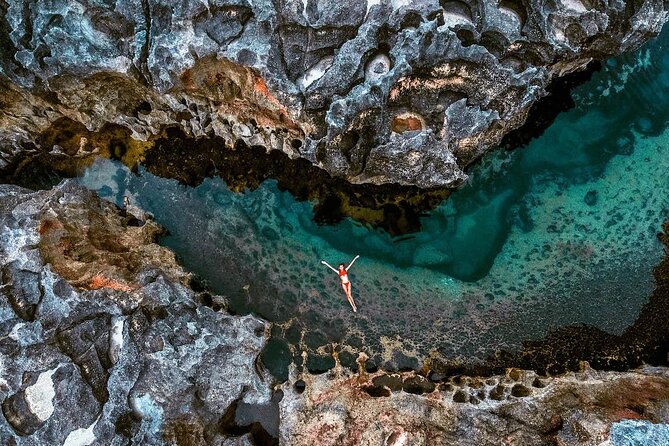
The afternoon is built around three of Penida’s biggest Instagram-level viewpoints: Kelingking Beach, Broken Beach, and Angel’s Billabong. This is where the scenery is jaw-dropping.
It’s also where the schedule pressure shows up.
The tour format is basically: arrive, snap photos, move on. Many people describe very short time at each stop—often just enough to get the classic viewpoint shots and a quick look around. That can be frustrating if you love lingering, but it works if you’re visiting Penida for the first time and want the highlights before heading back.
Kelingking Beach: the main event, but expect steep walking
Kelingking is famous for a reason, and you’ll feel it the moment you reach the viewpoint. The walk can involve steep paths and uneven steps. If you have mobility issues, it helps to go slowly and plan for extra time getting down and up.
Broken Beach and Angel’s Billabong: spectacular, but crowded and fast
Both Broken Beach and Angel’s Billabong are dramatic cliff formations. The problem isn’t that they aren’t beautiful—the issue is that you’re usually sharing the view with a pile of other people and getting only limited minutes.
You may also encounter a guide with strong photo instincts. In one case, an island guide named Ekka was mentioned as energetic and good at keeping the group moving and creating a fun atmosphere. Not every guide will match that style, but the overall rhythm tends to be schedule-first.
Roads between stops: bumpy + slow can eat your day
Penida roads can be rough, narrow, and congested. Even when the driver is good, the travel time between viewpoints adds up. That’s why the day feels long: you’re not just seeing Penida—you’re also riding across it repeatedly.
Value check: what $51.57 buys you, and what it costs in comfort
At around $51.57 per person, the value is mostly in what’s included:
- Return hotel transfer in an air-conditioned car (coverage listed includes Nusa Dua, Jimbaran, Kuta, Canggu, Sanur, and Ubud)
- Fast boat tickets (public fast boat)
- Land transportation on Nusa Penida
- Lunch
- Snorkeling gear, life jacket, and towel if you selected that option
So you’re paying for convenience and structure more than for endless time at any one location.
The trade-off shows up in how you feel during the day. When snorkeling stops are brief and viewpoints are photo-fast, it can feel like you spent more time in transit than you wanted. Some people also experienced rougher-than-ideal boat conditions and crowded spaces, which adds discomfort even if the itinerary itself is solid.
If you’re thinking about going private to avoid the rush, the basic idea is simple: a private tour gives you control over timing and fewer handoffs. A shared tour gives you a lower cost but a more rigid flow. This one clearly leans shared.
Practical packing list that saves your day
Here’s what I’d pack based on what matters most for this kind of trip.
- Waterproof phone storage: you’ll be near water constantly.
- Waterproof bags or cases for your valuables, plus a sealable pouch for wet gear.
- A microfiber towel (small) since towels at the end may be inconsistent.
- Secure waterproof sandals or shoes (Penida surfaces can be slippery).
- Sea sickness medication if you’re even slightly prone to nausea.
- A light day bag you can keep close—during a long day, you don’t want to dig for stuff.
- Cash for small needs like toilets. One practical tip you’ll hear is bringing small notes (like 5000) in case you need them at registration-type spots.
Also pack sunscreen and sunglasses. You’ll be outdoors early, midday, and during the viewpoint walk segments.
Who this tour fits best (and who should skip it)
This experience makes sense if:
- You’re visiting Penida on a time budget and want both snorkeling and the main viewpoints.
- You can handle group pacing and quick stops.
- You’re comfortable with a long day and early pickup.
- You want an organized day without planning boats, permits, and transport on your own.
I’d consider skipping or upgrading if:
- You get seasick easily and don’t want to gamble on rough water.
- You prefer longer snorkeling sessions and more time in one spot.
- You have mobility limitations for steep viewpoints and uneven steps.
- You want a relaxed pace with deeper guide explanations rather than photo stops.
Should you book this Nusa Penida snorkeling and land tour?
Yes, if you want the highlights and you’re okay with a structured, group-paced day. This trip is a practical way to see Manta Bay (even though mantas aren’t guaranteed) and still tick off Penida’s biggest cliff scenery—without doing logistics yourself.
No, if your priority is slow travel, long snorkeling time, or maximum comfort on crowded fast boats. In that case, a different format—like a shorter snorkeling-focused option or a private guide—will match your style better.
If you book, commit to preparation. Breakfast before you go, pack waterproof storage, bring your own towel, and plan mentally for quick stops. Do that, and the day can be memorable for the right reasons.
FAQ
How long is the tour?
The tour runs about 10 hours 30 minutes (approx.), starting with pickup around 6:30 am and returning in the early evening.
Where are the snorkeling stops?
The snorkeling portion targets Manta Bay, Wall Point (also referenced as Gamat Bay), and Crystal Bay.
Is pickup included from Ubud?
Pickup is offered, and hotel transfer is included in an air-conditioned car for areas listed as Nusa Dua, Jimbaran, Kuta, Canggu, Sanur, and Ubud.
Is snorkeling gear included?
Snorkeling gear is included, along with a life jacket and towel per person if you select that option.
What about manta rays—are they guaranteed?
No. The tour mentions you can see mantas if you are lucky, so sightings depend on conditions.
Is lunch included?
Yes. Lunch is included and is described as Indonesian food at a local restaurant.
What should I do if weather is bad?
This experience requires good weather. If it’s canceled due to poor weather, you’ll be offered a different date or a full refund.