One car, no stress, and Bali at your pace. A private, air-conditioned car plus an English/Japanese speaking driver-guide means you spend your day seeing places, not arguing about routes or fares. You also get a flexible plan that can pivot as your group wants—temples, art, waterfalls, rice terraces, or volcano views.
What I like most is how practical it feels for a full day. You’re capped at up to 5 people, the pickup is offered from your Ubud area meeting point, and you’ll have bottled water during the ride. The one thing to watch is the added cost of entrance fees and lunch, since admission tickets are not included.
You’ll also notice a clear service pattern from the way guides are described: polite, early pickup, and calm help when requests are a bit awkward or off-script. In the feedback, the name Wayan shows up often, and there’s also a similarly spelled name (Wgrang) attached to the same style of friendly, accommodating driving.
In This Review
- Quick takeaways before you book
- Why a Ubud private car charter beats taxis and buses
- Price and value: how $65 per group really works
- Pickup, mobile tickets, and the timing of a 9–10 hour day
- Stop-by-stop: temples, terraces, art, waterfalls, and the best photo moments
- Pura Puseh Desa Batuan (Batuan village temple)
- Sacred Monkey Forest Sanctuary (Padangtegal)
- Tegalalang Rice Terrace (subak irrigation views)
- Uma Pakel Agro Tourism (coffee + farm-style time)
- Mount Batur (Kintamani highlands volcano views)
- Semar Kuning Artist Cooperative (traditional Balinese painting)
- Tirta Empul Temple (holy water spring and purification bathing)
- Tegenungan Waterfall (nature break between big sights)
- Prapen Jewelry & Artifacts (Celuk studio + souvenir mission)
- Ulun Danu Bratan (Beratan Lake temple complex in Bedugul)
- Taman Ayun Temple (Mengwi temple from the 1600s)
- Tanah Lot (seaside icon and sunset backdrop)
- Uluwatu Temple (cliff temple and spiritual pillar)
- Optional “add-on” nature and photo stops you can swap in
- What the driver-guide actually adds (beyond driving)
- Budget tips so the day stays fun
- Who should book this Bali car charter
- Should you book this private Bali car charter?
- FAQ
- How much does the Ubud private car charter cost?
- How long is the tour?
- Where does the tour start and end?
- Is pickup included?
- Are entrance tickets included in the price?
- What’s included in the charter?
- Can I cancel for free?
Quick takeaways before you book
- Private door-to-door feel with pickup in/near Ubud and the car returning you to the meeting point
- Up to 5 people per group, so you avoid the squeeze of larger tours
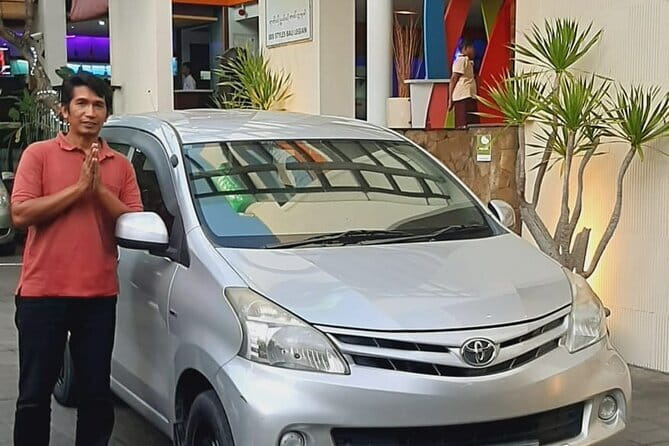
- English/Japanese speaking driver-guide who can explain what you’re looking at on the way
- Customizable route: you choose from temples, rice terraces, art stops, waterfalls, and viewpoints
- AC vehicle + bottled water included for the long ride days that Bali can demand
- Entrance fees and lunch are extra, so budget a little before you go
Why a Ubud private car charter beats taxis and buses
Bali’s road system is great—when you know it. The trouble is that first-time visitors often end up losing time to routing, cash changes, and that nervous feeling of agreeing on a price before you’re sure where you’ll be headed next.
A private car charter solves the big problems fast: it’s booked for your group, driven by a guide, and designed for a full 9 to 10 hour day. You’re not stuck waiting for a bus schedule, and you’re not forced into a one-size-fits-all “see everything” treadmill. If your group wants more time at one place—whether that’s an art stop or a viewpoint—you can generally adjust.
The “customizable” part matters too. The stops you’ll see are optional, so the day is built around what you actually care about: temples (purification water, cliff views, and the gate-of-heaven vibe), nature (waterfalls and the cave waterfall), and cultural stops (painting traditions and jewelry studios).
You can also read our reviews of more tours and experiences in Ubud.


Price and value: how $65 per group really works
The price is $65 per group up to 5 people for the day. That means the real cost per person drops a lot when your group fills the seats:
- If you’re 2 people, it’s about $32.50 each (plus tickets and lunch).
- If you’re 5 people, it’s about $13 each (plus tickets and lunch).
That math is important because the “not included” items can add up. Entrance fees are usually around USD 2 to 8 per person depending on the stop, and lunch varies by menu. The listing also notes other personal expenses around USD 4 per person depending on what you do. So the best value tends to come when you travel with friends or family and can share the car cost.
What makes the package feel fair is that the car day itself is taken care of: parking fees, fuel surcharge, and bottled water are included, and you get an air-conditioned vehicle. You’re not paying extra for basic logistics like fuel and parking the way you can with ad-hoc transport.
Pickup, mobile tickets, and the timing of a 9–10 hour day
This charter starts in Ubud, Gianyar Regency and ends back at the meeting point. Pickup is offered, and you’ll use a mobile ticket.
The biggest timing tip for this kind of day is simple: you can’t treat it like a short hop between close stops. The route includes places spread across Bali, so you’re likely looking at long stretches in the car. That’s normal. The AC and bottled water help, but the real win is that you’re not spending energy on directions.
The day is also flexible. The exact stops can differ based on your interests and your time at each site, so you should decide early how you want to balance:
- shorter “walk-through” stops (art galleries, cooperatives, jewelry studios)
- longer “experience time” stops (temples with bathing areas, rice terraces, waterfalls)
- viewpoint-driven stops where the timing may matter for photos (cliff temples and seaside icons)
If your group wants the most variety, expect fewer minutes at each place. If you want fewer stops with better pacing, that’s usually where this style of day shines.
Stop-by-stop: temples, terraces, art, waterfalls, and the best photo moments
These stops are optional, so think of them as a menu. I’ll break down what each one offers and the main tradeoffs to consider.
Pura Puseh Desa Batuan (Batuan village temple)
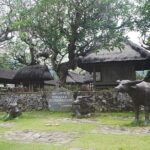
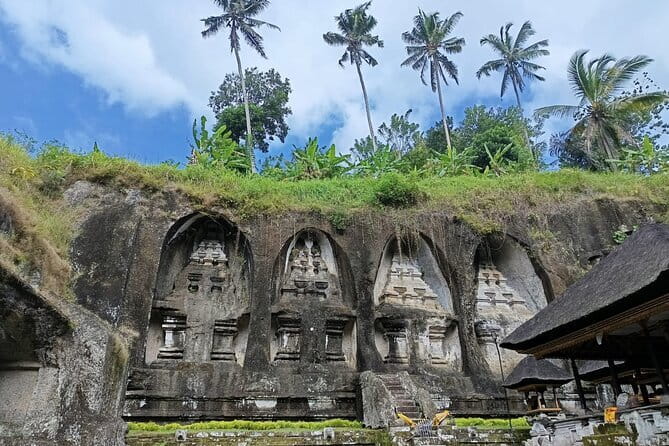
This is a Hindu temple in the village of Batuan, with roots described as dating to the 11th century. It’s also a focal landmark for Batuan, a place known for traditional Balinese arts and paintings.
Why it’s worth adding: temples in smaller villages often feel more lived-in than the big-ticket photo stops. It pairs well with an arts-focused day because it sets the cultural tone before you move into painting or gallery stops.
Tradeoff: it’s still a temple visit, so you’ll want to respect the typical rules of entry and behavior. Admission is not included.


Sacred Monkey Forest Sanctuary (Padangtegal)
In Ubud’s Padangtegal area, this sanctuary is described as a spiritual, economic, educational, and conservation center. It’s also where you’ll find about 700 monkeys across 186 species.
Why it’s worth adding: it’s one of the easiest “wow” stops from Ubud, and it’s packed with energy. If your group likes animals and watching how places work, this is a natural fit.
Tradeoff: with that many monkeys and a conservation focus, the experience can feel more intense than a calm temple hour. You’ll want to keep your expectations realistic and move carefully where people congregate. Admission is not included.
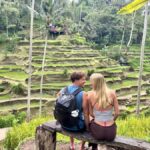
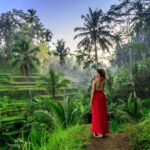
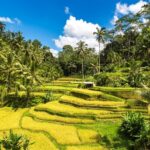
Tegalalang Rice Terrace (subak irrigation views)
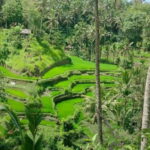
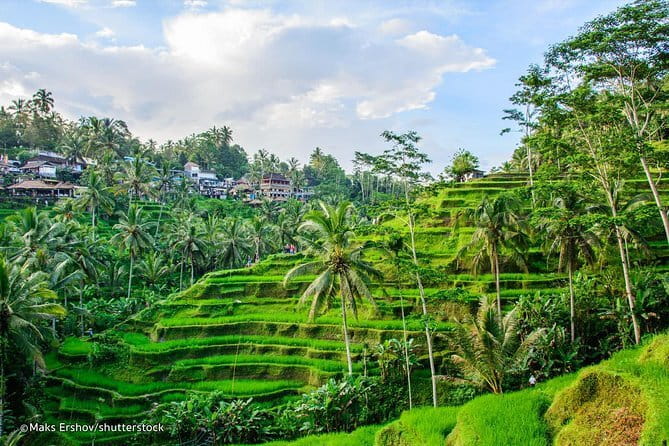
Tegallalang Rice Terraces are famous for the visual rhythm of rice paddies and for the subak system—Balinese cooperative irrigation.
Why it’s worth adding: you’re getting more than a pretty photo. The subak detail is the “why” behind the landscape, and the terraces can feel like a living system when you see them in person.
Tradeoff: terraces mean uneven ground and stairs in places, plus time spent standing around for the view. This stop tends to work best if your group likes walking and photography.
Uma Pakel Agro Tourism (coffee + farm-style time)
Uma Pakel Ubud is described as a jungle setting with a coffee plantation, and it’s positioned as a quieter escape from the day’s crowds.
Why it’s worth adding: it gives you a break from temple routines and a more relaxed pace—especially if your group wants something sensory like coffee and plantation atmosphere.
Tradeoff: agro-tourism stops can be hit-or-miss depending on what you expect from the “tour” versus the “hangout” parts. The good news is that it’s shorter (listed around 30 minutes), so you can keep control of the day.
Mount Batur (Kintamani highlands volcano views)
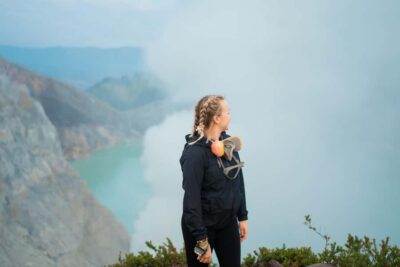
Mount Batur is described as a popular highland highlight, often paired with the Kintamani area and known for a very popular trekking option.
Why it’s worth adding: even a short visit can change the mood of a Ubud-based day. Highlands views also give your itinerary variety—different light, different air, different scenery.
Tradeoff: the stop time listed is short (around 30 minutes), so you won’t get a full trekking experience from this charter alone. Admission is not included.
Semar Kuning Artist Cooperative (traditional Balinese painting)
This is an art gallery associated with a cooperative, described as a deep look into traditional Balinese paintings.
Why it’s worth adding: it’s one of the best “slow” cultural stops because you can actually see brushwork and styles up close. If your group cares about craft and not just architecture, this is a strong choice.
Tradeoff: art can cost you time if you’re not in the mood to watch demonstrations or browse. It’s also listed around 30 minutes, so it’s usually more of a sampling than a full workshop day.
Tirta Empul Temple (holy water spring and purification bathing)
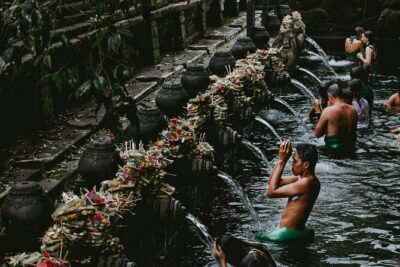
Tirta Empul means holy water spring. The spring feeds purification baths, pools, and fish ponds around the temple area.
Why it’s worth adding: this is one of the most meaningful temple stops on the list because it’s built around a living ritual space—water used for purification—and the whole complex is designed around that function.
Tradeoff: you’ll likely spend time observing or walking around the pools. It’s not a “rush and go” stop. Admission is not included.
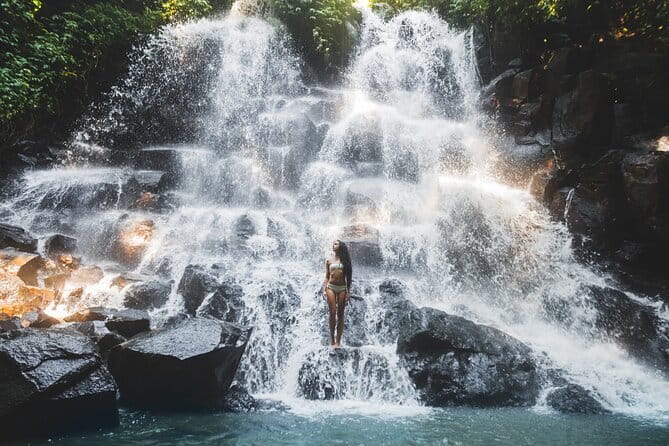
Tegenungan Waterfall (nature break between big sights)
Tegenungan Waterfall is aimed at nature lovers and is described as conveniently positioned halfway between Ubud and another major area in Bali (the provided text is cut, but the location idea is clear: it fits into a road trip route).
Why it’s worth adding: waterfalls give your day a reset. After temples and galleries, a short nature stop can feel like a palate cleanser.
Tradeoff: waterfalls can mean wet ground and crowds during peak hours. Since the stop is listed around 30 minutes, you’ll want to plan for quick viewing and a photo burst rather than a long hike.
Prapen Jewelry & Artifacts (Celuk studio + souvenir mission)
This is a gallery and studio compound in Celuk, known for nature-inspired jewelry and artifacts.
Why it’s worth adding: this is where you can combine shopping with cultural context. Celuk is associated with craft, and a studio compound setting often feels more purposeful than random souvenir stalls.
Tradeoff: if your group isn’t interested in jewelry or art objects, you might treat this as optional or limit time. Admission is not included.
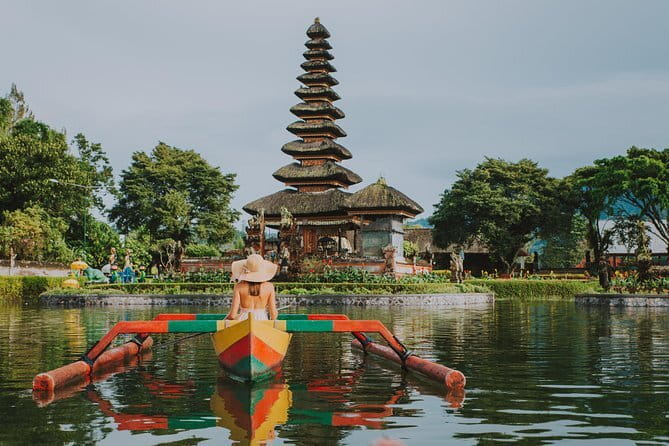
Ulun Danu Bratan (Beratan Lake temple complex in Bedugul)
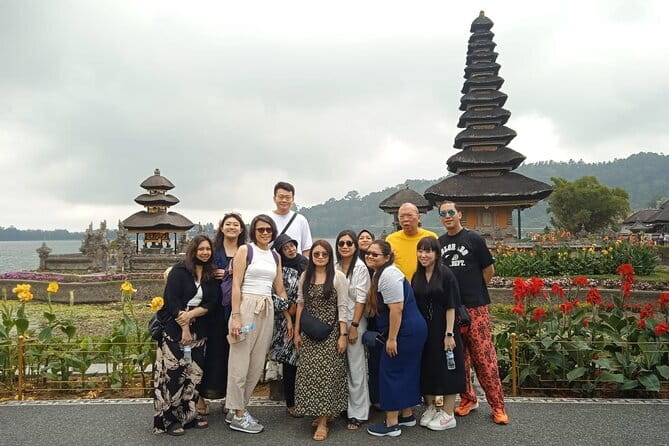
Ulun Danu Bratan is described as both a picturesque landmark and a significant temple complex on the western side of Beratan Lake in Bedugul. Bedugul itself is described as a popular upland area.
Why it’s worth adding: it adds a lake-and-temple visual that Ubud days can lack. The upland setting also gives a different feel from the lower elevations.
Tradeoff: it’s still a temple visit, so you’ll want to dress and move respectfully. Time is listed around 1 hour, which is plenty for a focused visit if you don’t get stuck browsing.
Taman Ayun Temple (Mengwi temple from the 1600s)
Taman Ayun Temple is a landmark in Mengwi, built circa 1634 by the ruler Tjokerda Sakti.
Why it’s worth adding: it’s a historic-feeling stop with a strong identity. Temples like this also help you understand Bali’s faith as something tied to specific places and rulers, not just one-off scenery.
Tradeoff: temples take longer than people expect if you stop for details. Budget at least the listed hour.
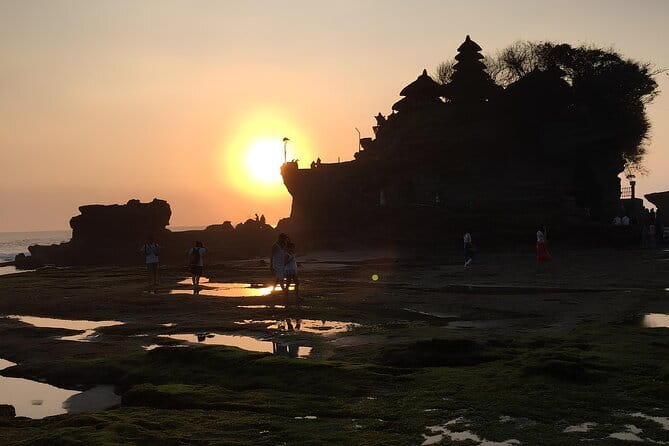
Tanah Lot (seaside icon and sunset backdrop)
Tanah Lot is described as one of Bali’s most important landmarks, famous for its unique offshore setting and sunset backdrops.
Why it’s worth adding: this is a classic photo moment for a reason. If your day includes cliff or lake temples, Tanah Lot gives you the seaside angle.
Tradeoff: the experience can get crowded and timing matters for the look you want. The stop is around 1 hour, so you’ll likely be moving with the flow and aiming for your best views within that window.
Uluwatu Temple (cliff temple and spiritual pillar)
Uluwatu Temple (Pura Luhur Uluwatu) is described as one of six key temples believed to be Bali’s spiritual pillars. It’s perched on a steep cliff about 70 meters above sea level.
Why it’s worth adding: cliff temples change your sense of scale. The height setting also makes it feel dramatic, even if you’re not chasing a long sunset program.
Tradeoff: cliff sites often mean lots of steps, uneven paths, and wind. If your group hates heights, make sure you’re comfortable with the route.
Optional “add-on” nature and photo stops you can swap in
These are all presented as options for customizing the day:
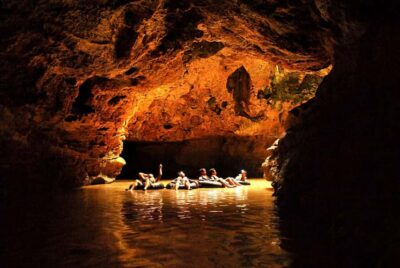
- Tukad Cepung Waterfall: about 15 meters, inside a stone cave, not exposed to the outside like other waterfalls. Great if your group likes unusual settings.
- Tibumana Waterfall (Air Terjun Tibumana): described as one of Bali’s most beautiful hidden waterfalls, located in Bangli. Good for a calmer, nature-first hour.
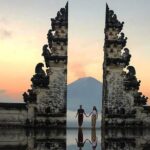
- Lempuyang Temple: often associated with a gate-of-heaven photo idea, where the backdrop includes Mount Agung. This is for photo timing and spectacle more than quick temple touring.
- GWK Cultural Park: home to the Garuda Wisnu Kencana statue, described as 121 meters tall and representing the Hindu god Vishnu. A good modern cultural landmark stop.
- Tirta Gangga Water Palace: described as a popular spot to see koi fish and a place often used for Instagram photos. Great for a lighter, more visual break.
The practical win here is control. If you’re not feeling volcano energy, you swap out Mount Batur. If you want fewer crowds, choose cave waterfall or Tibumana instead. The car charter style is built for those changes.
What the driver-guide actually adds (beyond driving)
A private driver-guide isn’t just transportation. On a long day, the guide helps keep your schedule realistic and your questions answered, especially when you want context for a temple, an art cooperative, or a craft studio.
From the way service is described, guides like Wayan are praised for being professional and kind, with communication that feels clear from the start. You also get a consistent theme: the guide listens to what you want, not just what’s written in a fixed plan.
That matters on Bali days because conditions change—crowd levels, timing, and your group’s energy. Having a driver cum guide who can adapt while keeping things smooth can be the difference between a good day and a “we managed to do it” day.
Budget tips so the day stays fun
Entrance tickets and lunch aren’t included, and that’s not a flaw. It’s simply how temple and attraction pricing works on Bali itineraries.
Here’s the clean way to budget:
- Set aside about USD 2 to 8 per person for entrance fees, depending on the stops you pick.
- Plan lunch based on menu prices at the stop area (the listing says lunch varies).
- Keep a little extra cash for personal expenses (noted around USD 4 per person, depending on what you do).
And remember: your stop list is modular. If your budget is tight, focus on fewer ticketed sites and swap in lower-cost options that still match your mood.
Who should book this Bali car charter

This is a great fit if you:
- want an efficient Ubud base day with a private car
- prefer temples and culture with real guidance (English or Japanese driver-guide)
- like a mix of arts, nature, and viewpoints in one long outing
- are traveling with a group where the per-person cost makes sense (up to 5)
If you’re traveling solo, it can still work, but you’re paying more per person. If your group is large and you want lots of stops packed tightly, expect the day to feel more rushed.
Should you book this private Bali car charter?
Yes, if your goal is a stress-free day with pickup, AC comfort, and a guide who can adapt the plan while still hitting the kinds of places you actually want to see. It’s especially worth it when you can fill the group cap of 5, because the value per person drops fast.
I’d skip or rethink it if you hate long car hours, want a very low-add-on-cost day (since entrance fees and lunch are extra), or you only want one or two nearby sights. For a full Ubud-and-beyond day across temples, art, and water, this format is built for exactly that.
FAQ
How much does the Ubud private car charter cost?
It costs $65.00 per group (up to 5 people).
How long is the tour?
The duration is about 9 to 10 hours.
Where does the tour start and end?
It starts in Ubud, Gianyar Regency, Bali, Indonesia, and ends back at the meeting point.
Is pickup included?
Yes, pickup is offered, with the tour ending back at the meeting point.
Are entrance tickets included in the price?
No. Entrance fees are not included and vary by site (about USD 2 to 8 per person).
What’s included in the charter?
Included are parking fees, fuel surcharge, bottled water, an air-conditioned vehicle, private transportation, and an English/Japanese speaking driver cum guide.
Can I cancel for free?
Yes. You can cancel for a full refund if you cancel at least 24 hours before the experience’s start time.