Jakarta packs centuries into four hours. This private half-day route stitches together Merdeka Square’s big monuments with the religious landmarks across the street—and then rolls into Old Town Batavia, where the Dutch ruled for 350 years. It’s a simple plan, but it helps you see Jakarta’s layers fast, without burning a whole day on logistics.
I love the National Monument stop for two reasons: you get the 132-meter icon with its gold-leaf flame, and you can visit the basement exhibit with 48 dioramas tracing Indonesia from prehistoric times to the present. I also like how the route pairs Istiqlal Mosque and Jakarta Cathedral, so you’ll notice how each place handles architecture, space, and sound.
One consideration: the experience depends heavily on communication on the day. The description says you’ll have an English-capable driver/guide setup, but you should confirm who will actually explain things in English, and keep an eye on the weekly closing days for each major site.
In This Review
- Key highlights to notice before you go
- A 4-Hour Route Through Merdeka Square and Dutch Batavia
- National Monument: 132 Meters and the 48-Diorama Basement
- Istiqlal Mosque: Southeast Asia’s Largest, Built for Tolerance
- Jakarta Cathedral (1891): Gothic Details and the Sound-Altering Altar
- Old Town Batavia: Dutch Rule for 350 Years in One Walking Stop
- Timing, Walking, and When Closures Can Change Your Day
- Price and What You Actually Get for $26
- Private Group Logistics: Pickup, Vehicle, and the English-Guide Question
- What to Bring (and What Not to Do Inside)
- Who This Tour Fits Best (and Who Should Skip It)
- Should You Book This Private Old Batavia Heritage Half Day Tour?
- FAQ
- How long is the Jakarta Old Batavia Heritage half-day tour?
- What stops are included in the itinerary?
- Where do pickup and drop-off happen?
- Are there weekly closure days for any of the attractions?
- Does the tour include an English-speaking guide?
- Is this tour suitable for kids or wheelchair users?
Key highlights to notice before you go
- Merdeka Square start: You begin at the National Monument in the center of the city’s symbolic heart.
- 48-diordrama basement: The monument’s underground exhibit gives a timeline feel, not just a photo stop.
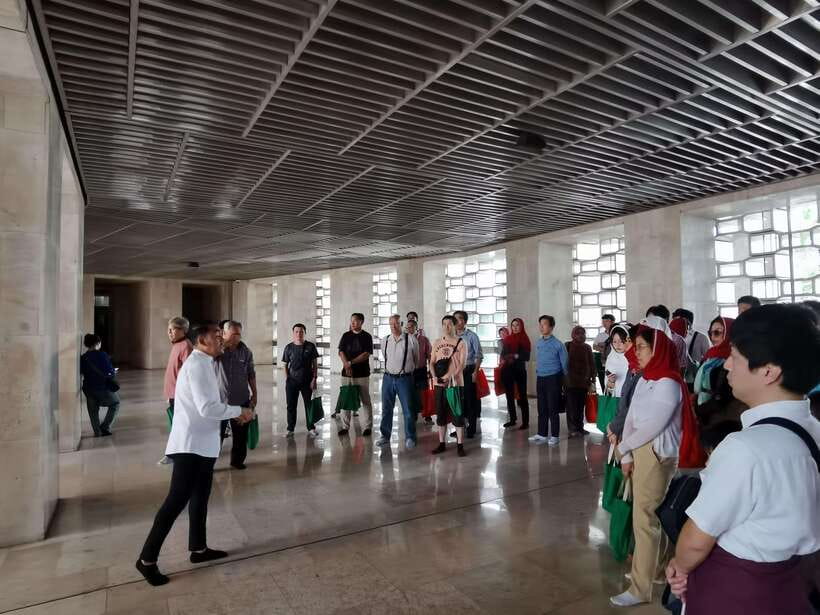
- Istiqlal’s scale: It’s described as the largest mosque in Southeast Asia, and visitors typically spend time admiring the complex and views around it.
- Jakarta Cathedral details: Built in 1891 in Gothic style, with glass paintings and a semi-circle arrangement of three altars.
- Old Batavia’s Dutch footprint: You’ll see why the area became the former center of Dutch rule for 350 years.
A 4-Hour Route Through Merdeka Square and Dutch Batavia
This tour is designed like a quick orientation to Jakarta. In about four hours, you’ll hit three “icon locations” that sit near major squares and axes in central Jakarta, then finish with a walk-and-look feel in Old Town Batavia.
The best part is how little time it wastes. Pickup is built in, and the vehicle handles between stops, so you’re not bouncing between apps and city maps. If your goal is to leave Jakarta with a mental map—where the national symbols sit, where religious landmarks cluster, and what the Dutch legacy looks like—this format does the job.
The trade-off is that it’s still a half-day. Each stop is time-boxed, so you’ll want to arrive with a rough plan for what you care about most: monument views, inside architecture, or Old Batavia streets and context.
You can also read our reviews of more tours and experiences in Jakarta.


National Monument: 132 Meters and the 48-Diorama Basement
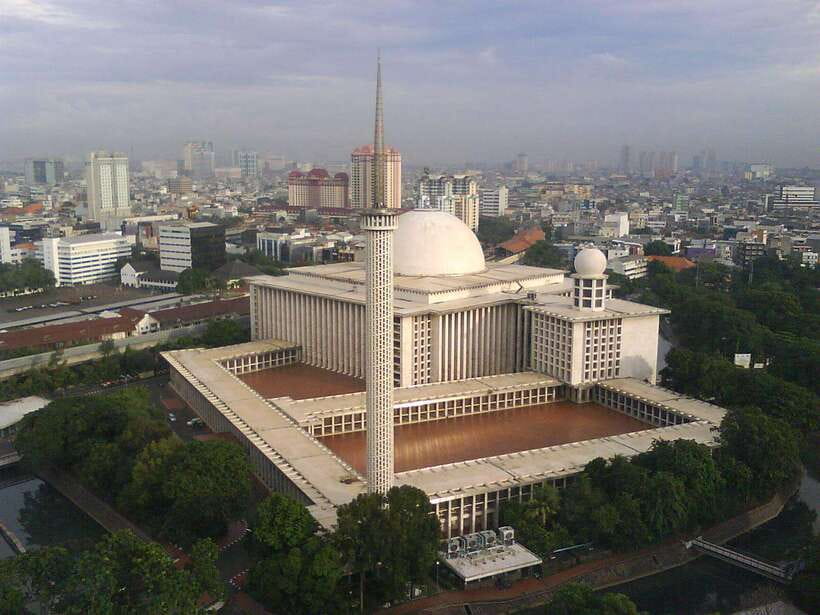
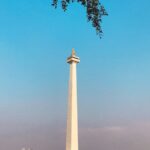
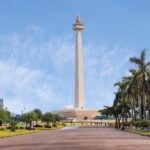
The tour’s first major stop is the National Monument, a 132-meter tall structure topped with a gold-leaf flame. It’s located right in the middle of Merdeka Square, which makes it the kind of place where you instantly get oriented to the city.
You’ll spend around 45 minutes here, and the schedule isn’t just about standing in front for photos. The monument also has a basement visit with an exhibit of 48 dioramas. That detail matters because it turns the site from a single landmark into a mini-story about Indonesia—covering history from prehistoric times through to the present.
What to watch for:
- This monument can have a weekly closure (it’s noted as closed to the public every Monday). If you’re in Jakarta on a Monday, your day can change fast.
- If you’re the type who likes to understand what you’re looking at, this is your highest-value stop on the itinerary.
For practical comfort, bring sunscreen and a hat. Even though you’re indoors for parts of the monument experience, you’ll likely still spend time outside around the square.
Istiqlal Mosque: Southeast Asia’s Largest, Built for Tolerance
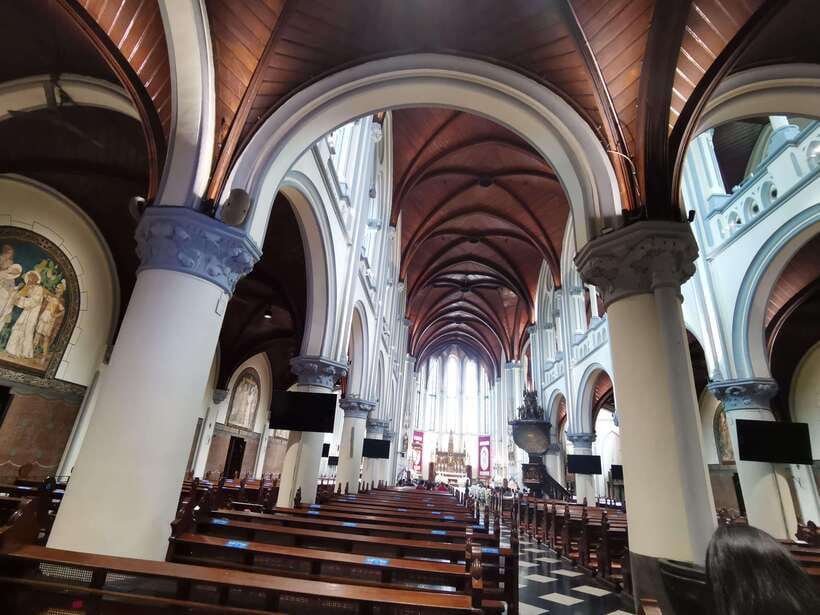
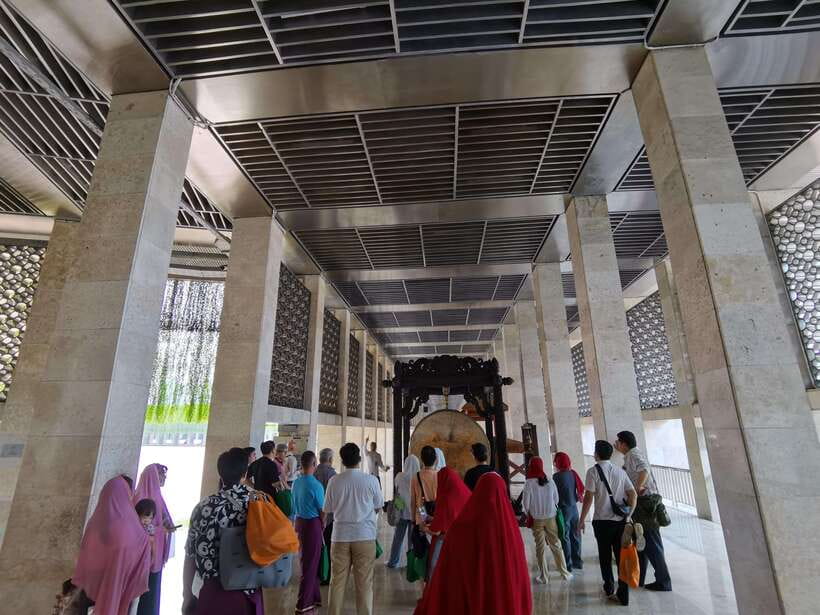
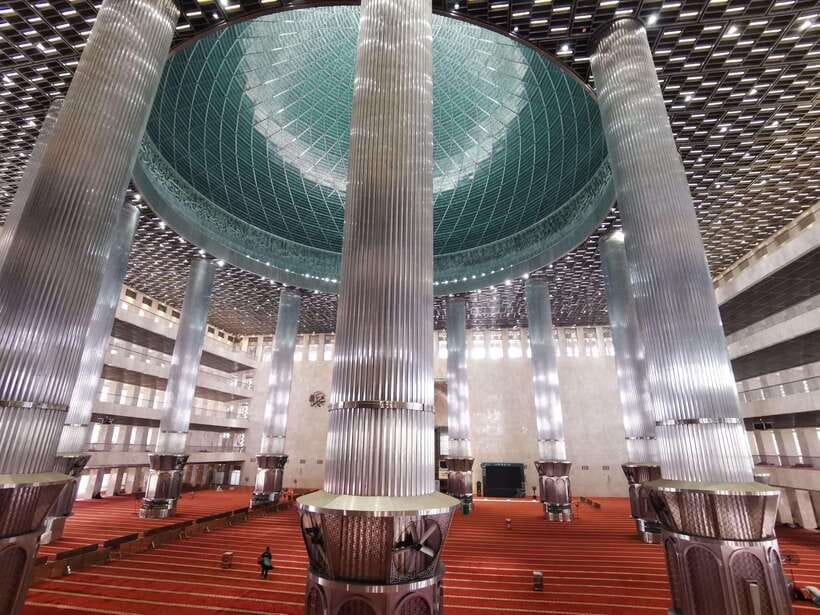
Next you’ll head to Istiqlal Mosque, described as the largest mosque in Southeast Asia and the sixth-largest in the world. It’s also said to be almost opposite the National Cathedral, which is why this route works so well: you’re comparing two monumental buildings across a short distance.
You typically get about 30 minutes here. That’s enough time for a good exterior look and a calm inside visit if access is open. The mosque is also presented as a symbol of peace and religious tolerance, which gives the place an extra layer beyond architecture.
Important timing note: Istiqlal Mosque is listed as closed for public every Friday. If your travel dates include a Friday, plan to treat this stop as flexible.
Also keep your expectations realistic. This isn’t a long theological tour with deep narration; it’s a half-day sightseeing plan. You’ll get the big impressions and key context, and then you move on.
Jakarta Cathedral (1891): Gothic Details and the Sound-Altering Altar
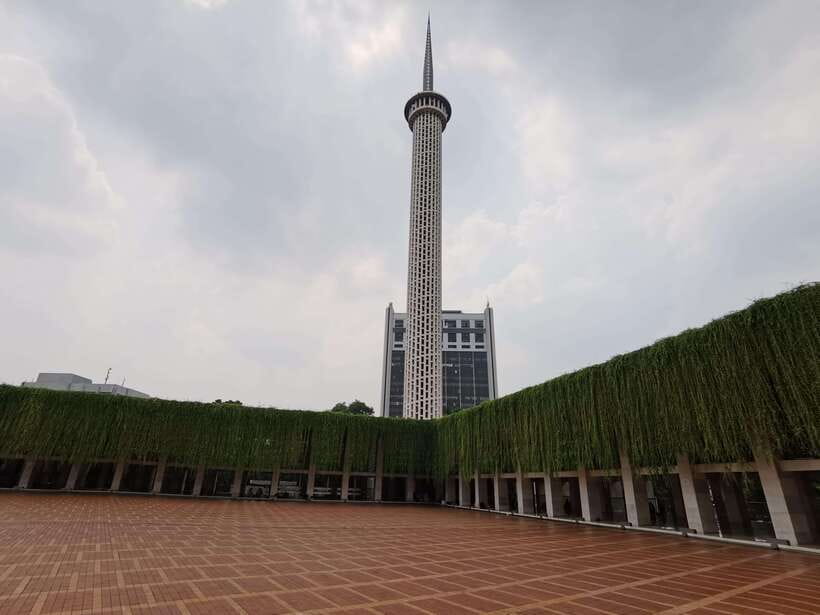
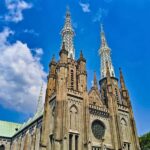
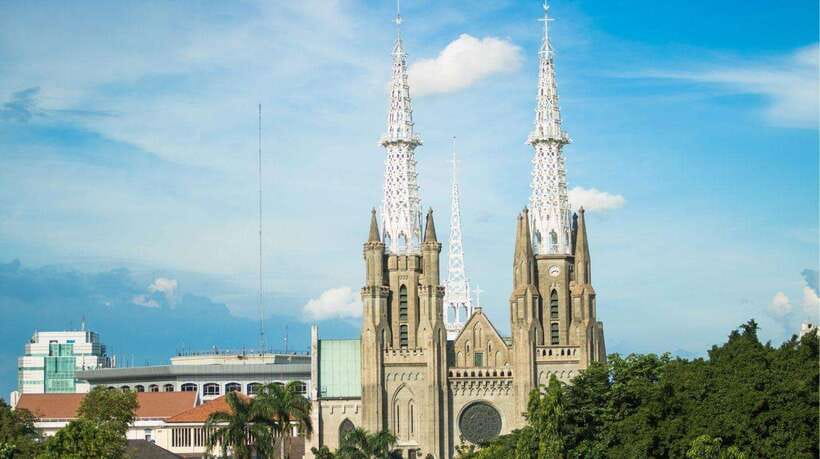
Jakarta Cathedral is a big contrast to Istiqlal. You’ll visit a church building constructed in 1891 in a Gothic style. The description points out specific architectural features that are worth seeking out, including a high tower and high windows decorated with glass paintings.
Inside, the tour notes that there are three altars that together form a semi-circle. There’s also an older altar mentioned for how sound behaves—specifically, that it reflects sound like a conch shell. That’s a fun detail to keep in mind while you’re there, because it makes you look up and pay attention instead of just taking pictures.
You should plan for about 30 minutes at the cathedral. That’s enough for a focused walk around the main areas, especially if you’re respectful and keep the visit moving.
The weekly schedule matters again: the cathedral is noted as closed for public every Sunday. If you’re visiting on Sunday, expect this stop to be unavailable.
Old Town Batavia: Dutch Rule for 350 Years in One Walking Stop
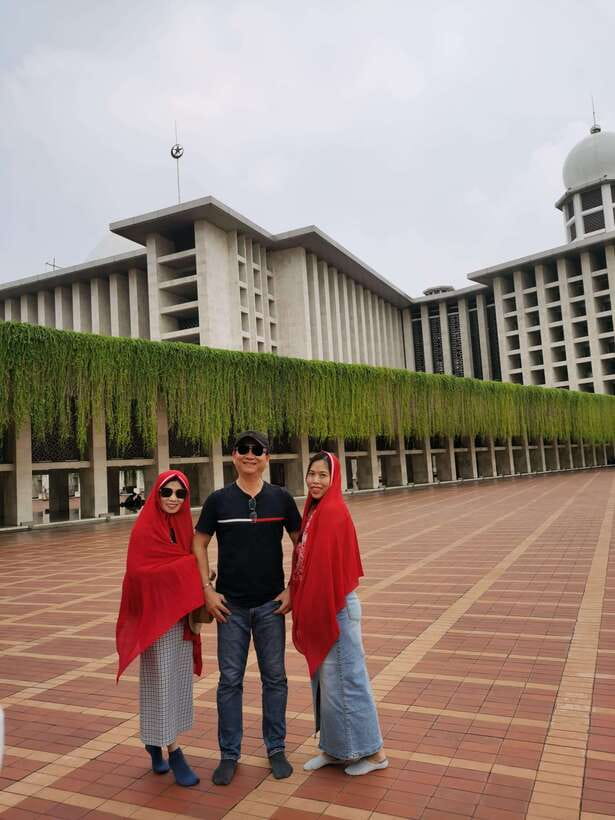
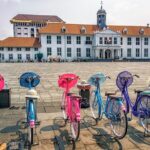
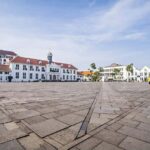
The last stop is Batavia (Ancient Capital of Dutch East Indies), described as the former center of Dutch rule when colonizing Indonesia. Even with just about an hour here, this section is your best chance to step away from big national icons and see the physical “memory” of colonial Jakarta.
You’ll get a photo stop plus sightseeing time, which usually translates to wandering at a comfortable pace, spotting architecture cues, and picking up context about how European administration shaped the city’s layout and buildings.
What I like about ending here: it’s a natural shift from monuments and worship spaces into streets and place history. It also gives you a calmer pace to finish the day with something more human-scale than a 132-meter pillar.
If you want to stretch your day, there is an add-on option mentioned for exploring China Town for an extra two hours. Even if you skip that, this Old Batavia stop is a good anchor for why Jakarta has so many visible layers.


Timing, Walking, and When Closures Can Change Your Day

This is a compact itinerary, and the biggest “gotcha” is closures. You have three major sites with weekly restrictions:
- National Monument: closed every Monday
- Jakarta Cathedral: closed every Sunday
- Istiqlal Mosque: closed every Friday
If your trip overlaps with any of those days, you’ll want to check how your tour provider plans to handle substitutions or shortened time. Since this is a tight half-day schedule, closures can affect the flow more than you’d expect.
Walking is another practical point. You should wear comfortable shoes. The tour materials specifically warn there will be lots of walking, and you’ll be moving between different sites rather than staying seated in a single area.
Comfort tips that actually matter:
- Bring a hat and sunscreen (sun exposure can be strong).
- Carry water. The tour includes bottled water, but having your own refill strategy helps on humid afternoons.
- Plan your camera use. Photography is allowed but flash photography is not allowed inside certain areas.
Price and What You Actually Get for $26
At $26 per person for a 4-hour private tour, this can be good value if you want a planned route with admissions handled. Your price includes hotel pickup and drop-off, an air-conditioned vehicle, bottled water, parking and highway fees, and entrance/admission tickets.
Meals are not included, so you’ll likely end up grabbing a snack or lunch either before you go or after you finish. That’s not a deal-breaker—it just means you shouldn’t expect this tour to handle food.
Where value can change:
- If you’re traveling solo, the private pricing may feel less “cheap.” If you’re traveling with one other person, it often feels more reasonable because the vehicle and pickup are still the same.
- If you want a true English-speaking guide with detailed narration, note that an English-speaking guide is listed as an add-on option. Without that, the communication level can vary depending on who’s driving.
So I’d call this a solid buy for structured sightseeing, especially if you’re fine with a general overview and you don’t need a deep lecture at every stop.
Private Group Logistics: Pickup, Vehicle, and the English-Guide Question
Pickup is straightforward, with two starting options:
- Hotel Indonesia Kempinski Jakarta
- Gambir Station
Drop-off is back to the same two locations. Free pickup is described for the Central of Jakarta area, and other locations have an extra return-trip car fee of USD 15 per car (you need to inform the provider before the tour).
One more practical detail: you’ll need a WhatsApp number so the team can reach you. That’s not just paperwork—on city tours, it helps avoid delays at pickup points.
Now for the big quality point. The tour description indicates an English-speaking driver and also mentions an English-speaking guide as an add-on. But if you’re booking specifically for English explanations, don’t treat that as automatic. In practice, language support can make or break the experience because you’re spending most of your time outdoors and inside iconic buildings where context helps.
My advice: confirm ahead of time what role the English language support covers—driver only, or a guide who will talk through each stop.
What to Bring (and What Not to Do Inside)
The tour gives you a clear checklist, and I’d follow it:
- Comfortable walking shoes
- Hat
- Camera
- Sunscreen
- Water
And keep these rules in mind:
- Oversize luggage is not allowed.
- Smoking is not allowed.
- Flash photography is not allowed inside certain areas.
- Smoking and consuming food and drinks are not allowed inside the attractions.
- Be respectful at religious sites (especially in and around Istiqlal Mosque and the cathedral).
If you’re the type who likes to move fast, this is one itinerary where slowing down helps. Religious sites and historical buildings reward a calm pace.
Who This Tour Fits Best (and Who Should Skip It)
This tour works best if you want a straightforward, centralized route with major sights and a bit of context at each place. It’s also a good fit if you like photography and want time allocations that are realistic for a half-day.
It’s not suitable for:
- Children under 5 years
- People with mobility impairments
- Wheelchair users
So if you or your group needs step-free routes or minimal walking, this likely won’t be the best format.
If you’re visiting for the first time and feel like Jakarta’s history is too big to tackle alone, this route gives you a manageable set of anchors: national symbols, faith landmarks, and colonial-era streets.
Should You Book This Private Old Batavia Heritage Half Day Tour?
If your priority is a planned, efficient half-day that hits the National Monument, Istiqlal Mosque, Jakarta Cathedral, and Old Batavia in one sweep, this tour is worth considering. The included tickets, pickup, and the National Monument basement exhibit (48 dioramas) make it more than a simple photo circuit.
But I’d book with one smart precaution: confirm who will provide English interpretation for the day, and check your weekday against the closures (Monday for the monument, Sunday for the cathedral, Friday for Istiqlal). If those two things are clear, you’ll get a smooth route and a strong sense of how Jakarta’s past and present sit side by side.
FAQ
How long is the Jakarta Old Batavia Heritage half-day tour?
It’s listed as a 4-hour tour. Exact starting times depend on availability.
What stops are included in the itinerary?
You’ll visit the National Monument, Istiqlal Mosque, Jakarta Cathedral, and Old Town Batavia (Ancient Capital of Dutch East Indies).
Where do pickup and drop-off happen?
Pickup and drop-off are available at Hotel Indonesia Kempinski Jakarta and Gambir Station. Free pickup is provided for central Jakarta; other locations add a USD 15 per car return-trip fee.
Are there weekly closure days for any of the attractions?
Yes. The National Monument is closed every Monday. Jakarta Cathedral is closed every Sunday for public. Istiqlal Mosque is closed every Friday for public.
Does the tour include an English-speaking guide?
The activity description lists an English-speaking driver, but it also notes that an English-speaking guide is available as an add-on at checkout. If you need narration, check what’s included for your booking.
Is this tour suitable for kids or wheelchair users?
No. It’s not suitable for children under 5 years and it’s not suitable for people with mobility impairments or wheelchair users.