Sleep later. This one starts before midnight.
The Ijen Crater Sharing Tour from Banyuwangi is built around two big moments: blue fire at the sulfur fields (if conditions allow) and the sunrise over the crater lake, after you’ve hiked up in the dark. You’re heading into one of Java’s most dramatic volcanic scenes, where smoke, sulfur, and a glowing phenomenon turn an early-morning hike into a full-on experience.
I love how the tour handles the hard parts for you: transportation plus park admission are included, and you’re not left to figure out logistics at 12:30am. I also like the practical safety extras—a gas mask and spotlight—so you can focus on the hike and the view instead of scrambling for gear.
One consideration: blue fire visibility isn’t guaranteed. It depends on volcanic activity and conditions, and sometimes you simply won’t be able to see it well.
In This Review
- Key highlights to know before you go
- Why the midnight start at Banyuwangi Train Station matters
- Pickup rules: where it’s included and where you may pay extra
- The hike up Ijen: smoke, sulfur, and why the included gear helps
- Blue fire: what it is, and how to keep your expectations steady
- Sunrise over the crater lake: when the whole scene turns
- What’s included (and what you still need to bring)
- Group size and the rhythm of a sharing tour
- Price and value: does $38.50 really add up?
- Weather reality: when nature changes the plan
- Who should book this Ijen Crater sharing tour
- Should you book this tour or skip it?
- FAQ
- What time does the Ijen Crater sharing tour start?
- How long is the tour?
- Does the tour include pickup?
- Is a gas mask included?
- Will I definitely see the blue fire?
- What happens if weather is bad?
Key highlights to know before you go
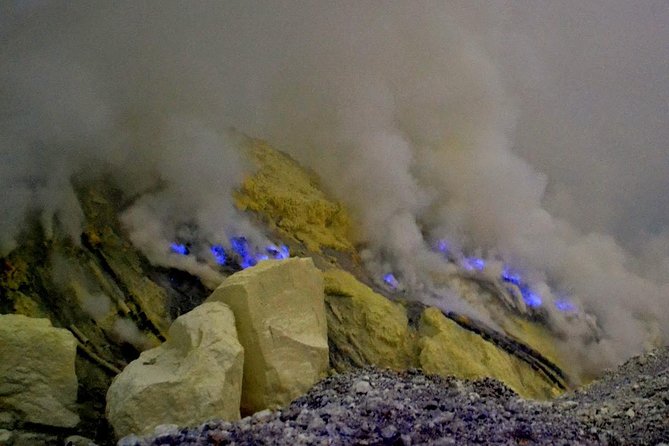
- Blue fire is conditional, so I’d go for the whole volcano experience, not only one glow.
- Sunrise is the main payoff, with the crater lake view turning from dark to bright while you’re already at altitude.
- Gas mask + spotlight are included, which helps a lot on a cold, dark climb.
- Small group size (max 15) means less chaos at viewpoints and during timing checks.
- Pickup is limited to Banyuwangi subdistricts, while other start locations may cost extra.
Why the midnight start at Banyuwangi Train Station matters
This tour is timed for the dark-to-dawn rhythm. You’ll meet around 00:30–01:00am at Banyuwangi City Train Station (Lingkungan Karang Ase, Bakungan, Glagah, Banyuwangi Regency). The listing also references a start time around 12:00am, so expect a meeting window in that late-night zone rather than a leisurely “show up whenever” plan.
That early push is what makes sunrise realistic. If you show up later, you miss the best light and the crater views that only really work when the sun is climbing.
It’s also a good reminder to plan your energy like a night shift: bring water, eat something beforehand if you can, and don’t treat the hike as a casual walk. The dark makes everything feel steeper.
You can also read our reviews of more tours and experiences in Banyuwangi.
Pickup rules: where it’s included and where you may pay extra
The tour offers pickup, but with clear boundaries. Pickup is available for Banyuwangi subdistrict only. If you’re staying somewhere outside that area, you can still request pickup—but you may need to pay an additional charge to the driver. Locations mentioned include places like Ketapang port and Blimbingsari Airport, but the key point is: outside Banyuwangi subdistrict can mean an extra fee.
If you’re thinking, I’ll just meet the group later: that’s risky. This is a time-sensitive start. I’d rather be at the correct meeting point early than try to “catch up” later.
Practical tip: when you book, confirm your pickup point in advance. The tour says confirmation comes at booking time, so use that as your checklist and double-check the exact pickup location and timing.
The hike up Ijen: smoke, sulfur, and why the included gear helps
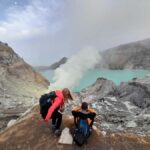
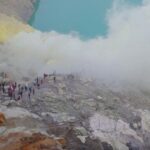
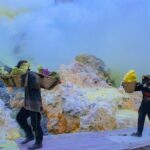
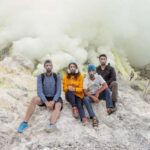
Once you’re set and moving, the day centers on the trek up toward Ijen’s crater area. The goal is to see the volcanic activity up close—especially the sulfur mines smoke fields—before the light changes.
This isn’t a “flat and easy” kind of hike. The tour asks for moderate physical fitness, which fits a steep climb in low visibility with cool night air and volcanic terrain. If you’re comfortable walking uphill for a while, you’ll likely be fine. If you tend to get winded quickly, start training before you come.
Two included items make a real difference:
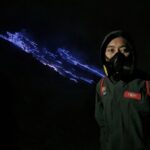
- Gas mask: helpful around sulfur gases during the time you’re near the activity zones.
- Spotlight: essential for safe footing and pacing in the dark.
Even with those, you should expect the hike to feel cold and long. Plan to move steadily rather than fast. The crater area is where people tend to slow down anyway—because the views and the activity demand it.
Blue fire: what it is, and how to keep your expectations steady
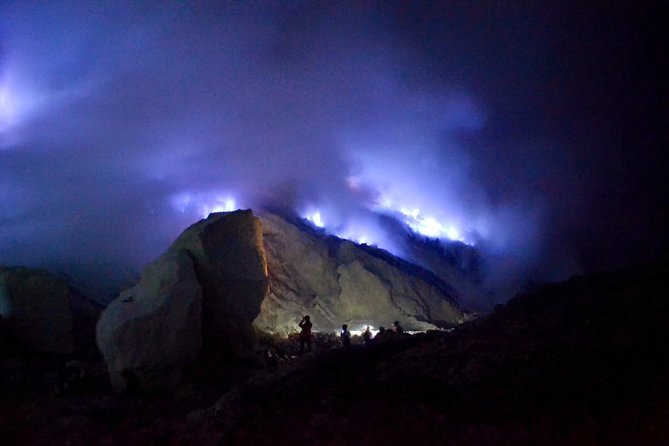
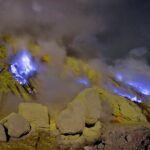
The headline attraction is blue fire, a rare-looking glow that forms where sulfur gases ignite. But here’s the most important thing I’d tell you: blue fire depends on conditions, including volcanic activity and visibility. That means you might get it, or you might not.
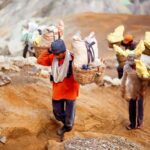
This tour is still worth it even if you don’t catch the blue fire clearly. The top viewpoints and the scale of the crater, smoke output, and sulfur mining activity can be visually intense on their own. So I’d treat blue fire as a bonus rather than the entire reason to wake up at midnight.
If your priority is photo/video, go in with a backup plan: shoot the smoke, the crater geometry, and the sunrise colors. Those usually work even when the blue fire is faint or harder to see.
Sunrise over the crater lake: when the whole scene turns
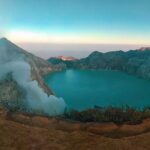
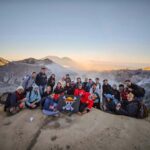
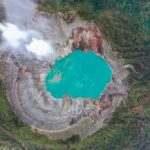
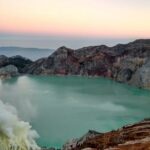
As dawn approaches, the tour shifts from “survive the climb and focus on safety” into “look around and take it all in.” The experience is designed around sunrise over the Ijen crater lake, which is exactly why that midnight start matters so much.
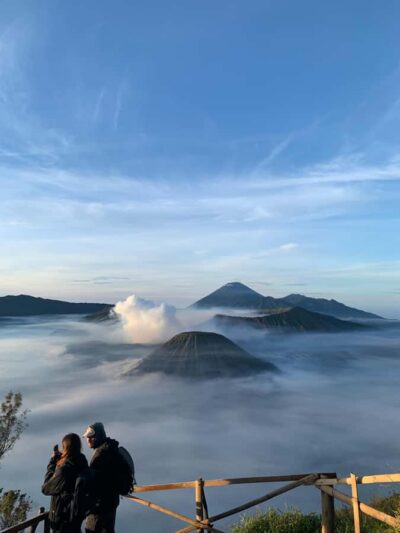
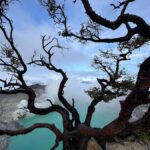
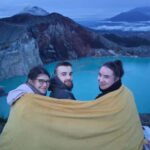
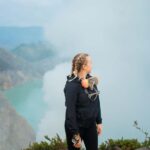
At night, the crater feels heavy and industrial—smoke, darkness, and stark shapes. As the sun rises, you get contrast: steam against the brightening sky, crater walls revealing more detail, and the water or reflective surfaces becoming easier to see.
This is also where you’ll appreciate the guide’s timing. When you’re on a volcano, light timing affects what you can recognize and photograph. You want to be in position as the color starts moving, not after it’s already fully risen.
My practical advice: keep your eyes off your phone for a few minutes at a time. The best moments come when you let your brain adjust from “white-knuckle dark hike” to “this is real volcanic power.”
What’s included (and what you still need to bring)
This tour includes the essentials that reduce risk and hassle:
- Guide services (Ijen)
- National Park admission
- Pickup and drop-off from designated meeting points
- All tickets
- Transportation
- Gas mask
- Spotlight
What’s not included is where your comfort can make or break the experience:
- Warm clothing (jacket/sweatshirt/trousers)
- Personal expenses
- Alcoholic drinks (available to purchase)
That warm clothing line is not small. Nights near volcanic areas can feel very cold, and wind + altitude can make it sharper. Even if you run warm, bring layers. You want to stay comfortable enough to keep moving and to wait briefly for sunrise timing.
Group size and the rhythm of a sharing tour
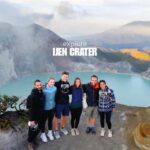
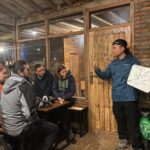
The tour runs as a sharing package with many weekend departures. Maximum group size is 15 travelers, which is a sweet spot for a hike like this. Too big, and you lose flexibility at viewpoints and the pace becomes chaotic. Too small, and the shared-price advantage fades.
The sharing format also makes coordination easier. You’re more likely to keep a clear schedule—especially since the tour depends on early timing for sunrise and visibility.
Price and value: does $38.50 really add up?
At $38.50 per person, the value comes from what you’re not paying for separately. Here’s what’s meaningful in that price:
- Guide + park admission + tickets are included.
- Transport is handled with pickup/drop-off (within the defined zone).
- Safety basics are included: gas mask and spotlight.
If you tried to piece this together on your own—guide fees, park entry, and arranging transport at midnight—you’d likely spend more time and effort than the savings are worth. The biggest value is not just the hike. It’s having the logistics lined up so you can focus on the volcano.
Do factor in the extra possibility: if your pickup isn’t inside Banyuwangi subdistrict, you may pay an additional charge to the driver. That’s not part of the base price, so it can change your all-in cost.
Weather reality: when nature changes the plan
This experience requires good weather. If poor weather cancels the tour, you’ll be offered either a different date or a full refund. That’s exactly how you want it to work for a volcano hike—conditions matter for safety and visibility.
What I do before I go: I keep my expectations flexible. Sunrise and sulfur viewing depend on the sky as much as the hike does. If conditions are bad, your best move is to follow the provider’s alternative date option rather than try to force it.
Who should book this Ijen Crater sharing tour
Book this if you want a classic Ijen night-to-sunrise experience and you’re okay with early hours. The tour is a good fit for:
- People with moderate physical fitness
- Travelers who value guided safety and timing
- Anyone who wants the full sequence: smoke fields → crater viewpoints → sunrise
You might think twice if you’re not comfortable with night trekking or uphill walking. Even with a spotlight, you’re still hiking in darkness on volcanic terrain, and that changes how “easy” any hike feels.
Should you book this tour or skip it?
I’d book it if your goal is a properly timed Ijen experience with park entry, a guide, and the key gear included, and if you can handle a midnight start without complaining to the sunrise.
The only strong reason to hesitate is if you’re emotionally locked onto seeing blue fire for sure. Since visibility can vary with volcanic activity, treat blue fire as a bonus. You’re still going to see something impressive: sulfur activity, smoke, and a crater sunrise that’s clearly the heart of this tour.
If you’re ready to plan layers, stay patient with early timing, and let the conditions shape the spectacle, this is a solid pick for Java.
FAQ
What time does the Ijen Crater sharing tour start?
You’ll meet in the late night window around 00:30–01:00am at Banyuwangi City Train Station, with start time information also indicating 12:00am in the details.
How long is the tour?
The tour is listed as approximately 9 hours.
Does the tour include pickup?
Yes, pickup and drop-off are included from designated meeting points. Pickup is available for Banyuwangi subdistrict only, while other locations may have an additional charge to the driver.
Is a gas mask included?
Yes. A gas mask and a spotlight are included.
Will I definitely see the blue fire?
Not always. Blue fire visibility depends on volcanic activity and sometimes it’s not possible to see clearly.
What happens if weather is bad?
The experience requires good weather. If it’s canceled due to poor weather, you’ll be offered a different date or a full refund.